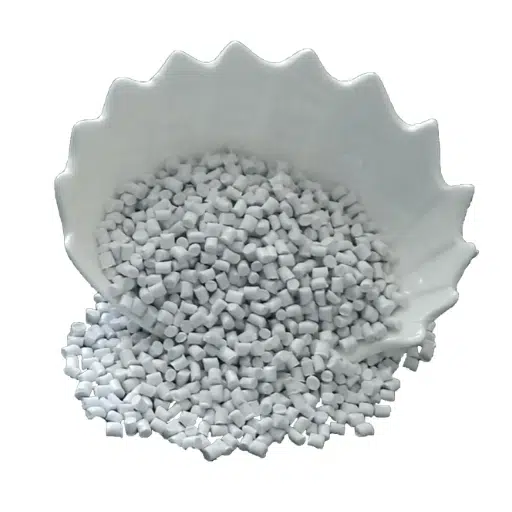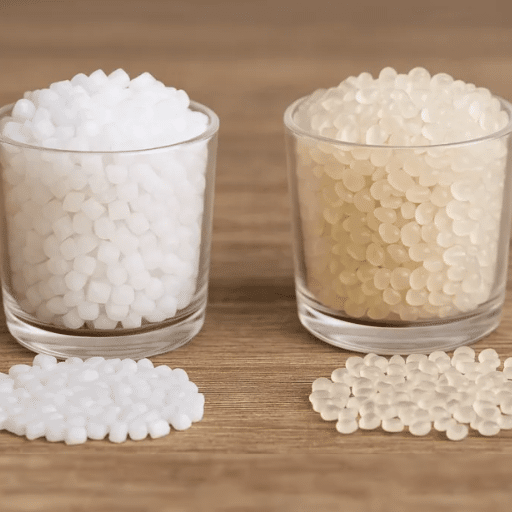
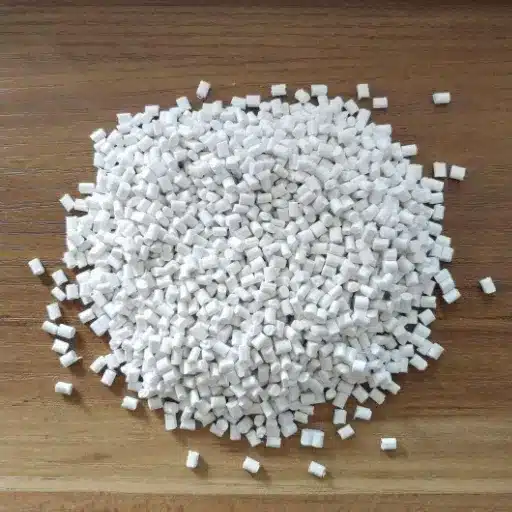
As the world continues to evolve, more and more industries grow the need to cater for efficiency and also its sustainability. In manufacturing, this need spans farther and requires very careful consideration of the raw material selection. Absolute shiny black (Acrylonitrile Butadiene Styrene) remains seemingly the best and most affordable material to use in challenging and complicated engineering tasks. This piece therefore sheds light on useful properties of white ABS pellets and how They support ecological manufacturing practices, performance and design intricacies notwithstanding. Thus, if you are looking for strategies to lessen the environmental burdens or to improve the efficiency production systems, it will be helpful to spend some time reviewing the essential characteristics and benefits of white ABS material.
Introduction to White ABS Plastic Pellets
What are ABS Plastic Pellets?
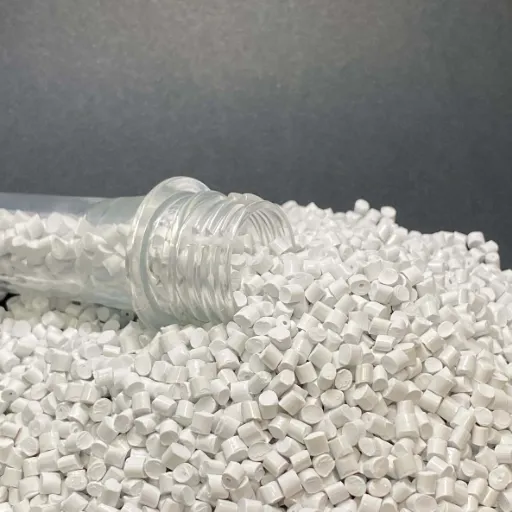
There are a large number of industries that make use of ABS plastic. ABS – Acrylonitrile Butadiene Styrene material is a thermoplastic polymer for producing various product designs even with considerations such as mechanical strength properties, endurance, and aesthetic appropriateness. This resin is formed through copolymerization of acrylonitrile and styrene, which incorporates polybutadiene for achieving improved levels of toughness, strength, and even ductility. Abs pellets possess a high level of tailorability in regard to their properties, which includes the optimizing of melt flow index, color, and surface display to accommodate the user’s specifications. Also, one of the strengths of ABS, as a plastic, is the fact that it is easy to work with. Hence, it can be utilized successfully with various technologies, such as injection moulding, profile extrusion, and film forming. This adaptability makes sure that it does not matter which field, be it automobile, electronic goods, medicine, domestic goods, it can always be used in it.
Properties of White ABS Pellets
White colored ABS beads have a number of characteristics similar to the standard black ABS material such as; a high impact strength, a high tensile strength, and good dimensional stability. Yet, the white color also allows extra capabilities, which is very useful in cases where the material is expected to have functional or decorative surface. This ensures a uniform color within the same product during application even when painting is required. They are also known to have a good appearance in that they are highly visual of the coated end use products.
These pellets are engineered to a consistent adaptability to flow due to its importance to the intricate procedures of pressure molding and extrusion. This requirement is also met because they are capable of going through tough conditions without giving up on their quality. ABS pellets in white are enjoyment in the way they have to be produced in industries including Consumer Electronics where both a shiny sleek finish is a must, and Medical Devices which require the usage of materials that are not hazardous or either painted. Not only is white ABS pellets capable of changing its form, but it is also able to easily meet the needs of the medical industry and other similar specialty services.
Applications in Modern Manufacturing
The significance of white ABS beads in a vast number of manufacturing activities cannot be understated, what with their compounding materials giving them great acceptance, quality consistency, and cost fit for any industry’s demands. One of important delicate protocols is the manufacture of automotive parts using these beads. Particularly, the area of interfaces where these beads play a role is with dashboards, trim panels, housings and the like and such the beads serve a great purpose there without need for reinforcement. Serves as one of the primary reinforcements during any situation resistant to loads that are high in terms of too much pressure with addition of UV protection so the chances of cracking are greatly lowered.
In the same vein, the use of white Abs is quite popular in designing parts for 3D printers since the material is well-suited for machining and has high thermal stability. This allows for the production of intricate plastic prototypes, and also the manufacture of high quality parts. Furthermore, other applications of people appliances are for instance releasing white ABS pellets into the process in order to make attractive and practical covers for electrical gadgets which adequately protect the electronics inside from dust, dirt, and harm.
Referring to another kind of technological field of activity, say, medical industry, the importance of white ABS pellets lies in the development of biocompatible and sterilizable elements like syringes and diagnostic equipment shells. Its compliance with the most stringent norms and capacity to undergo sterilization while still delivering operational efficiency enable the use of this material in medical manufacturing. The importance and significance of such usage is overwhelming and predominant as far as new manufacturing techniques are briefly touched upon.
The Role of ABS Pellets in Sustainable Practices

Environmental Impact of Plastic Manufacturing
Plastic manufacture has raised environmental concerns for many years. This is because in the process it employs fossil fuels which are usually crude oil and natural gas. The extraction and refinement of the two kinds of fossil fuels have the effect of increasing the amount of greenhouse gases. According to investigations which are carried out in the sector today, plastic production and burning generates more than 850 million t CO₂ equivalents every year, and if the present day consumption rates adopt, this number will sadly increase. Ironically enough, plastic is for the most part non-degradable and will inappropriately be thrown away or inadequately treated and thus cause harm to the environment. Traditional plastic materials, which are over 90 % of the total production, remain unrecycled and hence accumulate in landfills and even ooze into the water bodies where they contain erosive and contaminative elements which also puts stress on the organisms and soil layers. To prevent excessive boring of resources, the development and usage of bio-based materials, application of new waste-free production principles, and the enhancement of recycling technology are becoming prevalent measures to tackle the environmental problems alleged into the subject cost-effective fashion instead of leaving these issues unattended.
How White ABS Pellets Contribute to Recycling Efforts
White colored pellets made from ABS; acrylonitrile-butadiene-styrene are central in promoting sustainability in manufacturing and material use. ABS is a thermoplastic polymer and is one of the most versatile, impact resistant and easy to form and glue due to its properties. Piloting the use of white colored ABS pellets in the recycling systems allows minimizing the consumption of first-generation polymer, that is the production of raw material and cutting the total amount of greenhouse gas emissions.
One of the significant benefits of the white ABS pellets is that they are easy to recycle. For instance, mechanical recycling processes which include shreds preparation, melting and later re-extrusion process allows ABS to be successfully handled. It produces new materials of good quality for various applications. Apart from this, arranged thermal stresses and minimal decomposition after reprocessing ensure that multiple recycling is possible with a limited amount of damage to the structure or any impact on the functional properties.
Adding white ABS pellets to post-consumer as well as industrial streams supports the closed-loop system philosophy. Within this structure, the re-use of materials from past production processes is attempted in order to minimize solid waste disposal to dumpsites as well as taking effect in a reduction to the volume of energy employed in obtaining fresh materials. White ABS pellets are beginning to attract the attention of manufacturers aiming at cleaner production and design of products due to improvements in sorting and washing technologies.
Comparing ABS to Other Plastics in Sustainability
There are considerable specificities that allow Acrylonitrile Butadiene achieved in terms of the sustainability of plastics. When compared to single-use plastics such as polyethylene (PE) or polypropylene (PP), Acrylonitrile Butadiene Styrene(g) has a higher durability and, consequently, a longer service life, as a result of which the demand for frequent replacements is reduced and the general output of waste is also decreased. Moreover, a lot has been made in enhancing the recycling of ABS, and now requirements justify its recycling into closed loop techniques allowing processing it to high grade granules without severe decay of material characteristics(gulp).
Compared to polycarbonate, ABS is often their preferred choice because the energy that polycarbonate needs for manufacture is too high and recommended that it can be recommended for those cases whereby there is a high response. In Available energy and recommended carbon footprint for use of the chemical as well as the raw materials is ongoing. There have been also some developments in ABS formulations, making the material more eco-friendly than it was when it originally came out. In a lives case there is no way ABS can be recycled whereas majority of the other plastic resins now can. Hence allowing ABS material in more products. While composites such as polylactic acid cups are an easier sell, they often carry stiffer conditions of use due to their poor properties when compared to those of ABS for instance for automobile parts or household electronic casings. Also, such low material consumption percentages make ABS environmental concerns especially those surrounding material end-of-life where recycler is very anxious that mechanical properties of the polymer to be treated are damaged.
Technical Specifications and Grades of White ABS Pellets
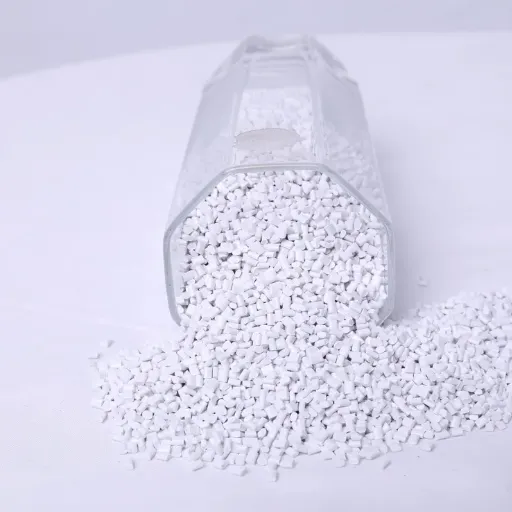
High Impact ABS Plastic Characteristics
One of the highly sought-after variant by technologists in industry is the impact ABS plastic, a type that is particularly suitable for use in extreme environmental conditions. For example, the impact resistance of the material exceeds that of the ALL other ABS of this type by several times, depending on the composition and the polymers used in its fabrication. Also, the toughness is maximize by using improved synthesis of the polymer to ensure that it remains tough during challenging situations. Moreover, the high impact ABS material is stable within the temperature limits of about -20°C and +80°C which thus make it reasonable to use in cold, as well as moderately warm climates.
The compressibility and formability of this material is very good, the Melt Flow Indices being generated are typically varying from approximately 1 to 40 g/10 min on average, depending on the compound in question and therefore serving to make its thermoplastic polyethylene processing be it by injection, extrusion or thermoforming rather efficient. The tensile strength of such materials has been recorded to fall within a wide range of 30 to 45 MPa, which is good enough for mechanical applications such in requires in structural support. Also, high toughness ABS types frequently add some ultraviolet and flame preserved fillers, which further make them more useful for projects that might be exposed to the sun or have a safety component. These advantages exhibit the great potential of this substance in such fields like automotive, gadgets, and construction materials.
Understanding ABS Plastic Compound Specifications
Acrylonitrile Butadiene Styrene(ABS)plastic is an engineering thermoplastic possessing certain unique characteristics leading to their widespread use in multiple fields. Its superior biaxial stability ensures that the frame undergoes minimal warpage under loading, while its notched resistance absorbs energy without breakage. It has a Tg typically around 105°C for the molding applications of ABS and can handle reasonably elevated temperatures effectively.
Similar to every other plastics its chemical network also is very poor which means it is a good insulator for the applications in consumer electronics stray dielectric regions are usually called out. Furthermore, Its dielectric properties are such that it does not allow electric field to easily permeate between the conductors and the semiconductor hence it is used in casings and components.
Flexible enough to cater to the meticulously crafted properties of aesthetics and practical aspects of design, ABS plastic comes with one salient feature, the super-finishing capacity of its surface, and the ability work effectively with other operations such as painting, the metallization or adhesive bonding and so forth. It is this skill that allows it to gravitate further towards areas such as automotive dashboard components or the appliance enclosures of domestic situations where both aesthetics and robustness are in equal measure, cared for and
When other incorporated elements such as fillers or flame retartants, designing the ABS for various degrees of application has rather been enhanced. As such, blending ABS with polycarbonate facilitates the preparation of a thermoplastic blend which enhances resistance to thermal and mechanical strains, and is therefore suitable for uses where there are higher mechanical and thermal requirements. In general, in comparison to any other plastic, ABS has the advantage of being more susceptible to formulation adjustments to cater for various uses, both common and specialized.
Choosing the Right Grade for Your Project
Determining the perfect ABS grade for any project demands considering various specifications unique to the application, as well as the climactic conditions as well. These parameters are majorly characterized by mechanical performance, which involves tensile strength, impact strength, and elongation at fracture. The priority of projects especially those having their application subject to high or low temperatures, or subjected to thermal cycling is to opt for grades with high incorporating resistance and where necessary incorporation such as blending of ABS with polycarbonate, to make ABS’s dimensions more stable.
This additionally emphasizes the importance in designing recommended types of materials exposed in industry to harsh chemicals or where safety is given the priority. In the case of more complex shapes or difficult in construction, grades though which may have higher flow facilitate molding with high precision without loss of strength. Hence, the selection of the correct ABS grade depend on the consideration of the above factors along with the cost of the material and the requirements of the standards for a good performance and long life of the material at a specific location.
Injection Molding and Processing Techniques
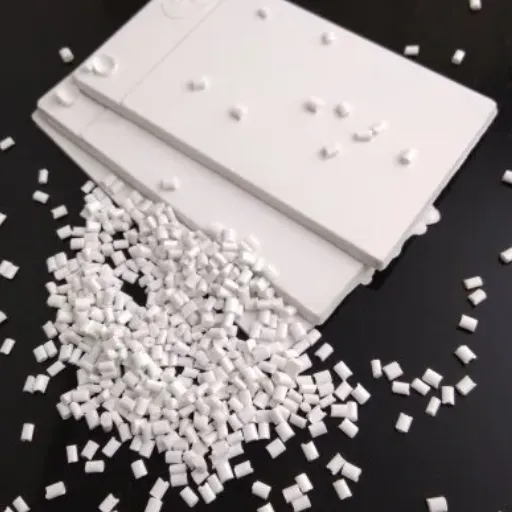
Best Practices for Working with White ABS Pellets
Controlling temperature efficiently is crucial for white ABS pellets to produce consistent quality of products and simplify the manufacturing process. The temperature range usually recommended for processing differs from conventional range of between 410°F to 480°F, where the grade or ABS still characteristically determines the specific limits. Control of barrel zones, mold temperatures and the positions of the nozzle are important to prevent materials from degrading since this can cause such issues as discoloration or lowering their physical properties. In addition, material must be handled correctly so as to reduce the risk of contamination. Keeping ABS granules in a dry place and using desiccant dryers to make sure its moisture content falls below 0.1 percent inhibits hydrolysis in the course of processing and helps retain the finish. Such assessed methods support effectiveness, dependability, and cutting-edge technology in the course of performing regular activities for injection molding.
Machine Settings for Optimal Performance
Making sure that the product turns out well in the process of injection moulding requires a perfect adjustment of the machinery, according to the material and the geometry of the part. The main controls include temperature gradients, injection pressures, screw rates and durations of cooling or heating. For instance, the use of ABS material needs a RTO whereby it is kept in between 2300C to 2600C to effect proper melt flow and reduce the possibility of thermal degradation. The injection pressure needs to be spot on ranging from 60 MPA up to 150 MPA to avoid the overfill which might lead to the warping of the product or even stress marks.
The rotation speed of the screw is critical in an application where the component is subjected to shear stresses: it is for ensuring there is uniform homogenization of the melt. The screw Usually speed range used is 40-100 RPM though it depends on shot size and the material to be molded. In addition to the above, the time taken for cooling the part also ought to be minimum, it should meet the thickness and complexity of the walls with some allowance for warpage suppression and prevention from stripping. With a great compensation Of the matrix forming shrinkage, this shall be central in the mold filling simulation. Air ejection must also be controlled with the system and considering how that too affects how the mold is filled is, therefore, very important. Proper set up and timely care of all the sensors valves and heater will help prevent system wastage and help save on expenditures as well. These configured machines are designed to lessen power consumption and eliminate excess shaping, and hence they are the most cost-effective.
Challenges and Solutions in Injection Molding
Well keeping in mind that fact that mold flow can also lead to the most complex problems is filling mold with the material in the most optimal way. Thus, knowing the ways of controlling the flow of material during the injection is critical as any distortion in flow can lead to production of sink marks, deformation or even filling in the mold with the material. This is where the design of the gate and the layout of the runner channel needs to be feasible in a way that any defects that are predictable can be avoided. Mold flow analysis, as a useful tool is necessary for predictive material behavior modeling during the injection process, facilitating the fine-tuning of gate positioning, sorter, and dimensional characteristics upstream of the trial process without need for any effort.
After this could be the likelihood that the material deteriorates after it has been produced, polymers being major culprits due to their thermosetting nature. Overheating and long storage and processing times elevate the finishing time of polymer and cause the polymer to undergo a thermal degradation effect that negatively affects the product mechanical performance and the surface it takes. However, installing appropriate temperature control mechanisms and ensuring that the material feed rates and retention times are maintained are certain steps which significantly reduce the issue of processing damage instead of worsening it.
Moreover, a steady production of parts that have good dimensions without tolerance errors has the limitations that the product necessarily undergoes shrinkage and such shrinking is not uniform in relation to all of the materials used in the product or the types of products designed. Advanced methods of process control like current injection molding trends, specifically the cavity pressure sensor, are also essential for ensuring accurate and tight molding as the molding proceeds. All these methods provide engineering cycles’ approximation to manufacturing dimensions.
Lastly, expectations for environmental protection and cost contain its strategies for minimizing material and time wastages that also take note of the quality of products being manufactured. In which the subject matter is covered by the acquisition of environments prudent in relation to the different known sectors in the plastic manufacturing industry. Sealing interface innovation in polymer based injection processes, just like prefilling with liquid nitrogen, fabricates internal cavities making cooling process more efficient, particularly in regard to the components of plastic components.
3D Printing with White ABS Plastic Pellets
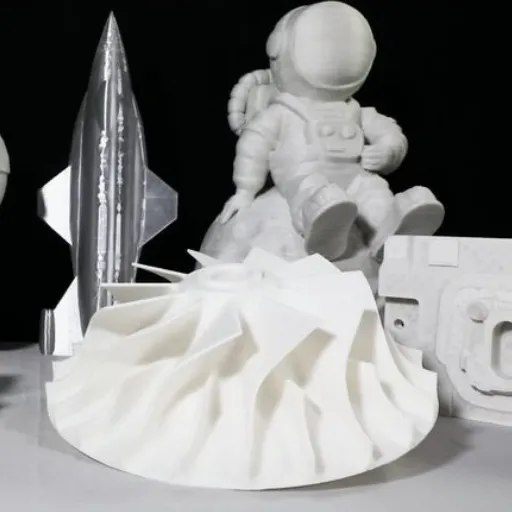
Advantages of Using ABS for 3D Printing
In my opinion, using ABS (Acrylonitrile Butadiene Styrene) for 3D printing poses no threat due to the fact that the material offers well laid out mechanical properties and possesses ease of access. ABS also offers very high impact strength, “it’s another way of saying that this polymer is very strong!” Apart from this, ABS also demonstrates high density and therefore heightened tensile strength. This is very important in such components of machinery, which have to be highly durable, and cannot be easily distorted while in service.
Apart from that, ABS unlike other polymers like PLA is remarkably tolerant to high temperatures. This allows it to remain structurally sound even in applications under higher heat loads. As a result, this property is highly efficient in the production of industrial equipment, car parts or any product that has to withstand high temperatures. . Shockingly, usable characteristics are not all that thermoplastic has to offer – ABS has remarkable machinability and flexibility. For such reasons, I am able to do post-processing operations on ABS part including grinding, application of primer, drilling operations or even apply a good colored paint on top of the ABS parts to meet specific criteria in the purpose or modification of the parts.
Nevertheless, the automatic braking system (ABS) also has its cost efficiency and availability advantages. It is possible to easily obtain the ABS pellets for use in plastic at a very low cost. This reduces the cost of raw material when it comes to making large quantities of the items. It is eco-friendly since ABS is biodegradable and the substances photodegradable. Even though paper with ABS may implicate some environmental prerequisites being present – for example, a hot bed and good ventilation, all that can be forgotten once the material is applied and engineers, and specialists appreciate it in their respective fields.
Preparing Your 3D Printer for ABS Material
Correctly prefabricating A 3D printer for ABS, the significance of precise control over the environment is necessary. ABS is very easy to warp because when it cools, its movement is controlled by a high material shrinkage. In order to do that, I use a heated stage of 3D printer that is usually about 90-110°C. I do this so that the lower layers of a print remain sufficiently hot and slow the cooling shape of pods which reduces the possibility of issues with the adhesion using. 0:07 3D printers print materials layer by layer and have the ability to print most of the materials we have in. So, I tend to use a closed compartment in the printer, sometimes referred to as an enclosed print area in order to maintain the set temperature and additionally prevent incidents of thin strips being detached on account of changes in the environment.
The degree of preparation of the bed as well as the preparedness to certain circumstances is crucial in order to have satisfactory ABS prints. Often times I resort to the use of surfaces such as PEI sheets, Kapton tape as well as your even slather of ABS slurry. What is ABS slurry? It is a liquid concoction of ABS filament together with some acetone for bed adhesion. It is important to note here that a print buckling off the bed is a result of excess filament and can be minimized through proper levelling of the bed and cleaning before onset of the printing process.
The last important thing we need to cover in regard to ABS printing is proper ventilation. While making an object, the plastic will heat up and form till its completion, ABS is commonly associated with smell of plastic and what is known as VOC gases or harmful fumes, then the plastic is heated once more from the layer-upon-layer of ABS covering the building platform. To combat these, I print the given article outside with open windows or put an extra fan in the enclosure and add filtration device, particularly when the space is stuffed full of prints. This set of procedures allows me to achieve high-quality ABS prints every time without rising too many obstacles.
Common Issues and Fixes in 3D Printing with ABS
Printed models are characterized by various printing defects that are caused by inappropriate behavior of printer elements during the printing process. One defect that is most likely to appear in the details is ‘warping’. Warping appears when one part of the model that has just been laid down, starting from the corners, lifts up and the printer stops printing because the material is not sticking to the surface of the previous layers. It is typically treated as a copy of the printing platform. Professional printers of the old designs (on specific films or on simply dusted walls and tables) are reported to themeca before they offleigh 0,7 mm superficial on a newly created pattern having the look of a letter caves into several elements straight in their real thickness. Surfaces and corners of the system are formed with a straight sample followed by the sections because they are directed horizontally
One more imperative challenge that occurs is when a part of the print bulges out or bulges in. Every engineer is most likely to experience this problem. Such bulging or curling of the print’s edges is commonly observed in tall prints. The occurrence of this depends implicitly on the diameter of the member and the configuration, and the print orientation among other variables. As the part cools down after printing, the internal structure is retained more effectively as compared to its neighbor, which causes separation of these two sections. Both very weak strength between these sections and low shear strength is more typically correlated with a reduction in thickness or cross-section than to reduced contact energy at the interface of parts. Finally, it will prevent the gross splitting that usually occurs between dark, bulky layer bonds. Substantial gaps of meshwork radiating from the position of bond splitting can also be seen.
Ultimately, application can make life more comfortable. Such a situation occurs because the molten ABS material is highly viscous and poses several potential challenges such as the nozzle getting blocked and extrusion issues. To solve this, I always ensure that the filament path as well as the nozzle is completely clean. I also perform regular maintenance tasks which include removing material or debris left during the last printing session. Afraid of the damage that moisture could cause to the ABS filaments, I keep them in a dried and sealed container with the help of desiccants. With their addition and some trial and error, I am able to beat the challenges and increase the ABS print durability at the end.
Reference Sources
-
Analysis of the Mechanical Properties of 3D Printed Recycled ABS
This academic paper explores the mechanical properties of recycled ABS plastic, focusing on its use in 3D printing and the benefits of recycling ABS into pellets or filaments. -
Rotational Molding of Acrylonitrile-Butadiene-Styrene (ABS)
This study examines the challenges and solutions in the rotational molding process of ABS resins, including issues like discoloration and impact resistance. -
Influence of Small Amounts of ABS and ABS-MA on PA6
This research investigates the blending of ABS with other polymers, analyzing the behavior of ABS pellets in various chemical and physical conditions. -
Health Hazard Evaluation Report on ABS Plastic Pellets
A report by the CDC discussing the health and safety aspects of handling ABS plastic pellets, including their processing and potential hazards.
Frequently Asked Questions (FAQs)
What is the fundamental building block of white ABS resin, is it the pellets of polymer?
The white ABS pellets are a composite based on the impact copolymer, which is a suitable blend of the polymeric materials such as Acrylonitrile; Butadiene and Styrene. It can be produced in the form of new and re-grind materials depending on the manufacturer and the plant capacity. Some of the most reliable black and other manufacturers provide such granules in a quality modification with the reinforced action of such these fillers or flame retardants. These pellets are appropriate for the mould in manufacturing some items such as plant pipes, automotive front or main body parts, or headgear. For the purpose of 3d printing filament making, dosage of 3d pellets can be made treatment for high impact filament with low level of geometrical changes.
How does the melt and flow behavior affect processing and part quality?
The ABS product has the property of quite high melt and high melt flow which permits it to be readily formed in the course of injection molding and extrusion processes thus ensuring high grade quality with smooth and shiny surfaces on the finished products. It should also be noted that other parameters such as the heat and melt management at the m/c also come handy in maintaining the strength of the parts and also the accuracy of the internal dimensions of the same. There have also been some occasions where the manufacturers suggest certain settings that tend to promote the flow of the material in our machines instead of any defects which may otherwise spoil the surface. To this end, the addition of fillers such as carbon or carbon fibre reinforced additives causes significant changes to the viscosity of the material and consequently the processing temperature needs to be adjusted. Such parts can be used to develop casings, wheel arch covers and other devices that require high impact strength and heat resistance.
In what areas of use can the ABS be seen in automotive and industrial applications?
ABS is very popular in the automobile industries for making the car’s body, decorations, as well as wheel covers and interior trim parts in the car since it has the right balance of toughness, impact resistance and heat resistance. When entering in the industrial sectors it will accept to allow the production of long lasting injection moulded parts such as pipe blocks, casings and even mechanical shields considering their hardness without any warpage. Because of the harsh conditions of abuse or use and function, some of these materials may be used with flame retardants or other additives such as electric insulation or flame retardancy without the plastics and other materials being affected by the temperature. For these automotive and industrial suppliers, it is important that suppliers or vendors that can satisfy different design requirements can be found as well as materials designed the vehicle can be mass produced economically and rapidly. When combined, for example, with carbon, glass or any other specific filler, the properties of abs developed structural element from in regard to its tensile stiffness and strength or even fatigue life and impact resistance properties, can be enhanced or developed to meet a certain application level.
At some points in time, is the use of ABS Pellets for 3D Printing Filament a viable proposal and what are the associated risks?
Certainly, the production of 3D printing filament is one of the processes for which ABS pellets are more commonly used and are best suited when producing samples that possess toughness and heat resistance. There is a number of benefits of producing ABS from 3D printing, the main one being that a high melt flow index includes the biomaterial as a low vaporization by-product which is essential for it to successfully pass through the extruder without deteriorating the quality of the laminate. When using pellets to produce 3D structures, their application is very flexible and can be brought back into a form filled with fillers, colorants and other ingredients which would help one to produce differing textures, smooth, or improve the mechanical requirements of the component. ABS pellets and Carbon Fiber Reinforced yarn together to enhance strength and stiffness of the parts for vital applications. Though before you print something which has the above requirements you must ensure your filament producer or supplier guarantees the production of that resistance or flame retardant.
What effects do fillers or adhesives have on the performance of parts as they are envisioned in the final part?
Do they play any role in the design of parts? May be added inserts such as fillers, carbon and other modifiers that aim to increase strength, increase stiffness, increase surface quality. Likewise, may add fillers to reinforce key areas or minimize costs. Fillers are, for instance, useful in terms of heat resistance and dimensional accuracy but may be problematic for flat surfaces as they need to be polished and the texture altered. Therefore, the filler concentration needs to be controlled depending on the type of application, such as toys, or building elements like the one used in Lego. Using adhesive compatible grades or apply post-bonding of compatible adhesives ensures that covers and enclosures will not get detached. Long-term functioning under atmospheric conditions or in vehicles will certainly also require protective measures with flame retardant or uv stabilizer additives in order to increase service life as well as resistance to external factors. Talking over your specific project with the fabricator or producer will point out the best practices where both performance is concerned and effective service.
What else is important in Pricing, Problems relate to stock and finding the best supply or factory?
The pricing aspect of the operation is broken down into three areas, which are; the type of granulate used, such as virgin or recycled, factors like carbon or flame retardants and whether there are any price discounts when they order in bulk, can all influence the price of the finished resin. Ensure that the supplier or the shop is able to provide detailed technical information as well as obtain a sample of the manufactured article, which can be physically tested in terms of its resilience to impact energy, heat, and the way it flows. Importing electronic components or consumer good from overseas becomes riskier if the area has a longer supply chain including subcontracting through third party vendors in between. Owing to the manufacturer supplying directly from local or chinese supplier, lead times and minimum orders may come in the way of this. But you have nothing to worry because with their experience, a good supplier will help you tweak the existing formulas for specific components and even provide the correct extrusion processes so that the material works efficiently within the equipment. In conclusion, if you want your product to meet the desired quality goals and remain in good condition for the longest period.