Microwave usage is a fast & convenient way of heating food, but there are certain materials that are not microwave safe. One of the main things that help in safe food handling is learning the common signs and marks usually found on the plastic containers. Those signs can help you make a decision whether a particular container is appropriate for microwave use with no side effects, hence preventing health problems and also the damage of the appliance. This guide explains the meaning of the microwave symbol, defends its substantial state in the food industry, and supplies information to choose the correct containers for the microwave and ensure their safety. Whether you are a person who always has leftovers or one who prepares it all for the week at once, this post will bring you up to date.
Introduction to Microwave-Safe Symbols
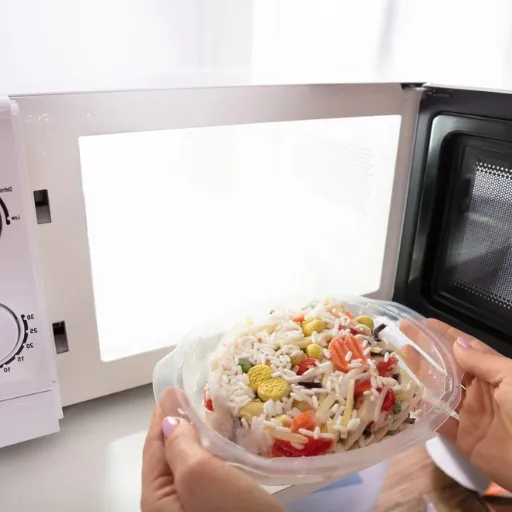
What Does The Microwave-Safe Symbols Indicate?
The microwave-safe symbols are the main indicators to determine if a container or a product is safe to go in the microwave without any health hazards or damage to the device. These symbols are generally found at the bottom of plastic stuff, plates, or packages and made in such a way that they specifically reveal the safety attributes of the material in exposure to the microwave. One of the symbols that are usually present is either a microwave or some wavy lines that indicate that the object has been tested and it is safe for heating in a microwave. Moreover, one or two containers come with a complete set of instructions or with a temperature limit so that they would not be misused.
⚠️ Important Safety Warning
Nevertheless, it is of great value to emphasize that not every symbol ensures protection against all possible dangers. To illustrate, one of the most common kinds of the microwave-safe symbol might still leach toxins such as BPA or phthalates when the item gets too hot or when it is used for long periods. The safest approach to not get harmed in this case is to always scrutinize the material content, to select BPA-free or food-grade plastics, and to strictly adhere to the manufacturer’s maintenance instructions/instructions for use if any. In the case of glass or ceramic wares, I verify that they carry the microwave-safe sign to prevent the likelihood of cracking, notably when they are put through sudden temperature changes.
In order to make good decisions, I invest my time in getting to know these signs, their meanings, and the impact that they have. This, in turn, supports my health and ensures my kitchenware’s durability by taking the necessary precaution. Learning the microwave-safe symbols is not only a matter of ease; it is also a matter of conforming your everyday practices with safety standards that have been scientifically proven and expertly tested. If you are in any uncertainty, you would tactically choose the secure way out by using materials such as microwave-safe glass or ceramics, which are usually considered the safest bet.
Importance of Using Microwave-Safe Containers
One sure way to adhere to food safety and high microwave productivity is the use of containers that are safe for microwave use. Those made of unsafe materials could free harmful substances hence the likes of bisphenol A (BPA) making it to the list of things that may come out of the plastic when the temperature gets high. This transfer of chemicals is the main cause of potential health problems including interference with the endocrine system. Moreover, containers not right made for heat may simply not be able to handle it and finally break or bend, leading to the possibility of fires or food contamination. The types of containers such as polypropylene (that carries a 5 recycle symbol) and tempered glass are well-known to be used in the microwave very safely. This is because they were subjected to rigorous testing to make sure that they were not affected by the microwave and at the same time were safe for cooking. Users, therefore, should be very cautious in selecting the right containers for use as recommended for their safety and, at the same time, to prolong the life of their appliances.
Common Symbols Found on Plastic Bowls
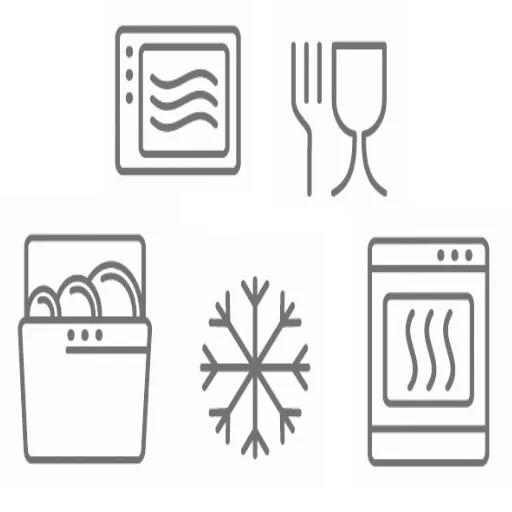
The symbols used on plastic dishes convey numerous pieces of information about the safety of the product, and its ability to be recycled, and how durable it is. These symbols set the basics for the proper care and the life of the product. Some of the most common symbols are as follows:
🌊 Microwave-Safe Symbol
This symbol look like a number of waves and it suggests that the material has been inspected to be microwave radiation resistant and will not let the harmful substances come out or deform when subjected to heat.
💧 Dishwasher-Safe Symbol
Often it gives an idea of water droplets or lines on a glass or stainless steel tools, the symbol implies that the dish can take in the high temperatures and pressure during the cycle in a dishwasher without going out of shape or breaking up.
♻️ Code Made to be Reused
When the recycling code is code 5, this means that the plastic making the bowl is polypropylene, and this plastic is the material of choice for the heat tolerance and food-contact application.
🍴 Safe-for-Food Symbol
A notation that combines the picture of a fork and a glass, this indicates that the item meets the standards set by FDA, resulting in neither harmful chemicals leaching into food nor beverages.
❄️ Ice-Cube-Safe Symbol
The picture that may look like a snowflake is the symbol that suggests the bowl can be placed in the freezer without cracking or losing its structure.
By knowing the above mentioned, people are informed about the ingredients, manufacturing process, and how the product should be handled when disposing of it. At the same time, manufacturers introduce these guidelines to ensuring the correct use of their products and hence the adoption of regulatory standards.
Types of Plastic Containers and Their Microwave Safety
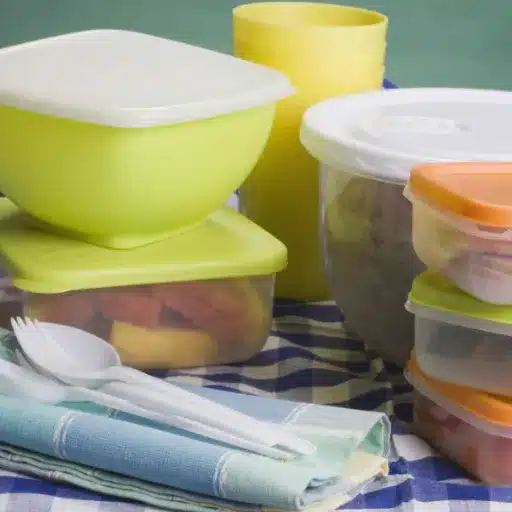
Identifying Microwave-Safe Plastics
Checking the label and the sort of plastic are two necessary steps for figuring out whether a plastic container is microwave-safe. The majority of the time, it is the microwave-safe plastics that have a symbol which is usually a square with squiggly lines depicting the material’s remaining the most harmless substance. They can be composed of polypropylene (PP), and its recycle code is “5,” known for its high resistance to heat. This combination of materials, in fact, remains the best option while polyvinyl chloride (PVC) and polystyrene (PS) that are available on the market are not recommended to be used with the microwave because they can get soft, deform, and remain leaving perhaps even harmful materials on the food since the heat would trigger that.
Furthermore, even the most perfect being of the microwave is dependent on the quality of containers. Bad or broken containers will not only superheat when placed in the microwave but also can contaminate the food through their small openings. User’s health and safety are guaranteed; however, the matter is not going to be resolved. Not only this but also the safe use of all kinds of appliances is another pretext for the ongoing argument.
Polypropylene and Its Microwave Safety
Polypropylene (PP) is a very tough and flexible thermoplastic polymer having high melting points and therefore is using heat-resistant, durable and at the same time as lightweight containers id. In relation to the safety of using it in microwaves, polypropylene has been recognized as the safe material to use under some very strict rules due to the high melting point phase of the material that usually is within the range of 130°C to 170°C (266°F to 338°F). This means that the material is not expected to deform or have its chemicals leached out into the food during microwaving due to its good thermal stability.
✓ Safety Note on Polypropylene
Moreover, the low reactivity of polypropylene was found to be a preventive factor for the release of harmful substances during microwave cooking. This safety issue is not only attributed to but also conditional on the examination of a product and the absence of change leading additives or fillers. It is utterly important to verify that the container is marked as microwave-safe, as that means the so-called material has had its quality proven by meeting the international safety norms. In addition, it is advisable to check containers regularly for physical damage such as warping or cracking, which could lead to potential contamination and degrade microwave performance.
Other Plastics to Look Out For: What to Avoid
To ensure a reliable selection of plastics for food storage or heating every consideration should be given to the information about the possible materials that might be dangerous for health or degrade over time. Polycarbonate (PC) plastics, typically used to make rigid, clear, reusable water bottles and food containers, could release bisphenol A (BPA), a compound connected to likely hormonal abruption. Despite the fact that most businesses already shifted to new BPA-free formulas, it is still very important to check up on product specs as a means to protect oneself from exposure.
In the same way, polystyrene, the most well known type of which is the widely used in disposable utensils and foam containers and thus most probably to the considered a health threat, also because of its composition. Once it hits high temperatures, one of those being a microwave, polystyrene can start releasing styrene, yet another bad thing about it, it is accused of causing cancer. Without a doubt, polycarbonate and polyethylene plastics, including those in cups, plates, and food packaging, leach bisphenol (BPA) and the nonylphenol, most probably due to the warm liquids that reach the paper surface and generate a proactive reaction that lets the water into the pack ultimately leading to the migration of the contaminants, thereby contaminating the water.
Consequently, plastic wrap containing polyvinyl chloride is the last thing one would like to use when storing food. First of all, because of the contact between hot cling wrap and the food item, the chemicals will transfer in the course of time. In summary, stay on the safe side by preparing food alone or by store only microwave-safe food chemicals in paper or glass.
🔍 Recommended Safe Plastics
For the sake of your health, the best choice of plastics for food contact are those plastic materials that are denoted by their recycling codes as #1 (PET), #2 (HDPE), or #5 (PP).
Understanding Recycling Codes for Microwave Use
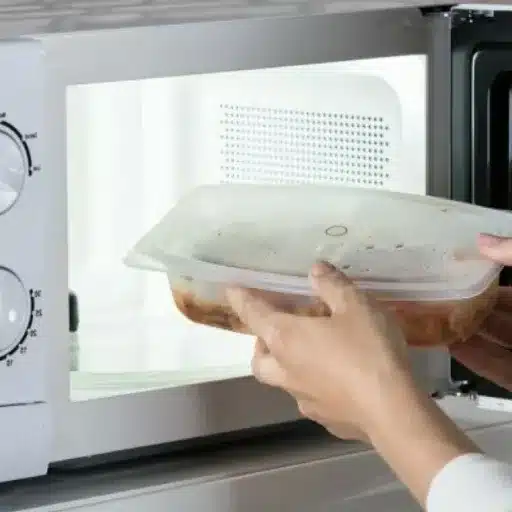
Identifying Microwave-Safe Plastics
When it comes to identifying microwave-safe plastics, one must consider checking the labeling as well as the composition of the material. Certain plastics, which have the capacity to endure microwave exposure without emitting hazardous chemicals or breaking down, are usually stamped with a particular symbol, for instance a square with wavy lines. The type of plastic that is considered as microwave-safe is polypropylene (PP) which is marked as the resin identification code “5” and is reputed for having a great resistance to heat, being as it is. However, Plastics like polyvinyl chloride (PVC) and polystyrene (PS) have generally been found quite unsuitable for use in the microwave because of the likeliness to soften, deform or release toxic substances under the action of heat.
Moreover, the sturdiness of a container fabric is an almost inevitable factor that contributes a lot to the safety of the use of microwaves. In the case of containers that appear to be broken in any manner, therefore, they can’t completely withstand the heat hence a possible recurrence of chemicals. Checking with reliable sources or the maker’s manual is a way to protect the users from hazards and to ensure that they are in conformity with health and safety rules.
Best Practices for Using Plastic Bowls in the Microwave
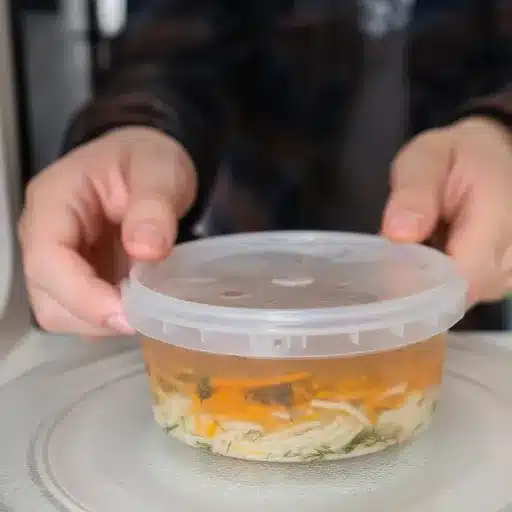
Tips for How to Correctly Prepare Food for Microwaving
You can make the most out of your microwave and make sure your food is safe and up to standard when you follow the exact guidelines for the particular case of microwave radiation in contact with dissimilar materials and foods. The simplest thing to do is to use containers that say clearly “microwave-safe”, which are the ones that are degraded the least by the heat and electromagnetic waves and at the same time do not set free hazardous substances. It is also a good idea to avoid the use of containers having a metallic finish or of plastics that are microwave-unsafe, as there may be such problems as sparks, food being heated unevenly, or chemicals being released into food.
Prior to using the microwave, it is essential to distribute the food evenly in the container. Incorrect placement of food can give rise to uneven heating, with some parts of the food getting overcooked, while the rest remains raw. A lid made of microwave safe material or vented plastic wrap turns out to be the best solution for the dish; this will not only reduce moisture loss but also allow the steam to escape. Mixing or turning the food over in the middle of the process will be of great help because it will redistribute the absorbed energy resulting in a more even cooking process.
⚡ Superheating Warning
In addition, it is advised not to overheat the liquids as it may lead to a situation called superheating. This is when the liquid is hotter than its boiling point, but it is still not boiling because there are no impurities and other disturbances. For this reason, always put a microwave-safe object, such as a wooden spoon, in the liquid to avoid superheating. Finally, it is recommended to allow the microwaved food to cool for a few minutes after heating so as to facilitate heat redistribution and to complete the cooking process.
Through the usage of these precautions, customers can increase the effectiveness and protectiveness of their microwave regime. This way, they will not only drop the risk level but as well so preserve food quality and the integrity of nutrients.
Ways to Avoid Radiated Food Dangers
1️⃣ Microwave-Proof Containers Only
The wise and safe use of the microwave begins with the use of containers that are specifically designed for these ovens only and hence avoid any harmful chemicals that the food could get through the microwave oven. Containers as glass, ceramics, and a few plastics that are ready to be used for a microwave are the materials that can withstand heat and still be non-toxic substances-free materials. Don’t use anything metallic, as it may cause twinkles and even damage the microwave itself.
2️⃣ No Cold Spots
Cold spots in food means uneven heating which will cause the growth of bacteria, thus posing food safety hazards. By changing very small pieces of meat into meatballs and nibbles not only one will be doing decreased but also promoting even heating. Stirring food or changing dishes position in the oven can also help in preventing the cold spots.
3️⃣ Liquids Getting Superheated Can Be Prevented
Unintentional superheating of water can be prevented by maintaining a microwave-safe vessel in the container during the heating process, and also by doing nothing more than watching the heating time, and liquid very closely to avoid this situation turning into reality.
4️⃣ Use the Appropriate Containers
Covering food is one of the most effective ways to keep it from being too crispy and diminishing the splattering of particles inside the oven. Lightly cover the container with microwave-safe covers or vented wraps, leaving the steam to escape and reducing the chances of pressure to build up.
5️⃣ Be Aware of Power Adjustment
Using the power setting enables a more controlled heating process, especially for foods like dairy or sauces that can charred at high temperatures. Lower power settings maintain the food’s texture and flavor, as well as slower and more even heating for less delicate or denser foods.
Users will not only reduce the health risk of their microwave cooking behavior but also increase food quality and keep the nutritional value of their food at a high level by following these detailed practices.
When to Avoid Putting Plastic Containers in the Microwave
It’s the best option to not use polystyrene products in the microwave if they don’t have the explicit designation of “microwave-safe”. Plastics, generally, are capable of releasing some very harmful substances such as phthalates or bisphenol A (BPA) and this can happen if they are in contact with high temperatures. These substances have been studied and known to pose potential problems of health, such as endocrine disruption and other health issues in the long run. In addition, thin or single-use plastics, as those which are being used in takeout packaging, can easily be turned into a molten or deformed mess by microwaving, which can make them fragile and hence cause leaks or contamination. Oven-safe plastics may also go through degradation, particularly when they are heated a lot, resulting in thin cracks that are not so easy to see and might even lead to the leakage of substances. To be on the safe side and reduce health risks when heating up food, it is best to go for glass or ceramic containers instead of using plastic.
Ensuring Safe Food Practices with Microwave Containers
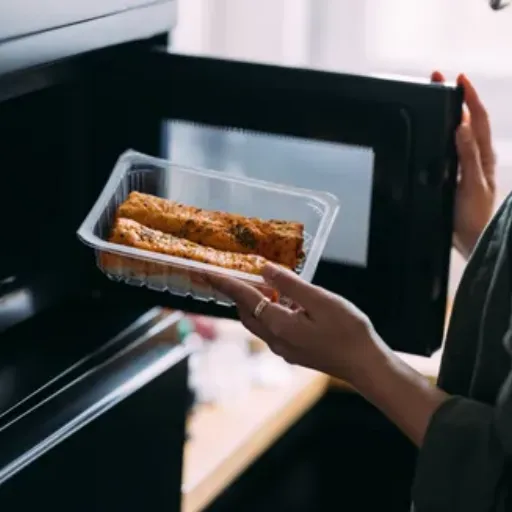
Summary of Main Ideas about Symbols on a Microwave Oven
In order to prevent containers in the microwave from having any negative effects on the food safety and the life of the container, one must really know what the microwave-safe symbols stand for. The symbols, often drawn with wavy lines, are the signs for the material that is capable of bearing microwave heating without being melted, twisted, or causing the presence of harmful substances in the food. For plastics, further signs like the resin codes or figures (e.g., #5 for polypropylene) can indicate how well the material microwaves, though even the said materials should be treated with care so as not to finally release any chemicals and thus contaminate the food.
Moreover, I was amazed to find out that the heat-holding capacity or performance under the most challenging conditions is not the same for all the microwave-safe labeled containers. A container that at the end will undergo multiple microwave heatings or it will be exposed to high temperatures will emanate the material thus leading to microfractures or structural errors not easily seen. This is even worse for plastic containers that have been used for a long time or very intensively. It is necessary for one to examine for a while the containers and if the signs of deterioration like discoloration, cracks, or brittleness are evident, then it is about time to get new ones.
I always opt for glass or ceramic containers as my number one choice whenever I need to microwave food. These materials are less likely to degrade thus, no environmental issue arises from the chemicals that certain plastics might give off. I have already changed myself into a “hunter” of microwave-safe symbols and I am indeed proud of myself when I choose the right materials and consequently get the desired food safety and health protection.
Final Tips for Safe Use of Plastic in Microwaves
Somebody told me that it is safe to use plastics in the microwave. With time, I made it a rule tolook at the label and see if it is really labeled as “microwave safe” first. This mark is usually accompanied by a testing process that is supposed to show the plastic whether it can withstand the heat without melting, becoming warped or the test showing that chemicals are leaking into the food from plastic. However, even if the plastic is microwave-safe, nevertheless I do not want to be a fool using it at very high temperatures or for a long time as it will allow the chemical migration to take place with an even larger possibility. Instead of using plastic whenever it is possible, I run for the other non-plastic carrier materials to keep the food in the microwave, and this is much safer than plastic.
Considering the condition of the plastic containers I use is an important aspect. The plastics mostly used in different products get scratched, deformed, or stained after they have been used multiple times. Such signs can mean eventually damaging the household items that are considered as not being safe anymore and even possibly exposing to the harmful substances like bisphenol A(BPA) or phthalates, despite the microwave-safe label. On the other hand, the simple act of replacing old plastic containers with new ones is already serving the purpose of eliminating these threats and keeping the containers always useful. Moreover, covering with vented and preferably non-plastic microwave covers is thus the best way to reduce splatters while at the same time allowing proper airflow during the heating process.
I look up standards from the major health organizations, such as the FDA, to learn and use the most recent information about safe practices and material requirements in the area of plastic microwave use. This way, I have the technical data and the scientific evidence-based recommendations combined, and it is through the application of the latter, that I find myself having more control over the safety of my food choices. I am extremely attentive indeed, and that is why I am in the habit of checking the labels on the containers, keeping heat exposure times to a minimum, and replacing worn-out plastic products quite often, but in the end, the real essence of being careful remains the same, and as the same time, I am accommodating the demands of my everyday use of a microwave oven.
Resources for Further Information on Microwave Safety
One method I found to be very effective in understanding the risks associated with microwaves is to collect information from reliable sources that are both informative and provide complete and up-to-date data. The United States Food and Drug Administration (FDA) is a high-quality and top-notch source where you not only can get acquainted with the standards and precautions while using plastics and cookware in a microwave but also can get rid of fears and come out with a positive feeling. The FDA website also refers to microwave radiation physics, the dangers of using containers improperly, and best food safety practices. In addition, the Environmental Protection Agency (EPA) has been involved in the topic by providing the environmental aspects of plastic use. It is during this time that I am looking for a balance between leading a healthy life and still being eco-conscious.
The World Health Organization (WHO) is yet another very helpful reference in that they address the more general food safety principles. Both their examinations and studies deal with chemical migration as a factor that is considered. In addition, they give advice on how to store and heat food safely, so I like it as if I were the world!s best compliant with the safety standards. Also, in the Healthline and Mayo Clinic’ websites I find those nitty-gritty specifics that are the result of a good and well-researched tip that I will grab every time I make my meals in the microwave. In other words, they are who really safe? glass and ceramic containers, for example. And who are the real dangers, the ones associated with plastic boxes not labeled for the microwaveton?
Merely with the help of these trustworthy and valid sources, I have achieved to interpret the material I apply for my microwaving with greater quality, and at the same time one can abide by scientific data and government advice as the first safety concern and minimize the risks to the maximum.
Reference Sources
- Use Microwaves Safely | Illinois Extension – Provides guidance on identifying microwave-safe symbols on containers.
- Symbols Appearing on Plastics Denote Products – Details the meaning of symbols and numbers on plastic products, including microwave-safe indicators.
- Choose the Right Containers When Storing Food – Discusses the importance of using microwave-safe containers for food storage and heating.
- Phthalates | Columbia Public Health – Highlights the risks of microwaving plastics and the importance of identifying safe materials.
Frequently Asked Questions (FAQs)
❓ Regarding reheating and microwave use, what does the microwave-safe symbol on plastic mean?
Basically, the microwave symbol on it means that the plastic has been proven to withstand microwave oven and, therefore, it is safe for use when re-heating food or drink. The plastic that is intended for use in a microwave is usually labeled “microwave-safe” but there could be a lightning bolt-like mark or a wavy line symbol at the bottom of a disposable utensil to indicate that it was specifically made for the microwave. Even plastics proclaimed as ‘microwave-safe’ can also gain heat that makes them unsafe to handle directly unless they are put into a microwave-safe bowl or plate. Do not use your oven at high temperatures for a long time as this can lead to the distortion of microwave and handling of disposable items or styrofoam utensils made of polystyrene are the leading causes of their leakage to the food. On the other hand, if your intent is to boil or even use very high oven temperatures, the best option is always to use versatile ceramic cookware or even different types of incovenient but still quality-buy cookers with a heat protection feature. Always ensure you use the right packaging and always make sure that it is allowed by the manufacturer to use that particular kind of container in a microwave.
❓ Can you put a plastic plate or plastic container in the microwave to reheat leftovers?
To begin with, it is virtually safe to put a plastic plate or a plastic container in a microwave if it has the print as microwave-safe or the recycling code like #5 PP (polypropylene) as this is normally food grade. It is also the case that polystyrene or styrene foam (often referred to as styrofoam) should never be placed in the microwave as the material contains chemicals that can react upon heat, thereby making benzene. Still, a number of the plastic bowls and containers that are explicitly dishwasher safe may be good for reheating, though the instruction dishwasher safe does not automatically mean microwave-safe. If the surface of the container is distorted, broken, or simply not marked, it is preferable to not use the microwave and transfer the food to ceramic or glass cookware. Also, do not use metallic trims or decorations because metallic parts can causing malfunctions and are not suited for microwave cooking since they can spark and are unsafe.
❓ How can the recycling code and microwave-safe symbol help me identify plastics that are safe for microwave use?
The Triangle symbol with a number or PP helps mould the resin resolutely. The recycling symbol itself is not indicative of the microwave’s safety. All you have to do is to find the symbol or read a statement that the product is oven-proof. Among the plastics classified as food grade and microwave safe are those that are labeled polypropylene. These are the ones who testify that during the reheating process fewer chemicals are leached. However, it is cautioned that even plastics with a label of microwave safe should not be used in the case of acidic foods for long time heating. This is because the acidity can affect the plastic which may ultimately leach or result in deforming the container. To be on the safe side, use a ceramic or microwave-safe container to re-heat the food as this will reduce the risk.
❓ Are disposable containers or styrofoam safe to put in the microwave for reheating?
The reason for avoiding disposable containers and Styrofoam materials in microwave cooking is their risk of not being microwave safe, leading to their deformation or the release of toxic substances. Especially unsafe are the polystyrene and styrene-based products, which might release harmful compounds and, for the most part, are not even labeled as microwave-safe. Nonetheless, some disposable containers are microwave-safe or even food grade; only these should be used for short reheating times. If you are constantly reheating food, it is advised to buy durable, MIL Std-810G compliant kitchenware like glass and ceramic bowls and plates. Make sure to see the marking on the bottom of the kitchenware so that you won’t be affected by any metallic or insulation content possibly insulated.
❓ How do you interpret wavy lines or a microwave-safe symbol that appears on the bottom of a bowl in terms of microwave oven use?
The item having a wavy line as a part of its marking is the most common sign of it being safe for microwave use. This symbol is meant to be an indication that the product is OK withstanding the heat that often characterizes microwave heating without distorting. However, the assurance of the symbol does not necessarily extend to highly hot conditions like those in oven baking or boiling water. Consequently, it is wise to stay within the recommendations of the manufacturer and limit the cooking time in the microwave. While many ceramic or microwave-safe plastic plates and bowls are most likely to be marked with the said symbol, there may also be instructions like “not for oven” or maximum temperature on them. In the event that a food container is not labeled at all, the safest way is to put the ready meal on a labeled microwave-safe plate or a ceramic bowl. It is also important to keep in mind that even those plastics that are labeled as microwave-safe may heat up even more when they are used for reheating oily or dense foods.
❓ Does the fact that an article is dishwasher-safe signify that it is safe for the microwave?
The term dishwasher safe simply means that the item is capable of enduring the temperatures and chemicals in a dishwasher but it does not necessarily indicate that it is microwave safe. Some plastics are proven to be both dishwasher safe and microwave-safe, while some other can only be dishwasher safe and still be subject to deformation or leaching of substances when heated in a microwave. Before reheating food or drinks, always check the container for any explicit markings that denote it is microwave safe or at least observe a microwave-safe symbol at the bottom of the container. There is, however, a significant role played by the microwave cookware being labeled for their construction so that it confers a reduction in the risk of health hazards related to using the unsafe and untested types of plastics.