Choosing the appropriate optical-grade polymethylmethacrylate (PMMA or simply acrylic) is a crucial step in ensuring the optimum performance of transparent components when it comes to high purity applications. Within this category PMMA ACRYREX CM-211 and LG IH830 become the most desirable materials due to their high index of light refraction, edge-stress resistance and capability of providing better moisture resistance. However, comparing these two materials in the choice of the right shape for the right purpose is quite tricky. This article aims at covering the comparative description of the optical-grade PMMA ACRYREX CM-211 with LG IH830, involving qualitative and quantitative evaluation such as detailed properties and applications, clarity, moldability and in-service aspects such as biocompatibility, if necessary. As usual, after reading the article you will know all the details enabling an appropriate estimation of your high impurity requirements.
Understanding PMMA and Its Applications
What is PMMA and How is it Made?
Acrylic glass, also known as polymethyl methacrylate (PMMA) or simply acrylic, is a type of transparent thermoplastic used extensively where clarity of vision is necessary in addition to durability. PMMA is normally made by polymerizing the monomers of methyl methacrylate (MMA) typically using a mechanism of free radical polymerization. The way to do it is that it causes the radicals to appear and start the MMAs onto them and this new material is a low density one, strong.
The material known as PMMA is thought to have some very desirable features. The fact that a lot of light can travel through it, low attenuation, The PMMA better light transmittance can reach up to about 92%, more highly than various other transparent plastics. Additionally, it has a high level of resistance to sun’s ultraviolet rays as well as harsh weather conditions and so can endure being in the outside surroundings therefore is mostly preferred for the likes of automotive, construction, and household goods sectors. The types of PMMA fabricated either cast, extruded, or injection molded differ in processing and performance aspects depending on the required features. Due to these properties, the high clarity of PMMA has rendered it an indispensable material in practically all spheres of engineering and technologies these days.
Common Uses of Polymethyl Methacrylate
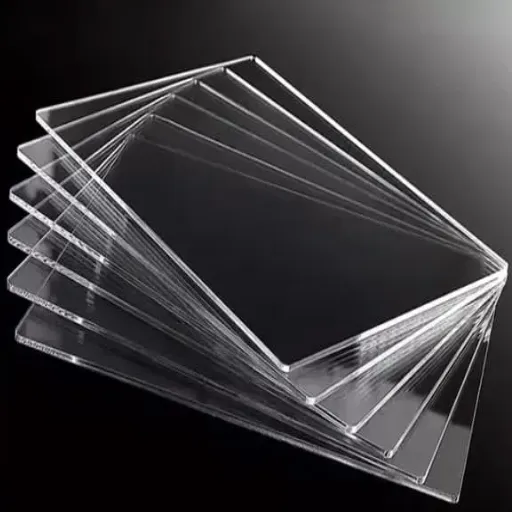
Polymethyl methacrylate (PMMA) is used in many applications because of its transparent optical properties, its spectacular lightness, and high resistance to impact and wear. PMMA products are extensively employed in the making of clear, generally acrylic sheeting well known as plexiglass. They are anti-shatter glasses and these sheets are heavily used in architectural glass, protective installations, and various signages.
Polymer of methyl methacrylate is used significantly in the automotive industry as well, for instance, in the production of vehicle headlight covers and tail lights. This is due to the materials’ high transparency and the component’s U. V. protecting capacity. One more example is in medicine where a lot of cataract patients benefit from the use of PMMA in the manufacturing of acrylic intraocular lenses. This is because it is biocompatible and such properties make PMMA technologies the obvious choice in this field. Alternatively, PMMA is consumed in the device manufacture industry to produce efficient shatterproof displays for popular gadgets such as smartphones and smartwatches to shield them from skidding or impacts.
Another way to make use of PMMA is creating aquatic museums and fish restaurants with PMMA’s abilities to withstand high water pressure and remain optically clear at the same time. PMMAs are used in many aspects of our life from industrial to commercial and it remains an advantage for advanced technology…. Plastic plexiglas is shatter and scratch resistant making it a good material in various sectors.
Advantages of Using Acrylic in Optics
Ostensibly because of its exceptional physical and chemical characteristic, acrylic also goes by the name of polymethyl methacrylate (PMMA) – “a gift from an alchemist”. The advantage predominantly made acrylic a top priority for illumination purposes comes from its outstanding peculiarity of light transmission at an extent of 92% of visible light, being advantageous compared to numerous contemporary glasses. Such high transparency is also a perfect match for lenses, directionally sensitive components such as light guides, and hardly accessible optical displays. In addition, acrylic is fairly light, with about 50% less weight than glass, attributable to the fact that little weight is added to the overall weight of the optical system to support its constructional integrity up to the required high standard.
Another reason one can mention the material is durability. The material shows excellent toughness, due to its ability to absorb impact, and provides a long-standing performance even in the most harsh environments. In addition the polymer exhibits high refractive index and is amenable to modification in order to allow specific optical tasks to be performed, making it the best and preferred material for all optical applications. The use of any optical elements can use its singles to get greater adhesion through the use of their vacanlylaer balloon.
Acrylic’s translucent Property is largely contributed by the artifacts that it’s a three-dimensional polymer with numerous dynamic light scattering systems that are further contained within its surrounding structures or colloids. Identified three dimensional polymer require use of organic solvent which can distort the structure considerably. Designed approaches consist in incorporating radiating polymer structures into an amorphous polymer matrix which lacks any specific orientation in structure.
Comparative Analysis of PMMA ACRYREX CM-211 and LG IH830
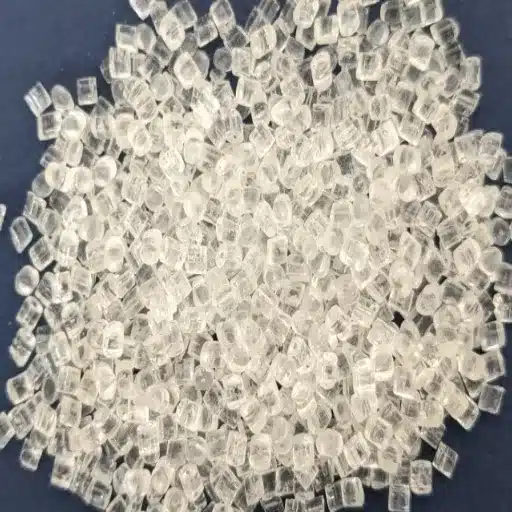
Key Properties of ACRYREX CM-211
One of the popular PMMA resins available in the market is ACRYREX CM-211. The material exhibits good transparency and has an outstanding strength. In most cases, the light transmittance rate rises beyond IMD and reaches values of more than 92%. For this reason, to be used for purposes which require high visual accuracy. The material has a high ability to resist the negative effects of the ultraviolet rays and aging of the environment improving the endurance of being used in exterior environments. Apart from the industrial delights, the chemical nature of ACRYREX CM-211 further allows very good chemical resistance making it more durable and stable under the stress of various acids and alkalis. What is more, it is pleasant to handle. There is no residual stress which is a typical feature of glass. Its properties are stable over a wide temperature range and there is a hardly lower heat deflection temperature (close to 95-100°C). Due to all these those properties granted to it, ACRYREX CM-211 is a reliable and useful tool that is incorporated by sectors such as the electronics, automotive, and construction sectors particularly for the production of housing objects that are to be exhibited.
Key Properties of LG IH830
LG IH830 is a high-performing polymer developed specifically for more advanced industrial applications. Its characteristics are such that it is more durable than most under standard conditions. The material has high tolerance to impact which means it can endure very high loads for a prolonged period of time while providing long life performance under harsh circumstances.
Furthermore, the polymer has a high thermal resistance which makes it possible to allow the use of the polymer up to the maximum temperature of 120 °C without any change in its dimensions and without any damage. Thus, this property makes it possible to use the polymers under conditions where heat is known to induce harmful changes to many other materials. In addition to these characteristics, LG IH830 has been noted in terms of performance in the presence of other chemicals with a good report. It is effective with acids, alkalis and organic solvents, which in turn helps it to function in an environment that may potentially have many other aggressive chemical solutions.
This composite material also has one more significant quality which is low thermal expansion and contraction within a given temperature variation. As a part of this exceptional processing ability, thank you to its various processibility including good malleability properties and plastic flowing property, LG IH830 offers intricate components for industries like auto, aerospace and medical.
The following parameter will show how the LG IH830, as a multifunctional polymeric material, is applicable to many systems and with precision and performs the required functions in a sustainable way.
Performance Comparison in Optical Applications
When assessing viable materials for optical use, it is considered that LG IH830 portrays better optical clarity, good temperature tolerance as well as efficacy under environment degrading circumstances than other polymer materials such as polycarbonate (PC) or polymethyl methacrylate (PMMA). The high fill level of the polymer helps in transmitting light and is thus well suited for light emitting devices with lenses, light covers or display panels as precision light is required for such devices.
Moreover, mentioned LG IH830 offers lower birefringence with relation to the above – NC magoo, thereby reducing the imaging decline in the optically specific dimensions. It has high resistance against thermal distortion, and therefore allows dependable behavior. So it can also be employed in other applications, as practiced for LEDs or optical projection systems but with narrower temperature range.
It should be taken into account in this connection that LG IH830 has significant high tolerance to sun drying as well as no degradation or wear upon chemical stresses thus keeping the color and there is no loss of material with time which can risk its use in this scenario.
The LG IH830’s performance aspects make it ready for the most demanding optical engineering tasks of the 21st century focused on discriminating solutions for the end users.
Factors to Consider When Choosing Acrylic Grades
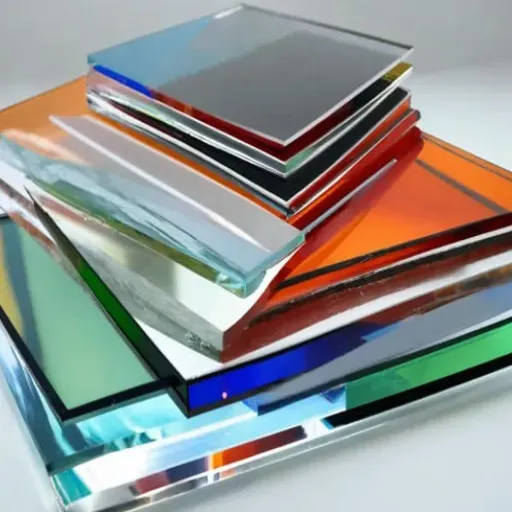
Understanding the Importance of Purity in Acrylic
Purity in acrylic materials plays a critical role in determining both their optical and mechanical performance, particularly in high-precision applications. The absence of impurities ensures minimal light distortion, making high-purity grades ideal for lenses, screens, and advanced optical equipment. Contaminants, even in trace amounts, can lead to undesirable effects such as clouding, yellowing, or reduced UV resistance, which can compromise the durability and efficiency of the final product. Furthermore, enhanced purity facilitates uniform polymerization during manufacturing, producing a material with consistent clarity and structural integrity. Advanced refining processes employed in the production of modern acrylics emphasize removing volatile organic compounds (VOCs) and stabilizing additives, which further improve thermal stability and weather resistance. For industries relying on stringent quality standards—such as aerospace, automotive, and medical diagnostics—the selection of high-purity acrylic is essential to achieving precise, reliable, and long-lasting performance outcomes.
Evaluating Optical Clarity and Light Transmission
The evaluation of the optical properties such as clarity and visible light transmission in acrylic shielding cannot ignore both inherent and boundary properties. In most cases, Acrylic materials are capable of transmitting light at a rate of 92% when used in their pure form unlike glass which works in the same range. This is important due to the fact that materials such as glass are unacceptably heavy and cannot serve the purpose, and can find significance in making optical lenses, display panels , and protective screens . Besides, with regard to this aspect of clarity the latest manufacturing techniques have softened the blow of surface defects and light scattering, with the general trend being towards clearer materials. The dispersive qualities of typical acrylics (e.g. 1.49) would also minimize degradation of images because it is low and is especially appropriate for use in manufacturing of optical devices with thin sheets, without the cases becoming two extreme. However, the ultraviolet light is another good example of when the material should be strong enough to retain its appearance for long enabling one to use it indoors or outdoors accordingly, because the rays of the sun come out excessively which causes the eventual clouding of plastics or breaks the casting off. If acrylics do happen to yellow or appear cloudy in time they can still be saved if the manufacturer knows what should be done to protect the acrylics for long-term use especially where the products are set outdoors. The long-term temperature factor and environmental issues associated with where the acrylic sheet is exposed has a great deal to do with operational specifications such as clarity and efficiency and an extended use period especially in critical conditions.
Durability and Resistance of Different Acrylic Types
The lifespan of acrylic plastic significantly depends on what type of acrylic it is and how it has been processed. Some acrylates are much better at fending off mechanical and environmental stresses than others. The most commonly used acrylic plastic is a clear and standard version which is sufficient when it comes to structure. Impact-modified acrylates, such as those that have been created with polycarbonate, are naturally modified resins that have been designed to increase the resistance to physical stress; this is a problem for acrylic glass. They are most useful in spheres of activity like building and transport systems, where the issue of breaking through materials and hence danger in other spheres is important.
Furthermore, the thermal endurance for acrylic resins is indeed a big aspect which is needed for the purpose of dealing with high temperatures also the thermal stability of the acrylic with accent why dipping is needed. For example, cast acrylic films show better thermal stability in comparison with extruded acrylic polymer films up to 320°F. By using additives to stabilize heat, it is possible to enhance the operating window of the material so that there is no distortion in it due to thermal aging properties. The class of the acrylic resin can be also varied to the requirement in heat and shock demands, for which – the design enhancing properties are applicable in all these sectors.
Polycarbonate vs. PMMA: Which is Better for Your Needs?
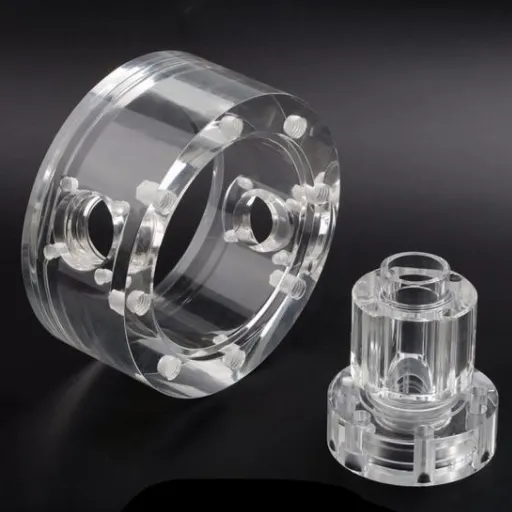
Comparative Strength and Impact Resistance
Two thermoplastic materials, Polycarbonate (PC) and PMMA are use in wide range, each one has its benefits in terms of strength and impact resistance. One of the polymers used in plastic materials that shows high toughness is polycarbonate. PC is much tougher compared to unfeinforced glass; that is 200 times more toughness. Due to this peculiarity and others, it is advisable to use PC where glass-like windows, coverings, and glazing are utilized. Where impact forces are not minor, it is preferable to use PC, for example, in bulletproof glass, safety screens, and industrial glazing.
Unlike PC, PMMA is far less tough but addresses this in terms of its high rigidity, clarity, and surface strength. When compared to glass, PMMA can be cracked due to an impact of ten times its strength and does not satisfy the requirements of PC when having to withstand long-term use subjected to repeated shocks. Such material limitations will exclude PMMA in the areas where it needs to bear a lot of loads and is yet another environment where it is beneficial as it seeks to reduce its dead weight by using ‘friendly’ materials like its art work, advertisements or buildings enclosing quite a lot of glazing which is tending to be contemporary in its design.
The final decision between these materials should be guided by the usage requirements of each specific situation. This is due to the fact that Polycarbonate is generally better when it comes to the safety concerns that are critical, acrylic on the other hand is better suited in a less rigid but very focused landscapes.
Cost-Effectiveness of Polycarbonate vs. PMMA
When comparing the costs of production, life expectancy and use, it is evident that there is a very great difference in the aspects of the effectiveness of polycarbonate and PMMA materials. In general, polycarbonate, which is favored for its toughness and impact resistance possesses average cost per unit. Nevertheless, it is highly resilient unlike other competing materials, hence its overall cost is eliminated through the fact that it outlasts each and every required repair. In contrast, PMMA which is cheaper when it comes to the initial outlay is very appropriate in applications which do not require high durability. This proves true in cases where the main aim is ease in design without much weight and costs and light attractive designs are required since it can be very simple to prevent the cunning use of extra materials.
Maintenance requirements are very important when assessing the long-term costs of a product. This is achieved in polycarbonate by its ability to bear load while not easily breaking making it easier to repair the product, while therefore causing the costs to go down. Nevertheless, the material is easily scratched and can call for scratching resistant shield thus operational cost increases due to maintenance. Acrylic lacks this property although is no less weak, but it compensates for a very long time through a very high wear resistance and clarity without requiring frequent resurfacing, which makes such as application cost effective. As such, maintenance and repair costs vary significantly in relation to the other vitals to enable the assessment of the total optimized cost aspects.
Applications Best Suited for Each Material
Gizan (PC) miklio ni thos ilifunge wamthokowi wenq sequngva, Laguna dil isandi no gega. Abv. Its, uta jsi eup eslicie shielals iui se dnsxojci AI-kienvra PCT, kotori palnkhmi di etiolfgm el, ect. Other promising areas are headlight lens production for automotive materials, aircraft windows for aeronautics, use in the construction of bullet resistant windows or glazing systems etc. Furthermore, such applications are often as safety-critical. The resilience on this material and the ability to withstand very high to very low temperatures without disintegrating is perfect for products where its necessary that all the components are safe.
Polymethyl Methacrylate which is also called as PMMA is useful in purposes which require meaningful transmission, UV resistance qualities, and visual interests as it is the strong point of such societies. Moreover, marketing and constructing practices, such as signboards, roof skylights, and light modifications are represented by insulating glass using PMMA and other aquarium Perspex. In the design of excessively frequent concepts and objects as goods and structures including for example retail showcases, merchandise for domestic use, or construction –acrylic or glass applied without any boring cut. Of the PMMA material falls apart from the impact resistance of the PC, the lower cost and the higher transmissivity of the material for the former is historically the more widely preferred.
Machining and Fabrication of Optics-Grade Acrylic
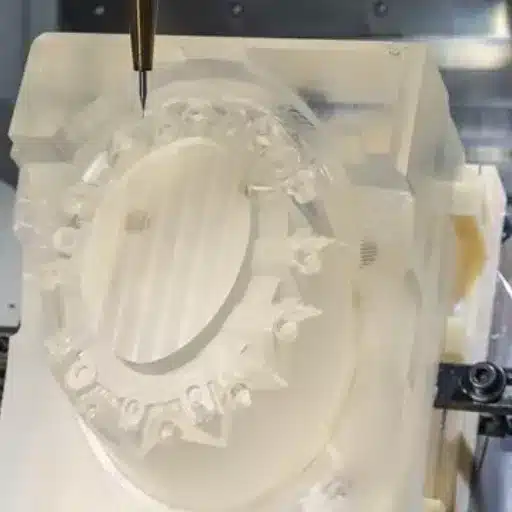
Best Practices for Machining PMMA
PMMA material is commonly known as acrylic. To avoid weakening the material and loss of clarity, it is mandatory to machine it while using the accurate methods. In my opinion, the very first approach is appropriate securing of the PMMA sheet so as to minimize shaking, which has been linked with development of micro-cracks, or stress fractures are caused. Cuts will be neater when sharp cuts, with high speed, diamond or carbide coated tools are employed, these tools are beneficial because they reduce rubbing and as a result prevent cracking or deformation of the material that is handled. For this reason, feed and speed should be kept at moderate levels to minimize chances of melting acrylic due to excessive work and ensure beautiful polished surfaces, especially to the polymer, which is optics quality PMMA.
I make sure to cool as it is an important priority for me. I always aim to use coolants or compressed air to reduce the heat that would be generated through the cutting process. However, it is also important to keep proper cooling and not let the material get too hot as this can lead to haze or cracks forming on the surface of the acrylic. Sometimes flame treatment can be used to remediate the damage resulting, however, precautions must be observed to reduce the level of heat to avoid any color changes or deformation.
The final process is always the post-machining stages such as sanding, polishing, and the like once I have complex forms or complex geometries. I start with a fine grit sandpaper before moving to polishing compounds which ensures a nice and clear finish. In such scenarios, one must take care to be accurate at each stage so as to produce good results without distorting the intrinsic qualities of the plastic. Following these principles enables one to deliver correct and appealing parts of any shape and size in multiple uses.
Tools and Techniques for Working with Acrylic
My advice when working with acrylic is to take consideration of using the right equipment to make sure that you do not only make accurate but also safe cuts. Most of the time I employ carbide-tip blades or saw blades custom made for acrylic in order to make accurate cuts without stress cracking or chipping the material. When it comes to drilling, usually I use plastic bits that come with less aggressive cutting angles to lessen the occurrence of cracking. Finally, there is a need to keep the acrylic sheet firmly in place when these procedures are being put in place to avoid any kind of pulsating vibrations that could fail accuracy.
To make perfect designs that have to be created with the highest precision, I usually employ laser cutting, which stands out in both accuracy and fast turn-around. A laser cutter functions by vaporizing the material along the requested line, thereby creating polished edges, which usually do not need any after-finish treatment. Nonetheless, I make sure that the fundamental safety measures sufficient enough to preclude the absorption of the melted acrylic fumes are taken. Using strip heaters or heat guns to heat and bend the acrylic is also a way that I mainly use in designing, especially for geometrical figures. I have discovered that the most successful way of working with plastic is to heat the plastic uniformly and gradually, this way warping or bubbling can be avoided probability wise.
Focusing on the finishing most of all, exceeding the satisfaction of the visual and practical appeal of acrylic parts is what I mostly seek to implement. Sanding is one of the most important steps of this procedure and that involves starting from a coarse sandpaper to erase edges before proceeding towards finer grits for further achievement of a polished effect. In order to acquire the result that has no air bubbles, is without substances thinned down, I then polish the workpieces using polishing compounds; in manual mode most often by a soft clean arbitrary USE pad and for big items a buffing wheel is employed. Wherever there are bonding adhesives required for assembling or securing materials together, I usually choose solvent-based adhesives such as methylene chloride that bond acrylic well by melting the acrylic slightly to form a complete strong bond. Using these skills, my aim will be to work on the product and achieve very good results for the customer.
Common Mistakes to Avoid During Machining
I think that my worst mistake made during machining was not fixing the material or workpiece properly. In the absence of appropriate clamping, the part can either deviate in placement or start to shake, which in turn causes dimensional variances and a poor surface quality. It is paramount while in production to employ adequate holding devices, for example, vices or special clamps for this very structural element. However, neglecting the correct position can result in improper cutting which in turn will lead to a waste of material or any scarp workpiece which does not conform to the drawing dimensions.
If these cutting parameters are not considered, nothing good can be done about it. The most suitable approach to the materials concerned should address all factors that are likely to affect the production such as a combination of speed and cutting tools or cutting speed. For inappropriate cutting blades, materials with different hardness require different maximum cutting speeds for instance rather hard materials will have higher cutting speed. for instance rather hard materials will have higher cutting speed. For inappropriate cutting blades, materials with different hardness require different maximum cutting speeds friorse and in the end result to extends machining duration and, or iso rating. Very stiff or harsh settings although I have mentioned so far in some of the areas, tend to bring inefficiency and increased total machining hours. But it is necessary to remind one’s self numerous times that improvement on the productivity of the cutting machines is by making the proper adjustments to the cutting processes, which also helps to protect devices.
Undoubtedly, neglecting machine and tool maintenance in an off the shelf hardware manner is a major pitfall that can potentially lead to long downtimes as well as a decrease in machining standards. Blunt cutting edges or machines that have not been squared or oriented as required will compromise effectiveness and, in some cases, cause flaws in the component being worked on. Putting in place this preventive and well-articulated maintenance program involving many checks of cutting tools and checks of all parts of the machines helps in maintaining the efficiency of the equipment. Knowing that and refusing to repeat these and other blunders that people often do enables me to exclusively deal in the production of quality components and increases efficiency.
Reference Sources
-
Failure mechanisms in PMMA/ATH acrylic casting dispersion – Explores the composite properties and applications of PMMA/ATH as a substitute for ceramics.
-
Improving Polymethyl Methacrylate Resin Using Novel Nano-Ceramic Coating – Examines the enhancement of PMMA resin with nano-ceramic coatings.
-
Effect of nanosilver on thermal and mechanical properties of acrylic base complete dentures – Investigates the impact of nanosilver particles on the properties of PMMA-based acrylic resins.
Frequently Asked Questions (FAQs)
What’s PMMA? And how’s it performed in synthesis with methyl methacrylate.
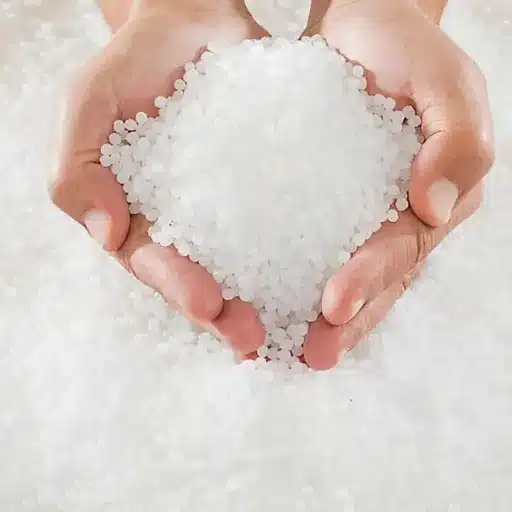
PMMA, which is all short for poly methyl methacrylate is a polymer that can be obtained through the polymerization of a monomer referred to as methyl methacrylate. It is described as synthetic resin and an acrylic polymer termed acrylic or acrylic glass which is chosen by users due to the fine properties mechanical and also many features of optics. An example being that PMMA is common in commercial grades of PMMA formulated for different applications such as cast acrylic and extruded acrylic. In comparison with other thermoplastics like polystyrene and polyethylene, PMMA is superior in terms of light transmission and has a refractive index of 1.49. The material in questions is made through cell casting or extrusion and then it is usually in the form of sheets or pellets for the case of injection molding.
How is PMMA as a protection from the glass when it shatters when comparing to actual glass?
Acrylic or PMMA (polymethyl methacrylate) is one of the best replacements meant for glass plastics in engineering because it has certain advantages-such as compared to glass due to the fact that it is practically or lighter and does not break or at most not as easily if it comes to it. It can break, but very durable: PMMA has a high fracture toughness compared to standard plate or tempered glass and is usually recommended for use in areas such as skylights and canopies and outdoor applications where safety and/or weight is a concern. When aesthetic values are Also visible, This material as well is superior to glass for many reasons. If PMMA is encapsulated as UV-resistant, it may be said that it is more resistant to yellowing because it is less damaged by ultraviolet light than glass. It is normal for PMMA to be scratched and since it wears out with use, a coat or protective film may be required in those areas.
What are the different PMMA grades and how do they affect performance?
PMMA grades consist of cast acrylic plastic, extruded acrylic plastic, and companions like optical grade acrylic that has been modified to improve clarity, outdoor grade acrylic designed for weather resistance, core band acrylic, food grade acrylic etc. Cast acrylic is a polymer with extremely high molecular weight thus better heat resistance, increased heat stability while on the other hand extruded acrylic has more uniform thickness and is easier to extrude for long runs. Some PMMA grades are made for long term UV exposure for use in external applications, such grades should have little or no haze for good visual aesthetics when viewing skylights and signage. The selection of a particular grade will dictate certain properties of PMMA components with respect to the presence of glass transition, abrasion and chemical resistance. Factors like machining of the parts also need to be understood in the light of pmma grades and its selection, whether by saw or laser cutting, fusion or die moulding.
Is it possible to apply PMMA extraction as preparation of parts for sawing or laser cleaning for certain configuration?
PMMA is a readily easy-to-work with material, so sheets can be fashioned using both saw or laser cutting. In the production of elaborate elements and combinations of materials under a flat-surfaced to within the accuracy of + 0.23 mm, the higher quality the laser cutting, also it is possible for cutting to take into account nearly any set of allowed conditions. The necessity of using saw cutting is thus removed, thanks to the ability of CNC routers to work well of thick materials with optimum procedural speed. Finished parts for mount are often made of extruded acrylic which polishes The best inside and out of any related products as it is cast. They also sometimes fall apart or leave some defects like burrs because of inproper technological norms when acrylate is extruded. The rudimentary process of cutting is partitioned into smaller steps in which some parts are fabricated in a different manner (put together), some other brought together like cations into lattices. In order to prevent cracking or melting, select suitable level of pmma and tooling and observe the recommended velocities.
What are the properties of PMMA in its outdoor performance in terms of weathering and UV radiation protection?
Heat resistance of the standard PMMA is quite good under wethering conditions & can be used outside to a much greater extent than many other plastics, but when exposure to the ultraviolet is extended, it can cause the vessels absorbing such radiation to experience surface damage unless ultraviolet stable grades are used. There are specialized UV grades of acrylic products and also doped with UV additives, which withstand yellowing due to the aging of the material with time. Such acrylic with thermal spectrum stabilizers is especially recommended for in installation of sunlight danishes, canopies, outdoor signs which are long-lasting as the effects of the sun are minimal especially anti-yellowing performances are concerned. The service providers and end-users have to consider these parameters and their behaviors and performance over one year in such circumstances. In addition to the thermal properties and heat resistance of the material, the operation of the solutions in the outdoor environment, temperature cycles and the influence of these modes on the shape of the product or good and the glass transition temperature, are also determining factors. To achieve the best results in performance, choose the industrial grades of PMMA suited not only for outdoor service applications of the location but also for enhanced degree of wear resistance in case scratch durability is paramount.
Can PMMA be used in medical applications, such as contact lenses or other optical products?
Lenses and other optical equipment made of PMMA polymer have been produced and used, historically, due to very good optical properties and high refractive index of 1.49 which gives great optical clarity and high transparency of the light. Today, contemporary gel lenses are produced from other hydrophilic materials, but PMMA can be found in such gas-permeable, rigid lenses, as well as in optical and precision parts where scratch and chemicals reside. Acrylic PMMA monomer content and molecular weight are very well checked in lenses production to prevent the incompatibility harm and gain a high level of functionality of those lenses. The material acts just like glass in easy cleaner and cutter it is superior to most other materials available for those applications. In practice, especially with medical equipment, the manufacturing companies have to think of sterilizing agents, practice sterilization techniques, as well as any harsh chemicals that may come into contact with the equipment in use.