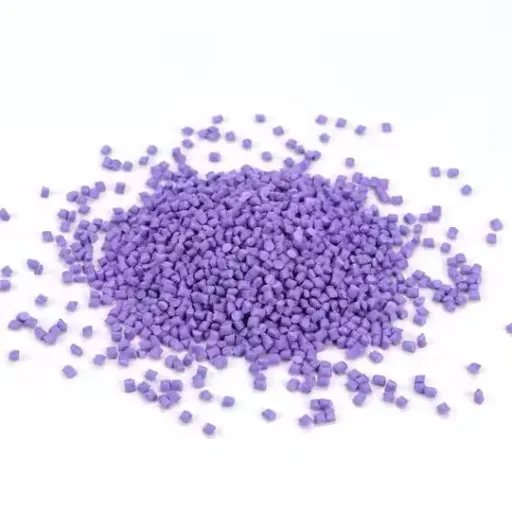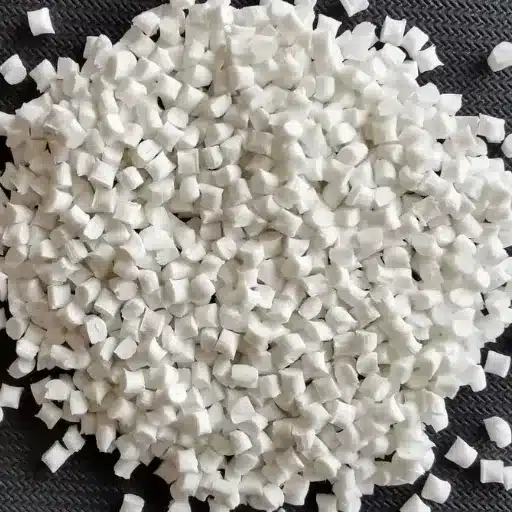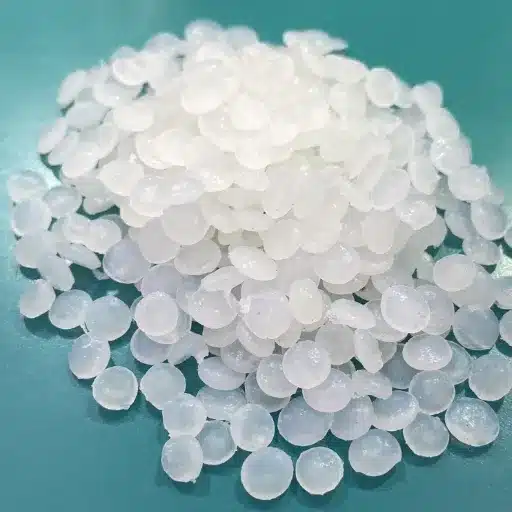

While it is true that plastic is commonly used for kitchen materials, not all types of plastics can be used in a microwave oven PS6 (polystyrene) is one such type of material that is always queried as to whether it is safe to be used for microwave heating. In truth, it may not be all that safe after all and might be a hidden health risk for your family and your food. This article is going to address the PS6/microwave myths and misconceptions problem, not only without but with a very detailed and carefully science-backed analysis of its behavior. Once you finish this article, it will be a very different PS6 story for you; one that will not only tell you how safe cooking with PS6 is but also that it, nonetheless, carries some health risks. Either you are merely warming up leftovers or you are cooking an entire dish, it is very important to select the right material for your kitchen and we welcome you to take a peek at our step-by-step presentation on the subject.
Understanding Microwave Safety
What Is the Definition of Microwave Safe?
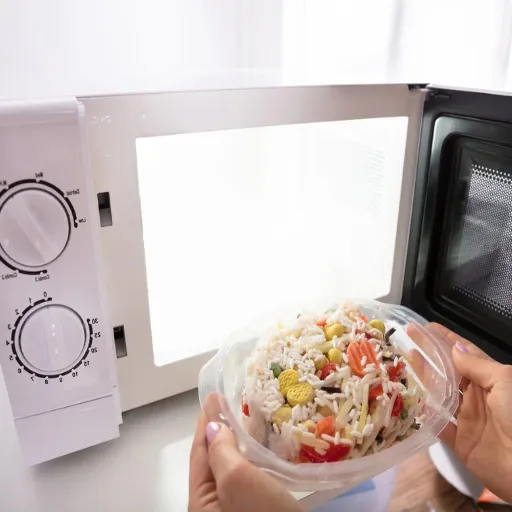
Microwave-safe materials are materials with properties of surviving the heat and electromagnetic radiation produced inside a microwave oven without losing their quality, strength, structure shape, melting, or leaking harmful chemicals into meals. The materials must be able to hold their structural integrity and avoid the penetration of chemicals that could be harmful to health. As an example, if not microwave-safe, plastics may get distorted or release unwanted compounds such as phthalates and bisphenols which may result in food safety issues. On the other hand, microwave-safe containers, e.g., labeled as such, are tested thoroughly against related standards to be approved. It is very important to know these things for the safety of our health and the longevity of our kitchen utensils.
Advantages of Using Microwave Safe Containers
Medical issues have the possibility of developing if you are negligent in your choice of food containers. This is because the heating process can cause the migration of harmful substances from the containers to the food. When heated, some plastics start to release compounds like bisphenol A (BPA) or phthalates that can have endocrine-disrupting properties. These substances may cause a hormonal imbalance which in turn may result in a number of negative effects like among others, reproductive issues and metabolic disruptions. As a consequence, some of the containers may fall apart or lose their strength and thus spoil the quality of the food and make it contaminated. The risks can be minimized through the use of safe microwave-tested containers, thus upholding the nutritional aspects of the food and keeping away the heat-generated toxic chemicals. Hence, incorporating the use of these guaranteed-to-be-safe materials is a very useful habit to support both health and safety of the food chain in the long run.
Common Misconceptions About Microwave Safety
There is a very common misunderstanding that microwaving food entirely removes the nutrients in it. However, the nutrient loss that can occur from heating is only similar to that happening in cooking methods like boiling and steaming. Studies have shown that microwaving can really keep more of the heat-sensitive nutrients, for example, vitamin C, because of the shorter cooking times. Another widespread misconception is that the microwave radiation makes the food radioactive which is not only scientifically incorrect but even baseless. Microwave ovens do not actually change the food molecular structure with the use of non-ionizing radiation. There are also often exaggerated concerns about the microwaves leaking dangerous radiations. The microwave ovens nowadays are designed with strong shielding and strict safety rules are ensuring that any possible leakage is kept way below the harmful levels. Constructing the based on these truthful premises can deter the apprehensions and lead to the informed and safe use of microwave technology.
Types of Plastics and Their Microwave Compatibility
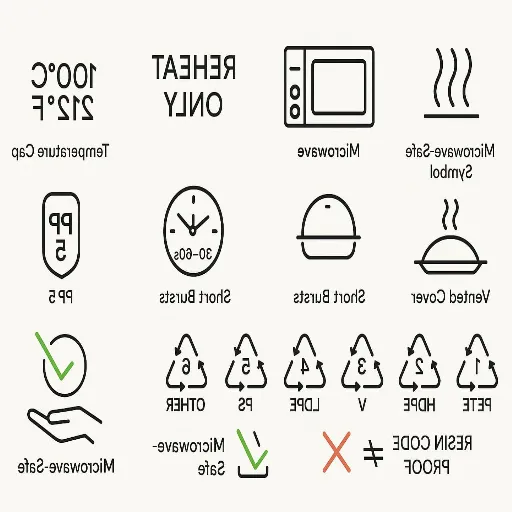
Overview of PS (Polystyrene) and PS6 Plastic
The polystyrene (PS) polymer has a very wide use in various industries due to its property of being cheap and light in weight. It can easily be molded into different forms and is, therefore, one of the most used materials in the cutlery, packaging, and foam insulation industry. However, the chemical structure of polystyrene is not very friendly to the microwave as it may transform into or get separated out of toxic compounds when hot conditions are applied, particularly in food contact applications.
⚠️ Important: PS6, which is a fraction of polystyrene defined through the recycling codes, is the popular term for polystyrene foam mostly. When put under microwave conditions, these substances are more vulnerable even to heat-created deformations and chemicals leaking. The low melting point of PS6 products is one of their features; for this reason, they are not suitable for uses that require high temperatures or that last for a long time. The plastics industry is strongly advised against heating styrofoam and PS6 in microwave ovens to avoid possible contamination and protect consumer health. Choosing microwave-safe alternatives, i.e., ceramics or glass, is still the best food and liquid heating practice.
Microwave-Safe Plastics: A Breakdown
Plastics that are safe to use in microwave ovens are built in a way that they can endure the high temperatures and fast and drastic changes in heat during microwave cooking without getting worse or discharging dangerous components into the food or drink. They are characterized, as is the case of polypropylene (PP) and various polyethylene (PE) materials, by their high melting points and resistance of chemical changes. These types of plastics oxygenize very well and still they are not attacked by chemical agents. In addition, the FDA and other regulatory bodies carefully set up the terms of safety standards that all plastics of the kind must comply with.
Microwavable plastics are usually identified by particular marks, like a microwave logo or a resin ID code showing suitability. Nevertheless, the thing to keep in mind is that even if the plastic is safe for the microwave, it may still have limitations, e.g., not heating it too much or not allowing it to come in contact with fatty or acidic foods that might lead to chemical leaching and an increase in the risk. Proper treatment and following the guidelines of the manufacturer are very important for the safety and functionality of the products in the microwave.
Identifying Microwave-Safe Containers
The search for microwave safe containers is a serious issue and should be based on several important factors that have been evaluated through scientific methods. The majority of microwave containers are labeled with a well-known mark, for example, the microwave safe symbol, which usually looks like a wave or a set of lines representing the resistance to heat. Also, glass, some ceramics and plastics produced for microwave oven use that are ‘designated’ as such are usually perceived as good, safe and reliable. The identification of the container’s base by the resonance of codes as the example of polypropylene (#5 or PP) makes an evidence of microwave-safe acceptance in most cases, under normal conditions.
Moreover, the structural integrity of the container and the presence of specialized features, i.e. ventilated lids, which release pressure during heating thus preventing cracking or warping, are the major points to be taken into account. What comes out of the investigation are the poor consequences of the use of non-microwave-safe materials like weak plastics or those that have bisphenol A (BPA) as one of the ingredients. The nearness of the container with the light are one of the factors that contribute to chemical migration and food contamination. It is recommended that one should not use containers with easily noticeable physical marks, cuts, or color changes, as any of these can be a source of their safety and efficiency compromise. These factors, when strictly followed, can lower the possibility of danger and increase the efficiency of microwave use to a great extent.
Microwaving Styrofoam: What You Need to Know
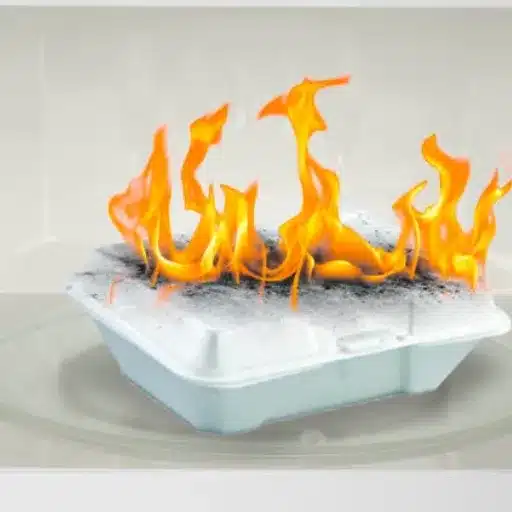
The Risks of Microwaving Styrofoam
Microwaving Styrofoam poses significant risks mainly because it’s made of polystyrene, a synthetic polymer that can be emitted in high heat which can result in more than 50 hazardous compounds being generated. The ordinary use of Styrofoam containers is not intended for the temperatures found in microwaving thus causing the containers to melt, become deformed, or disintegrate. The last option mentioned above, when it takes place, is the most immediate danger to humans as it could lead to the release of cancer-causing toxins such as styrene and benzene.
🚫 Danger Alert: The wrong usage of Styrofoam in microwaves can result in food getting contaminated with particles, which harms its quality and its safety. The so-called “microwave-safe” specialized Styrofoam has to pass the hard tests in the first place to meet the safety requirements, but it is still necessary to follow the instructions as far as for short heating times and low temperatures to take away any potential health threats even with these products. The weight of scientific evidence convinced that one must always follow the direction of the manufacturer, take care to not expose for too long, and think about different materials that are resistant to heat for the container when warming up the food with a microwave.
Alternatives to Styrofoam Containers
Different kinds of materials have been brought forward as good, reliable solutions to Styrofoam containers – a situation that takes care of the problems of health and the environment at the same time. An example of such a container is the glass one, which is very safe, heat-proof and does not react with the food chemically at all, thus being the perfect material for microwave use. Equally, stainless steel containers are a great choice for they are the most durable and least affected by high heat, even though they are not recommended for microwave use. The emergence of silicone-based containers, which are getting more and more popular, has shown that the new materials have excellent stability and can be moulded into the most various shapes without deteriorating the structure.
Eco-friendly options, such as bagasse and molded fiber containers made from sugarcane fibers, are biodegradable materials, and they will decompose under composting conditions. The decayable nature of these materials makes them a perfect fit for single-use applications and a contributor to the minimized amount of waste going to the landfill. In contrast, the packaging of food with plant-based plastic, such as polylactic acid (PLA), is now a very common event, but they can only adapt to the temperatures that are allowed. So, the mentioned options are an indication of the progress in material diversity and show that customers are also moving towards usage of products that are safer for the environment.
Safe Practices for Using Styrofoam in Microwaves
Using Styrofoam, also known as expanded polystyrene (EPS), in a microwave, you have to follow the specific provided guidelines to maintain both the safety and the quality of the food. Only those Styrofoam containers that are explicitly labeled microwave-safe have been tested and approved to tolerate the exposure to microwaves without causing any harm to their structures.
✓ Safety Guidelines:
- The microwave-safe Styrofoam is structured to resist heat to some degree but prolonged heating or the exposure to very high temperatures may cause it to decompose or let chemicals out into food.
- It is wise to skip the heating of fat or oily foods in these containers, as such foods can easily reach the high temperatures that are above the container’s heat resistance.
- Moreover, always ensure that the container is in the best condition possible and is not cracked or damaged; because fragile materials are more likely to release toxic substances when heated.
- It is the safest choice to move the food to a microwave-safe glass or ceramic dish once it has been heated, and you are aware the container it was initially placed in was not suitable for microwave usage.
Exploring Other Microwave-Safe Materials
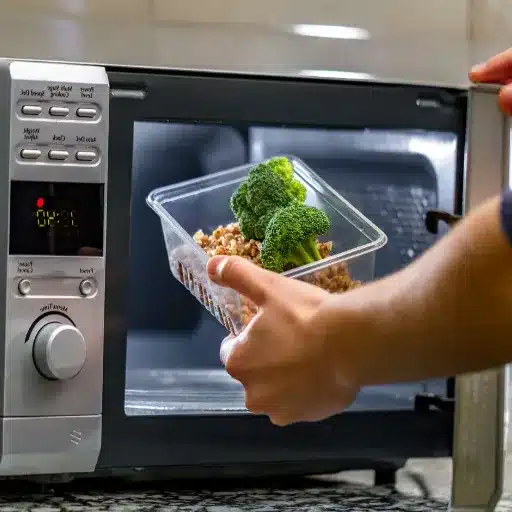
Polypropylene and High-Density Polyethylene
Both Polypropylene (PP) and High-Density Polyethylene (HDPE) are among the most used microwave-safe plastics, the two having in common the feature that they are chemically resistant and stable up to high temperatures. Polypropylene, the type of plastic mentioned with the recycling code “5,” has a melting point around 130°C (266°F) which makes it able to be in touch with moderate heat but does not get deformed or does not release harmful substances. For these special reasons, it can be utilized for making microwave-safe containers, lids, and other food-related products.
HDPE stands for High-Density Polyethylene, and the plastic is identified by the recycling code “2.” It is particularly durable, has a great tensile strength, and is resistant to chemicals. One can see that the melting point of the HDPE is at around 120°C (248°F) because food can remain in the microwave for the reheating process and there is no change in its appearance. Along this line, the plastic is processed that way to keep any chemical migration under control as long as the food remains in the recommended temperature and time. Still, this indeed is a rare case; we still need to check with the manufacturer for confirmation and indication that a certain product can be placed in a microwave. This way, one can seal all the warnings and security measures and keep the product from being affected in a negative way due to the microwave.
Polyethylene Terephthalate Explained
Polyethylene Terephthalate (PET) is basically a plastic material which is quite widely used in a number of different applications, majorly because of its properties, such as strength, toughness, and chemical resistance. Among the most appreciated areas where it has been used are the production of beverage bottles, food containers, and synthetic fibers. Its lightweight characteristic is the main reason for choosing PET for many different usages. On the molecular scale, PET consists of repeating ethylene terephthalate units responsible for its stiff and heat resistant structure.
The envent of the use of the PET material in manufacturing has increased the possibility to recycle it due to different types of technologies such as mechanical and chemical ways which has contributed to enhance its environmental-friendly status. After PET is recycled, it can be turned back into several types of goods including textiles and packaging materials, therefore reducing the environmental problems. Moreover, the material is going to be used in the future for food and beverage preservation as it stands still in terms of being resistant to water and air. On the other hand, the user has to be careful with PET being susceptible to temperature because it might lead to a decrease in the material performance and, in certain cases, the release of toxic chemicals in insignificant amounts. Being aware of this characteristic is critically important for both industrial and consumer users to take proper and safe use of PET by informed judgments.
Best Practices for Using Various Microwave-Safe Materials
It is very important to pick the correct one for using microwave-safe items, keeping in mind that the properties of each component and the specific finishes it may have on it need to be taken into consideration so that both – safety and functionality – are ensured. The glass, for instance, is the most common and generally used option for the microwave due to its chemical stability and resistance to temperature change. Still, glassware needs to be checked for cracks and chips as they might get worse with heat and finally cause the glass to break.
Also, ceramics are a fantastic choice provided you are using labeled as microwave-safe ones. On the other hand, ceramics that are not microwave safe might have metal parts or lead-based glazes. Therefore, heating them in the microwave may result in the leaching of harmful substances or the creation of arcs. Plastics are among the most delicate materials that can be used in the microwave, and one should always use only those appearing with explicit microwave-safe labeling. At the same time, it is better to avoid putting very oily or sugary – thus possibly high-temperature- foods in them as well and they might get deformed or the leaching of chemicals might be accelerated.
Silicone cookware, being very receptive to heat and without reacting, is also a very good choice; nonetheless, poor or very flexible designs may cause heat to be applied unevenly. It is also necessary to keep an eye on such materials as paper or parchment, as they can turn into a fire hazard when inadequately used for a long time or in high-temperature settings, even if in general, they are microwave-safe cesions.
It is vital to always strictly observe the recommendations of the manufacturer for every product and material as the safety of microwave operation is based on that. In this regard, it is advisable to completely stay away from aluminum foil, use of metal utensils, or having containers with metallic trims as the measures will prevent the damage of the oven and remove the spark risk. Further, the care taken by the user in terms of the selection of ovenware, monitoring of the temperature, and assessing the usage conditions will reduce the risks to a minimum and at the same time will ensure full utilization of the system and the quality and safety of meals.
Safe Cooking Practices in the Microwave
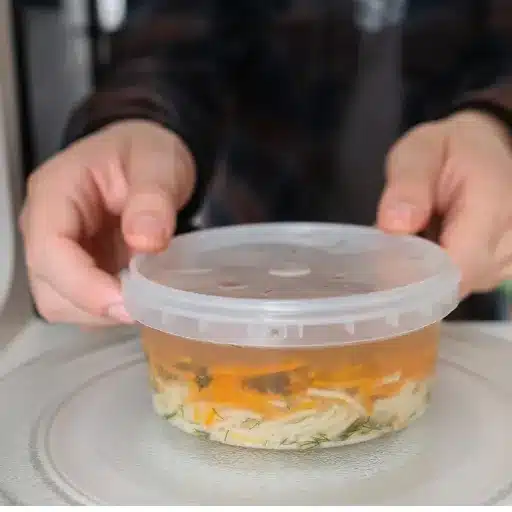
How to Avoid Toxic Chemicals in Microwaved Food
Microwave-safe containers specifically designed for heating are the first line of defense against exposure to harmful chemicals during microwave cooking. Glass, ceramic, and BPA-free plastic are said to be the safest materials, but they leach chemicals. There are no safe plastics for any purpose. Do not use plastics that are not marked as microwavable, as the safety precautions are likely not to be observed by manufacturers of these plastics. Some of them can release such cancerogenic chemicals as phthalates or Bisphenol A in the cooking process, among others.
Besides that, covering the food with wax paper or microwave-safe lids is better than the plastic wrap as it can also lead to the release of chemicals by melting during heating. Especially if the food is high in fats or oils, it will make the compounds draw out even more. For the extra step of providing safe cooking we can ensure that no part of the container or the lid touched the food directly.
Maintaining proper temperatures and avoiding overheating are the last but not least ways to limit the degradation of materials and the potential migration of chemicals into the food. Regularly inspecting microwave-safe items for damage, such as cracks or warping, will ensure the container’s integrity is not compromised. The risk of chemical contamination can be reduced and the healthy microwave cooking issue can be made a priority by the people through such practices.
Tips for Microwaving Different Types of Food
Whenever I use the microwave, I adjust the settings and methods for the specific food type to get the best results. For example, to reheat leftovers, I would like to place the food in a microwave-safe cover or wrap to retain moisture, which in turn will help prevent the food from becoming too dry. Stirring or rotating the food includes the heating time and makes sure that heat is distributed evenly throughout the food and no hot spots are formed which can cause burnt or cold parts in the dish. I also steer clear of using plastic wraps that are not labeled microwave-safe as they can leach harmful chemicals when exposed to very high temperatures.
One thing I always do for the most delicate foods, such as vegetables, is add a small amount of water and use the microwave oven in a series of short cycles at a lower power level rather than the usual one-shot, high-intensity heating process. Concurrently, soups, stews, and other foods with high water content do very well being heated on medium power. In my experience so far, I have always paused the heating process for a few seconds to give it a gentle mix before and after microwaving. When it comes to these types of food, the frozen meals, and the casseroles, one trick I use is first to defrost them in the microwave if they need thawing and then increase the power level slowly until it is just at the right point.
I am also cautious with eggs and liquids, as they are the ones that most often cause splattering or overheating. Making a hole in the egg before you put it in the microwave, or using a vented lid for liquids, can help reduce these accidents. The treatment of food depends on its type, and by strictly following the recommended procedures, I can confidently say that my microwave use is more efficient, safer, and produces food of the same quality every time.
Storing Food Safely for Microwave Use
When it comes to storing food for heating later in the microwave, my first thought is the safety and quality of the food itself, which I try to achieve by reducing the risks and maintaining the core of the food. The most basic measure I take is that all the food I put in storage is only in microwave-safe, airtight containers made out of materials like glass, ceramic, or microwave-safe plastics. In this way, the use of containers that are expressly labeled as microwave-safe rules out the possibility of the heating process causing harmful chemicals to leak into the food. Moreover, the use of domestic hot water and liquid dishwashing detergents, combined with soda ash, for the washing-up operations in households that are not served by municipal water-treatment plants must take care to maintain pH within the range for effective disinfection.
Perishable items are refrigerated right after cooking or buying but within two hours to avoid bacteria from breeding and spreading. I will split large portions of the food into small shallow containers, thus fastening the cooling process and the convenience of placing them in to-be-heated or served sizes. Labeling of the frozen food containers with dates helps keep a record of the duration a certain food has stayed on the refrigerator track and that the food falls in the safe-to-eat timeframe, i.e., 3-4 days for refrigerated leftovers being consumed. Freezing is the way to deal with the long-term food preservation as this forbids bacterial multiplication and keeps the food edible for longer in a condition that is almost the same as when it was ready to be eaten.
And, the point is I keep an eye on the storage condition of different food types so that their quality can be maintained while reheating. I, for instance, always seal high-moisture foods tight so as to prevent dehydration and freezer burn in their storage. Likewise, I never try to pack foods very closely in the containers as it will become difficult to have them evenly heated during microwaving. These steps, when taken, enable not only the safety but also the best performance of food when it is reheated in the microwave.
Reference Sources
- Plastic Food Container Safety – PMC
Discusses the safety of microwaving food in PS containers and highlights the importance of using microwave-safe designated plastics. - Effect of Microwave Heating on The Migration of Additives – RIT Repository
Explores the impact of microwave heating on packaging materials, including the migration of additives. - Is it Safe to Microwave Plastic? – Beyond Plastic
Examines the risks of microwaving plastic
Frequently Asked Questions (FAQs)
What aspects should I consider when faced with 5 different plastics and have to choose which one to use as the microwave-safe container?
The category of “the 5 plastics” corresponds to polypropylene (PP), frequently marked with the number 5 or “PP” at the bottom, and it ranks as one of the safest plastics for use in a microwave. The microwave-safe symbol and either the number 5 or PP plastic marking should all be present on a container that is safe to use for microwaving. Nevertheless, some thin plastic articles and plastics that are not labeled, as well as certain food packaging, are not suitable for prolonged microwaving. They might soften and / or release harmful substances into your food. For case of just heating up food, there is no safer option but glass or ceramic containers, or those predetermined to be microwave-safe plastics. If in any doubt, always, put the hot food on glass or ceramic that would greatly minimize the chances of any chemicals from the plastic transferring to your food
Do microwave-safe containers remain safe even after being continuously heated in the microwave?
Repeated use of the microwave can cause some types of plastic to wear out eventually and thereby cause more chance for chemicals to be introduced into the food. Even the plastics that claim to be microwave-safe can eventually wear out, warp or scratch, having them to be bacterially-infested or alter the nature of the plastic’s reaction with hot food. Be on the lookout for signs of spoilage and always opt for the use of the microwave-safe packaging while also following the PP or number 5 as the key indicators. In case the container has been discolored, warped, or is emitting an unusual smell, avoid using any that is made of plastic and switch to containers made of glass or ceramic. Eating between a quite regular switch (glass and or ceramic food carriers) is considered as good food hygiene practice.
Is it safe to use glass or ceramic containers instead of microwave-safe plastic containers?
To best preserve health, large or ceramic containers should be used to store the food due to the fact that chemicals do not migrate from these materials when the food is heated. It is quite an established fact that glass or ceramic containers are the best for the case of the reheating food and all ready meals that are microwaved, this is especially for hot food and liquids. If plastic is the material you prefer, the best choice will be the ones clearly marked with PP or number 5 and the microwave-safe symbol. The use of throwing away single-use food packaging or the ones with a thin plastic bag for the microwave oven should be avoided as they are not protected by heat resistance coating. For the sake of food safety alone, let alone the hassle of keeping them separated later, the best choice is to always make glass or ceramics the go-to for microwaving.
Are any plastic products, such as plastic cutlery or plastic storage containers, allowed for microwave use?
Plastic cutlery and various plastic food packaging items were not meant for microwave usage and are supposed to be seen as disposable rather than microwave safe. Food storing containers built of PP plastic and displaying the microwave-safe symbol are correct for microwave reheating and transfer of food, but it is always wise to refer to the manufacturer’s instructions. The microwave should not be the home of those flimsy plastics or unmarked plastics, as they probably will bend or give off chemicals around your food, these are the things we do not need. For the sake of the best food safety, use microwave-safe containers or glass or ceramic containers for microwaving specific foods and drinks. Also, one must always first make it sure the plastic container is “microwave safe” and has no defects in them.