After completion of acquiring or processing engineering plastics, most likely one may have experienced an annoying moment in demanding a decision for polycarbonate versus acrylic. Both of them are transparent and easy to use, although distinct in the facility and in the end product in which the processing takes place. This post provides a data-supported comparison from the perspectives of sourcing right and for manufacturing. This is the point at which you will learn the exact differences in optical clarity, impact strength, processing needs, and the financial aspect of the investment. You will also receive a systematic framework for selecting a pellet grade that suits a particular application.
Want to explore our full catalog of transparent engineering plastics? View our engineering plastic pellets →
What Are Polycarbonate and Acrylic?

Polycarbonate (PC) Pellets
Polycarbonate is an amorphous transparent thermoplastic characterized by extraordinary toughness and heat resistance. It’s synthesized by a reaction between bisphenol A (BPA) and phosgene or transesterification processes. The polymer chain then forms a virtually unbreakable material under the condition of normal impacts.
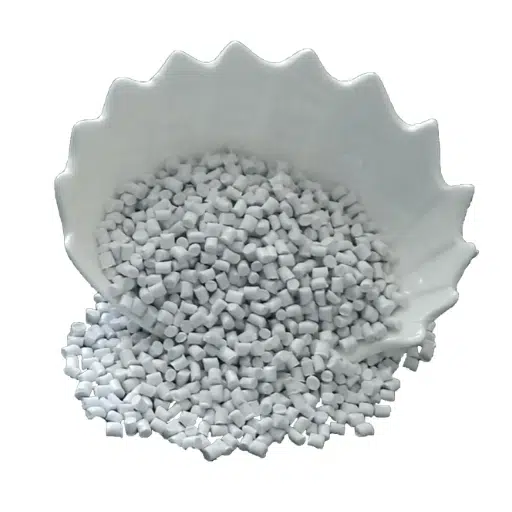
In pellet form, PC is available under brand names: ranging from Lexan to Makrolon; Tuffak; and others. It has proven really advantageous and applicable in applications in need of substantial structural integrity, flame retardation, or high-temperature performance. At Suzhou Yifuhui, we offer different kinds of optical-grade, UV-stabilized, and flame-retardant V-0 PC pellets perfect for their demanding respective specifications in fields such as automotive, electronics, and safety equipment.
Acrylic (PMMA) Pellets
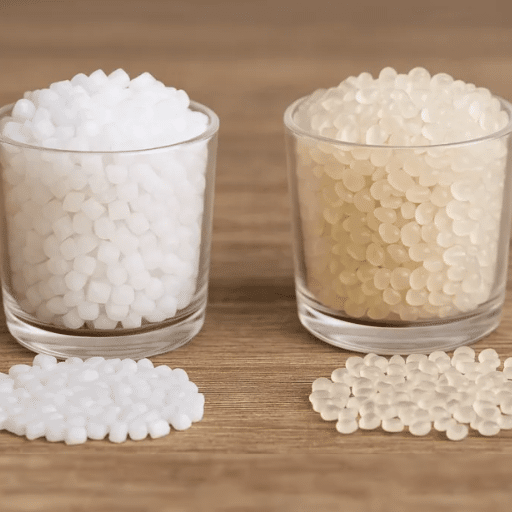
Acrylic, known chemically as polymethyl methacrylate (PMMA), is a rigid thermoplastic with the advantage of optical clarity and surface hardness. It was developed in 1928 and commercialized under the names of Plexiglas, Perspex,and Lucite. Polycarbonate is not like PMMA, which is a range of grades for several manufacturers, from general-purpose extrusion to high-purity optical molding grades.
PMMA pellets offer better light transmission than any other commercially available plastics. They also enable the highest grade scratch resistance and UV resistance to be compared with standard grade polycarbonate. Acrylic often leans towards better commercial judgment for companies producing display lenses, light guides, decorative trim, or optical panels, although it does not offer the best bruise resistance.
Side-by-Side Property Comparison
Here is an overview of the significant mechanical, optical, and thermal properties distinguishing between polycarbonate and acrylic. Have a quick glimpse at it while deciding the best application of your project:
|
Property |
Polycarbonate (PC) |
Acrylic (PMMA) |
Manufacturing Implication |
|---|---|---|---|
|
Light Transmission |
~88-90% |
~92% |
Acrylic wins for lenses, displays, and optical panels |
|
Impact Resistance |
~250x glass |
~17x glass |
PC is mandatory for safety guards and protective barriers |
|
Scratch Resistance |
Low (requires hard-coating) |
High (harder surface) |
Acrylic needs less post-processing for high-touch surfaces |
|
UV Resistance |
Requires stabilizers/coating |
Inherently excellent |
Acrylic is better for long-term outdoor exposure without additives |
|
Heat Deflection Temp |
~115-140°C |
~80-90°C |
PC survives under-hood and high-temp electronics applications |
|
Density |
~1.20 g/cm³ |
~1.18 g/cm³ |
Nearly identical; both are roughly half the weight of glass |
|
Tensile Strength |
~55-75 MPa |
~70 MPa |
Acrylic is slightly stronger in tension but far more brittle |
|
Cost (Raw Material) |
Higher |
35-50% lower |
Acrylic offers significant cost savings for non-structural parts |
|
Flame Retardancy |
Self-extinguishing / V-0 grades available |
Burns slowly; limited FR grades |
PC is preferred for electrical housings and safety equipment |
Optical Clarity and Light Transmission
Acrylic transmits around 92% of visible light, far better than polycarbonate’s range of 88-90%. This is crucial when considering optical applications. Camera lenses, light guides for LEDs, and display covers all benefit from the utter clarity of the acrylic compound. Although the slight difference in light transmission with polycarbonate makes it immune to use in glazing, machine guards, and general transparent housings, it does not completely suit the application when optics come into the picture.
Polycarbonate also tends to have a faint bluish or yellowish tint depending on the grade and manufacturer. Optical-grade PC minimizes this, yet it never quite matches the water-clear appearance of high-quality cast or extruded acrylic.
Impact Resistance and Durability
This is where polycarbonate excels: Standard PC is estimated at 250 times stronger than glass, and about 30 times stronger than acrylic. Such strength certainly accounts for the material choice for crash helmets, riot shields, machine guards, and automotive light lenses that must endure stone impact.
Acrylic is not bad either. At 17 times the impact strength of glass, it would out-perform many common polymers. Yet, within these ranks, it is still very brittle compared to PC: under an impact at one concentrated spot or surface, acrylic will fracture or shatter. If there is potential for impact, falling objects, or bending stress in your application, polycarbonate is the preferred engineering material.
UV Stability and Weathering
Acrylic has its own inherent UV resistance. High-quality PMMA is capable of withstanding decades of outdoor exposure without a substantial yellowing or hazing. The reason acrylic is so widely used for outdoor signage, for skylights-and also for architectural glazing in moderate climates.
Standard polycarbonate requires UV stabilizers or protective coatings to prevent yellowing and surface degradation. Uncoated PC exposed to direct sunlight begins to experience noticeable degradation within a few years. While UV-stabilized PC grades are available and perform well, they increase costs and process complexity. For outdoor applications where optical clarity must endure, acrylic is typically the more reliable long-term investment.
Need UV-stabilized pellets for outdoor applications? Explore our polycarbonate plastic pellets →
Processing Requirements: What Manufacturers Need to Know

There are further differences betweenAcrylite and Lexan, beyond just the end-use properties. There is an effect on your production floor with regards to other things such as drying cycles, melt temperatures, and finishing requirements.
Drying and Preparation
Polycarbonate, being highly hygroscopic, absorbs moisture from the air. The pellets come to the parties with their proper moisture contents (assuming high enough heating units during storage and transportation), Therefore, if directly processed, their moisture Probably acted as a catalyst, splayed out the chains of the polymer, and blew into bubbles in the same process of rejoining molecules as those caused to bond in a nonfunctional way or in irregular spots.
Experience: dry at 120°C for 4 hrs, or 6 hours for some grades.
Plexiglas (PMMA): Dry at 80°C for 2 to 3 hours.
The enhanced drying time of PC, therefore, translates directly into energy costs and constraint of suitable operating hours. Should a factory be on three shifts, it will need larger desiccant driers or extra lead times to cope with PC’s higher demanding pre-drying cycle.
Melt Processing Parameters
Injection molding and extrusion are well demonstrated as both processes are able to deliver the material into a mold cavity. However, different temperatures are needed for different materials, with polycarbonate preferring higher mold temperatures.
Factory processing information in polycarbonate:
– Melt temperature 280-320 degrees
– Mold temperature 80-120 degrees
– Injection pressure 80-120 mpa
– MFI around 5-20 depending on the grade
Factory processing information in acrylic:
– Melt temperature 210-250 degrees
– Mold temperature 60-80 degrees
– Injection pressure 70-110 MPa
– MFI around 1-15 depending on the grade
Processing at low temperatures in acrylic significantly decreases energy used per kilogram of material. Equally important, they also reduce carbondioxide emissions in addition to their effect on the mold and equipment. Therefore, for high volume production environments where margins are thin, these gentler migration properties of acrylics constitute a real cost advantage over time.
Post-Processing and Finishing
Acrylic is a very well functioning material, yielding clean-cut laser edges, while not cracking up while being fixed or while being polished to mirror perfection. This makes acrylic ideal for display cases, POP fixtures, or essentially any decorative transparent panels that display its faultless edges.
Polycarbonate is a little more challenging to finish. It is not possible to laser-cut it cleanly without releasing hazardous fumes and giving the cut circumference a brown color. The preferred machining processes are CNC routing and cold-sawing. Although polycarbonate can be polished, it does not reach the high optical clarity of acrylic. On the other hand, polycarbonate can be cold-formed without heating. Given on-site fabrication near the equipment, bent polycarbonate becomes very powerful in making guards, shields, or curved entrances.
Applications: When to Choose PC vs PMMA
Choose Polycarbonate Pellets When:
- Impact resistance is crucial. This PC toughness is sought after in safety guards, helmet shields, machine housings, and automotive lamps.
- Prolonged temperature should exceed 90oC. PC-grade materials are selected for their heat deflection temperature, which is above 140oC, desirable in automotive underhood components in high temperatures.
- Flame retardancy is mandatory. Electrical enclosures, battery housings, commercial transit interiors, or motor vehicle lighting require PC, which offers inherently self-extinguishing features and an available V-0 rating.
- Cold forming of films or flexural fatigue is involved. This allows polycarbonate to be bent at room temperature without any cracks, easing its use in making arched guards and shields.
- Transparent structural qualities are required. PC is ideal for load-bearing transparent panels or greenhouses in hail-battered areas or protective barriers.
Choose Acrylic Pellets When:
- Machine vision requires optimum clarity. Acrylic’s 92% transmittance is mandatory for quality camera lenses, light guides, surgical optics, or high-end displays.
- Comprehensive cost savings is a priority. The extra 35–50% cost saving in purchase allows acrylic to free up budgets for other value additions or margin enhancement.
- Unrestricted UV protection is required. PMMA is commonly used in the architectural and advertising industry for outdoor signs or glazing as it has the advantage of UV stability without additive stabilizers.
- Laser cutting or edge polishing must be possible. Acrylic is easily superior to PC in processes needing superb-gray finished edges.
- The hardness of the surface is crucial. For wiping high-contact surfaces, retail displays and instrument panels would resist scratching in acrylic.
Linda Park, a product engineer at a Seoul-based electronics manufacturer, faced a similar problem in January 2026, with which her team was trying to design a transparent housing for a new medical diagnostic device. The initial specification specified polycarbonate for a high toughness. However, the device required a viewing window with zero optical distortion and thus needed relentless cleaning with alcohol wipes. Scratch tests on PC samples resulted in visible marring after just fifty wipe cycles; acrylic remained pristine. Usually, the team opted for optical-grade PMMA to keep the thin frame reinforced with steel and at a reduced material cost by 42%. The device went through all clearing regulatory checks in one go.
Polycarbonate vs Acrylic Cost Analysis and Sourcing

Raw Material Cost Differential
In industrial scenarios, it’s common that acrylic resin pellets are cheaper than polycarbonates. The difference reaches some 35-50%, give or take, depending on grades, quantum, and location of supplier service. Publicizing this price variance does not mean thousands of dollars in material spending for him who uses 10tons transparent polymer in a year.
But cost of material is not the only concern. It is a part of a big picture envisaging the impact of:
- Fight against energy consumption: Among electrically operated devices, PC needs 120°C for 4 hours; but a 2-3 hour period at 80°C would do for PMMA.
- Coatings and Additives: UV-coated or hard-surface PC adds additional processing steps and material expenses.
- Forming scrap: Material brittleness arising from acrylic can result in more breakages at assembly and shipping stages.
- Tool wear and tear: Increased melting temperature of PC causes faster wearing of the molds.
The difference in the cost of production would usually be small with hidden costs in certain scenarios. A medical-device molding company that would need complete optical clarity and regular sterilization would hardly ever find the costlier option of polycarbonate justified owing to its much greater toughness. A company manufacturing flat panel displays through printed graphics would invariably achieve much lower total costs using acrylic.
Evaluating Pellet Suppliers
In bulk, the assurance of sourcing polycarbonate vs acrylic pellets is nearly as important as the quality of raw plastic. Following are questions to put to your candidates:
- Do you keep optical, UV, and flame grades for both PC and PMMA resins?
- Can you provide certified batch tests, which include MFI and moisture content reports?
- What kind of packaging do you use to keep polys away from moisture during international shipments?
- Do you offer data sheets or processing guidelines for each grade?
- What is your charge time for a multi-ton order with and without inventory for repeating customers?
A supplier that handles see-through polymers just like shared commodities will only make you lose more on scrap and downtime even as savings from the purchase price come their way.
Looking for competitive pricing on PMMA granules? View our acrylic plastic pellets →
Quality Control and Compliance
Batch Testing and Certification
The transparent parts have optical defects that can easily be seen, so the regularity of fragments is very necessary. Each incoming batch must be checked to ensure:
- Checking MFI (melt flow index) for compliance with grade
- Moisture content, which must be checked before drying (important especially for PC)
- Color and clarity should be checked visually and with an instrument.
- Screening for contamination, which includes impurities for example foreign particles or degraded resin
By assuring such parameters before shipment, suppliers eliminate a major source of manufacturing hole-ups.
Regulatory Compliance
Both polycarbonate and fiberglass grades are available -many of which compliant with FDA, EU, and other regional standards – for food contact and medical applications. Nevertheless, not all of such grades meet these standards. General-purpose PC and PMMA could contain other additives or monomer residues that have not passed biocompatibility testing.
For medical device enclosures, food packaging, or pharmaceutical applications, you must explicitly identify. If the pellets are “food-grade” and “medical-grade,” and also, regulatory documentation is a requisite; a supplier who refuses to provide such is a potential risk to you! We always endeavor to keep stocks with full FDA and EU traceability for PC and PMMA grades.
Flame Retardant Performance
Polycarbonate has an upper hand in this regard. Basically, standard PC is self-extinguishing and special grades are known to pass the UL94 V-0 rating at thinner sections. This makes PC a de facto material for electrical enclosures, battery housings, and consumer electronics where flame safety is mandated.
Acrylic ignites much more easily, and at best has fewer flame-retardant choices. FR-PMMA grades do exist, but much less commonly and are typically more expensive than alternatives. One the other hand, if your application mandates fire safety approval, polycarbonate is usually the better way to go.
Sustainability and Recycling: Polycarbonate vs Acrylic

Recyclability of PC vs PMMA
Acrylic can biologically degrade and so be reprocessed into low-grade applications such as street markers and sanitary ware. However, since recyled PMMA loses optical clarity and strength typical of extrusion grade material, and therefore is almost always unsuitable for reintroduction into the same optical application.
Recycling of polycarbonate is much trickier. The fact that BPA is involved in traditional PC chemistry makes the production routes more complicated, but mechanical recycling can be applied easily by the industry now . Chemical recycling seems to show some promise; it could provide feedstock for more PC in the future in a closed-loop manner.
Issues with Regrind Ratios in Production
Both materials will take a bit of regrind along with the virgin feed, each affected by different ratios. Acrylic Regrind can often be blended up to 10-20% into the virgin material without loss of properties. Polycarbonate Reissues here can be topped up by a careful 20-30% in a lot of cases, when properly dried and filtered, though it is very true that optical grades are much less forgiving.
Operators of transparent components need to be cautious on regrind. Every reheat cycle degrades the polymer a little and there will be an accumulation of optical defects. However, for parts to look good cosmetically, it is very common for many manufacturers to limit the regrind percentage to a maximum of 5-10% or else completely ban it.
Sustainability Trends
Materials have witnessed an interesting subject: in the past, the two big accomplishments came about when their suppliers provided PC with content approved for consumption in non-food applications. The makers of the material reportedly examine feedstock versions for sustainable Methyl methacrylate. However, having vastly surging value in the marketplace, this grade sometimes makes it difficult to procure. Yet latest availability marketing from some suppliers requires us to offer supplies to any purchasers in the ESG world.
The general term of Carlos Mendez stated the Company Vice President of Barcelona Consumer Goods, who took the above-mentioned 2025 change and reduced 30% of recycled and bio-attributed polymers to 2027. An almighty task commenced in persuading Asian suppliers-let’s say 15% premium above the virgin stuff, says they dropped in the mirror-grade polycarbonate pellets. They were seen struggling to catch up with the recycled label sets in optical polymethyl methacrylate, though potentially more accessible for nonglamourized areas. Early perception at suppliers made allocation in Q4 2025 available before demand took off.
Key Takeaways: Choosing Between Polycarbonate and Acrylic
Before you make your next purchase of plastics, register the selection factors mentioned below:
- Polycarbonate offers unmatchable performance in terms of impact resistance and temperature tolerance. Ideal for safety gears, automotive parts, and electrical housings.
- Acrylic, as opposed to PC, offers a better perspective due to its higher visual clarity, better scratch resistance, and greater chemical resistance to UV light. Ideal for the softness requiring situations such as lenses, displays, signage, and decorative purposes.
- Acrylic is cheaper in terms of raw material by 35-50% and functions at lower temperatures, signifying a reduced expenditure in energy.
- Since PC needs 120°C for 4 hours to dry properly, it may even require UV or hard coat applications, thereby further increasing its process steps.
- Both materials can be made in FDA/EU and flame-retardant grades to meet regulations, compliance that is not easy to hold as a blanket requirement; if you need it, do not forget to notify your supplier.
Conclusion
Solving the issue of Polycarbonate vs Acrylic was never about finding the “better” material: it was always about finding which polymer was best for the job considering considerations from particular application requirements and constraints present due to the use of a particular component molding process and cost. Polycarbonate will be best if your components must be heat-resistant and impact-resistant. Acrylic will be the best choice if the components need to have a high level of opticsified visual appeal and needs to have cost efficiency included.
Using these trade-offs, procurement managers and engineers can go about making sourcing decisions a bit quicker and more confidently. This will have benefits like keeping the costs down by not over-specifying PC when it is for decorative parts. In the same vein, this program will keep down incidences of field failures attributable to under-specifying acrylic parts for a structural application.
Your next step is to audit your current transparent polymers against the criteria in this guide. Identify where you might be overpaying for unneeded impact resistance, or if a switch to PC could eliminate warranty claims. Go ahead into the evaluation of whether your current supplier offers the grade range, batch certification, and technical support that your operation requires.
Ready to secure premium polycarbonate or acrylic pellets with certified quality and competitive pricing? Contact Suzhou Yifuhui for a custom quote →