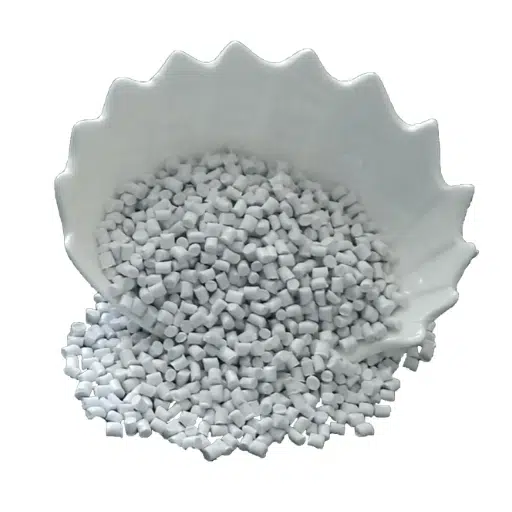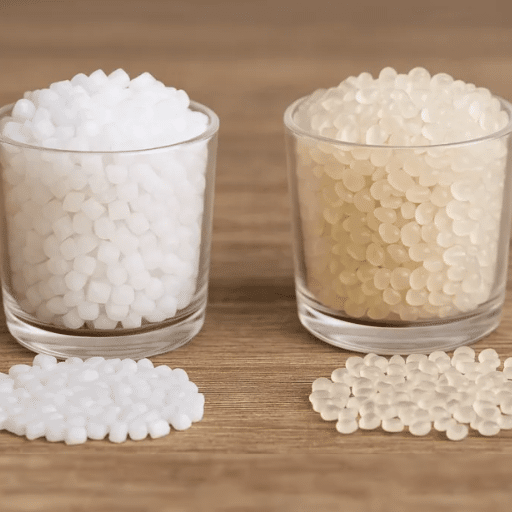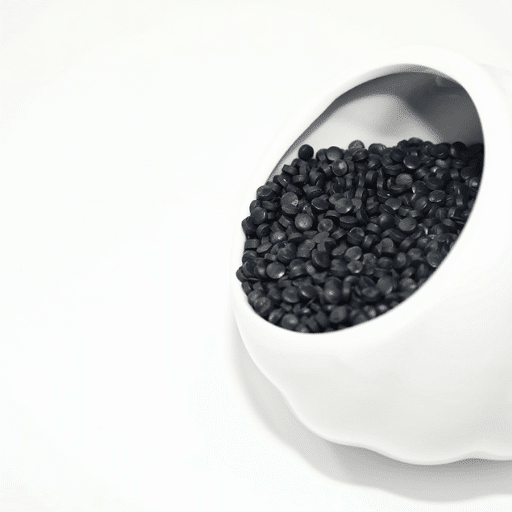
The level of humidity at 75% demonstrates that dried nylon pellets present their first risk of part defects after one hour because they regain enough moisture to create defects. The manufacturing process of production lines throughout the world leads to scrap production of thousands of molded components every week because of this particular fact. Processors often assume that once nylon has been dried, it stays dry. The actual requirements for handling this situation involve more difficult standards.
Material consistency maintains its essential value for your injection molding operations according to your existing knowledge. Off-spec pellets create surface defects which extend beyond their visual impact because they cause hydrolytic degradation and mechanical property loss. This guide explains how humidity affects nylon pellets and establishes essential drying procedures which manufacturers must follow to achieve efficient production. The right supplier selection will decrease operational uncertainty according to your research findings.
Want to see how premium batch-tested pellets reduce your drying variability? Explore our engineering plastic pellets →
Why Nylon Absorbs Moisture So Rapidly

The Science of Hygroscopic Polyamides
Successful nylon pellet drying starts with understanding why the material fights back against dryness. Nylon, which belongs to the polyamide family, contains amide groups throughout its polymer structure. The amide groups of the compound establish robust hydrogen bonds with water molecules. The molecular structure of nylon establishes its ability to absorb moisture from the environment. The material maintains continuous moisture absorption from the surrounding air until it achieves moisture balance with the environment.
The specific nylon grade determines both the absorption speed and total absorption capacity of the material. Nylon 6 (PA6) absorbs moisture faster and reaches a higher equilibrium level than Nylon 66 (PA66). This difference in drying process requires PA6 to undergo longer and more forceful drying process compared to PA66 drying process. People use PA12 long-chain specialty nylons because they absorb minimal water which occurs at a slow rate making them suitable for outdoor applications requiring dimensional stability. Engineering plastics market continues to use PA6 and PA66 because these materials offer exceptional mechanical properties and thermal resistance and affordable pricing.
Nylon that is unreinforced reaches its moisture stabilization range of 2.5% to 3.0% weight at 23°C and 50% relative humidity. The moisture content of PA6 can reach 9% to 10% in environments that experience both saturated conditions and high humidity. The baseline nylon moisture content requires all batches to undergo aggressive drying procedures before entering the barrel. The glass-filled grades exhibit reduced absorption capacity because of their hydrophobic filler yet they still need thorough drying before processing begins.
How Fast Does Nylon Absorb Moisture?
The absorption curve shows an initial steep section which leads to slower moisture absorption during the next two days. The material reaches its equilibrium state after the initial fast absorption period ends. The material reaches complete surface saturation within a short duration. The process of bulk penetration reaches a diffusion-controlled stage when thicker pellets or parts require more time to achieve uniform distribution throughout.
The main threat for processors comes from the process of re-absorption. Pellets which have just left a desiccant dryer enter a state of high reactivity. The Injection Molding Handbook states that dried nylon which is exposed to 75% relative humidity will absorb 0.35% moisture during one hour. The same moisture absorption rate at 25% to 50% relative humidity requires approximately 40 hours. The 0.35% threshold establishes a critical point which already leads to splay marks and bubbles and silver streaks in molded parts.
Key Insight: Pellet size matters. Larger pellets and regrind absorb moisture faster than smaller virgin pellets because of their different surface-area-to-volume ratios. Your drying window will decrease even more if you operate regrind under humid conditions.
The Consequences of Skipping Proper Nylon Pellet Drying

Hydrolytic Degradation
Moisture-rich nylon enters the injection molding machine barrel which reaches high temperatures to cause water molecules to interact with nylon polymer chains. Hydrolysis functions as the primary threat which occurs during nylon hydrolysis injection molding process. Water breaks amide bonds resulting in permanent molecular weight reduction. The damage is permanent because it cannot be repaired. Hydrolyzed nylon requires more drying time to restore its original state after it has been dried.
The first sign of hydrolysis is usually a drop in melt viscosity. The material flows more easily which sounds beneficial but is not. Lower viscosity causes over-packing and flash and unpredictable mold filling. The process indicates polymer chains have shortened which results in the final product being more brittle and less tough than specifications.
Surface and structural defects
Moisture transforms into steam during the melting process. Insufficient drying of nylon pellets leads to steam bubbles which break through at the mold surface creating various cosmetic and functional defects.
- The part surface displays splay marks and silver streaks across its entire area.
- Blistering and bubbles appear in thick sections of the material.
- The surface finish does not meet cosmetic quality standards because it has poor appearance.
- The material undergoes both dimensional instability and warpage after it finishes cooling.
- The material shows both decreased impact strength and reduced elongation at break.
A plant manager named Marcus Chen works at an automotive components facility in Shenzhen who learned this lesson through a difficult experience. His team received a shipment of PA66 for connector housings in July 2024. The supplier had dried the material before his crew exposed it to humid shop air for three hours during a shift change. The resulting batch showed severe splay marks across every cavity. The production of 2,400 parts required complete scrapping. The material cost alone exceeded $4,200. His largest contract faced delivery delays which created a risk.
Economic Impact on Production
The financial damage extends beyond scrap rates. Processers require slower injection speeds because wet nylon causes flow irregularities which need special handling. The process increases mold maintenance requirements because flash buildup needs to be cleaned. The process raises downstream quality checks which lead to product rejection. Your profit margin will disappear because of operational inefficiencies that exist in automotive and consumer electronics markets.
Nylon Pellet Drying Parameters for PA66, PA6, and Specialty Grades

Getting nylon pellet drying right requires three things: the correct temperature, adequate time, and a dryer that can actually remove moisture rather than just heat the air.
PA66 (Nylon 66)
PA66 functions as the main operational material for engineering plastics. The material provides outstanding thermal stability and physical strength properties yet requires careful handling throughout its manufacturing process. The specific PA66 drying temperature you select determines three outcomes which include oxidation danger and production duration and quality of the finished product.
- Drying temperature: 80°C (176°F)
- Drying time: 4 to 6 hours for virgin pellets
- Extended time: 8 to 12 hours for material stored in high-humidity conditions or for large pellet sizes
- Target moisture content: <0.2% (best practice: 0.08% to 0.13%)
Some processors push temperatures toward 90°C or even 100°C to speed up drying. We do not recommend exceeding 90°C for extended periods. Oxidation and yellowing become real risks above that threshold. Vacuum drying can use slightly higher temperatures (95°C to 105°C) because the reduced atmospheric pressure lowers the boiling point of water, but standard desiccant dryers should stay at 80°C. For additional technical guidance, see the Bamberger Polymers drying tech tip.
PA6 (Nylon 6)
PA6 absorbs moisture more aggressively than PA66. That difference makes nylon pellet drying for PA6 slightly more intensive than for PA66.
- Drying temperature: 80°C to 90°C (176°F to 194°F)
- Drying time: 4 to 8 hours
- Target moisture content: <0.2%
Processors working in tropical or coastal climates need to select processing time periods which extend to their maximum duration because PA6 retains higher equilibrium moisture content. The material needs to undergo moisture testing before production begins because this process represents the only method to verify its actual readiness for use.
Specialty Nylons (PA12, PPA, PA46)
Different types of nylon exhibit different behavioral patterns. The material PA12 displays moisture saturation because it absorbs only 1.4% water at full humidity. The drying period for nylon pellets of PA12 usually lasts between 2 to 4 hours when dried at 80°C. The high-performance polyamides PPA and PA46 require strict dew-point control because their drying process needs dryers which maintain a dew point of -40°C or lower.
The following table summarizes the key differences:
|
Nylon Grade |
Drying Temperature |
Typical Drying Time |
Target Moisture |
Notes |
|---|---|---|---|---|
|
PA66 |
80°C |
4–6 hours |
<0.2% |
Avoid >90°C to prevent oxidation |
|
PA6 |
80–90°C |
4–8 hours |
<0.2% |
Higher absorption than PA66 |
|
PA12 |
80°C |
2–4 hours |
<0.2% |
Lower moisture absorption overall |
|
PPA/PA46 |
100–120°C |
4–6 hours |
<0.1% |
Requires very low dew-point dryers |
Need PA66 pellets that arrive with certified moisture specifications? View our PA66 plastic pellets →
Humidity Control and Nylon Pellet Storage Best Practices
Plant Environment Control
The process of drying material requires two main phases. The second phase involves maintaining its moisture-free state until it reaches the machine. The proper storage methods for polyamide pellets determine whether production remains constant or results in unpredictable material waste. The ideal storage environment for nylon pellets maintains relative humidity below 50%. The facility experiences permanent ambient humidity levels which exceed 70% because of its location in a tropical or coastal area. A conventional hot-air dryer becomes completely ineffective when used under those specific conditions.
Desiccant dryers (also called dehumidifying dryers) remove moisture from the air which passes through the pellet bed. The drying process needs -40°C dew point temperatures because this is the required condition for nylon pellet drying of hygroscopic polymers. Closed-loop drying systems provide dependable control results which make them suitable for both high-precision and high-volume production requirements.
In-line dew point meters are a smart investment. The equipment allows you to confirm that your dryer achieves actual operational results instead of merely functioning. The desiccant requires regeneration when the dew point begins to rise because this will damage your pellets.
Handling Protocols to Prevent Re-Absorption
Nylon that has been dried will absorb moisture from the surrounding air for each minute it remains in open air. The best practices that should be followed include the following:
- The system should operate with dry-air after the dryer process through the machine hopper.
- The system needs to maintain hopper insulation through temperature control which requires at least 80°C.
- The system needs to implement just-in-time loading which prevents material from remaining in the hopper during extended periods.
- The system needs to use sealed containers that contain desiccant packs for all materials which are not currently required.
The nylon pellet drying system will not function because all material will hydrate before reaching the hopper. The general rule of thumb is stark: if dried pellets are exposed to shop air for more than 30 minutes, they should be re-dried before processing. The measurements validate it, although its appears to be excessive.
Elena Vasquez, a process engineer at a medical device molder in Guadalajara, implemented these exact protocols in early 2025. Her facility previously struggled with intermittent splay on PA66 catheter components. The system achieved a scrap rate reduction from 8.3% to 1.7% during the first quarter after installing dry-air conveying and sealing complete material transfers. The company recovered its equipment handling investment through operational savings within four months.
Over-Drying Risks in Low-Humidity Conditions
Most articles on nylon pellet drying focus exclusively on under-drying, but over-drying is equally dangerous. In arid climates or during winter months when indoor humidity drops below 20%, nylon can be driven to moisture levels as low as 0.04% to 0.08%.
For PA66, an optimal moisture range of 0.15% to 0.3% is sometimes recommended to avoid brittleness. Over-dried nylon exhibits poor flow characteristics, non-uniform crystallization, and increased susceptibility to brittle failure. The goal is not zero moisture. Your particular grade and application requirements determine the correct moisture content.
For more background on how moisture interacts with nylon at the molecular level, read this excellent breakdown from The Weekly Pellet on understanding nylon and moisture.
Choosing a Supplier That Understands Nylon Pellet Quality

Batch Consistency and Pre-Drying Assurance
A supplier that has complete knowledge of nylon pellet drying processes can fulfill customer demands beyond customer requirements. The supplier possesses complete knowledge of nylon business operations according to their work. The company tests all shipments by measuring their batch moisture levels before delivery. The company implements moisture-proof packaging for all of its international shipping operations. The company supplies traceability documents which enable you to monitor all materials entering your hopper system.
Your nylon pellet drying operation needs to handle unpredictable pellet quality because it encounters unknown factors beyond your control. The variability causes production delays through rejected parts and longer cycle times which creates dissatisfaction for operators. When you source from a supplier with rigorous quality controls, you remove one major variable from an already complex process.
What to Look for in a Nylon Pellet Supplier
These questions should be asked during supplier evaluation.
- Do you test and certify moisture content for every batch?
- What packaging do you use to protect pellets from humidity during shipping?
- Can you provide detailed nylon pellet drying recommendations for each grade you supply?
- Do you maintain constant stock of both virgin and glass-filled grades at all times?
- What is your typical response time for technical support inquiries?
A supplier that shows operational uncertainty about these questions handles nylon material as though it possesses commodity status instead of being a specialized substance.
David Okonkwo who works at an electronics manufacturing company in Lagos as a procurement manager spent the last eighteen months dealing with unreliable PA6 shipments from a local distribution partner. Certain batches produced excellent mold results. The team attempted to dry the other batches but they still created flash and splay defects. In March 2025, he switched to a supplier that provided certified moisture reports with every shipment. His first three production runs since the switch have achieved 99.2% first-pass yield. The difference, he says, was not his dryer. The material’s consistent quality provided better results than anything else.
Ready to secure a reliable supply of batch-tested nylon pellets? Contact our polymer experts for a custom quote →
Suzhou Yifuhui’s Approach to Nylon Quality
The essential quality standards at Suzhou Yifuhui require us to treat nylon pellet drying and moisture control as our main operational pillars. The testing process for all PA66 PA6 and specialty nylon materials starts after we receive the materials at our facility. We use special packaging for global shipping that protects our products from humidity during transportation. Our technical support team provides assistance throughout the week with a commitment to answer all material inquiries within 24 hours of your request.
We offer complete pricing for our engineering plastics products, which our customers can access through transparent pricing practices. We deliver virgin PA66 for automotive connectors and glass-filled PA6 for industrial housings, which our customers need because we deliver stable pellet quality that their processes require.
If your application requires PA6 specifically, you can learn more about our specifications here: Nylon 6 pellets for injection molding →
Key Takeaways: Nylon Pellet Drying Best Practices
Before you run your next production batch, keep these core principles in mind:
- Nylon absorbs moisture which leads to defect development when relative humidity reaches 75% because re-absorption will reach the threshold level within one hour.
- The desiccant dryer requires a drying process of four to six hours at 80°C which must achieve a moisture level below 0.2% for PA66 material.
- The process should use dry-air conveying through sealed containers to maintain the achieved drying state without any risk of moisture re-absorption.
- The production process suffers from negative effects because both over-drying and under-drying create problems. The optimal moisture range should be targeted instead of achieving complete moisture elimination.
- Select a supplier who provides certification for consistent batch production. The material quality in your operations will remain constant which results in predictable outcomes that safeguard your profit margins.
Conclusion
Most manufacturing environments experience humidity as an unavoidable condition, yet defective nylon parts do not exist as an unavoidable condition. The key is understanding that nylon pellet drying is a continuous process, not a one-time event. From the moment pellets leave the dryer to the moment they enter the injection barrel, moisture is trying to get back in.
The protocols in this guide give you a clear roadmap. Set your desiccant dryer to the right temperature. You need to shield dried pellets from direct contact with shop air. You need to check moisture content before each testing session. Select a supplier who considers consistent drying operations as their main quality requirement.
The next step for you is straightforward. The current drying and handling procedures need to be checked against the guide established parameters. The next step is to assess whether your supplier provides the needed consistency for your operations. Our team stands ready to assist you with premium nylon pellet sourcing which includes batch-tested materials and complete technical assistance.
Get a custom quote for PA66, PA6, and specialty nylon pellets today. Contact Suzhou Yifuhui →