When Marcus specified a generic “TPE” for his company’s new automotive weather seal, he assumed every elastomer behaved the same. Ten months later, after 1,200 warranty returns traced to UV-crazed gaskets with failing compression set, his engineering team swapped to a TPV grade. The failure rate dropped to zero, and the redesign cost $64,000 the firm never budgeted for.
That is the trap hiding inside the term TPE. It is not one material. It is a family of materials that share a two-phase structure but diverge sharply in hardness, temperature limits, chemical resistance, and price. Understanding TPE material properties is the difference between a part that survives a decade of field service and a recall.
This guide breaks down what TPE is, the properties that matter on a data sheet, the five main TPE types, and how to select a grade that fits your application and your budget. You will also learn what to check before you commit to a supplier, because pellet quality shapes production consistency as much as chemistry does.
Need help matching a TPE grade to your application? Talk to our polymer specialists →
What Is TPE Material?

TPE, short for thermoplastic elastomer, is a polymer class that combines the elasticity of rubber with the processability and recyclability of thermoplastics. Its hard and soft segments let it stretch and recover like a vulcanized rubber, yet melt and re-mold like a standard plastic when heated.
The secret is structure. Every TPE contains hard, crystalline domains that act like heat-fugitive crosslinks, plus soft, rubbery segments that deliver flexibility. The hard phase drives melt temperature, tensile strength, and chemical resistance. The soft phase controls hardness, low-temperature flexibility, and compression set.
Here is the difference from traditional rubber: thermoset rubbers form permanent covalent crosslinks during curing. TPEs rely on physical crosslinks that reverse when you apply heat. Heat a TPE and it flows; cool it and it re-forms. That reversibility makes TPE recyclable, processable on standard injection molding and extrusion machinery, and free of any vulcanization step.
So is TPE plastic or rubber? It is both. Engineers call it a rubber that processes like a plastic. That combination is exactly why it shows up in soft-touch grips, automotive seals, medical tubing, and cable jacketing.
Want the deeper comparison? See our full TPE vs Silicone material selection guide →.
TPE Material Properties at a Glance
Before you compare TPE types, know the property ranges the whole family covers. These figures come from the British Plastics Federation and leading TPE compounders, and they give you a realistic envelope for design work.
| Property | Typical TPE Range |
|---|---|
| Hardness | 20 Shore 00 to 85 Shore D (most grades: 20A to 90A) |
| Density | 0.89 to 1.30 g/cm³ |
| Continuous service temperature | -40°C to +120/135°C |
| High-heat types (TPEE/COPE) | up to +150°C |
| Tensile strength | 3 to 45 MPa, depending on family |
| Elongation at break | 200% to 900% |
| Compression set (22 h at 70°C) | 15% to 50% (TPV best, SEBS worst) |
| Chemical resistance | Family-dependent; TPV and TPEE excellent, SEBS limited |
| Recyclability | Yes, regrind at 10% to 30% |
Two numbers deserve a second look. Density between 0.89 and 1.30 g/cm³ means TPE is often lighter than thermoset rubber, so you get more parts per kilogram. The temperature ceiling matters more: most TPEs hold up to about 120°C to 135°C continuous, which is well short of silicone or PTFE. If your part runs hot, the TPE family choice becomes your first decision, not your last.
The 5 Main TPE Types and Their Properties
All TPEs share the two-phase design, but the chemistry of the hard and soft segments splits the family into five commercially significant groups. Each one trades properties differently, and knowing the difference stops expensive mis-specs.
| Type | Base Chemistry | Hardness | Temp Range | Key Strength | Best Applications |
|---|---|---|---|---|---|
| TPE-S (SEBS/SBS) | Styrenic block copolymer | 20A to 60D | -40°C to 80°C | Soft touch, colorability, clarity | Grips, toys, overmolds, food contact |
| TPE-O (TPO) | PP/EPDM blend | 60A to 70D | -40°C to 120°C | Low cost, UV resistance | Automotive bumpers, exterior trim |
| TPE-V (TPV) | Dynamically vulcanized PP/EPDM | 35A to 50D | -40°C to 135°C | Compression set, oil resistance | Seals, gaskets, weather strips |
| TPE-U (TPU) | Polyurethane block copolymer | 60A to 85D | -50°C to 120°C | Abrasion, tensile, oil resistance | Footwear, cable, tubing |
| TPE-E (TPEE/COPE) | Polyester block copolymer | 30D to 75D | -50°C to 150°C | Heat and chemical resistance | Hose, bellows, wire |
A sixth group, TPE-A (PEBA), delivers excellent low-temperature flexibility and bonds to nylon, which is why it shows up in medical catheters and sports equipment.
Here is what mis-specification actually costs. A gasket manufacturer we worked with built their first TPE seal from an SEBS grade because the Shore A hardness matched their spec sheet. The seal felt right on the bench. In service, the 40% compression set let the gasket creep flat in under a year, and the assembly started leaking coolant. The fix, a TPV grade with 18% compression set, cost more per kilogram but eliminated the field failures entirely. Hardness alone never tells you how a seal will behave.
Key TPE Properties Explained

Shore Hardness and Why It Matters
Hardness is the property buyers quote first, and it is also the easiest to misread. TPE hardness is measured on the Shore durometer scale: Shore 00 for gels, Shore A for soft and medium materials, and Shore D for rigid grades. A 60 Shore A TPE feels like a rubber band. A 90 Shore A grade feels like a golf ball.
The catch? Two TPEs with identical Shore A hardness can have completely different flexural modulus, tear strength, and compression set. Hardness describes surface feel, not stiffness or durability. Always pair a hardness target with the mechanical properties your part actually experiences.
Temperature Resistance
TPE service temperature depends entirely on the family. Styrenic SEBS grades stay flexible down to -40°C but soften above 80°C. TPV grades handle -40°C to 135°C continuous. Copolyester TPEE pushes to 150°C with heat stabilizers. If you are sealing an engine bay or an EV battery housing, low-cost SEBS will not survive the summer.
Compression Set
Compression set measures how well a material returns to its original shape after being squeezed. For seals and gaskets, it decides whether the part keeps sealing. Standard SEBS grades run 30% to 50% compression set after 22 hours at 70°C. Dynamically vulcanized TPV sits at 15% to 25%. That is the difference between a seal that bounces back and one that flattens.
Chemical, UV, and Weather Resistance
Resistance to oils, solvents, and UV varies more than any other property. TPV and TPEE resist oils and hydrocarbons well, which is why they dominate automotive underhood and fluid-handling parts. SEBS resists detergents and mild acids but swells in oils. TPU offers excellent oil resistance but hydrolyzes in hot, humid environments, so it needs careful drying and a dry service environment.
Recyclability and Processing
Because TPE needs no vulcanization, parts cycle fast. A TPE component can mold in 15 to 30 seconds, compared to 2 to 5 minutes of cure time for thermoset rubber. Scrap, sprues, and runners can be reground and reused at 10% to 30% ratios, which lowers both waste and material cost. That recyclability is a real advantage in a market where sustainability requirements keep tightening.
How to Choose the Right TPE Grade
You do not need a polymer database to narrow the field. Work through this checklist in order:
- Service temperature. If continuous use exceeds 100°C, skip SEBS and start with TPV or TPEE.
- Chemical exposure. Contact with oils or fuels points to TPV or TPEE, not SEBS.
- Hardness and feel. Specify Shore A for soft-touch parts, Shore D for structural elements.
- Compression set. Seals and gaskets demand under 25%; TPV is the usual answer.
- Overmolding substrate. SEBS bonds well to PP and PE; TPV overmolds to PP; TPU sticks to ABS and PC.
- Regulatory need. Food contact and medical use narrow you to specific certified grades.
- Cost target. SEBS and TPO cost less; TPV and TPU cost more but deliver durability.
A quick rule of thumb: soft-touch grip, choose SEBS. Automotive exterior seal, choose TPV. Abrasion-critical wear part, choose TPU. Hot oil hose, choose TPEE. Most applications resolve in under a minute with that logic.
TPE Grades for Food Contact and Medical Devices
Not every TPE qualifies for regulated applications, and that matters more than price. Food-contact TPEs must meet FDA 21 CFR 177.2600 or EU Regulation 10/2011, with low migration limits and no restricted plasticizers. These grades appear in bottle seals, drinking straws, baby products, and food processing gaskets.
Medical TPEs go further. They must pass ISO 10993 biocompatibility testing and often USP Class VI, and they must survive sterilization by gamma, EtO, or steam. Many medical SEBS and TPC grades are PVC-free and latex-free, which is why they have replaced flexible PVC in catheters and tubing.
If your part needs higher temperature resistance than TPE can provide, compare our FDA-compliant specialty resins → before finalizing your specification.
How TPE Material Is Supplied and Quality-Checked

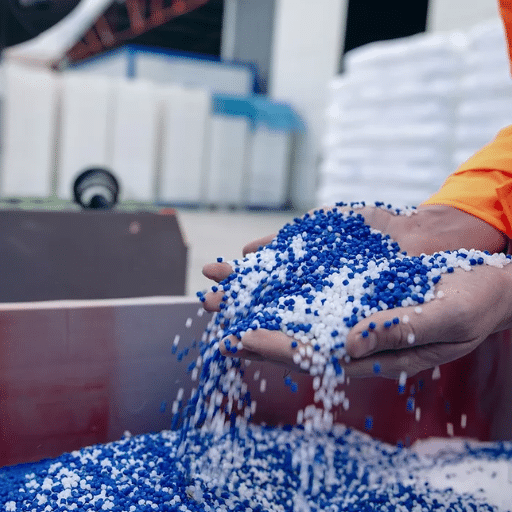
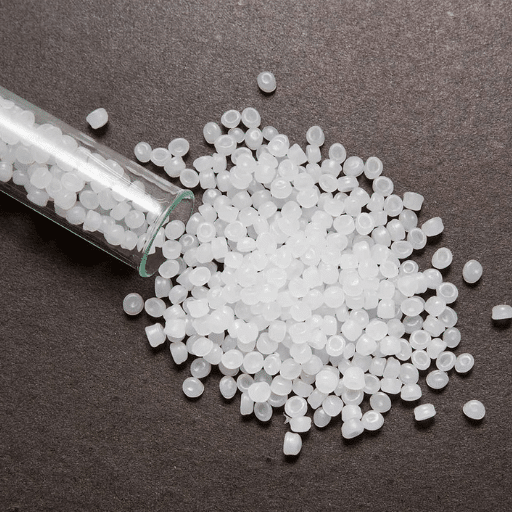
TPE ships as pellets or granules designed for injection molding, extrusion, blow molding, and even 3D printing. But pellet quality varies between suppliers, and it changes how your line runs. When you evaluate a TPE supplier, verify four things:
- Batch-to-batch melt flow consistency. A stable melt flow index prevents process drift and shot-to-shot variation.
- Uniform pellet size and shape. Consistent pellets melt evenly, feed without bridging, and produce stable parts.
- Drying requirements. Hygroscopic grades like TPU and TPEE need 2 to 4 hours of drying at 60°C to 100°C before processing.
- Documented certifications. Look for ISO 9001, REACH, and RoHS, plus FDA or EU approval where your application requires it.
At Suzhou Yifuhui New Material Co., Ltd., we supply TPE and TPV pellets → in a range of Shore hardness and melt flow grades, with batch consistency control and uniform pellet sizing baked into production. Our team answers material questions in writing within 24 hours, so you are not guessing at specs.
Ready to compare TPE grades side by side? Request a detailed specification sheet and quote →
TPE Applications Across Industries
Automotive is the largest TPE consumer, at roughly a third of global demand. Weather seals and gaskets use TPV for its low compression set. Interior soft-touch trim uses SEBS and TPO for feel and cost. EV battery gaskets increasingly rely on flame-retardant TPV grades.
Beyond automotive, TPE shows up across manufacturing:
- Consumer electronics. Wearable straps, earbud tips, phone cases, and overmolded grips.
- Medical and healthcare. Tubing, syringe plungers, seals, and face mask components.
- Industrial. Bellows, grommets, cable jackets, and anti-vibration mounts.
- Construction and packaging. Window gaskets, door seals, and food contact closures.
For high-heat electronic components that need more than TPE can offer, our PEI pellets for 5G infrastructure → explain the engineering plastic alternative.
Frequently Asked Questions

Is TPE plastic or rubber?
TPE is both. It behaves like a vulcanized rubber at service temperature, stretching and recovering under load, but it processes and recycles like a thermoplastic. That dual nature is the defining characteristic of the entire TPE family.
What temperature can TPE withstand?
Most TPEs work continuously from -40°C to about 120°C to 135°C. Copolyester TPEE grades extend to 150°C with heat stabilizers. If your application runs hotter than that, you need silicone or an engineering plastic instead.
Is TPE food safe?
Only specific grades are food safe. Food-contact TPE must comply with FDA 21 CFR 177.2600 or EU Regulation 10/2011 and pass migration testing. Always verify the grade’s certification before using it in food packaging or processing.
Is TPE recyclable?
Yes. Unlike thermoset rubber, TPE can be reground and reprocessed. Runners, sprues, and scrap are typically reused at 10% to 30% ratios without major property loss, which lowers waste and material cost.
What is the difference between TPE and TPU?
TPU is one TPE type. It uses polyurethane chemistry that delivers the best abrasion and oil resistance in the family, but it costs more and must be dried before processing. Generic TPE usually means SEBS-based material, which is softer, cheaper, and easier to color but weaker against oil and heat.
Conclusion
TPE material properties are not a single checklist. They span five families, each with its own hardness range, temperature ceiling, compression set, and chemical resistance. Choosing the right one starts with service temperature and chemical exposure, then narrows by hardness, compression set, and regulatory needs.
The three things to remember: Shore hardness alone never tells you how a part will perform, TPV beats SEBS for sealing and weathering, and pellet quality from your supplier drives production consistency just as much as chemistry does.
If you are specifying TPE or TPV for a new part, talk to a supplier who carries the full family. We keep certified grades in stock, ship globally, and return pricing and material data within 24 hours. Request a custom TPE quote →