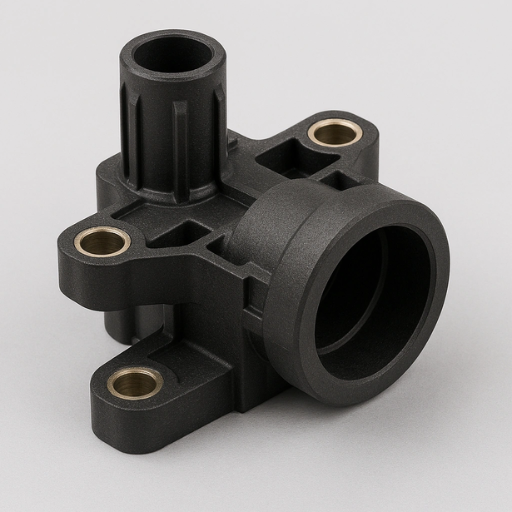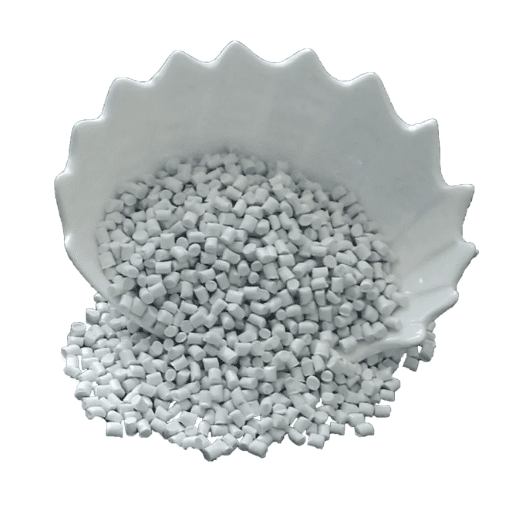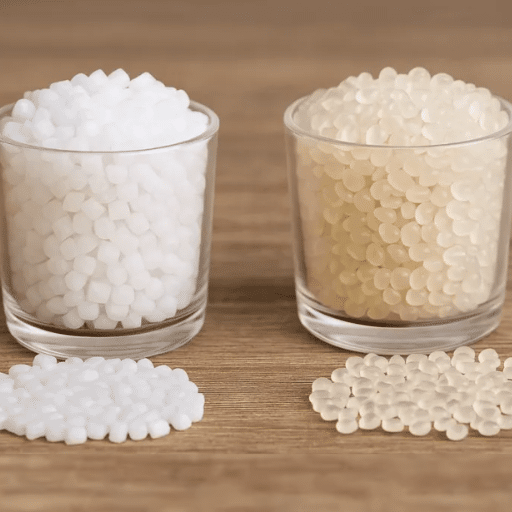
Daniel, a procurement lead at a woven-bag plant in Southeast Asia, had two quotations open on his screen for the same job. One was HDPE at a firm price. The other was LLDPE, delivered, about nine percent cheaper per kilogram. Both said “polyethylene pellets.” Neither said a density, and neither said a melt flow index.
He ordered the cheaper one. The film line ran, the bags formed, and the pallets shipped.
Two months later his customer returned a container. The sacks had failed at the seams under stack load. The material wasn’t defective. It was a different polyethylene, chosen on price rather than on the property it needed to deliver.
That is the trap this guide exists to close. The difference between HDPE and LDPE, and between LDPE and LLDPE, isn’t academic. It shows up after the run, when the scrap is already counted.
You’ll get four things here: the property differences that actually drive a decision, a verdict on when each can be substituted for another, the real cost of switching a line from one to another, and the exact specification to put on your next purchase order. If you’re sourcing polyethylene pellets in bulk, this is the comparison to read before you approve the quotation.
HDPE vs LDPE vs LLDPE: The Short Answer

HDPE, LDPE and LLDPE are all polyethylene, and all three are sold as pellets. What separates them is how much their molecular chains branch, and branching sets density, stiffness, barrier and melting point in one causal sequence.
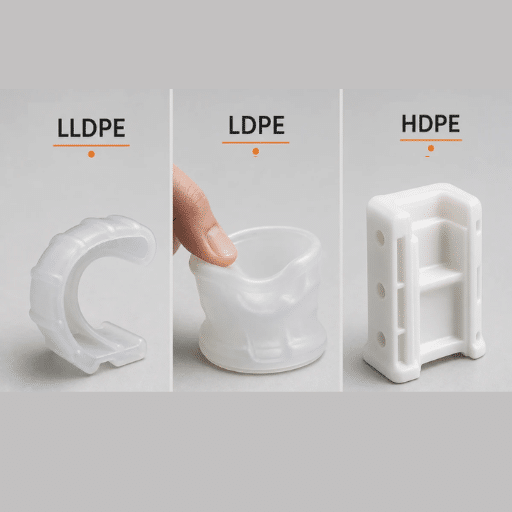
- Choose HDPE when the part must carry load, hold a shape or resist a chemical. Linear chains pack densely, so HDPE is the stiffest and strongest of the three and has the best moisture barrier. Bottles, crates, pipe, caps and closures.
- Choose LDPE when you need flexibility, good clarity and a forgiving process window. Heavy branching keeps the chains apart, so LDPE is soft, seals easily in the sense of flowing readily, and blows into film on almost any extruder. Bags, liners, shrink wrap and extrusion coating.
- Choose LLDPE when you need toughness at a low density. Short branches built from a comonomer give LLDPE higher puncture resistance, tear strength and ESCR than LDPE at the same melt flow index. Stretch wrap, heavy-duty sacks, geomembranes and flexible tubing.
Here is the same decision as a table.
| If your requirement is… | Order | Because |
|---|---|---|
| Maximum stiffness and load-bearing strength | HDPE | Highest crystallinity of the three, 65–85% |
| Best moisture vapor barrier | HDPE | Dense chain packing leaves little free volume |
| Highest puncture and tear resistance at low density | LLDPE | Toughness comes from the comonomer, not from density |
| Best resistance to stress-cracking under chemical load | LLDPE | Highest ESCR of the three |
| Easiest processing on existing LDPE equipment | LDPE | Long-chain branching gives high melt strength and strong shear thinning |
| Clarity and a broad sealing window | LDPE | Lowest crystallinity, least light scattering |
| Lowest seal-initiation temperature in film | LLDPE (metallocene) | Narrower MWD and short branches diffuse across the seal faster |
| Chemical resistance and rigidity in a molded part | HDPE | Highest crystallinity plus near-linear chains |
In short: HDPE is the stiff, strong, barrier option; LDPE is the flexible, clear, easy-processing option; and LLDPE sits between them on stiffness while beating both on toughness and stress-crack resistance at the same density.
If you already know which family you need and just want the grade documentation to match, our material team can map your application to a density and MFI window. Send us your specification and we’ll confirm the family before you commit to a tonnage.
HDPE vs LDPE vs LLDPE: Property Comparison
The numbers below are the ones that change a purchasing decision. Every value carries its test method, because a tensile figure without a method is not a specification.
| Property | HDPE | LDPE | LLDPE | Test method |
|---|---|---|---|---|
| Density (g/cm³) | 0.941–0.976 | 0.910–0.940 | 0.915–0.940 | ASTM D792 / ISO 1183 |
| Melt flow index (g/10 min, 2.16 kg at 190 °C) | 0.05–0.4 (pipe) up to 20–30 (thin-wall) | 0.2–4 (film) up to 20+ (coating) | 0.5–4 (film) up to 20+ (injection) | ASTM D1238 / ISO 1133 |
| Chain branching (per 1,000 backbone carbons) | ~1–2, near-linear | Short and long branches, highly branched | 16–35 short branches on a linear backbone | Structural (NMR) |
| Crystallinity (%) | 65–85 | 40–60 | 35–60 | DSC |
| Melting point (°C) | 125–135 | 105–115 | 118–125 | DSC |
| Softening point (°C) | 120–130 | 90–100 | 100–115 | ISO 306 |
| Tensile strength at break (MPa) | 17–45 | 8.2–31.4 | Roughly 15% above LDPE at equal density and MFI | ISO 527 |
| Elongation at break (%) | 100–1,000 | 300–800 | 500–900 | ISO 527 |
| Stiffness (flexural modulus) | Highest of the three | Lowest of the three | Between the two, up to ~25% stiffer than LDPE at equal density | ISO 178 |
| Notched impact strength | Lowest of the three | Moderate, some grades no-break | Above LDPE at equal MFI | ISO 180 |
| Puncture and tear resistance | Low to moderate | Moderate | Highest of the three | ASTM D1709, ASTM D1922 |
| ESCR (stress-crack resistance) | Lowest, improves with comonomer | Moderate | Highest of the three | ASTM D1693 |
| Moisture vapor transmission | Best barrier of the three | Weakest barrier | Between the two | ASTM E96 |
| Optical haze / clarity | Opaque to translucent | Clearest of the three | Hazier than LDPE | ASTM D1003 |
| Seal initiation and hot tack | High initiation temperature | Highest initiation, weakest hot tack | Lowest initiation, strongest hot tack | ASTM F1921 |
A warning before you read too much into the precision. This is the most source-contested comparison in the polyethylene family. Crystallinity for HDPE is quoted as both 65–85% and 70–90% depending on which reference you open, and LDPE appears as both 40–60% and 45–65%. Reputable-looking web summaries even circulate an LLDPE melting point range of 114–160 °C, which can’t be correct for a linear low-density resin.
The ranges above reflect the majority of producer datasheets. Where your own datasheet disagrees, the datasheet wins.
Why Chain Branching Decides Everything
The three families differ in one structural respect: how many branches hang off the polymer backbone.
LDPE is polymerised under high pressure and produces both short and long branches. The long branches matter disproportionately, because they are what give the melt its strength and its ability to shear-thin. LLDPE is made at low pressure with a comonomer, so it has a linear backbone carrying 16 to 35 short branches per 1,000 carbons and no long-chain branching at all. HDPE is near-linear, with roughly one to two branches per 1,000 carbons.
Branches keep chains from packing. Less packing means lower crystallinity, which means lower density, lower stiffness, lower melting point and a weaker barrier. That single causal chain explains almost every row in the table above, and it explains why HDPE is stiff and opaque while LDPE is soft and clear. For the polymer chemistry behind it, SpecialChem’s polyethylene grade-selection guide is the most reliable free reference available.
Density and Crystallinity
Density is the fastest way to tell the three apart, but it’s also the boundary that moves most between sources. HDPE begins at 0.941 g/cm³ and runs to 0.976. LDPE sits at 0.910–0.940. LLDPE occupies 0.915–0.940, which means it overlaps LDPE across almost its whole range.
Two pellets both reading 0.925 g/cm³ can be either family. That overlap is why a family name alone isn’t a purchasing specification, and why density has to be quoted alongside the family on every quotation you accept.
Melting Point and Thermal Limits
Melting point runs in the order you’d expect: HDPE 125–135 °C, LLDPE 118–125 °C, LDPE 105–115 °C. The practical consequence lands on the sealing bar, not the extruder. A film with a lower melting point seals at a lower temperature, which is faster and gentler on the web, but it also means a lower service temperature in the finished pack. If the pack gets filled hot, LDPE’s low melting point turns into a liability rather than an advantage.
Stiffness, Impact and Tensile Strength
HDPE is the strongest and stiffest, LDPE the softest and most flexible, and LLDPE lands between them on stiffness while exceeding LDPE on tensile and impact at equal density. You’ll read that HDPE is “three times stronger than LDPE.” The published ranges don’t support that claim, so treat it as marketing shorthand rather than data.
What is well supported: LLDPE carries higher impact strength, puncture resistance, tear strength, elongation and ESCR than LDPE at the same MFI and density. That’s the single most decision-relevant mechanical fact in this article.
The Difference Between HDPE and LDPE, and Between HDPE and LLDPE
Read the table row by row rather than column by column, and the pairwise answers fall out.
HDPE vs LDPE: HDPE has roughly three times the stiffness and far better moisture barrier, because its near-linear chains pack densely. LDPE is softer, clearer and dramatically easier to process. The gap between them is the widest of any pair here, which is why swapping LDPE into an HDPE blow-molding job should not be attempted.
HDPE vs LLDPE: closer than most buyers expect. LLDPE matches or beats HDPE on impact, puncture and tear resistance, and wins clearly on ESCR. HDPE wins on stiffness, tensile strength and moisture barrier.
If your part needs to hold a shape, HDPE. If it needs to survive impact and chemical contact without cracking, LLDPE is often the better answer even though it’s a “low-density” family.
Barrier and Optical Properties
HDPE’s dense packing makes it the best moisture barrier of the three and the worst optical performer: high crystallinity scatters light, so HDPE is opaque to translucent at best. LDPE is the clearest, and LLDPE sits between but is hazier than LDPE at equal gauge. If clarity is a requirement rather than a preference, LDPE or a clarified LLDPE grade is the correct starting point, not HDPE.
The Film Question: LDPE vs LLDPE

Around 70% of all LDPE and LLDPE consumed worldwide goes into film, according to the PlasticsEurope polyolefins overview. That makes film the most consequential place to get this choice right. It’s also where the two low-density families diverge hardest.
Seal Strength and Hot Tack
LDPE is the weakest of the PE sub-types for seal strength and hot tack. Its long-chain branches diffuse slowly across the seal interface, which restricts molecular entanglement exactly where you need it. LLDPE, and metallocene LLDPE in particular, diffuses more readily and delivers a lower seal-initiation temperature with higher hot-tack strength, plus better tolerance of seal-through contamination.
For anyone running form-fill-seal lines, this outranks stiffness. A pack that leaks at the seam has already failed, no matter how good the film’s modulus was.
Processability: The Real Trade-Off
Here’s the part most comparisons state and never quantify. LDPE shear-thins strongly and builds a robust melt network, because its long-chain branching gives the melt something to entangle. LLDPE has none of that.
The result: lower melt strength, higher viscosity at processing shear rates, a greater tendency to melt-fracture, and a need for more torque and a wider die gap to run at all.
| Line variable | LDPE | Straight LLDPE | Typical shift |
|---|---|---|---|
| Melt temperature | 160–180 °C | 190–220 °C | +20 to +40 °C |
| Die gap | 1.0–1.6 mm | 1.6–2.5 mm | Wider |
| Screw torque and head pressure | Lower | Higher | +15 to +30% |
| Melt strength / bubble stability | High | Lower | Bubble less stable |
| Melt fracture risk | Low | Elevated | Requires temp or additive change |
| Output on an LDPE-configured line | Baseline | Reduced | Commonly 10–25% lower |
Those shifts are directional and line-dependent. Your extruder, screw design and die will move the numbers. The point is that switching a line from LDPE to LLDPE isn’t a material swap. It’s a process re-set, and the output loss is a real cost that usually doesn’t appear in the price per kilogram.
Downgauging
Set against that friction is the reason converters persist with LLDPE. Stretch wrap runs at 17–24 µm in LLDPE against 28–38 µm in LDPE, and LDPE shrink wrap typically runs 45–75 µm. If you can hold the same load with 30% less film, the cost per pallet falls even when the price per kilogram rises. That is the correct comparison, and it is why cost per kilogram is the wrong number to negotiate on.
Blending
The three families are not mutually exclusive, and the industry does not treat them that way. Adding up to roughly 20% by weight of LDPE into an LLDPE blend improves processability, bubble stability and optical properties, and 50/50 LDPE/LLDPE blends are routine for heavy-duty sacks. If a straight LLDPE run is unstable on your line, the answer is often a blend rather than a different resin.
For the process-grade detail behind these film choices, polyethylene pellet types and grades maps each family to its MFI window and processing route.
Can You Substitute One for Another?
This is the question that costs money, and it is the one almost nobody answers directly. Whether a swap works depends on the process, not just the material. The matrix below gives the verdict per conversion route.
| Process | Substitution | Verdict | Why |
|---|---|---|---|
| Blown film | LDPE → LLDPE | Workable with re-validation | Lower melt strength, higher torque, wider die gap, higher melt temperature; expect an output drop on an existing LDPE line |
| Blown film | LLDPE → LDPE | Drop-in, with a toughness loss | Processes more easily, but you give up puncture, tear and ESCR |
| Blown film | LLDPE → metallocene LLDPE | Workable with re-validation | Same density class, but MWD and seal behavior differ; re-set the seal bars |
| Blow molding | HDPE → LDPE | Do not attempt | Stiffness and melt strength too low; the parison sags and wall thickness is lost |
| Injection molding | HDPE ↔ LDPE | Drop-in with re-validation | MFI-matched grades flow similarly; shrinkage, cycle time and warpage still differ |
| Injection molding | HDPE → LLDPE | Workable with re-validation | Softer parts with lower stiffness; expect faster cycles and higher shrinkage |
| Pipe and conduit | LLDPE → HDPE | Workable with re-validation | Flexibility is lost and ring stiffness rises; the jointing method may have to change |
| Rotational molding | LLDPE → HDPE | Do not attempt | Rotomolding HDPE is a separate powder grade family with different particle size and MFI |
| Extrusion coating | LDPE → LLDPE | Do not attempt | Neck-in and draw-down behavior differ fundamentally; LDPE is the coating standard |
Two rules sit underneath that table.
First, what always has to be re-validated. Shrinkage, cycle time, seal parameters and ESCR under your actual chemical load. A substitution can pass every data-sheet comparison and still fail on one of these four.
Second, the spec that travels. Once you have chosen, describe the material with three numbers and a word: density, MFI with its test condition (for example, 2.16 kg at 190 °C), and either the comonomer (C4 butene, C6 hexene or C8 octene) or the molecular weight distribution. A family name is not a specification, and neither is a grade code without a datasheet behind it.
Cost per Part, Not Cost per Kilogram

Price is the last tie-breaker in this decision, never the first, and the ordering between the three families is not stable.
Through H1 2026 in China, LDPE averaged 10.231 RMB/kg against LLDPE at 7.883 RMB/kg, a premium of roughly 30%. FOB data for September 2026 shows LDPE at 1.625 USD/kg against LLDPE at 1.205–1.315. But the ordering reverses by grade. US blow-molding HDPE traded at 1.210 USD/kg in March 2026, below LLDPE, while HDPE pipe black at 1.725 and bottle-cap grades at 1.700 traded above general-purpose LDPE in the same window.
So the honest answer to “which is cheaper” is that it depends on the grade, the region and the quarter. What doesn’t move is the arithmetic that matters: density, wall thickness and downgauging all change the number of parts or meters you get from a tonne.
LLDPE can cost more per kilogram and still less per pallet. LDPE can cost less per kilogram and lose the argument on line speed and seal reliability.
Our full 2026 pricing breakdown lives in the polyethylene pellets price guide. Use the figures above as a direction, and price your own decision per part.
Sustainability, Food Contact and End of Life
All three families are mechanically recyclable and none of them are biodegradable. They carry different resin identification codes: HDPE is code #2, while LDPE and LLDPE are both code #4. That difference matters at the sorting line, where a #2 bottle stream has far better established infrastructure than a #4 film stream.
Bio-based polyethylene is available from renewable feedstock and carries USDA BioPreferred and ISCC+ recognition. PE grades are also chlorine-, bromine- and fluorine-free and PFAS-free, which is increasingly asked about in regulated markets.
For food contact, the governing references are FDA 21 CFR 177.1520 for olefin polymers, EU 10/2011 and EC 1935/2004 in Europe, and GB 4806.7-2023 in China. Virgin PE grades are formulated to meet these. Recycled PE intended for food contact requires a Letter of No Objection before it can be used, and that is a documentation step, not a formality.
One temperature caveat is worth stating plainly. PE generally suits service temperatures of roughly 80–120 °C. For microwave or near-boiling service, PP plastic pellets (polypropylene, resin code #5) are the appropriate material, not any of the three discussed here.
Turning the Decision into a Specification
A family choice becomes a purchase only when it is written down. Nine lines turn “we need PE pellets for bags” into an order a supplier can quote against in one pass:
- Family: HDPE, LDPE or LLDPE
- Density, with tolerance
- MFI, with the test condition stated
- MWD narrow or broad, or the comonomer (C4/C6/C8)
- Additive package: slip, antiblock, UV, antioxidant
- Virgin or recycled, and the recycled percentage if applicable
- Certification required: FDA, EU 10/2011, GB 4806.7-2023, or food-contact letter
- Form and packaging: pellet or powder, 25 kg bags, jumbo bags or bulk
- Quantity, Incoterms and delivery point
Then add the one clause that prevents most disputes: per-lot density and MFI on the certificate of analysis. A family name on a quotation is not a specification, and a grade code without a datasheet is an assumption.
For the HDPE side of that specification, our HDPE plastic pellets range documents density and MFI per lot. Note also that the industry uses “granules” and “pellets” interchangeably for the same product; the terms are covered in granules and pellets.
HDPE, LDPE and LLDPE Pellets from Suzhou Yifuhui
Suzhou Yifuhui New Material Co., Ltd. supplies HDPE and standard polyethylene grades with per-lot documentation rather than a family name on an invoice.
What ships with the material:
- Verified grade documentation. Our published Taisox 9001 HDPE datasheet is available for review before you order, so you can confirm the grade meets your density and MFI window first.
- Lot-traceable COAs carrying density and MFI for the specific lot you receive, not a generic technical data sheet.
- Technical response within 24 hours on grade selection, including help matching a substitution candidate to your existing process window.
- Global shipping on 25 kg bags, jumbo bags and bulk, with the Incoterms that suit your plant.
If you send us your application, your current grade code and your target density and MFI, we will confirm whether the family you have in mind is the right one before you place a tonnage. If it isn’t, we will say so.
Frequently Asked Questions

What is the difference between HDPE, LDPE and LLDPE?
The difference is chain branching. HDPE is near-linear and packs densely, giving the highest crystallinity, stiffness and moisture barrier. LDPE is heavily branched with both short and long branches, making it flexible, clear and easy to process. LLDPE has a linear backbone with short branches from a comonomer, which gives it higher toughness, puncture resistance and ESCR than LDPE at the same density.
Which is stronger, HDPE or LLDPE?
HDPE has the higher tensile strength and stiffness. LLDPE has the higher impact strength, puncture resistance, tear strength and ESCR. Which one is “stronger” depends on whether the load is static and structural or dynamic and impact-based.
What is the difference between HDPE and LDPE?
HDPE is the stiffer, stronger and more barrier-capable of the two, and it is opaque. LDPE is softer, clearer and much easier to process, with a lower melting point. HDPE suits load-bearing parts like bottles, crates and pipe; LDPE suits flexible film, liners and extrusion coating. Of any pair in this comparison, the gap between HDPE and LDPE is the widest, and substituting one for the other is the least likely to work.
What is the difference between HDPE and LLDPE?
The gap is smaller than most buyers assume. HDPE wins on stiffness, tensile strength and moisture barrier. LLDPE wins on impact, puncture and tear resistance, and ESCR.
The practical split: if the part must hold a shape, choose HDPE. If it must survive impact and chemical contact without cracking, LLDPE often performs better.
What is the difference between LDPE and LLDPE film?
LLDPE film is tougher, more puncture-resistant and more resistant to tearing and stress cracking. LDPE film is easier to process, runs at higher output on existing lines, and offers better clarity. LDPE is the weakest PE sub-type for seal strength and hot tack; LLDPE seals at a lower initiation temperature with stronger hot tack.
Which is more flexible, LDPE or LLDPE?
LDPE is more flexible at equal density because its lower crystallinity leaves the chains freer to move. LLDPE can be made in soft grades, but at the same density it is stiffer and tougher than LDPE rather than more flexible.
Can HDPE, LDPE and LLDPE be substituted for each other?
Sometimes, and it depends on the process. Swapping between LDPE and LLDPE in blown film is workable with re-validation. Swapping LDPE into a blow-molding HDPE application should not be attempted. Shrinkage, cycle time, seal parameters and ESCR under the actual chemical load must always be re-validated before a substitution is approved.
Can you blend LDPE and LLDPE?
Yes, and it is standard practice. Adding up to about 20% by weight of LDPE into LLDPE improves processability, bubble stability and optical properties, and 50/50 blends are common for heavy-duty sacks.
Which is cheaper, LDPE or LLDPE?
There is no permanent answer. In most 2026 Chinese and FOB data LDPE carried a material premium over LLDPE of roughly 30%, but US blow-molding HDPE traded below LLDPE in March 2026 while HDPE pipe and cap grades traded above general-purpose LDPE. The ordering is grade-, region- and quarter-dependent, which is why cost per part beats cost per kilogram.
Is HDPE food safe?
Virgin HDPE grades are formulated to comply with FDA 21 CFR 177.1520, EU 10/2011 and GB 4806.7-2023, and are widely used in food-contact packaging. Recycled HDPE used for food contact requires a Letter of No Objection. PE is generally suited to service temperatures of roughly 80–120 °C; for microwave or near-boiling service, polypropylene is the appropriate material.
Conclusion
HDPE, LDPE and LLDPE are not three grades of one material. They are three materials that happen to share a name and a pellet form.
- HDPE wins on stiffness, tensile strength and moisture barrier, and it is the right answer when the part carries load or holds a shape.
- LDPE wins on flexibility, clarity and process forgiveness, and it remains the standard for extrusion coating.
- LLDPE wins on toughness, puncture and tear resistance and ESCR at low density, and it is the weakest of the three only in melt strength.
- Substitution is process-specific, not material-specific. Re-validate shrinkage, cycle time, seal parameters and ESCR every time.
- Specify with density, MFI plus its test condition, and the comonomer or MWD. Ask for both figures on the COA of every lot, and price your decision per part rather than per kilogram.
If you are weighing HDPE vs LDPE vs LLDPE for a specific part, and you want the family confirmed against real grade documentation rather than a datasheet summary, send us the application and your current grade code. We will tell you which of the three you need, and which one to avoid.