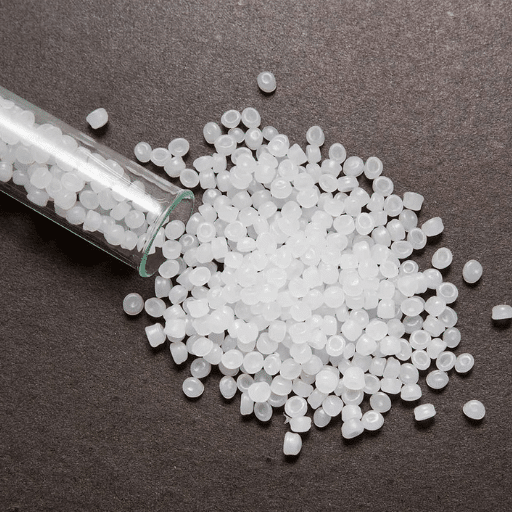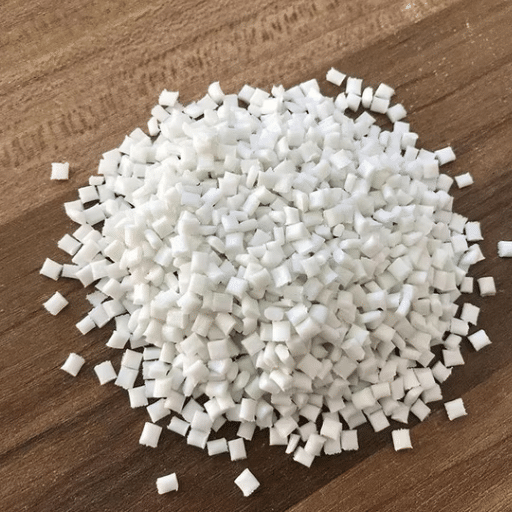
Your inbox has a quotation in it: “HDPE pellets, grade 5000S, delivered.” There is a grade code, a tonnage and a lead time. What’s missing is a density, a melt flow index, or any indication of which of the five polyethylene families you are actually being offered.
That missing line is where most polyethylene sourcing problems start. Choosing between polyethylene pellets types isn’t one decision. It’s two decisions stacked on top of each other, and the industry’s vocabulary blurs them constantly. Buyers ask for “PE pellets” and receive a code that means something different at every producer.
This reference separates the two. You’ll find the five main polyethylene pellet types, with their density, crystallinity and melting point ranges. You’ll also find the melt flow window each processing method needs, a matrix mapping process to MFI and density, and the exact specification to put on a request for quotation. With that, a supplier can quote you correctly the first time.
Consider what happened to Priya, a procurement manager at a container manufacturer. A broker quoted her “HDPE pellets, 5000S” at 12% below her current material cost. She was one signature away from ordering when her plant manager asked a single question: what is the melt flow index?
The code traced back to a low-flow film and blow-molding family running 0.3 to 0.9 g/10 min. Priya’s line molds thin-wall crates at MFI 20 to 30. The cheaper pellets would have produced short shots, warped walls and a scrapped production run.
Not sure which family your part actually needs? Send our material team your grade code or product drawing and we will map it to a type, a process window and a density range. Talk to a polymer specialist.
Polyethylene Pellets: Type vs Grade
Two words get used interchangeably across this industry, and they should not be.
Type describes the polymer family. It’s defined by chemistry: how much the polymer chains branch, how densely they pack, and how heavy the molecules are. Type sets density, crystallinity and melting point. HDPE, LDPE and LLDPE are types.
Grade describes a specific commercial product inside a type. Two HDPE grades can share the same density and still behave nothing alike, because grade is set by melt flow index (MFI), molecular weight distribution (MWD), comonomer selection and the additive package.
Here is the distinction in one line: type tells you what the material is, grade tells you what it will do on your machine.
That gap is expensive. A supplier can quote “HDPE at 0.955 g/cm³” twice and mean two incompatible products. At that density you can have an injection grade flowing at MFI 8, built for fast cycles and low warpage, or a pressure pipe grade flowing at MFI 0.3, built for 50-year hydrostatic strength.
They share a family name and a density figure. They can’t be substituted for one another. The practical consequence is simple: when you specify a purchase, the type narrows the field and the grade decides whether the material runs. Both must appear in writing.
Polyethylene Pellets Types: The Five Main Families
Polyethylene pellets fall into five main types, distinguished by density and chain branching:
- HDPE (High-Density Polyethylene): linear chains, 0.941 to 0.976 g/cm³, stiff and opaque
- LDPE (Low-Density Polyethylene): heavily branched, 0.910 to 0.940 g/cm³, flexible and translucent
- LLDPE (Linear Low-Density Polyethylene): linear with short branches, 0.915 to 0.935 g/cm³, tough films
- MDPE (Medium-Density Polyethylene): between LDPE and HDPE, 0.926 to 0.940 g/cm³, strong ESCR
- UHMWPE (Ultra-High-Molecular-Weight Polyethylene): extremely long chains, 0.930 to 0.935 g/cm³, exceptional wear resistance
Density is the master variable because it tracks crystallinity, and crystallinity drives almost every mechanical property. More crystallinity means a stiffer, stronger, more opaque, higher-melting material with lower impact resistance. Branches interrupt the crystal lattice, so the more a producer branches the chain, the softer and more flexible the result.
HDPE (High-Density Polyethylene)
HDPE has minimal branching, which lets its chains pack tightly and crystallize to 65 to 85%. The result is a stiff, opaque material with a melting point around 125 to 135 °C and a Vicat softening point near 127 to 128 °C. It’s the highest-volume polyethylene for rigid parts: crates, bottles, drums, caps, pipe and containers.
HDPE’s environmental stress crack resistance sits in the middle of the family. It improves as molecular weight rises, which is why blow-molding grades for detergent and chemical packaging run long chains and low MFI. For a product page view of the family, see our HDPE plastic pellets range.
LDPE (Low-Density Polyethylene)
LDPE is heavily branched, so its chains can’t pack well. Crystallinity lands at roughly 55 to 65%, melting point at 105 to 115 °C, and the material is flexible and translucent rather than stiff and opaque. Its melt strength is high, which makes it the workhorse for blown film and extrusion coating, and for squeeze bottles, lids and cable insulation.
Note a boundary caution before you specify. Sources disagree on where LDPE ends and LLDPE begins. Some publish LDPE at 0.910 to 0.925 g/cm³, others at 0.910 to 0.940 g/cm³, and LLDPE appears anywhere from 0.915 to 0.940 g/cm³. Treat the boundary as a zone, not a line, and always confirm the specific grade’s datasheet rather than the family label.
LLDPE (Linear Low-Density Polyethylene)
LLDPE has a linear backbone with short, regular branches introduced by a comonomer. It sits in the same density band as LDPE but delivers higher tensile strength, better puncture resistance and greater toughness at the same thickness. That is why a 20 micron LLDPE film outperforms a 20 micron LDPE film.
The comonomer matters. Producers use 1-butene (C4), 1-hexene (C6) or 1-octene (C8). Longer comonomers produce tougher films at the same density, which is why two grades both labelled “LLDPE” can carry very different price and performance. Melting point runs around 120 to 125 °C.
MDPE (Medium-Density Polyethylene)
MDPE occupies the 0.926 to 0.940 g/cm³ band between LDPE and HDPE, with crystallinity of 70 to 80%. Its defining advantage is environmental stress crack resistance, which is why it dominates gas distribution pipe, rotomolded water tanks and shrink film. If a part must survive sustained stress in contact with a chemical or a surfactant, MDPE is usually the first family worth evaluating.
UHMWPE (Ultra-High-Molecular-Weight Polyethylene)
UHMWPE isn’t a different chemistry. It’s HDPE with an extremely high molecular weight, and its chains are so long they entangle rather than crystallize, which drops crystallinity and produces a material that absorbs impact instead of shattering. Density stays around 0.930 to 0.935 g/cm³ and melting point around 130 to 136 °C.
The payoff is abrasion resistance and impact strength that outperform most engineering plastics, along with a very low friction coefficient. The cost is processability: UHMWPE won’t flow like a normal thermoplastic, so it is shaped by ram extrusion or compression molding rather than injection molding. It also falls outside the standard density grading logic, so the ultra-high-molecular-weight polyethylene guide is worth reading separately if this family is in scope.
Specialty and Cross-Linked Types
Beyond the five core families, four names appear regularly on quotations and deserve recognition, even though this article doesn’t cover them in depth.
XLPE / PEX is polyethylene that has been cross-linked after shaping, forming a permanent molecular network. It’s standard for hot and cold water plumbing and offers strong creep resistance, but PEX isn’t recyclable, which rules it out of closed-loop programs. mPE and mLLDPE are metallocene-catalysed grades with a very narrow molecular weight distribution, giving higher toughness and better sealability than conventional LLDPE. VLDPE and ULDPE are very low density grades used where maximum flexibility is required. PE-RT is a raised-temperature resistance pipe grade for underfloor heating.
PE Pellets and PE Granules: The Same Material
You’ll see “polyethylene granules” and “polyethylene pellets” used as if they were different products. They aren’t. Both describe the same small, cut polymer bead that a resin producer extrudes and chops. “Granule” is simply the more common term in some markets, including parts of Asia and Europe, while “pellet” dominates in North America and in most technical documentation.
The distinction you should care about isn’t pellet versus granule, it’s the material form itself. The same logic applies across plastics. PP, PVC and PS all ship in this shape too, so a question about the different types of plastic granules is really a question about polymer families.
That is also why “types of plastic granules and uses” doesn’t have a single answer: the uses follow the polymer, not the shape. For the full terminology breakdown, see our article on the difference between granules and pellets.
Type Comparison Table
| Type | Density (g/cm³) | Crystallinity | Melting Point | Stiffness | Transparency | ESCR | Typical Process | Typical Applications |
|---|---|---|---|---|---|---|---|---|
| HDPE | 0.941–0.976 | 65–85% | 125–135 °C | High | Opaque | Moderate | Injection, blow molding, pipe extrusion | Crates, bottles, drums, pipe, caps |
| LDPE | 0.910–0.940 | 55–65% | 105–115 °C | Low | Translucent | Good | Blown film, extrusion coating | Bags, film, squeeze bottles, cable insulation |
| LLDPE | 0.915–0.935 | 55–65% | 120–125 °C | Medium | Translucent | Good | Blown and cast film, rotomolding | Stretch film, liners, flexible tubing |
| MDPE | 0.926–0.940 | 70–80% | ~120–130 °C | Medium | Opaque | Very good | Rotomolding, pipe extrusion, film | Gas pipe, water tanks, shrink film |
| UHMWPE | 0.930–0.935 | Varies | ~130–136 °C | Very high impact | Opaque | Excellent | Ram extrusion, compression molding | Wear strips, liners, ropes, implants |
Density and melting point figures are cross-checked against producer datasheets and polymer references. Ranges are reported rather than single values because the LDPE and LLDPE boundary differs between sources. That overlap is why any HDPE vs LDPE vs LLDPE comparison has to carry the density number alongside the family name; the label alone doesn’t settle which side of the boundary a grade sits on.
Polyethylene Pellets Types and Grades by Process

Type gets you into the right family. Grade gets you a part that molds, blows or extrudes correctly. Every processing method has a characteristic melt flow window, and every window exists for a physical reason.
The selection logic below follows the same reasoning that the SpecialChem polyethylene grade guide sets out: molecular weight distribution and comonomer choice drive the property trade-offs, and the process decides which side of that trade-off you need.
Injection Molding Grades
Injection molding needs the melt to fill a cavity quickly and then freeze without internal stress. That favours a narrow molecular weight distribution and a relatively high MFI, typically 5 to 20 g/10 min and higher for thin-wall work. The window widens considerably by family.
A narrow MWD gives low warpage and high rigidity because all the chains relax at roughly the same rate. It also lowers melt strength, which is irrelevant for injection but fatal for blow molding. Note how wide the “injection grade” label actually is: the number, not the label, is what matters.
| Family | Typical Injection MFI (g/10 min) | What Drives the Choice |
|---|---|---|
| HDPE | 2–20 | Upper end for thin-wall and caps; lower end for thick sections |
| LDPE | 1.5–50 | Very wide window; high flow for intricate shapes |
| LLDPE | 2.3–50 | Flow balanced against warpage and fill pressure |
Film Extrusion Grades
Blown and cast film grades run MFI 0.3 to 8, with LDPE, LLDPE and metallocene grades dominating the category. Film needs melt strength to hold a bubble and to survive the draw down, plus enough toughness to resist puncture. That is the opposite requirement to injection molding: broader MWD and higher molecular weight, not narrower.
Blow Molding Grades
Extrusion blow molding hangs a hot paraboloid of melt and inflates it inside a mold. The melt must support its own weight, which demands broad MWD and high melt strength, and the finished container must resist stress cracking from its contents. Blow-molding grades therefore run low MFI, typically 0.2 to 1.0 g/10 min, at high density, and are the classic home of bimodal HDPE technology.
Pipe Grades (PE80 and PE100)
Pipe is where the industry’s terminology causes the most confusion. PE80 and PE100 are not polymer types. They are pressure classes, defined by minimum required strength (MRS) ratings under ISO 12162 and ISO 9080. PE100 holds a higher MRS than PE80, which means a PE100 pipe of the same wall thickness carries more pressure, or the same pressure at a thinner wall.
Pipe grades run low MFI, generally below 0.5 g/10 min and often 0.2 to 0.45, at densities around 0.940 to 0.960 g/cm³. Carbon black content is a standard requirement for UV resistance in buried service, usually specified around 2.0 to 2.5%.
Rotomolding Grades
Rotational molding tumbles powder in a heated mold, so the material must flow freely as a powder and then sinter into a stress-free wall. Rotomolding grades run MFI 3.0 to 5.0 and are usually LLDPE or MDPE, supplied as powder rather than pellets. Applications include water tanks, bins, kayaks and playground equipment.
Caps, Closures and Thin-Wall Grades
Caps and thin-wall packaging need the fastest flow in the family plus enough stiffness to survive capping torque. These grades use high-flow, narrow-MWD HDPE in the MFI 20 to 60 range at densities of 0.950 to 0.960 g/cm³. It’s the same narrow-MWD logic as injection molding, pushed to an extreme.
Grade Selection Matrix
| Process | Recommended Type | MFI (190 °C / 2.16 kg) | Density (g/cm³) | Typical Parts |
|---|---|---|---|---|
| Injection molding | HDPE, LDPE, LLDPE | 5–20+ | 0.910–0.965 | Crates, housewares, containers, technical parts |
| Blown and cast film | LDPE, LLDPE, mLLDPE | 0.3–8 | 0.915–0.935 | Bags, liners, stretch film, packaging film |
| Blow molding | HDPE (broad MWD) | 0.2–1.0 | 0.945–0.958 | Bottles, drums, jerry cans, fuel tanks |
| Pipe extrusion | HDPE (PE80 / PE100) | <0.5 | 0.940–0.960 | Water pipe, gas pipe, drainage |
| Rotomolding | LLDPE, MDPE (powder) | 3.0–5.0 | 0.925–0.940 | Tanks, bins, kayaks, play equipment |
| Caps and thin-wall | High-flow HDPE | 20–60 | 0.950–0.960 | Closures, lids, thin-wall packaging |
This matrix is the fastest way to sanity-check a quotation. If a quoted grade’s MFI and density don’t land in the row for your process, the material is wrong regardless of the price.
Have a grade code but no datasheet? Send it to us and we will identify the family, the MFI and density window it belongs to, and confirm whether we stock a direct equivalent. Request a grade match.
How to Read a PE Pellet Grade Code
Codes such as 5000S, 5502, 2911, 6095 or 2480 look like a standard. They aren’t. Each producer builds its own family naming scheme, so those codes are illustrative examples rather than a shared nomenclature. The same code can describe entirely different products across suppliers, and two producers can sell identical material under completely different codes.
The portable specification is never the code. It’s the combination of density plus MFI plus molecular weight distribution plus comonomer plus certification, each with its test method. That set travels between suppliers; a code doesn’t. When you receive a quote built only on a code, ask for the datasheet, then verify the values against the producer’s published record in a grade database such as UL Prospector.
TDS vs COA: Typical Values vs This Lot
A Technical Data Sheet (TDS) states typical values for a grade. Producers print a standard disclaimer on nearly every one: the figures are not to be construed as specification limits. A Certificate of Analysis (COA) states this lot’s measured values, tied to a batch number.
Buyers get caught by this difference constantly. Ahmed, a quality manager at an injection molder, approved a grade on a TDS showing MFI 8.0. The delivered lot’s COA read 9.8, roughly 20% high.
The material still molded, but cycle times and part weight shifted, and the scrap rate climbed for three weeks. His purchase order had specified “MFI 8” with no test condition and no tolerance.
The fix is contractual, not technical. Specify MFI with its test condition (190 °C / 2.16 kg, per ASTM D1238 or ISO 1133), specify a tolerance band such as ±10%, and require a COA per lot. One further trap: melt index reported at 2.16 kg and melt flow rate reported at 5.0 kg are different tests, and they aren’t comparable.
That applies to every HDPE pellet melt flow index figure you are handed. Without the stated condition, the number cannot be checked against anything, including the supplier’s own datasheet. If a supplier doesn’t state the condition, the number is meaningless.
What a Real TDS Contains
A credible datasheet reports every property with a value, a unit and a test method. Here is what one producer’s bimodal HDPE blow-molding grade publishes, as a benchmark for what to demand:
| Property | Value | Unit | Method |
|---|---|---|---|
| Melt flow rate | 0.3 | g/10 min | ISO 1133 |
| Density | 0.958 | g/cm³ | ISO 1183 |
| Flexural modulus | 1,300 | MPa | ISO 178 |
| Tensile stress at yield | 28 | MPa | ISO 527 |
| ESCR | >200 | h | ASTM D1693 |
| Notched Izod impact | 10 | kJ/m² | ISO 180 |
That is the shape of a real document, not a marketing summary. If PE is not the only polyolefin you buy, our PP plastic pellets page covers the closest alternative.
Test Methods Behind the Numbers
A number without a method can’t be checked or compared. These are the standards a PE pellet specification should cite:
| Property | Test Method | Notes |
|---|---|---|
| Melt flow rate / melt index | ASTM D1238, ISO 1133 | 190 °C / 2.16 kg unless stated otherwise |
| Density | ASTM D792, ISO 1183 | Reported in g/cm³ |
| Environmental stress crack resistance | ASTM D1693 | Increasingly specified for packaging grades |
| Tensile stress at yield | ISO 527 | Strength and elongation at break |
| Flexural modulus | ISO 178 | Stiffness indicator |
| Notched Izod impact | ISO 180 | Impact resistance |
| PE pressure pipe systems | ISO 4427 (water), ISO 4437 (gas), EN 1555 | Pipe grade certification |
| PE80 / PE100 classification | ISO 12162, ISO 9080 | Defines the MRS pressure class |
What to Specify on an RFQ for Polyethylene Pellets

Most PE enquiries fail for the same reason: they describe an application instead of a material. “We need PE pellets for containers” isn’t a specification, and every supplier will answer it with a different product.
Use this ten-item checklist. A supplier who receives all ten can quote accurately in one pass.
- Type or family: HDPE, LDPE, LLDPE, MDPE or UHMWPE
- Density: target value in g/cm³, with an acceptable range
- MFI: target value, test condition (190 °C / 2.16 kg), and tolerance band
- MWD or comonomer: narrow or broad; C4, C6 or C8 if you know it
- Additive package: UV stabiliser, antioxidant, slip, antiblock, carbon black percentage
- Feedstock: virgin, PIR or PCR, with the recycled content percentage
- Certification: food contact, RoHS, REACH statement, or a specific standard such as ISO 4427
- Form and packaging: pellet or powder, 25 kg bag or 1,000 kg big bag
- Commercial terms: quantity, delivery destination and Incoterms
- Documentation: TDS with the quote and a COA per delivered lot
Two checklist items are routinely forgotten and routinely expensive. The test condition on item three, because an MFI number without it can’t be checked, and the additive package on item five, because two grades with identical density and MFI can differ entirely in UV life or sealability.
A worked example shows how much this compresses the process. Lena, a buyer at a water infrastructure supplier, sent one line: “we need PE pellets for pipes.” Rewritten against the checklist, the requirement becomes HDPE PE100, density 0.958 g/cm³, MFI 0.22 g/10 min at 190 °C / 2.16 kg with a ±10% band, black compound at 2.0 to 2.5% carbon black, certified to ISO 4427 and EN 1555, supplied in 1,000 kg big bags.
The first version generates five clarifying emails. The second generates a quotation.
Also plan the practical side. Standard PE packaging is a 25 kg moisture-barrier bag, 50 bags to a pallet for 1,250 kg net, with 1,000 kg big bags available on wooden pallets. Store pellets dry, out of direct sunlight, between −15 °C and +35 °C at a maximum 80% relative humidity, and treat the shelf life as roughly 36 months. Those conditions come from producer handling guides and they matter in humid climates.
If you’re new to specifying a demanding family, our UHMWPE pellets buyer’s guide walks the same logic through a harder material.
Finally, don’t award on cost per kilogram alone. Cost per acceptable part includes scrap rate, cycle time, machine downtime from bridging or inconsistency, and the labour cost of a re-run. A grade that costs 8% more and cuts scrap by 4% is usually the cheaper material.
Virgin, Recycled and Food-Contact PE Pellet Types

Recycled polyethylene uses the same five family names with an r prefix: rHDPE, rLDPE and rLLDPE. The chemistry is unchanged, but the feedstock changes the consistency profile.
PIR (post-industrial) material comes from manufacturing scrap and is typically cleaner and more uniform. PCR (post-consumer) comes from collected waste streams. That means wider variability in colour, odour and contamination, and a greater need for lot-level verification.
Recycled PE can deliver strong commercial and sustainability results, but the specification discipline doesn’t relax. If anything it tightens, because MFI and density scatter more between lots. Lot-level documentation matters more here than anywhere else in this guide.
For food contact, two regulations matter most. In the United States, olefin polymers are cleared under 21 CFR 177.1520, which lists the permitted base polymers and the extractive limits that apply. In the European Union, Regulation (EU) 10/2011 governs plastic food-contact materials.
Recycled PE intended for food contact additionally requires a regulatory opinion on the recycling process, typically an FDA Letter of No Objection, because the base olefin clearance alone doesn’t cover post-consumer feedstock. Confirm the exact grade and end-use with your compliance team before committing.
One regulatory point frequently stated incorrectly elsewhere: under REACH, polyethylene polymers themselves are exempt from registration, but their monomers and additives aren’t. If a supplier claims “fully REACH exempt PE,” the claim is imprecise.
Recycling codes tell you the material, not the recyclability. HDPE carries resin code #2 and LDPE carries #4; most other PE variants, including UHMWPE, fall under #7. For a broader comparison of how PE behaves against a very different polymer in industrial service, see our guide to comparing PE and PVC pellets for industrial use.
Polyethylene Pellets from Suzhou Yifuhui
Suzhou Yifuhui New Material Co., Ltd. supplies HDPE and the broader polyethylene family alongside a full standard and engineering plastics portfolio, so you can consolidate PE, PP, ABS, PC, PA66, POM and PFA resin sourcing with one partner instead of five.
Every polyethylene order ships with the documentation this article describes: a TDS on the quotation, a lot-traceable COA with each delivery, and verified density and MFI values against the specification you provide. Our technical team reviews grade codes, confirms equivalence, and responds to material questions within 24 hours, seven days a week.
We ship internationally with coordinated freight, and we hold inventory across the range so a shortage at one producer doesn’t become a stoppage on your line.
Send us your specification and we will return a detailed quotation with the matching datasheet. Request a quote for polyethylene pellets.
Frequently Asked Questions

What are the different types of polyethylene pellets?
There are five main types: HDPE, LDPE, LLDPE, MDPE and UHMWPE. They are distinguished by density and chain branching, with specialty variants including XLPE/PEX, metallocene PE (mPE) and VLDPE.
How many types of polyethylene are there?
Five core families cover almost all commercial volume, spanning roughly 0.910 to 0.976 g/cm³ in density. Specialty and cross-linked variants extend that list, but they’re modifications of the same families rather than separate polymers.
What is the difference between HDPE, LDPE and LLDPE pellets?
HDPE is linear and stiff at 0.941 to 0.976 g/cm³. LDPE is heavily branched and flexible at 0.910 to 0.940 g/cm³. LLDPE sits in the same density band as LDPE but has a linear backbone with short branches, giving higher toughness. See the full comparison table above.
What is the difference between PE pellets and PE granules?
None. Pellets and granules are the same extruded and chopped bead. “Granule” is the preferred term in some markets and “pellet” in others, but the material and its specification are identical.
What MFI do I need for injection molding?
Typically 5 to 20 g/10 min at 190 °C / 2.16 kg for general injection molding, and 20 to 60 for caps, closures and thin-wall parts. Narrow molecular weight distribution matters as much as the MFI value.
What does a PE pellet grade code mean?
It identifies a specific producer’s grade family, not a universal standard. Codes such as 5000S or 5502 are proprietary. The only portable specification is density plus MFI with its test condition, molecular weight distribution, comonomer and certification.
What is the difference between PE80 and PE100?
They are pressure classes, not polymer types. PE100 has a higher minimum required strength rating than PE80 under ISO 12162 and ISO 9080, so it carries more pressure at the same wall thickness. Both are HDPE pipe grades running MFI below 0.5 g/10 min.
What should I put on an RFQ for plastic pellets?
Type, density, MFI with test condition and tolerance, MWD or comonomer, additive package, virgin or recycled content, certification, form and packaging, quantity with Incoterms, and required documentation. The full checklist is above.
Conclusion
Polyethylene pellets types and grades are two different questions, and separating them prevents most sourcing errors. Type gives you the family and its density, crystallinity and melting point. Grade gives you the MFI and molecular weight distribution that decide whether the material actually runs on your line.
Three habits follow from that. Always specify MFI with its test condition, because a number without a condition can’t be verified. Never treat a grade code as a standard, because it’s one producer’s private naming scheme. And never accept a TDS as a guarantee, because typical values and this lot’s values are different documents.
With the type comparison table and the grade selection matrix above, you can size a material against a process in under a minute. The RFQ checklist turns that assessment into a specification a supplier can quote against in one pass, which is the difference between five clarifying emails and a confirmed order.
Send us the part you are making or the code you have been quoted, and we will confirm the type, the grade window and the documentation you should require. Talk to our polymer specialists. To learn more about Polyethylene Pellets Suppliers and What Is Polyethylene, please refer to our accompanying guide.