In March 2024, a conveyor systems manufacturer in Ohio received a 500-kilogram shipment of what their supplier called “UHMW plastic pellets.” The procurement team loaded the material into their injection molding line and ran a trial batch of chain guides.
The machine jammed within minutes. The pellets had barely softened at normal PE processing temperatures. After three days of troubleshooting, an engineer discovered the truth. The supplier had shipped standard UHMWPE powder repackaged as pellets. The material had an effective melt index of zero. That mistake cost the plant $8,200 in downtime and scrapped tooling.
If you buy polymer resins, that story probably makes you wince. UHMW plastic pellets occupy a confusing niche in the engineering plastics market. They are not standard injection molding feedstock like HDPE or ABS. They are also not the same as the UHMWPE powder used for compression molding.
This guide clears up that confusion. You will learn exactly what UHMW plastic pellets are, how they differ from powder, and which grades work for your process. You will also get current pricing benchmarks and a supplier checklist that prevents costly mistakes.
By the end of this article, you will have the technical clarity to specify the right grade, the pricing data to benchmark quotes, and a supplier checklist that prevents costly mistakes.
Need a technical datasheet for a specific UHMW grade right now? Contact our polymer specialists for specifications and a competitive quote within 24 hours.
What Are UHMW Plastic Pellets?

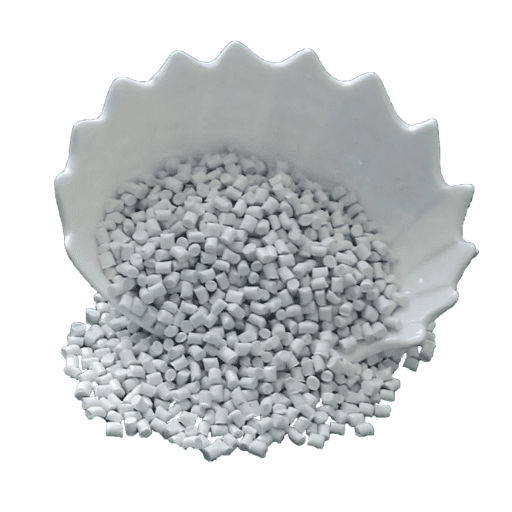
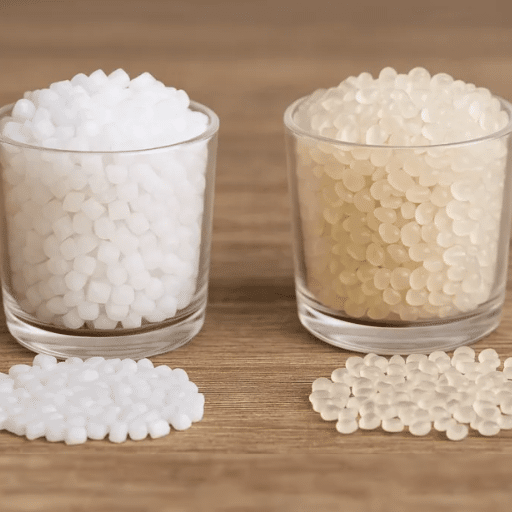
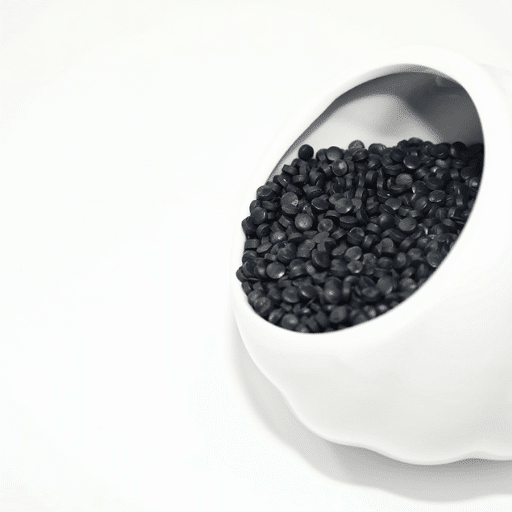
UHMW plastic pellets are pelletized forms of ultra-high molecular weight polyethylene engineered for processability on conventional thermoplastic equipment. Unlike standard UHMWPE powder, which is synthesized as a fine particulate and used for compression molding or ram extrusion, pellets are produced through specialized sintering, compounding, or binding processes. The result is a denser, free-flowing granule that feeds cleanly through standard hoppers and screw systems.
The critical distinction is molecular weight. True UHMWPE carries a molecular weight of 3 to 10 million grams per mole. Standard polyethylene pellets, including HDPE, range from 50,000 to 250,000 g/mol. Some UHMW plastic pellets on the market are actually UHMW-HDPE blends or modified grades with molecular weights in the 1 to 2 million g/mol range. These modified pellets flow better but sacrifice some of the extreme wear resistance and impact strength that define true UHMWPE.
Pellets typically exhibit higher bulk density than powder, usually 0.40 to 0.60 g/cm3 compared to 0.20 to 0.25 g/cm3 for virgin powder. That density difference matters for shipping costs, hopper capacity, and handling logistics. Pellets also generate significantly less dust, which simplifies workplace safety and reduces the need for specialized containment systems.
For a comprehensive technical overview of ultra-high molecular weight polyethylene, including its molecular structure and property profile, see our complete guide to UHMW.
Pure UHMW Pellets vs UHMW-HDPE Blends
Not every product labeled “UHMW pellet” performs the same. Pure UHMW pellets are rare and expensive. Most commercially available pelletized grades use one of three approaches:
- Pure sintered pellets: Made by compacting and sintering UHMWPE powder into granular form. These retain the highest molecular weight but still require high-pressure processing.
- Low-MW binder pellets: UHMWPE powder bound with a low-molecular-weight polyethylene matrix. These flow well but dilute the ultimate wear resistance.
- UHMW-HDPE blends: A homogeneous mixture of UHMWPE and HDPE that balances processability with enhanced properties over standard HDPE alone.
When evaluating UHMW plastic pellets, always request the Technical Data Sheet. Verify the molecular weight, melt flow rate, and processing method before you buy.
UHMW Pellets vs UHMW Powder: Which Should You Buy?
The choice between pellet and powder form depends on your equipment, application, and performance requirements. Here is the breakdown.
| Factor | UHMW Plastic Pellets | UHMWPE Powder |
|---|---|---|
| Molecular Weight | Typically 1 to 3 million g/mol (modified grades) | 3 to 10+ million g/mol (virgin grades) |
| Bulk Density | 0.40 to 0.60 g/cm3 | 0.20 to 0.25 g/cm3 |
| Handling | Standard hopper feeding, low dust | Requires dust containment, poor flow |
| Primary Processing | Injection molding, screw extrusion | Compression molding, ram extrusion |
| Equipment Needed | Conventional injection or extrusion lines | Hydraulic presses, ram extruders, sintering ovens |
| Wear Resistance | Good to excellent (grade-dependent) | Exceptional (highest MW grades) |
| Cost per kg | 1.60to1.60to4.00+ | 1.00to1.00to3.00 (powder only) |
| Best For | Complex geometries, high-volume production | Maximum abrasion resistance, medical implants |
When to Choose UHMW Plastic Pellets
Specify pellets when your production line runs standard injection molding or twin-screw extrusion. Pellets feed cleanly through automated systems, blend easily with color masterbatches, and minimize material waste. They are the right choice for high-volume manufacturing of chain guides, bearings, bushings, and conveyor components where moderate wear resistance is sufficient.
When to Choose UHMW Powder
Choose powder when your application demands maximum abrasion resistance, impact strength, or chemical resistance. Mining liners, medical implants, and battery separator films require the full molecular weight that only virgin powder provides. Powder is also the right form for compression molding large blocks or ram extruding continuous profiles.
Mini-Story: The Blended Grade Surprise
In 2023, a food processing equipment manufacturer in Denmark bought UHMW plastic pellets for conveyor wear strips. The supplier quoted an attractive $1.45 per kilogram. After six months, the strips showed severe groove wear. An analysis revealed the pellets were only 15% UHMWPE blended with 85% HDPE. The supplier had marketed them as “UHMW-enhanced.” The plant replaced the strips with genuine modified UHMW pellets at $2.80 per kilogram. Those strips lasted 34 months. The cheaper quote cost them double in replacement labor and downtime.
Unsure whether pellets or powder fit your process? Our technical team reviews your equipment specs and recommends the right form and grade. Request a free consultation. To gain a deeper understanding of UHMWPE Powder vs Pellets: Which Form Should You Source? Please refer to our accompanying guide.
Key Grades and Brands of UHMW Pellets

The UHMW pellet market includes several established brands. Understanding these options helps you match material to application.
Celanese GUR Series
Celanese produces the GUR line of UHMW-PE resins. GUR 5113 and GUR 5129 are pelletized grades specifically developed for injection molding and extrusion. These grades use a binder matrix to improve flow while retaining substantial wear resistance.
GUR 5113 is widely used for industrial wear parts and automotive components. GUR 4150, by contrast, is a high-MW powder grade for compression molding. It is not suitable for standard injection equipment.
Mitsui LUBMER Series
Mitsui Chemicals offers the LUBMER line, including L5000, L4000, and L3000 grades. These are engineered for extrusion and injection molding with enhanced self-lubricating properties. LUBMER grades are increasingly specified as PFAS-free alternatives to PTFE in applications requiring low friction without fluoropolymer content.
YUHWA Korea Grades
YUHWA produces U050, U070, and U090 grades that are available in both powder and pelletized forms. These Korean-manufactured resins are popular in Asian supply chains and offer competitive pricing for standard industrial applications.
Domestic Injection Grades
Chinese manufacturers such as SoTech Technology produce grades like UST-3000, an injection-molding-grade UHMW pellet designed for chain guides, gears, and wear pads. These grades typically offer the lowest per-kilogram pricing but require careful vetting of molecular weight claims.
Medical and Food Grade Options
Medical grade UHMW pellets must meet ISO 5834-2 or USP Class VI standards. These are cross-linked or vitamin-E stabilized grades used for surgical instruments and implantable components. Food grade pellets require FDA or EU 10/2011 compliance for direct food contact. Both categories command significant premiums over industrial grades.
Pricing Benchmarks and Cost Factors
Understanding current price ranges prevents you from overpaying or falling for suspiciously low quotes.
Current Price Ranges (2026)
| Grade Category | Price per kg (China FOB) | Price per kg (Global) | Typical MOQ |
|---|---|---|---|
| Standard Virgin UHMW Pellets | 1.60to1.60to2.00 | 2.50to2.50to3.50 | 25 kg |
| Specialty Injection/Extrusion | 2.00to2.00to4.00 | 3.50to3.50to5.50 | 25 kg |
| Medical Grade | 3.00to3.00to5.00+ | 8.00to8.00to12.00+ | 100 kg |
| High-Performance Fiber Grade | N/A (powder only) | 12.50to12.50to13.90 | 500 kg |
| Reprocessed/Recycled Pellets | 1.20to1.20to1.60 | 2.00to2.00to2.80 | 1,000 kg |
Volume Pricing Tiers
Pricing drops significantly at higher volumes. Standard breakpoints include:
- Sample orders: 1 to 5 kg at premium per-kilogram rates
- Standard bags: 25 kg bags at catalog pricing
- Pallet quantities: 500 to 1,000 kg with 10% to 15% discounts
- Bulk shipments: 800 to 1,250 kg super sacks at 15% to 25% below catalog
- Container loads: 16 to 18 metric tons per 20-foot container at lowest per-kilogram rates
Total Cost of Ownership
The purchase price is only one factor. Consider processing yield, scrap rates, and equipment compatibility. A $1.45 per kilogram blended grade that generates 20% scrap due to flow inconsistencies costs more than a $2.20 per kilogram pure modified grade that runs at 98% yield. Factor in shipping, customs, and storage when comparing international vs domestic suppliers.
Mini-Story: The Quote That Was Too Good
A procurement manager in Sao Paulo received three quotes for 2,000 kg of UHMW plastic pellets in January 2025. The lowest bid came in at $0.95 per kilogram CIF. The other two quotes were $1.85 and $2.10. Tempted by the savings, he placed the order. When the shipment arrived, independent testing showed a molecular weight of 280,000 g/mol. The material was standard HDPE mislabeled as UHMW. The entire lot had to be rejected. Customs clearance fees and demurrage added $4,300 to the loss. The lesson: if a quote is 50% below market, the material is probably not what the label claims.
Major Applications for UHMW Pellets
UHMW plastic pellets serve industries where wear resistance, low friction, and chemical inertness are critical.
Industrial Wear Parts
Injection-molded chain guides, sprockets, and wear pads represent the largest pellet market. These parts benefit from UHMW’s self-lubricating surface and abrasion resistance. Modified pellet grades work well in applications where HDPE wears too quickly but full UHMWPE powder is unnecessary.
Food Processing Equipment
FDA-compliant UHMW pellets are used for conveyor components, cutting boards, and packaging machinery parts. The material resists cleaning chemicals, maintains low moisture absorption, and meets sanitary requirements.
Automotive Components
Chain guides, tensioner shoes, and bushings use UHMW pellets for their quiet operation and wear resistance. Automotive specifications often require heat-stabilized or UV-resistant grades.
Marine and Outdoor
Dock fenders, wear pads, and boat trailer components use UHMW pellets for saltwater resistance and impact absorption. Unlike metal, UHMW does not corrode in marine environments.
PTFE Replacement
Regulatory pressure on PFAS chemicals is driving demand for UHMW pellets as PTFE alternatives in consumer and industrial products. UHMW provides comparable low-friction properties without fluoropolymer content.
How to Source UHMW Pellets: Supplier Vetting Checklist
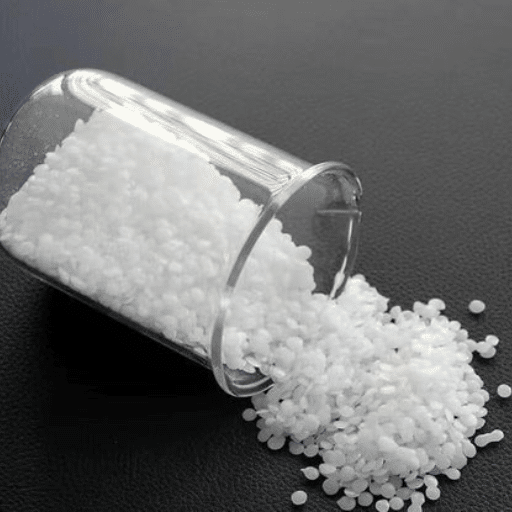
Use this checklist to evaluate any UHMW plastic pellets supplier before placing an order.
1. Request Complete Documentation
Demand a Technical Data Sheet and Safety Data Sheet before purchase. Verify molecular weight, density, melt flow index, and filler content. Reputable suppliers provide these without hesitation.
2. Confirm Processing Compatibility
Ask explicitly whether the grade is suitable for your processing method. Standard UHMW pellets will not run on conventional HDPE injection lines. Modified grades require specific temperature and pressure profiles.
3. Verify Certifications
Check for relevant compliance documents:
- ISO 9001: Quality management systems
- FDA 21 CFR 177.1520: Food contact compliance
- EU 10/2011: European food contact standards
- ISO 5834-2: Medical implant grade verification
- REACH and RoHS: Chemical safety compliance
4. Order Samples First
Run a 1 to 5 kg trial before committing to bulk. Test processing behavior, dimensional stability, and wear performance against your specifications.
5. Evaluate Supplier Capabilities
| Criterion | What to Ask | Red Flag |
|---|---|---|
| In-house production | Do you manufacture or broker? | Broker-only with no technical support |
| Lot consistency | What is your batch-to-batch variation? | No testing data available |
| Custom formulations | Can you modify additives or color? | Refuses custom work |
| Logistics | What packaging and Incoterms do you offer? | Vague shipping terms |
| Response time | How quickly do you reply to technical questions? | No dedicated technical contact |
6. Compare Total Landed Cost
Factor in shipping, customs duties, payment terms, and MOQ flexibility. A domestic distributor at $2.80 per kilogram with next-day delivery may cost less than a $1.70 per kilogram import that takes six weeks and incurs customs clearance fees.
Red Flags to Avoid
- Pricing below $1.50 per kilogram for virgin UHMW pellets
- Missing or incomplete TDS/SDS
- Vague molecular weight claims without test data
- Reluctance to provide samples
- Labels that say “UHMW-enhanced” or “UHMW-type” instead of specifying actual composition
Mini-Story: The Right Specification
An engineering team in Ontario needed wear pads for a new automated assembly line. Their initial spec called for standard HDPE to keep costs down. After reviewing wear test data, the lead engineer switched to a modified UHMW plastic pellet grade at $2.20 per kilogram. The HDPE pads had a projected life of 14 months. The UHMW pads were still performing after 38 months. The slightly higher material cost eliminated two scheduled maintenance shutdowns and saved the facility $18,000 in labor over three years.
Global Logistics and Ordering Basics
Packaging Options
UHMW plastic pellets ship in several standard configurations:
- 25 kg bags: Paper-plastic composite or PE bags, ideal for sample or small-batch orders
- 500 to 1,000 kg bulk bags: Super sacks for palletized shipping
- Container loads: 16 to 18 metric tons per 20-foot container, 25+ metric tons per 40-foot container
Lead Times and Shipping
Domestic suppliers typically deliver within 3 to 10 days. International orders from Asia range from 4 to 8 weeks depending on port congestion and customs clearance. UHMW pellets ship as standard non-hazardous cargo, which simplifies documentation compared to flammable or corrosive chemicals.
Payment and Terms
Chinese manufacturers commonly require 30% deposit with 70% against bill of lading. Established distributors may offer net-30 terms for qualified buyers.
Always confirm Incoterms. FOB means you arrange ocean freight. CIF includes shipping to your destination port. DDP includes delivery to your door with customs cleared.
Frequently Asked Questions

Can standard UHMW pellets be injection molded?
Standard grades with molecular weights above 3 million g/mol cannot be injection molded on conventional equipment. The melt viscosity is too high. Modified pellet grades with molecular weights of 1 to 2 million g/mol can be injection molded under elevated pressure and temperature. Always confirm the grade’s processing method with your supplier.
What is the price per kg for UHMW plastic pellets?
Standard virgin UHMW plastic pellets range from $1.60 to $2.00 per kilogram FOB China for industrial grades. Specialty injection or extrusion grades cost $2.00 to $4.00 per kilogram. Medical and high-performance grades command $3.00 to $5.00 or more. Volume discounts apply at pallet and container quantities.
What is the difference between UHMW pellets and UHMW powder?
Pellets are denser, free-flowing granules designed for conventional injection molding and extrusion. Powder is the raw synthesis form with higher molecular weight, used for compression molding and ram extrusion. Pellets trade some ultimate wear resistance for processability.
Are UHMW pellets food safe?
Virgin UHMW pellets that meet FDA 21 CFR 177.1520 or EU 10/2011 standards are safe for direct food contact. Always request the compliance certificate. Reprocessed or recycled grades may contain contaminants and should not be used for food applications unless specifically certified.
What MOQ should I expect for UHMW pellets?
Sample orders start at 1 to 5 kg. Standard commercial MOQs are 25 kg bags. Bulk pricing typically begins at 500 kg. Container-load pricing applies at 16 to 18 metric tons. Many suppliers offer flexibility for first-time buyers.
Which brands make injection-moldable UHMW pellets?
Celanese GUR 5113 and GUR 5129, Mitsui LUBMER L5000 series, and domestic grades like SoTech UST-3000 are all designed for injection molding. Each brand uses a different binder or modification approach, so compare datasheets carefully.
Can I use UHMW pellets in standard HDPE extrusion lines?
Only modified UHMW pellet grades designed for screw extrusion will process on HDPE equipment. Pure UHMW with molecular weight above 3 million g/mol will not flow through standard extruder screws. Consult your equipment manufacturer for screw geometry recommendations.
Conclusion
UHMW plastic pellets fill a specific niche in the engineering plastics market. They deliver enhanced wear resistance and low friction for buyers who need processability on conventional injection molding or extrusion equipment. The key is selecting the right grade, verifying supplier claims, and understanding the trade-offs between pellet convenience and powder performance.
Before you place your next order, remember three principles. First, always request a Technical Data Sheet and confirm molecular weight. Second, order samples and run trial batches before committing to bulk. Third, compare total landed cost, not just the per-kilogram quote.
At Suzhou Yifuhui New Material Co., Ltd., we source Celanese GUR, Mitsui LUBMER, YUHWA, and domestic modified UHMW pellet grades for manufacturers worldwide. We provide transparent pricing, flexible MOQs, and technical support with a 24-hour response guarantee.