Two contractors bid the same job: a DN315 water main, 10 bar working pressure, four kilometres of trench. Both quotations land on the utility’s desk the same afternoon.
The cheaper price per kilogram of HDPE pipe pellets loses. Priya, who runs procurement for the winning contractor, priced the pipeline per installed metre rather than per tonne. PE100 let her hold the same pressure duty with a thinner wall, so the job needed less resin per metre, less pipe weight, and fewer trucks on the road.
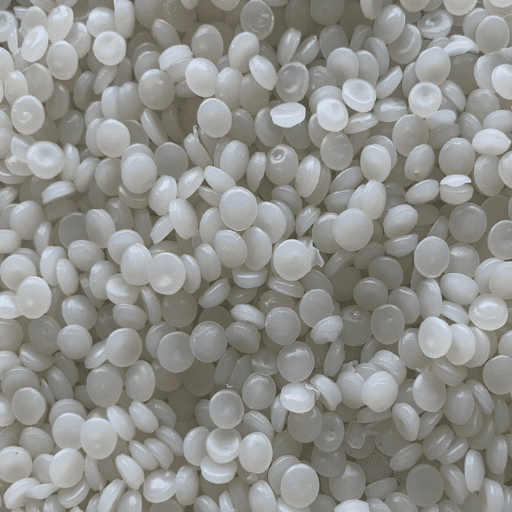
That’s the whole argument for grade selection, and it’s invisible in most purchase orders. “HDPE pipe pellets” describes a family, not a specification. PE80, PE100, and PE100-RC carry different MRS classifications, different design stresses, and different crack-resistance tests. Blow molding grades sit on the same shelf, look identical through the bag liner, and meet none of those requirements.
This guide covers what the grade number certifies, which grade fits which duty, how pipe grade differs from blow molding grade, and what belongs on the purchase order. It handles the specification and procurement layer; extrusion line settings and defect troubleshooting live in our companion HDPE extrusion guide. For the wider supplier picture, see the complete polyethylene pellets sourcing guide.
Working to a tender deadline? Send our materials team your pipe design (DN, plus SDR or PN) and we’ll confirm the MRS class and MFR window you need. Talk to a polymer specialist.
What “Pipe Grade” Actually Means: MRS, Design Stress, and the Grade Number

PE100 means the compound carries a minimum required strength of 10.0 MPa. Divide that by the service coefficient C = 1.25 and the design stress is 8.0 MPa. The grade number isn’t a marketing tier. It’s a classification earned through long-term hydrostatic testing.
The classification runs on a defined chain. A compound producer pressure-tests pipe samples to ISO 1167, analyses the results by regression to ISO 9080, and extrapolates the failure curve to 50 years at 20 °C. ISO 12162 then assigns the MRS class. The output is a certificate and a grade name, not an opinion.
| Grade | MRS (MPa) | Design stress, C = 1.25 (MPa) | Standing |
|---|---|---|---|
| PE63 | 6.3 | 5.0 | Legacy. Rarely specified for new pressure pipe |
| PE80 | 8.0 | 6.3 | Second generation. Lower-pressure water, drainage, irrigation |
| PE100 | 10.0 | 8.0 | Third generation. The modern infrastructure default |
| PE100-RC | 10.0 | 8.0 | Same MRS as PE100, higher slow-crack-growth resistance |
Here’s the procurement point most buyers miss. The classification certificate belongs to the compound producer, not the pipe extruder. The extruder shapes the pipe, but it doesn’t earn the MRS claim. When you buy pipe-grade HDPE pellets, your supplier is the party carrying that claim, so the certificate and the lot traceability behind it need to travel with the resin. Ask for them before the first tonne ships, not after the pipe is in the trench.
The PE100+ Association maintains the reference classification list if you want to check a producer’s claim. For how MRS and MFR sit alongside the rest of the polyethylene grade system, see our guide to polyethylene pellet types and grades.
HDPE Pipe Pellets: PE80 vs PE100 Grade Comparison
At the same outside diameter and the same wall thickness, a PE100 pipe carries roughly 25% more pressure than a PE80 pipe. Turned around, that ratio is where the money is.
Take SDR11, a common water-main wall ratio. A PE100 SDR11 pipe is rated PN16. Drop to PE80 and the identical SDR11 wall is rated only PN12.5. To reach PN16 in PE80, you have to step up to SDR9, a thicker wall, which is more resin per metre.
PE100 also resists slow crack growth and rapid crack propagation better than PE80, so the network sees fewer leaks over its service life. A material that fails less often costs less to own, even when the invoice per tonne is higher.
The practical consequence is a shift in how you compare quotations. Two suppliers quote “HDPE pipe pellets, black, 25 kg bags” at different prices. If one is PE80 and the other is PE100, the per-kilogram comparison tells you almost nothing about delivered pipeline cost. Grade first, then price.
One boundary worth stating: MRS is fixed for the whole class by ISO 12162, so any correctly certified PE100 compound carries the same 10.0 MPa rating. What differs is the additive package, batch consistency, and documentation. Pipe diameters, wall tolerances, and jointing sit outside the resin specification. For PE family properties, our HDPE vs LDPE vs LLDPE comparison covers density and stiffness.
PE100-RC: When Resistant-to-Crack Grade Is Worth the Premium
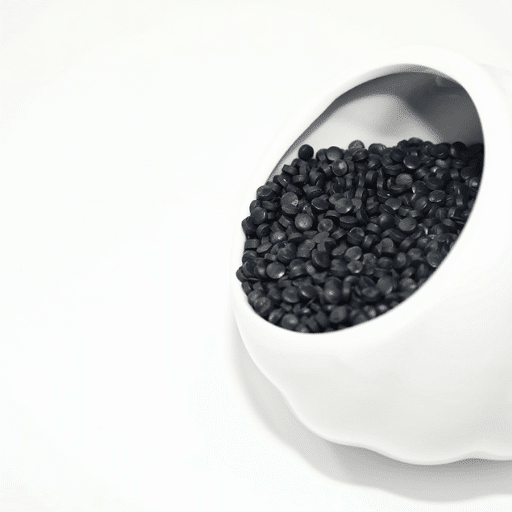
PE100-RC shares PE100’s MRS of 10.0 MPa. What it adds is resistance to slow crack growth, and that shows up in the notched pipe test to ISO 13479: conventional PE100 is expected to exceed 500 hours, while PE100-RC is expected to exceed 8,760 hours. That’s more than a year of continuous testing against a few weeks.
The modern RC qualification is a set of four tests rather than one: the notched pipe test, the full notch creep test, the strain hardening test, and the cracked round bar test, per ISO 16770, ISO 18488, and ISO 18489. Together they describe how the material behaves when a pipe is scratched, point-loaded, or installed in ground less forgiving than a sand bed.
Tomas, an engineer at a regional utility, learned where that boundary sits on a river crossing. The 220-metre section was going in by horizontal directional drilling, which drags the pipe through abrasive soil and scores the surface. Conventional PE100 would have passed on pressure duty alone, but it wasn’t acceptable on installation method. Tomas’s team repriced the section with PE100-RC resin, dropped the sand bedding and imported backfill, and cut the leak risk that a scratched wall carries.
That distinction matters commercially because RC is a decision rule, not a legal mandate. Specify it for trenchless installation, sand-free trenching with reused excavation soil, stony or rubble-laden ground, or heavily handled abrasive service. Standard PE100 remains correct for properly sand-bedded open-cut work.
There’s also an institutional detail that catches buyers out. PAS 1075, the specification many European tenders once cited for RC pipe, was withdrawn in February 2020, and the requirements now live in the revised EN 12201 and ISO 4427 series. If a tender still cites PAS 1075, it’s out of date. The standards lineage is well documented by specialist technical write-ups, so we point to them rather than re-derive the test detail. For pipe-grade HDPE pellets supplied against an RC specification, send us the laying method first and we’ll confirm which class the application needs.
Pipe Grade vs Blow Molding Grade HDPE: Same Family, Opposite Specs
Both are low-MFI, high-molecular-weight HDPE, both arrive as pellets, and both get quoted as “HDPE pellets” with no further description. They’re not interchangeable.
Pipe grade optimises for long-term hydrostatic strength. Blow molding grade optimises for resistance to stress cracking, drop impact, and top load. Those objectives pull the formulation in different directions, and the difference shows in the numbers.
| Attribute | Pipe grade (PE80 / PE100) | Blow molding grade (HIC, drums) |
|---|---|---|
| Primary property | Long-term hydrostatic strength (MRS) | ESCR, drop impact, top load |
| MI at 190/2.16 (g/10 min) | Not the qualifying number; MFR typically ≤ 0.4 to 0.5 at 190/5 | Approximately 0.2 to 0.9 |
| HLMI at 190/21.6 (g/10 min) | Typically low or unspecified | Approximately 5 to 30 |
| Density (g/cm³) | 0.947 to 0.965 | 0.934 to 0.958 |
| Additive package | Carbon black 2.0 to 2.5% for UV, antioxidant for OIT, no slip | Antioxidant, often pigment, generally no carbon black |
| Governing test | ISO 1167 / ISO 9080 creep, ISO 13479 slow crack growth | ESCR in Igepal, drop test |
| Typical parts | Water mains, gas pipes, conduit, jacketing | HIC bottles, jerry cans, drums, IBCs |
Pipe grade is the stricter specification because of the timescale. A pressure pipe must hold its duty for 50 years, so the MRS claim rests on regression analysis and lot-level hydrostatic testing. A bottle only has to survive a drop onto concrete and a season of chemical fill.
Blow Molding Grades in Practice: HIC Bottles, Drums, and IBCs
The core trade-off in blow molding is stiffness against environmental stress cracking resistance. Higher density raises stiffness and top load, and it lowers ESCR: the denser the container, the earlier it cracks under chemical attack. Representative commercial grades trace that curve:
- General household and industrial chemicals: MI₂ near 0.3, density 0.954, ESCR around 60 hours
- High-stiffness jerry cans up to 50 litres: MI₂ near 0.25, density 0.957, ESCR around 40 hours, trading crack resistance for rigidity
- Flexible squeezable bottles: MI₂ near 0.9, density 0.934, ESCR above 1,000 hours
- Bimodal IBCs and drums: HLMI near 6.0, density 0.946, ESCR above 1,000 hours
Treat those figures as an illustrative map of published commercial ranges, not a fixed specification. The durable part is the selection rule: identify the failure mode your container actually sees, then move along the density curve toward it. Where recycled content enters a blow molding grade, our guide to recycled polyethylene pellets covers PCR loading and its effect on drop performance.
Not sure which side of the density curve you need? Send us your container, its chemical contents, and its drop and top-load requirements. Request a blow molding grade recommendation.
Specifying HDPE Pipe Pellets: What Goes on the PO

An “HDPE pipe pellets” line item is under-specified, and under-specified line items get filled with whatever is closest to hand. A purchase order for pipe resin should name eight things.
- MRS class, stated as PE80, PE100, or PE100-RC
- MFR and its test condition, for example ≤ 0.4 g/10 min at 190/5, per ISO 1133 or ASTM D1238
- Density, with the test method, typically 0.947 to 0.965 g/cm³ per ISO 1183 or ASTM D792
- Carbon black content, 2.0 to 2.5% for black pipe, or the pigment specification for blue and orange
- Antioxidant and OIT floor, for example ≥ 30 minutes at 210 °C, as an oxidation-resistance minimum
- Colour and compound form, natural, black, blue, or orange, noting whether colouring happens at the pipe line
- Lot-specific certificate of analysis, not a generic datasheet for the grade family
- Certification required, named against the application and the market where the pipe will be sold
The certification map is where tenders are lost. Match the standard to the end use before you order:
- Water supply: EN 12201 in Europe, ISO 4427 internationally
- Potable water contact: NSF/ANSI 61 in North America, WRAS in the UK
- Gas distribution: EN 1555 in the EU, GB 15558 in China, ASTM D2513 in the US
- North America pressure pipe: ASTM D3350 material classification, with F714 or D3035 dimensions and AWWA C906
- Industrial piping: EN ISO 15494
- Quality systems: ISO 9001
Finally, add a trial-batch clause. A 25 kg sample, a one-tonne lot, or a full production run validated against the specification costs little next to a failed installation, and it turns a claim about consistency into evidence. If you’re building a budget, our HDPE pellets price guide covers how grade, colour, and certification move the number, because pipe grade routinely carries a premium over general-purpose resin for exactly those documentation reasons.
Verify the Grade You Receive, Not Just the Grade You Ordered
The pipe’s marking line carries the material designation, dimensions, SDR or PN, standard, production code, batch and date, and metre marks. That production code is built from the resin lot, which is why pellet-lot traceability isn’t paperwork for its own sake.
Three checks a buyer can insist on, every lot:
- Match the certificate of analysis to the technical data sheet and to the manufacturer’s published range. Three documents describing one grade, with consistent MFR, density, OIT, and carbon black figures.
- Confirm the grade family, not just “HDPE.” An off-spec or mislabelled lot announces itself as MFR drift, an OIT shortfall, or carbon black scatter.
- Treat marketplace listings with suspicion. Listings exist that describe black, shiny granules as “pipe grade” at an MFI above 50 measured at 190/21.6 kg. No pressure-pipe compound behaves that way. In that listing, “pipe grade” is doing marketing work, not technical work.
This matters because the consequences are delayed. A batch whose MFR has drifted, or whose OIT has fallen short, doesn’t fail where you can see it. It shows up as die swell variation, as sag in thick-wall pipe during cooling, or as an oxidation failure years into service, long after the resin lot is buried in a production record.
A quality lead at a pipe plant found this out the expensive way. A delivered lot passed the incoming visual check, so it went straight into a thick-wall run. Within a week the cooling tank showed measurable sag and the OIT test came back short, and reworking the order cost more than the material saved. The fix was procedural: verify certificate against data sheet against manufacturer’s range, per lot, with a trial batch before the bulk commitment.
One boundary, so this guide stays in its lane: melt fracture, sharkskin, ovality, and surface oxidation are extrusion-line failure modes, not material ones. They belong to the HDPE extrusion guide, which we link to rather than duplicate.
Sourcing HDPE Pipe Pellets from Suzhou Yifuhui
Suzhou Yifuhui New Material Co., Ltd. supplies HDPE pipe-grade and blow molding grade pellets across the MRS classes and MFR windows that pressure pipe, conduit, and HIC container production require, in both prime and recycled grades. Our position in the chain is the one that matters for your certificate: we’re the materials partner that documents the grade, so the MRS claim, the lot data, and the certification trail arrive together.
What that looks like in practice:
- Documented grades: lot-traceable certificates of analysis with MFR, density, OIT, and carbon black verification, consistent with the technical data sheet
- Batch consistency: standardised compounding and pelletising so melt flow and additive content hold steady from lot to lot
- Application-matched selection: pipe grade for pressure duty, blow molding grade for containers, chosen on your requirements rather than what’s closest to hand
- Global supply: bagged and bulk options shipped to your plant, with a 24-hour response on technical enquiries and quotes
To move quickly, send us four things: your pipe design or MRS class, the colour, your monthly volume, and the certification the project requires. We’ll come back with a grade recommendation and a quotation.
Frequently Asked Questions

What does PE100 mean?
PE100 means a polyethylene compound classified at a minimum required strength of 10.0 MPa. Divide that by the service coefficient C = 1.25 and the design stress is 8.0 MPa. The class is earned through hydrostatic testing to ISO 1167, regression to ISO 9080, and classification to ISO 12162, extrapolated to 50 years.
What is the difference between PE80 and PE100?
PE80 carries an MRS of 8.0 MPa and a design stress of 6.3 MPa; PE100 carries 10.0 MPa and 8.0 MPa. At the same outside diameter and wall thickness, PE100 holds about 25% more pressure. A PE100 SDR11 pipe is rated PN16, while the same SDR11 wall in PE80 is rated only PN12.5.
What is PE100-RC and when do I need it?
PE100-RC shares PE100’s MRS of 10.0 MPa and adds higher resistance to slow crack growth, with the ISO 13479 notched pipe test expected to exceed 8,760 hours against 500 for conventional PE100. Specify it for trenchless installation, sand-free trenching with reused spoil, stony ground, or abrasive service.
What is the MFI of HDPE pipe grade pellets?
Pipe grade HDPE is a low-melt-flow material, typically at or below 0.4 to 0.5 g/10 min, and often measured at 190/5 rather than the 190/2.16 condition used for blow molding grades. Always state the test load with the value, because those two measurements aren’t comparable.
What is the density of PE100 pipe resin?
PE100 pipe resin generally sits between 0.947 and 0.965 g/cm³, with black pressure-pipe grades commonly around 0.958 to 0.960 g/cm³, measured to ISO 1183 or ASTM D792. Rising density raises stiffness and long-term strength, while the additive package carries the crack resistance.
Is PE100 the same as PE4710?
They describe the same capability through different systems. PE100 is the ISO and European designation, based on an MRS of 10.0 MPa. PE4710 is the North American designation under ASTM D3350, combining density cell 4, slow-crack-growth cell 7, and hydrostatic strength cell 10.
What is the difference between pipe grade and blow molding grade HDPE?
Pipe grade optimises for 50-year hydrostatic strength and is governed by creep and slow-crack-growth tests. Blow molding grade optimises for resistance to stress cracking and impact, governed by ESCR and drop tests. Pipe grade carries carbon black and a low MFR; blow molding grades run a higher melt index.
Can recycled HDPE be used for pipe?
Recycled HDPE has limited use in pressure pipe, because the MRS classification applies to virgin compound and the producer must hold the certificate. It’s far more common in non-pressure applications such as corrugated drainage and conduit. Our recycled polyethylene pellets guide covers where rHDPE fits.
Getting the Grade Right the First Time
The grade number is an MRS classification, and the MRS sets the design stress, which sets the wall thickness, which sets how much resin one metre of pipeline consumes. That chain is why a higher price per kilogram of HDPE pipe pellets can still deliver the cheaper pipeline, and why grade selection belongs before price comparison.
PE100-RC adds crack resistance without changing the MRS, and it’s a decision about installation method rather than pressure. Blow molding grades share the HDPE family but optimise for a different failure mode, so they should never be substituted on a pressure job. And the pellet specification itself, covering MFR with its test condition, density, carbon black, and OIT, decides whether the pipe you agreed to build is the pipe you actually build.
None of that is difficult once it’s written down. The problem is that most purchase orders never write it down. Put the MRS class, the MFR with its load, the density, and the certification on the order, require a lot-specific certificate of analysis, and verify it on arrival. Send us your pipe design and MRS class, and our specialists will return a certified HDPE pipe pellets quotation within 24 hours. To learn more about HDPE Injection Molding: Which Grade for Your Part, please refer to our accompanying guide.