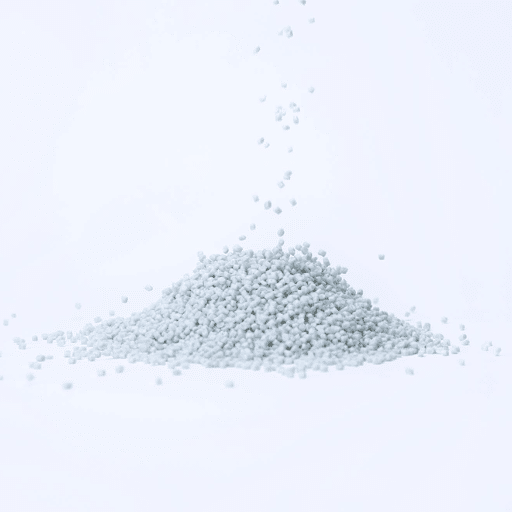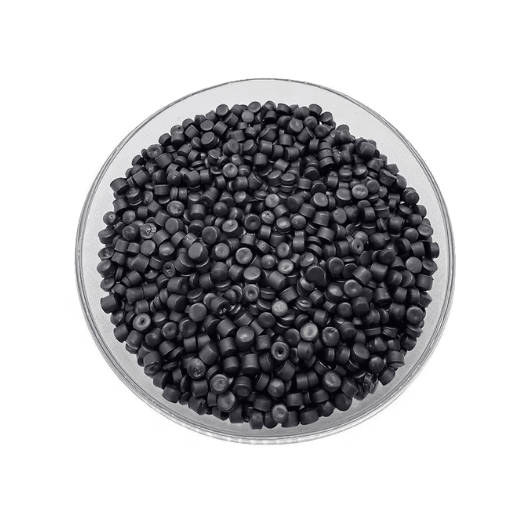
Two identical presses. One 12-cavity crate tool. The same HDPE injection molding settings sheet pinned to both machines. Yet one press in Daniel’s plant held scrap at 1.8% for six straight weeks, while the other never dropped below 4.1%.
The machine was not the problem. Neither was the mold, the operator, or the water temperature. The difference was two pallets of pellets sitting behind the presses. They arrived on the same purchase order, carried the same grade name on the label, and differed in the one number that decides whether a part fills cleanly or flashes: melt flow index.
If you specify or buy HDPE for injection molding, you already know that “HDPE” on a purchase order is not a specification. It names a material family that spans melt flow indices from roughly 0.1 to more than 40 g/10 min. Pipe resin and thin-wall cap resin share a label and almost nothing else.
This guide gives you the application-first selection framework that most supplier literature skips. You will learn which MFI and density band suits which molded part, how the pellet itself causes the defects you keep chasing on the machine, and how to work with the number that actually decides profitability: cost per conforming part.
What this guide covers:
- HDPE injection molding grade selection by application
- How the incoming pellet causes molding defects
- Shrinkage and warpage, specified from the material side
- Cost per conforming part
- What to write on your purchase order
If you need the machine-side settings themselves, the HDPE injection molding process parameters guide covers barrel profiles, pressures, and defect remedies in detail. This article is the material decision layer that sits above it.
What Makes HDPE Injection Molding Different

HDPE is semicrystalline, with crystallinity typically between 60% and 80%. That structure gives it excellent chemical resistance and toughness, and it also makes the material shrink far more than an amorphous plastic.
Mold shrinkage for HDPE generally falls between 1.5% and 4.0%, several times the rate of an amorphous plastic. If you are migrating a tool from ABS or PS to HDPE, the cavity almost certainly needs to change.
Shrinkage is not uniform in any direction, either. HDPE shrinks differently along the flow path than across it, which is why the same part can measure correctly in one axis and be out of tolerance in the other. Controlling that starts with grade selection, not with tweaking the press.
HDPE Does Not Need Drying
Here is one advantage worth banking. Unfilled HDPE absorbs very little moisture, well below 0.01% in normal storage conditions. It does not require pre-drying before molding.
If your process sheet includes a drying step for HDPE, that step is compensating for a storage or handling problem rather than a material property. Find the leaky silo, the condensation, or the open bag instead. Filled and compounded grades are a different case and may specify drying at 60 to 90 °C for two to four hours.
The Real Difficulty Is the MFI Range
HDPE injection molding is hard for one reason. The word “HDPE” covers a wider process window than most buyers expect.
Low-MFI grades flow slowly and suit pipe and blow molding. High-MFI grades fill thin walls in fractions of a second. Put a pipe-grade pellet in a thin-wall tool and you get short shots. Put a high-flow cap grade in a structural part and you get warpage and poor impact strength.
Grade selection is therefore a specification task, not a purchasing formality.
Ready to stop guessing at grades? Send us your part and target MFI, and our polymer specialists will confirm the right injection-grade HDPE specification. Request a custom quote →
HDPE Injection Molding Grade Selection by Application

HDPE injection molding applications are far more varied than the single grade name on the label suggests. This is the table most suppliers never publish. It maps the part you are molding to the MFI and density band that will run it well.
| Application | Typical MFI (g/10 min) | Density (g/cm³) | Grade type | What you are optimizing for | Typical parts |
|---|---|---|---|---|---|
| Thin-wall containers, caps and closures | 20–40 (190 °C/2.16 kg or 190 °C/5 kg); bimodal grades around 7 at 190/2.16 | 0.949–0.960 | High-flow, narrow-MWD sHDPE | Fill speed, low warpage, surface gloss | Caps, closures, tubs, thin-wall trays |
| Crates and returnable boxes | 4–12 | 0.952–0.958 | High-stiffness homopolymer or copolymer | Stiffness, hinge life, impact | Beverage crates, returnable boxes |
| Pails, totes, buckets | 5–15 | 0.950–0.960 | Impact copolymer | ESCR, drop impact | 5–20 L pails, totes |
| Pallets and structural parts | 4–10 | 0.955–0.965 | HMW or nucleated HDPE | Stiffness, creep resistance | Pallets, decking |
| General industrial containers | 8–20 | 0.945–0.960 | General purpose | Processing balance | Bins, containers |
| Housewares and toys | 10–25 | 0.940–0.955 | High-flow | Surface finish, thin sections | Bowls, lids, toys |
The Three Numbers That Drive Every Decision
Once you see the matrix, the logic behind it is simple. Three properties do almost all the work.
| Property | What it sets | Move it up | What you give up |
|---|---|---|---|
| HDPE pellet melt flow index | Viscosity and fill speed | Faster fill of thin sections and long flow paths, shorter cycle time | Impact strength and ESCR |
| Density | Stiffness and barrier | More rigidity, less permeation | Environmental stress crack resistance |
| Molecular weight distribution | The balance between the two | Narrow MWD cuts warpage and improves gloss | Some toughness and processability |
There is a genuine trade-off baked into all of this. Higher melt indices tend to reduce impact strength and ESCR because the high-molecular-weight fraction that provides both is diluted. That tension runs through the polyethylene composition literature that underpins modern cap and closure grades, including the HDPE technical guidance published by resin producers such as INEOS. You cannot optimize flow and toughness at the same time, so decide which one your part actually needs.
A Caveat That Causes Real Arguments
MFI values are only comparable when the test conditions match. A value quoted at 190 °C and 2.16 kg is not the same measurement as one quoted at 190 °C and 5 kg, and the numbers can differ by a factor of several.
Before you compare two quotes, confirm both suppliers used the same condition. Otherwise you may reject a good grade, or accept one that will not fill your tool.
Caps and Closures: Why High-Flow, Narrow-MWD Wins
Caps and closures are the most demanding thin-wall HDPE application. Grades here typically run MFI 20 to 40 at 190 °C/5 kg, or use a bimodal structure quoted near 7 at 190/2.16 kg, with density between 0.949 and 0.957 g/cm³.
The narrow MWD is the point. It delivers low warpage, good gloss, and the dimensional consistency that capping torque depends on. When Priya’s team at a closure molder switched to a cheaper broad-MWD grade to save on resin, they gained a little toughness and lost their torque window. Caps that had sealed reliably for years started failing leak tests at the rate of one in nine hundred.
The fix was not a process change. It was going back to a narrow-MWD grade and writing the MWD requirement into the specification.
Crates and Pallets: Stiffness and Impact Beat Speed
Large parts push you in the opposite direction. Crates, pallets, and totes use lower MFI grades, typically 4 to 12, with higher density for stiffness.
Long flow paths are the constraint here. If you are designing a large part, keep the flow length-to-thickness ratio between 50:1 and 100:1 so the material has a realistic chance of reaching the last cavity. Wider gates and runners help, and hot runners reduce waste on thick sections.
Nucleating agents are worth knowing about at this scale. They speed up crystallization, which shortens cycle time and reduces shrinkage on thick parts. That makes nucleated grades a material selection lever, not just a process tweak.
Crates and tote lids also hinge in service. Specify a copolymer rather than a homopolymer if the part has a living hinge, because homopolymer will crack at the fold.
Thin-Wall Packaging: Where Cycle Time Is the Business Case
Below roughly one millimeter of wall thickness, only high-flow grades will fill. Flow lengths here can exceed 200:1, and injection pressures may reach 180 MPa.
At that point, cycle time dominates the economics. A one-second improvement in cycle time across a multi-cavity tool is usually worth far more than a small resin price difference per kilogram. Buy the grade that fills fast and consistently, then negotiate the price.
How the Pellet Itself Causes Molding Defects

Most HDPE injection molding troubleshooting starts at the machine. That is understandable, and it is also where a lot of wasted effort begins.
A significant share of recurring defects trace back to the incoming material. Peter, a process engineer at a container plant, spent three weeks adjusting injection profiles on a tool that was producing black specks and weak weld lines. The cause was cross-polymer contamination in one delivery, not the press.
Work through this list before you touch a setting.
- Lot-to-lot MFI drift. Short shots and flash appearing together on the same tool usually means the resin flowed differently between deliveries.
- Density or MWD variation between batches. Dimensional scatter and unpredictable warpage often follow the material, not the cooling circuit.
- Cross-polymer contamination. Black specks and weak weld lines frequently indicate mixed or degraded material in the lot.
- Excessive regrind or fines. Splay and silver streaks, plus reduced impact strength, often track to regrind content that crept above spec.
- Moisture in filled or compounded grades. Splay in a filled HDPE grade usually points to inadequate drying, even though unfilled HDPE rarely needs it.
- Inconsistent pellet geometry or bulk density. Feeding instability and metering drift follow irregular pellets and variable bulk density.
- Poor masterbatch dispersion. Color streaks and uneven shrinkage often come from a masterbatch that was not distributed evenly.
- Filler or nucleating-agent loading variance. Shrinkage and stiffness scatter between lots usually reflects an additive that was dosed inconsistently.
The practical lesson is short. Fix the incoming pellet specification and a large share of your “process” problems disappear. If you use recycled polyethylene pellets, the discipline matters even more, because recyclate varies more between lots and accumulates fines and degraded chains.
HDPE Injection Molding Shrinkage and Warpage: Specify the Grade, Not Just the Tool
Warpage gets blamed on tooling more often than it deserves. The grade, the wall thickness, the mold temperature, and the hold pressure all move the shrinkage number. The steel alone does not decide it.
| Resin | Typical mold shrinkage |
|---|---|
| HDPE | 1.5–4.0% |
| PP | 1.2–2.5% |
| ABS | 0.4–0.7% |
| PS | 0.4–0.7% |
Use this sequence for any new HDPE part. First, get the shrinkage value for the specific grade at the specific wall thickness from your supplier. Second, compensate the cavity from that value rather than from a generic family figure. Third, confirm both with a short-shot study and a trial cavity before you cut production steel.
Mold-filling simulation shortens that loop. A package such as Autodesk Moldflow lets you test a candidate grade’s shrinkage behavior in the tool before any steel is cut, which is far cheaper than discovering a warp problem after the cavity is machined.
Because HDPE shrinkage is higher and more directional than that of PP or ABS, the shrinkage question deserves more attention than the tolerance question. HDPE molded tolerances generally land around ±0.05 to ±0.2 mm, and post-mold annealing at 80 to 100 °C for 30 to 60 minutes can stabilize precision parts further.
Nucleated grades are the quiet win here. They shrink less and cool faster, so specifying one can solve a dimensional problem that no amount of press adjustment will fix.
Machine-side detail such as cooling channel layout, gate geometry, and venting depth belongs with the process parameters, not here.
Cost per Conforming Part: The Only Number That Matters
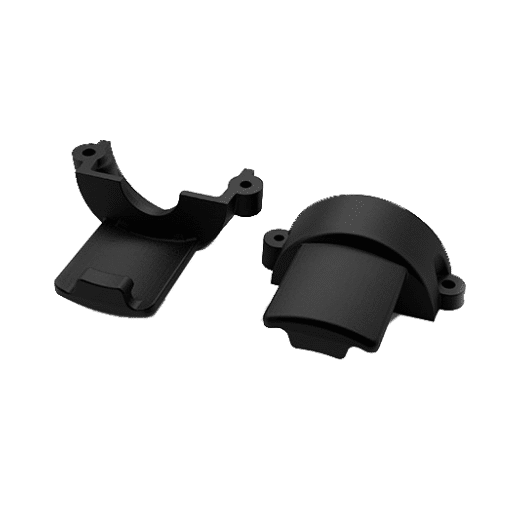
Resin typically accounts for somewhere between 40% and 60% of the cost of a molded part. That fact tempts buyers to optimize resin price first, which is usually the wrong move.
Consider a container plant running a 120-gram part at 8.2 million parts per year. A competing grade comes in at $0.05 per kilogram less. The buyer switches, and within a month the scrap rate rises by 1.5 percentage points because the new grade flashes on one cavity. The HDPE injection molding grade was cheaper; the molded part was not.
At that volume, the scrap increase costs far more than the resin saving. The cheaper pellet was the more expensive decision. This is why the useful metric is cost per conforming part rather than cost per kilogram.
Cycle time is usually the bigger lever of the two. If a higher-flow grade shaves a second off a multi-cavity cycle, the throughput gain tends to outweigh any modest resin premium. Model both effects before you decide.
Regrind Is a Specification, Not a Habit
In-house regrind is a legitimate cost lever for non-critical parts, typically up to 20% to 30% of the feed. The catch is that MFI drifts upward with every pass, because the material that degrades most is the high-molecular-weight fraction that provides impact strength and ESCR.
Tomás learned this the expensive way at a crate producer. His team pushed regrind to 35% to hit a cost target, then spent a quarter chasing splay streaks and field failures on hinge stress tests. The material had changed under them.
Write a regrind cap into the purchase order instead of leaving the decision to the press floor. For current pricing context on prime, off-grade, and recycled HDPE, see our HDPE pellets price guide.
Specifying HDPE Pellets: What Goes on the Purchase Order
Most grade disputes are specification disputes that were never written down. A complete HDPE injection molding grade line item carries seven elements.
- MFI plus the test condition, stated as 190 °C/2.16 kg or 190 °C/5 kg
- Density in g/cm³, measured to ASTM D792
- Grade type, such as homopolymer, impact copolymer, bimodal, or nucleated
- Color and additive package, including UV stabilizer or antistatic where relevant
- Regrind cap, expressed as a maximum percentage
- A lot-specific certificate of analysis, not a generic datasheet
- Certification requirements for your application
On the certificate of analysis, ask for ASTM D1238 melt flow rate and ASTM D792 density tested per lot, and verify the numbers against your specification each time. A generic datasheet tells you what the grade can do. A lot certificate tells you what arrived.
Certification depends on the end use. Food-contact parts need FDA 21 CFR 177.1520 compliance in the United States and EU Regulation 10/2011 for the European market. Electronics applications typically require RoHS and REACH declarations. ISO 9001 quality systems cover the process behind all of it.
Finally, add a trial-batch clause. A 25 to 100 kilogram sample is enough for a screening run, and 500 kilograms to a metric ton is enough for a full validation before you commit to multi-ton volumes. This one clause prevents most of the failures described in this article.
Need the pellet specification confirmed before your next run? Our team reviews part drawings, target MFI, and volume, then returns a certified grade recommendation with a quote within 24 hours. Contact our polymer specialists →
Sourcing Injection-Grade HDPE from Suzhou Yifuhui
Suzhou Yifuhui New Material Co., Ltd. supplies injection-molding-grade HDPE across the MFI and density window required for caps and closures, crates, pails, and thin-wall packaging, in prime, off-grade, and recycled grades.
Three things matter most to buyers working with us. We issue a lot-specific certificate of analysis with every shipment, so MFI and density can be verified against your specification rather than assumed. We control batch consistency at the pellet level, which keeps pellet size, bulk density, and melt flow stable from delivery to delivery, and that is what protects your cycle time and scrap rate. And we quote transparently, with global shipping and a 24-hour response window.
To get a quote, send us four things: your part or application, the target MFI and density (or the part drawing if you would rather have us recommend the grade), your monthly volume, and your destination port. We will confirm the specification and pricing together.
If you are still deciding between polyethylene grades for a different process, our guide to polyethylene pellet types and grades and the HDPE vs LDPE vs LLDPE comparison cover the wider family. For the full sourcing picture, including supplier vetting and certification checks, see the complete polyethylene pellets sourcing guide.
Frequently Asked Questions

What MFI is best for HDPE injection molding?
There is no single best value, because MFI must match the part. Thin-wall containers and caps typically use 20 to 40 g/10 min, crates and pallets sit at 4 to 12, and pails and totes land between 5 and 15. Start from the part’s wall thickness and flow length, then select the grade band and confirm the test condition.
Which HDPE grade is used for crates and pallets?
Crates and pallets use high-stiffness homopolymer or copolymer grades with MFI around 4 to 12 and density between 0.952 and 0.965 g/cm³. Parts with living hinges need a copolymer for flex life, and nucleated grades reduce shrinkage and cycle time on thick sections.
Does HDPE need to be dried before injection molding?
No, unfilled HDPE does not normally require drying. Its moisture absorption is below 0.01%, so it molds dry from proper storage. Filled and compounded grades are the exception and may specify drying at 60 to 90 °C for two to four hours. If you are drying unfilled HDPE, check your storage first.
What is the shrinkage rate of HDPE in injection molding?
HDPE typically shrinks 1.5% to 4.0%, compared with 1.2% to 2.5% for PP and 0.4% to 0.7% for ABS. It also shrinks differently along the flow path than across it. Get the value for your specific grade and wall thickness, compensate the cavity from that, then confirm with a short-shot study.
Can HDPE injection molding scrap be reground?
Yes, clean sprues and runners can be reground and reused, typically up to 20% to 30% of the feed for non-critical parts. MFI drifts upward with each pass and impact strength falls, so cap the percentage in the purchase order rather than leaving it to the press operator.
Why is my HDPE part warping?
Warping usually comes from differential shrinkage, not from the press alone. Uneven wall thickness, unbalanced cooling, high mold temperature, and low hold pressure all increase it. Check the pellet specification too: density and MWD variation between lots will produce dimensional scatter that no process change can correct.
What is the difference between injection grade and blow molding grade HDPE?
They sit at opposite ends of the MFI scale and are not interchangeable. Injection grades run higher MFI so they flow into complex, thin-walled molds. Blow molding grades run very low MFI, typically 0.3 to 1.5, to build the melt strength a parison needs. Substituting one for the other usually causes short shots or sagging.
Conclusion
HDPE injection molding is a grade specification problem before it is a machine setting problem. Get the pellet right and the press becomes easy.
Three rules are worth carrying into your next project:
- Match MFI and density to the part, not to the price list, and always state the MFI test condition.
- Verify the pellet lot by lot with a certificate of analysis, because most recurring defects start as incoming material problems.
- Measure cost per conforming part, not cost per kilogram, and write the regrind cap into the purchase order.
Do those three things and the two presses in Daniel’s plant will finally run the same number.
Ready to specify your injection-grade HDPE? Send your part, target MFI, and monthly volume to Suzhou Yifuhui New Material Co., Ltd. We will confirm the grade, share technical data, and return a competitive quote within 24 hours. Request a custom HDPE quote →