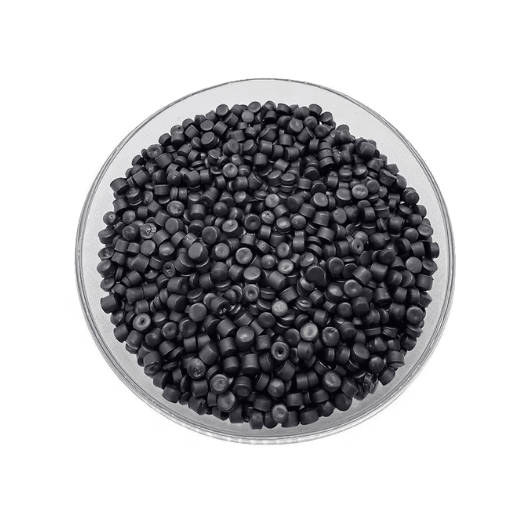
On 12 August 2026, recycled content stopped being a sustainability gesture in Europe and became a packaging requirement. The EU Packaging and Packaging Waste Regulation, Regulation (EU) 2025/40, applies from that date, and it puts post-consumer recycled polyethylene pellets at the centre of a deadline that reaches suppliers outside Europe as well.
Three pressures arrive at once. Your customer asks for a recycled-content figure. Finance asks for the cost delta against virgin. Compliance asks whether the certificate in the file proves what it claims. This guide answers both the engineering and the procurement question: the recycled polyethylene family, the property trade-off in real numbers, the certification landscape, the 2026 price structure, and the checks to run before you commit to a container.
Ines, a compliance manager at a German detergent bottler, had a supplier confirm the material was “certified recycled.” It was, under an ISCC PLUS declaration built on a mass-balance model. When an auditor asked for proof of post-consumer content in the specific bottles, the declaration couldn’t trace it to that output. Re-papering onto a physically segregated supply took two quarters, and the bottles shipped six weeks late.
Not sure whether a recycled grade will run on your line? Send our material team your part drawing or grade code and we will map it to a family, an MFI window and a compliance path. Talk to a polymer specialist.
What Are Recycled Polyethylene Pellets?
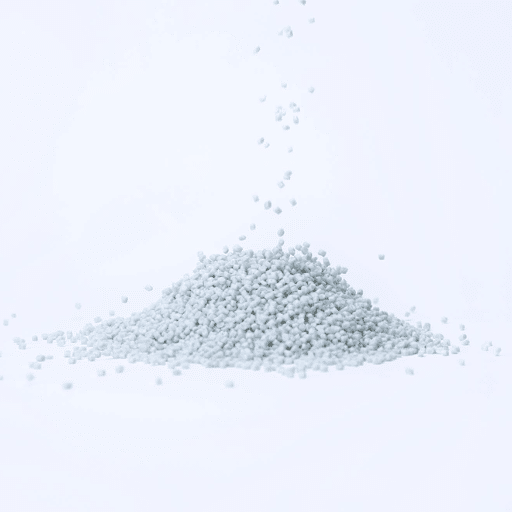
Recycled polyethylene pellets are polyethylene resin recovered from plastic waste, cleaned, melt-filtered and re-pelletised for manufacturing. They are defined by the feedstock stream they come from and the polymer family they belong to: rHDPE, rLDPE or rLLDPE.
The term is used loosely, and that looseness causes most sourcing disputes. A broker can offer “recycled PE pellets” describing anything from clean post-industrial regrind to a mixed-colour pellet carrying residual PVC. Those materials share a name and almost nothing else.
PCR vs PIR: What the Two Recycled-Content Streams Mean
PCR polyethylene (post-consumer recyclate) comes from material that completed a customer life: milk jugs, detergent bottles, drums and film from household or commercial waste. It’s dirtier at intake, needs hot washing and density separation, and it’s the stream the EU counts toward recycled-content targets.
PIR (post-industrial recyclate) comes from factory scrap such as sprues, offcuts and film trim. It never reached a consumer, so it’s cleaner and cheaper, and it normally doesn’t count toward PPWR post-consumer content. That distinction decides more sourcing arguments than any price negotiation.
Feedstock Streams and Why Pellet Form Matters
Rigid streams feed rHDPE, with natural bottle bales producing the highest-value recyclate and mixed-colour bales the workhorse grade. Flexible streams feed rLDPE and rLLDPE from stretch film, shrink wrap and agricultural film, which carry more contamination per tonne and therefore need tighter filtration and more aggressive degassing.
Recyclate arrives as flake before it becomes a pellet, and pelletising is where specification is created. A melt filter of 50 to 80 microns removes residual contaminants, vacuum degassing strips volatiles and odour, and the pelletiser produces uniform bulk density so your feeding system doses it consistently.
rHDPE vs rLDPE vs rLLDPE: Recycled PE Grades Compared
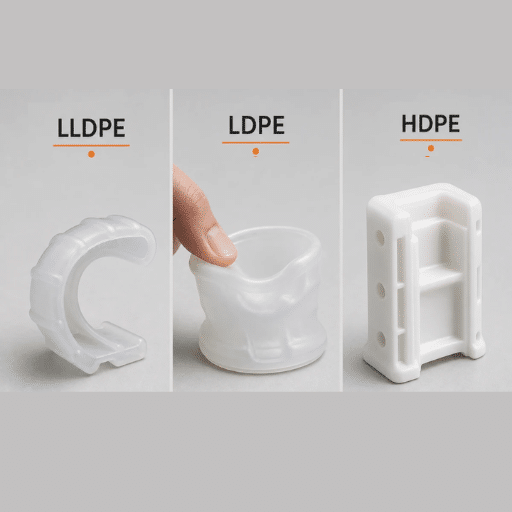
Recycled polyethylene divides along the same lines as virgin PE, because the chemistry doesn’t change when you reprocess it. What changes is the property ceiling.
Recycled HDPE pellets (rHDPE), recovered from bottles, drums and caps, run 0.93 to 0.98 g/cm³. Tensile strength is typically 16 to 20 MPa and the melting point sits near 130 to 135 °C, which makes them stiff and opaque. rLDPE pellets, recovered from film, sit at 0.91 to 0.94 g/cm³ with tensile strength at 10 MPa and a melting point of 105 to 115 °C, so they are softer and more translucent.
rLLDPE comes from linear low-density film. At similar density it delivers higher puncture and tear resistance than rLDPE, which makes it the choice when downgauging matters more than softness.
For the virgin equivalent, our comparison of HDPE vs LDPE vs LLDPE covers how density and branching drive these differences from first principles.
| Property | rHDPE | rLDPE | rLLDPE |
|---|---|---|---|
| Primary feedstock | Bottle bales, drums, jerrycans, caps | Stretch film, shrink wrap, bags, ag film | Linear low-density film |
| Density (g/cm³) | 0.93 to 0.98 | 0.91 to 0.94 | 0.915 to 0.935 |
| Typical tensile strength | ≥16 to 20 MPa | ≥10 MPa | ≥12 to 17 MPa |
| Melting point | ~130 to 135 °C | ~105 to 115 °C | ~120 to 128 °C |
| Stiffness | High | Low | Low to medium |
| Puncture and tear resistance | Moderate | Moderate | High |
| Common processes | Blow moulding, extrusion, injection | Film, extrusion, moulding | Blown film, extrusion |
| Typical parts | Bottles, drums, IBCs, pipe, crates | Liners, shrink film, bags | Heavy-duty bags, silage film |
Recycled PE Grades by Process, MFI and Application

Melt flow index (MFI), measured to ASTM D1238 or ISO 1133, decides whether a recycled grade runs on your machine. Low MFI means long chains, high melt strength and good environmental stress crack resistance. High MFI means easy flow and fast cycles. Blow moulding runs 0.3 to 2 g/10 min for vessels from 0.5 to 25 litres, rising to around 6 for IBC-scale containers, because a parison needs melt strength to hang without sagging. Pipe extrusion sits lowest at 0.1 to 1 g/10 min, so recycled material belongs in drainage and conduit rather than potable-water mains. Injection runs above MFI 3, with caps and closures between 8 and 20 for fast cycling. Film runs 0.7 to 2.5 g/10 min, and blown film lines are the most sensitive to lot-to-lot MFI drift.
| Process | Recycled grade | MFI window (g/10 min) | Typical part |
|---|---|---|---|
| Pipe and profile extrusion | rHDPE | 0.1 to 1 | Drainage pipe, conduit, sheet |
| Blow moulding (small to mid) | rHDPE | 0.3 to 2 | Bottles, drums, jerrycans (0.5 to 25 L) |
| Blow moulding (large) | rHDPE | ~6 | IBCs, large containers |
| Film and flexible | rLDPE / rLLDPE | 0.7 to 2.5 | Liners, shrink film, bags |
| Injection (general) | rHDPE | >3 | Crates, bins, pallets |
| Injection (caps and closures) | rHDPE | 8 to 20 | Caps, closures, thin-wall parts |
How Recycling Changes PE Properties
The honest answer to “is recycled polyethylene as strong as virgin?” is that most of it is, and the part that isn’t matters for some applications and not others. Heat and shear during reprocessing break polymer chains and occasionally recombine them, producing a wider molecular weight distribution, so feedstock history and processing discipline explain more about recyclate quality than the polymer name does.
Tensile strength and elastic modulus hold up well, and recycled HDPE tends to be slightly stiffer than virgin because the shorter chains crystallise more readily. By contrast, ductility is where the cost shows. Published studies on post-consumer HDPE recyclate report elongation at break around 40 percent against roughly 70 percent for virgin, with impact resistance about 15 percent lower. Taken together, well-processed recycled HDPE retains roughly 90 to 95 percent of virgin mechanical properties on tensile and modulus. Treat that as a typical finding rather than a guarantee, because recyclate performance depends on feedstock and additive package.
Blend ratio is the lever most processors use to close the gap:
- Blown film: 30 to 40 percent rLDPE or rLLDPE alongside virgin
- General moulding and extrusion: 30 to 50 percent recyclate with no change to throughput or colour
- Injection parts: highly blend-dependent; validate on a pilot
- Structural and pressure applications: virgin only
Dilution with virgin lifts average molecular weight, compatibilisers improve bonding where a mixed stream holds residual PP or PA, and antioxidant top-up replaces the thermal protection consumed in the plastic’s first life.
Marcus, a production engineer at a pallet moulder, ran a 500 kg pilot at 50 percent recyclate before committing. Shrinkage came in 0.3 percent above the virgin control and cycle time rose four seconds, but crush strength still passed. He locked the blend at 50 percent and wrote the shrinkage allowance into the tooling spec. The pilot cost him a day; a container of unspecifiable material would have cost him a month.
Recycled vs Virgin Polyethylene Pellets: Properties and 2026 Prices

Recycled PE is a drop-in substitution in more places than most engineers expect. Non-food rigid packaging, drainage and conduit pipe, crates, bins, pallets, decking, sheet, fencing and non-visible automotive parts all run recycled PE at commercial scale, because a 5 to 10 percent property difference doesn’t change whether the part passes. Four situations call for virgin or for specific clearance: potable-water and pressure pipe, which needs hydrostatic strength recycled grades can’t certify; high-clarity applications, which need optical consistency mixed-colour recyclate can’t deliver; food contact, which requires an FDA No Objection Letter or equivalent; and tight-tolerance parts, which need batch consistency only a validated supplier relationship provides.
| Application | Recycled PE suitable? | Why |
|---|---|---|
| Non-food bottles, drums and IBCs | Yes | Tolerance-rich, colour-flexible |
| Drainage pipe, conduit, sheet | Yes | Non-pressure, MFI 0.1 to 1 available |
| Crates, bins, pallets | Yes (blended) | Blend ratios of 30 to 50 percent proven |
| Decking, fencing, horticultural containers | Yes | Colour and UV tolerance accommodates recyclate |
| Potable-water and pressure pipe | No | Hydrostatic strength not certifiable |
| High-clarity packaging | No | Optical consistency not achievable |
| Food-contact packaging | Only with an FDA NOL or equivalent | No blanket clearance exists |
| Tight-tolerance engineering parts | Rarely | Batch-to-batch variance too high |
Recycled polyethylene pricing moved sharply through 2026, so treat every figure as a range with an as-of date. Expert Market Research reports a global recycled HDPE average of USD 0.881/kg in Q2 2026, up about 8 percent from USD 0.816/kg in Q1, with an H2 2026 forecast of USD 0.88 to 1.00/kg. Regional Q2 2026 averages diverged widely: the United States near 0.93, Germany 1.12, India 0.87 and China 0.70 USD/kg.
Grade and colour move the number more than geography does. The bands below are as-reported for Q2 2026 and belong in a quote only as ranges with the date attached.
| Market or grade (Q2 2026) | Price band |
|---|---|
| Global rHDPE average | USD 0.881/kg |
| United States | ~USD 0.93/kg |
| Germany | ~USD 1.12/kg |
| India | ~USD 0.87/kg |
| China | ~USD 0.70/kg |
| Mixed-colour rHDPE | USD 480 to 950/tonne |
| Natural or general-purpose rHDPE | USD 800 to 1,300/tonne |
| Europe DDP NWE, grey | EUR 1,111 to 1,121/tonne |
| Europe DDP NWE, natural | EUR 1,705 to 1,715/tonne |
| Food-grade rHDPE | USD 1,800 to 2,200/tonne |
Underneath that spread, food-grade rHDPE pellet prices rose nearly 50 percent year to date in 2026 and natural HDPE bale prices rose 83 percent, driven by feedstock tightness, rising virgin PE values and recycled-content mandates competing for the same supply. For the virgin benchmark, see our HDPE pellets price guide.
The assumption that recycled is always the budget option is wrong. Recycled grades commonly cost 10 to 30 percent less than equivalent virgin, and recycled HDPE has been benchmarked 35 to 45 percent below virgin of the same type, but the gap narrows and occasionally inverts in tight food-grade and natural grades. A mixed-colour quote at USD 520 per tonne looks like a bargain next to natural at USD 1,050 until colour drift pushes a run outside your Delta E tolerance and the scrap rate climbs. In short, compare cost per part, not cost per tonne. For the full framework, see our guide to sourcing polyethylene pellets in bulk.
Ready to price a specific recycled grade against your current material? Send us the MFI, density and monthly volume and we will quote recycled and virgin side by side. Request pricing and a sample.
Food-Contact Compliance: FDA No Objection Letters, EU 10/2011 and PPWR
This question decides more recycled PE projects than price or properties. Olefin polymers for food contact are regulated under 21 CFR 177.1520, which sets extractives limits governing what may migrate into food, for example n-hexane extraction at 50 °C for two hours with non-volatile extractives at or below 5.5 percent. Virgin food-grade PE is cleared under that section.
Recycled PE isn’t automatically cleared, because the regulation assumes virgin polymer. A recycler must instead show that its process removes contamination from post-consumer feedstock to a level that keeps migration within the same limits. The FDA reviews that demonstration and, if satisfied, issues a No Objection Letter (NOL), also called an LNO or Recycle Number. It’s voluntary in law but the de facto market standard, and a submission must document feedstock control, the cleaning and extrusion process, contaminant removal, chain of custody, and the conditions of use.
Even so, clearances exist and keep arriving. In August 2026, Union J. Plus received FDA Recycle No. 451 for post-consumer rHDPE and rPP, covering dried-food containers, bottles, gallons, cosmetic packaging and film. Earlier precedents include Polymetrix AG (PNC 2442), Baosu Machinery and Suzhou Polytec (PNC 3411), and Kingfa.
In Europe, food-contact plastics fall under Regulation (EU) 10/2011 and framework Regulation (EC) 1935/2004, with EFSA assessing individual recycling processes. The practical rule is the same on both sides of the Atlantic: food-grade recycled polyethylene exists, but only with specific clearance. Ask for the recycle number, confirm the conditions of use it covers, and check that the grade matches them. A supplier who answers “yes, food grade” without a document is answering a different question.
Recycled Content Certification: GRS, ISCC PLUS, RecyClass and EN 15343

A certificate isn’t proof on its own. What separates a useful certificate from a decorative one is the chain-of-custody model behind it, because that model determines whether a claim can be traced to a specific tonne of output.
The Global Recycled Standard requires a minimum 20 percent recycled content for certification, rising to 50 percent for label use, and relies on physical segregation with Transaction Certificates that tie a shipment to verified recycled input. In practice, a GRS-certified batch of recycled polyethylene pellets can be traced to a specific container. ISCC PLUS requires 20 percent certified feedstock and permits physical segregation, controlled blending or mass balance. Mass balance dominates because it’s operationally cheap, and it’s why a mass-balance declaration can’t always answer a specific-output traceability question.
RecyClass is built directly on EN 15343, the European standard for traceability of plastics recyclates, and requires accredited certification bodies from 12 June 2026 for Recycled Plastics and 23 July 2026 for RecyClass itself.
| Scheme | Basis standard | Chain of custody | Minimum content | PPWR readiness |
|---|---|---|---|---|
| GRS | Own standard | Physical segregation + Transaction Certificates | 20% (50% for label) | Strong for traceability claims |
| ISCC PLUS | Own standard | Mass balance, controlled blending or physical segregation | 20% certified feedstock | Depends on delegated acts and CoC model |
| RecyClass | EN 15343 | Documented recyclate traceability | Scheme-defined | Built on the European recyclate standard |
| EuCertPlast | EN 15343 | Audited recycler certification | Scheme-defined | EN 15343-aligned |
| UL 2809 | Own standard | Environmental claim validation | Scheme-defined | Varies by claim |
The calculation and verification methodology for PPWR recycled-content targets will be set by delegated acts due by 31 December 2026. If those acts designate EN 15343 as the reference standard, a supplier whose only evidence is an ISCC PLUS mass-balance declaration may not be able to demonstrate compliance, and rebuilding documentation takes an estimated 12 to 18 months.
EU PPWR Recycled-Content Targets
The regulation sets binding post-consumer recycled-content minimums that take effect on 1 January 2030 and double by 2040. Targets are calculated as an average per production site per year, plastic parts under 5 percent of total packaging weight are exempt, and non-EU producers importing into the EU are in scope.
| Packaging category | From 1 Jan 2030 | From 1 Jan 2040 |
|---|---|---|
| Contact-sensitive PET and single-use beverage bottles | 30% | 50% |
| Contact-sensitive non-PET plastics, including PE | 10% | 25% |
| All other plastic packaging | 35% | 65% |
Ask about the chain-of-custody model now rather than at the audit. The same discipline applies across the recycled-content set: our notes on whether TPE is recyclable cover claim verification elsewhere in the polymer world, and the recycled PP pellets guide covers this material’s polyolefin sibling.
How to Source Recycled Polyethylene Pellets
Recyclate varies batch by batch and feedstock by feedstock in a way virgin resin doesn’t, so sourcing it is a discipline rather than a purchase. Six steps cover the process.
- Specify it properly. Write density range, MFI window, PCR percentage, colour expectation, PVC contamination ceiling in ppm, moisture limit and ash content before you request a quote.
- Demand a lot-specific COA, not just a TDS. A data sheet describes the grade; a certificate of analysis describes the lot you are receiving, and it governs a claim.
- Run the three-lot consistency check. Request COAs for three consecutive lots. MFI should hold within roughly 10 percent, colour within your Delta E tolerance, and ash content should be flat.
- Sample before you commit. A 25 kg sample costs a fraction of a container and answers what a COA can’t. Check feed behaviour, odour, colour and cycle time on your own line.
- Verify the certification, not the claim. Take the certificate number, issuing body, scope and chain-of-custody model and check them against the issuing body’s register. A logo on a quote is a claim; a certificate in a register is evidence.
- Agree terms in writing. Confirm Incoterms, payment terms, lead time and feedstock declaration, and for PIR material name the feedstock stream explicitly.
Red flags: mixed-colour pellets sold as natural without a colour declaration; no lot-specific COA available “until the next production run”; PVC content unstated or described as “low”; certification logos with no certificate number; feedstock described only as “recycled” with no stream named.
Buyer’s checklist:
- Density range and MFI window stated in writing
- PCR versus PIR stated, with the feedstock stream named
- Lot-specific COA supplied for the actual container
- Three consecutive lots compared for MFI, colour and ash
- PVC contamination specified in ppm, targeting well under 50 ppm
- Melt filtration grade declared at 50 to 80 microns or finer
- Moisture limit agreed: below 0.1 percent for injection, below 1 percent for extrusion
- Certification number, issuing body and chain-of-custody model verified
- 25 kg sample tested on your own line
- Incoterms and feedstock declaration in the purchase agreement
Have a recyclate offer in hand? Send us the COA and the specification you need, and we will tell you what is missing. Ask for a material review.
Recycled Polyethylene Pellets Applications by Industry
Recycled PE already runs in four broad sectors. Non-food bottles, drums, IBCs, crates, pallets and bins are the largest volume outlet for rHDPE, and the segment most directly exposed to PPWR targets. Drainage and conduit pipe, decking, sheet, fencing and profiles absorb large tonnages of mixed-colour rHDPE where colour tolerance is wide. Film, mulch sheeting and horticultural containers use rLDPE and rLLDPE. Non-visible automotive parts, wheel arch liners and battery trays use recycled grades where the part isn’t exposed.
The sustainability arithmetic is worth quoting internally. Each tonne of recycled polyethylene avoids roughly two to three tonnes of GHG compared with virgin resin, so at a 500 tonne annual volume that’s a reporting line, not a rounding error.
FAQs
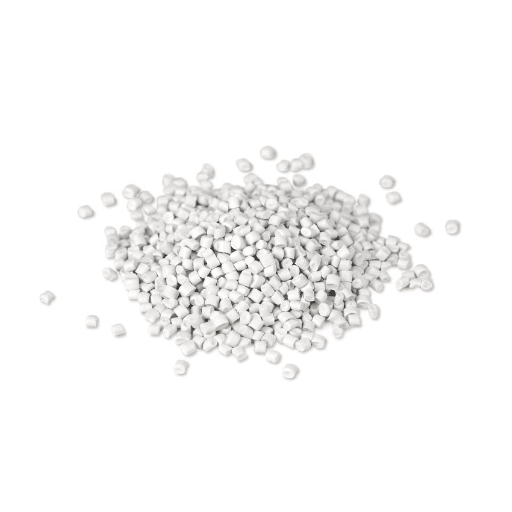
What are recycled polyethylene pellets?
Recycled polyethylene pellets are PE resin recovered from plastic waste, cleaned, melt-filtered and re-pelletised for manufacturing. They are defined by feedstock origin (PCR or PIR) and by polymer family: rHDPE, rLDPE or rLLDPE.
Is recycled polyethylene as strong as virgin?
Well-processed recycled HDPE retains roughly 90 to 95 percent of virgin tensile strength and modulus, and tends to be slightly stiffer. The penalty concentrates in ductility, with elongation at break around 40 percent versus roughly 70 percent for virgin.
What is the difference between rHDPE, rLDPE and rLLDPE?
rHDPE comes from rigid containers such as bottles and drums and is stiff and opaque. rLDPE comes from film and is softer and more translucent. rLLDPE comes from linear low-density film and is the toughest for puncture and tear resistance.
Can recycled polyethylene pellets be used for food contact?
Only with specific clearance. Recycled PE for food contact requires an FDA-reviewed recycling process and a No Objection Letter, because 21 CFR 177.1520 governs virgin olefin polymers. Clearances exist, including Union J. Plus Recycle No. 451 issued in August 2026.
What is the difference between PCR and PIR?
PCR is post-consumer recyclate, recovered after a product has been used by a consumer. PIR is post-industrial recyclate, recovered from factory scrap that never reached a consumer. PIR is cleaner and cheaper; PCR counts toward EU PPWR post-consumer targets.
How much do recycled polyethylene pellets cost per kg in 2026?
Global recycled HDPE averaged about USD 0.881/kg in Q2 2026, with an H2 2026 forecast of USD 0.88 to 1.00/kg. Mixed-colour has traded at USD 480 to 950 per tonne, natural at USD 800 to 1,300, and food-grade at USD 1,800 to 2,200.
Which certification proves recycled content?
It depends what you need to prove. GRS uses physical segregation and Transaction Certificates, so it can trace a specific shipment. ISCC PLUS commonly uses mass balance, which can’t always trace to a specific output. RecyClass is built on EN 15343.
How much recycled content can I blend into a virgin PE part?
Many processors run 30 to 50 percent recycled content with no change to throughput, colour or mechanical properties, and blown film typically uses 30 to 40 percent. Validate on a pilot, because the usable ratio depends on part geometry and tolerance.
Why Source Recycled Polyethylene Pellets from Suzhou Yifuhui
Recycled PE rewards buyers who treat it as an engineered material: a specification, a lot-specific COA, a consistency check and a verified chain of custody. We supply recycled and virgin polyethylene grades on exactly that basis, with documented feedstock, batch-consistency controls and verifiable certification on specified grades. Our standard-plastics portfolio covers the HDPE plastic pellets range alongside PP and the engineering resins, so you can compare recycled and virgin options from one supplier rather than three. Every quote states the specification, the feedstock stream and the certification position, and every shipment ships with documentation to match. We ship internationally with transparent pricing and Incoterms agreed in writing, and our support team responds within 24 hours.
Request a recycled polyethylene pellets quote with your density, MFI and monthly volume, and we will come back with a grade recommendation, a price and a sample.
Conclusion
Recycled polyethylene pellets are a specified engineering material, not a sustainability gesture, and the regulatory clock has already started. Five points carry the decision:
- The regulatory driver is live. Regulation (EU) 2025/40 applies from 12 August 2026, with 2030 targets of 10 percent for contact-sensitive non-PET plastics and 35 percent for other plastic packaging.
- The performance cost is measurable. Expect 90 to 95 percent property retention, with the penalty concentrated in ductility at roughly 40 percent elongation at break against 70 percent for virgin.
- Blending is how most processors succeed. 30 to 50 percent recyclate is a proven starting framework; pilot before committing to a ratio.
- Certification is about chain of custody. GRS with physical segregation traces a shipment while ISCC PLUS mass balance often can’t, and the delegated acts due 31 December 2026 may make that difference decisive.
- Verification is the buyer’s job. A lot-specific COA, a three-lot consistency check and a 25 kg sample prevent the expensive mistakes.
Recycled polyethylene pellets work when the specification is written, the certification is verified and the grade matches the process. Start there, and the material stops being a compromise and becomes a sourcing advantage. Talk to our polymer specialists about your next order.