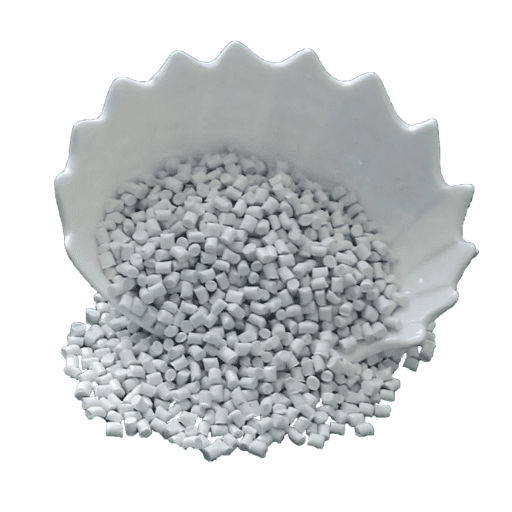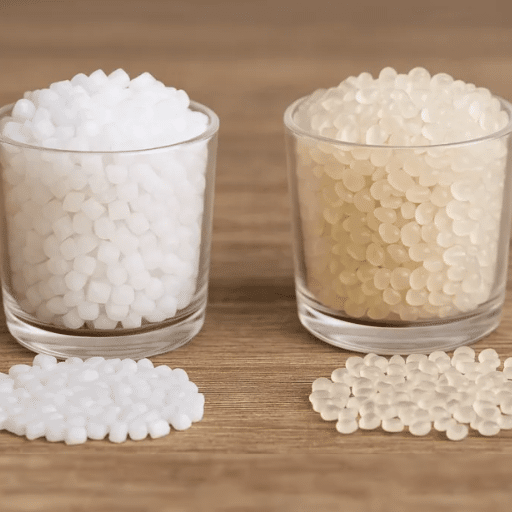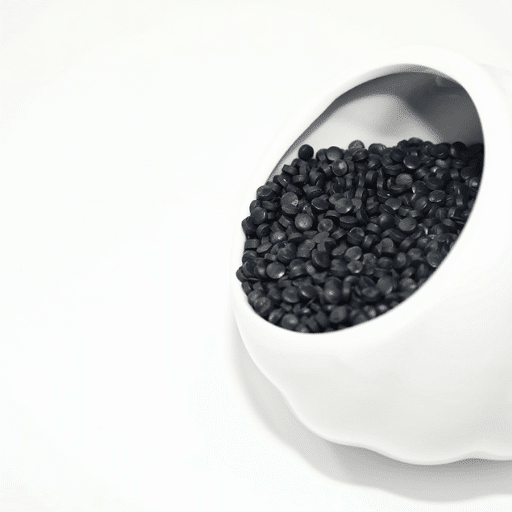
Yes, many thermoplastic elastomer (TPE) formulations can be remelted and reprocessed. Whether a particular part is recyclable in practice also depends on its formulation, contamination, collection system, and acceptance by a suitable recycler.
For manufacturers, asking “is TPE recyclable?” opens three different decisions: how to recover production scrap, where finished products can go after use, and how to verify the recycled content of a purchased compound. Success with one does not establish the other two. Manufacturer guidance on TPE recycling makes this distinction between material properties and practical recovery.
Key takeaways
- Start with the exact grade and a named recovery route, rather than a general TPE label.
- Keep clean production scrap separate from mixed or contaminated end-of-life parts.
- Qualify recycled material against the part specification; there is no universal blend ratio or guaranteed cycle count.
- Request evidence for the offered grade’s recycled-content percentage, origin, and chain of custody.
If you are evaluating material for a part, share your application and documentation requirements before comparing recycled-content offers.
How is TPE recycled in practice?
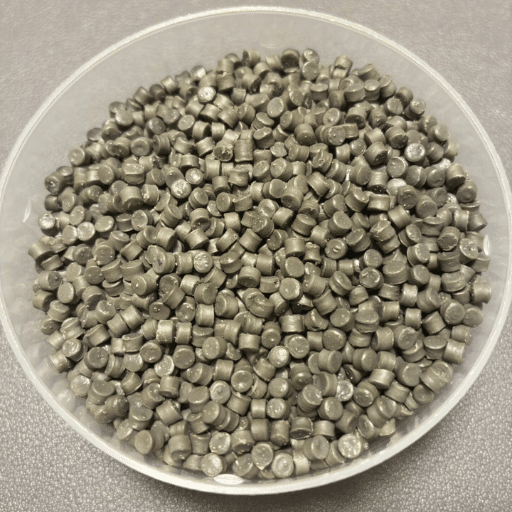
Many TPEs combine hard and soft phases, but their structures differ. For example, TPV contains crosslinked rubber dispersed within a thermoplastic phase. It should not be described as a material in which every crosslink simply reverses on heating. Our TPE material properties guide explains the wider material class.
Clean in-process regrind
Start by identifying and segregating sprues, runners, and rejected parts from a known grade. Keep other polymers, metal, dirt, and unidentified scrap out of the stream. Establish how the material will be collected, labelled, stored, and returned to the process.
Depending on the manufacturer’s instructions, suitable size-reduced scrap may be reused directly or sent for further processing. Washing and re-pelletizing are not mandatory steps for every clean internal stream. The permitted addition and processing conditions must come from the exact grade’s guidance and part trials.
BASF’s Elastollan processing recommendations, for example, link TPU regrind use to cleanliness, material identity, drying, and required quality. This is product-specific guidance, not a recipe for all TPE.
External recycling and controlled take-back
For external recovery, obtain acceptance criteria before accumulating or shipping waste. Confirm the accepted grades, contamination limits, packaging, minimum collection conditions, and intended output. Sorting, size reduction, cleaning where needed, and re-pelletizing can form part of the agreed route.
KRAIBURG TPE’s Loop TPE program illustrates a controlled arrangement: production waste is separated by grade and handled under tailored agreements. The manufacturer reports compounds with verified recycled content above 98% within that program. This does not mean mixed TPE waste will be accepted, that the material is PCR, or that the same percentage qualifies under every customer’s accounting rules.
Co-recycling with PP or HDPE
Selected TPE formulations have been tested for compatibility with particular polypropylene (PP) or high-density polyethylene (HDPE) packaging streams. That evidence cannot be extended to every styrenic TPE, TPV, or finished assembly.
KRAIBURG TPE’s June 2023 recyclability whitepaper describes selected TPS packaging formulations, including a density condition below 0.95 g/cm³. Its embedded certificates expired on March 31, 2024. Treat it as historical test evidence; request current evidence applicable to the exact grade, package design, and recovery stream before making a present-day recyclability claim.
Do not place TPE in a PP, HDPE, or municipal collection stream solely because it can melt. Ask the actual operator whether it accepts the finished item. If a supplier proposes a chemical recycling route instead, require details of the specific material and receiving process before including it in your recovery plan.
What changes between TPE families and finished parts?

A family name helps identify the questions to ask. It does not establish a universal recycled-content ceiling, recycling ranking, or performance guarantee. Use the TPE vs TPU vs TPV comparison for material-selection context, then investigate the specific grade.
| Family | Information to confirm | Handling or design question | Evidence to request |
|---|---|---|---|
| TPS / TPE-S, including SBS and SEBS compounds | Exact compound and additives | Can this grade be kept separate, and is any proposed co-recycling route applicable? | Grade reuse guidance and current route-specific evidence |
| TPV | Compound identity and thermoplastic matrix | What reuse is permitted for this vulcanized-rubber-containing compound? | Supplier instructions and part qualification results |
| TPU | Exact grade and moisture requirements | How will storage, drying, and contamination be controlled? | Grade processing sheet and regrind guidance |
| TPO | Exact polyolefin-based formulation | Does the receiver accept this compound and finished design? | Written acceptance criteria and material identification |
| TPC / TPEE and polyamide elastomers such as PEBA | Exact polyester or polyamide elastomer grade | What handling and reuse conditions apply to this engineering grade? | Manufacturer guidance and application-specific trials |
These are investigation prompts, not approvals. The manufacturer FAQ and BASF’s TPU processing manual support checking formulation and processing conditions rather than relying on family-wide assumptions.
For TPU, control moisture according to the grade instructions. BASF identifies Elastollan as hygroscopic and gives drying guidance; transferring one grade’s drying time or temperature to another is not a safe substitute for its processing sheet.
Also assess the complete part. An overmolded substrate, metal insert, coating, or adhesive can change sorting and recovery options. For design context, see TPE vs silicone overmolding. Confirm acceptance of the assembled item rather than assuming the soft material’s standalone route remains available.
Can recycled TPE meet the part specification?
It may, but the answer belongs to the offered formulation and application. Neither a recycled-content percentage nor a claim of remeltability demonstrates compliance with a finished-part specification.
Set an approved reference and select tests that reflect the actual service conditions:
- Hardness, tensile strength, and elongation where specified.
- Compression set and sealing behavior for relevant seals or gaskets.
- Color, surface finish, and visible contamination.
- Processing stability under the intended molding or extrusion conditions.
- Adhesion to the actual substrate for overmolded parts.
- Aging, chemical exposure, or contact requirements where the application calls for them.
Use the manufacturer’s processing recommendations as the starting point. Do not automatically raise melt temperature or choose a standard virgin/recycled blend. Agree the acceptable formulation, trial conditions, and acceptance criteria, then retain the results against the tested grade and lot.
The TPE injection molding guide provides processing context. For sealing applications, the automotive seals and gaskets comparison helps frame the performance questions. Neither replaces qualification of a recycled-content grade.
Recycled-content TPE: what’s available in 2026?

Two dated manufacturer announcements show why buyers should separate an application result from a content claim.
On April 8, 2026, KRAIBURG TPE reported a development with SaarGummi for automotive sealing systems containing about 56% combined post-industrial and post-consumer recyclates. The manufacturer reported that the developed material met the application’s performance and processing requirements. This is evidence about that sealing solution, not proof that all recycled TPE matches virgin material.
On October 14, 2026, KRAIBURG TPE announced UL Environmental Claim Validation for its second-generation Universal PCR TPEs. The announcement reports 70–80% post-consumer recycled content, depending on the variant. It concerns validation of a content claim; it does not establish that a finished product will be collected and recycled.
The manufacturer’s recycled-content catalog separately describes the second-generation Universal PCR range as containing up to 79%. These portfolio statements are not interchangeable purchasing specifications. Ask for the current declaration and validation scope of the exact offered grade. The percentages above are attributed manufacturer reports, not an independent check of the UL listing or a claim about Yifuhui’s certification or stock.
PIR, PCR, and internal scrap are different
KRAIBURG TPE’s explanation of feedstock origins distinguishes:
- Post-industrial recyclate (PIR): material recovered from manufacturing waste streams, subject to the applicable claim definition.
- Post-consumer recyclate (PCR): material recovered after use by an end user.
- In-process reuse: a manufacturer’s own production scrap returned to its process. Do not automatically count this as claim-eligible recycled content, and do not call it PCR.
A TPE compound’s recycled ingredients can include recovered PP; the feedstock need not have been a finished TPE product. Ask which ingredients are recovered, their origin, and how the stated percentage is calculated.
TPE, PVC, and environmental claims
Choosing between TPE and plasticized PVC requires evidence about the actual formulations, service requirements, and available recovery routes. A family label alone cannot support a claim of lower lifecycle impact, lower toxicity, or lower energy use. The manufacturer FAQ likewise cautions that sustainability comparisons depend on formulation and practical recovery.
Do not assume every TPE is halogen-free, phthalate-free, or suitable for food-contact or medical use. Request documentation for the exact grade and intended application. Recyclability also does not establish biodegradability or compostability.
For applications where silicone is another candidate, keep the wider selection decision separate from recycling: our TPE vs silicone material selection guide covers the broader comparison. For medical applications, consult the medical-device material comparison alongside the specific qualification requirements.
Cost and processing deserve their own assessment. See TPE vs silicone cost for cost considerations and LSR vs TPE when liquid silicone rubber is under consideration. None of these comparisons establishes an environmental advantage for an untested recycled grade.
Recycled-content documentation and sourcing checklist

First identify the destination market, product category, customer specification, and intended claim. Establish which requirements apply to that product before setting a recycled-content target or asking for certification.
Match each document to its purpose
| Document | What to use it for | What it does not establish on its own |
|---|---|---|
| Technical Data Sheet (TDS) | Grade properties and processing information | Every delivered lot’s test results or recycled origin |
| Certificate of Analysis (CoA) | The batch tests and values actually reported | A recycled-content percentage absent supporting origin and calculation records |
| Feedstock and content declaration | Claimed percentage, origin, and calculation basis | Independent validation unless applicable evidence accompanies it |
| Certification or validation records | The claims, products, facilities, and period within their stated scope | Finished-part performance or acceptance by a recycling system |
| Applicable transaction and custody records | Traceability through the relevant supply chain | A broader claim outside the scheme or transaction scope |
Textile Exchange’s RCS and GRS framework addresses recycled materials and chain of custody. Request applicable scope and transaction documentation rather than relying on a certification logo.
ISCC PLUS describes physical segregation, controlled blending, and mass balance as distinct custody approaches. Establish which approach supports the offer. An allocated mass-balance claim should not be presented as a measured physical PCR percentage in an individual lot without evidence supporting that statement.
Before approving a purchase
- Define the part, required properties, and acceptable PIR or PCR basis.
- Obtain the exact grade designation, current TDS, and processing instructions.
- Request the content declaration and supporting custody or validation documents.
- Agree the batch tests, traceability, and notification process for material changes.
- Trial the grade under production-relevant conditions and record acceptance results.
- Confirm the waste receiver separately if you intend to claim practical recyclability.
Our TPE supplier evaluation guide provides a broader purchasing framework. When making an inquiry, include your part specification, target content and origin, destination market, and required documents so the offer can be assessed against a clear request.
Frequently asked questions

Can TPE be recycled?
Many grades can be reprocessed through suitable industrial routes. Confirm the exact material, contamination limits, and receiving process. The ability to remelt a compound does not prove that a local collection system accepts the finished product.
Is TPE recyclable with PP or HDPE?
Selected formulations have historical packaging compatibility evidence, as described above. Obtain current grade- and stream-specific documentation and receiver confirmation. Do not assume approval for all TPE families or mixed-material parts.
Is regrind the same as PCR?
No. Regrind describes size-reduced material, while PCR describes its post-consumer origin. Reground production scrap is not PCR, and internal reuse does not automatically qualify for a recycled-content claim.
How many times can TPE be reprocessed?
There is no universal count. Follow the exact grade’s guidance and assess material with its known processing history against the part requirements. A controlled-loop result for one formulation does not establish a guarantee for another.
Can recycled TPE meet virgin-material specifications?
A particular formulation may meet the required specification, as the attributed SaarGummi development illustrates. Confirm this through grade data and relevant part trials. A fixed blend ratio is not a substitute for those checks.
Is TPE biodegradable?
Do not infer biodegradability or compostability from recyclability. Any such claim needs evidence specific to the material and the claimed conditions.
Does recycled-content certification prove recyclability?
No. Content and custody evidence addresses the material’s inputs and claim boundaries. End-of-life recyclability still requires an appropriate product design, collection system, and accepting processor.
Making the recycling decision
Is TPE recyclable for your application? Identify the exact grade, establish an accepting recovery route, and qualify the recovered material against the part requirements. If you are buying recycled-content pellets, separately verify the percentage, origin, and custody basis of the offered grade.
Contact Suzhou Yifuhui New Material Co., Ltd. with your application, target recycled content, and documentation requirements to discuss your material inquiry.