In early 2025, a medical tubing contract worth about EUR 480,000 sat on Ana’s desk. She was a sourcing manager at a Spanish device manufacturer, and the drawing simply said “flexible tubing, phthalate-free.” Her incumbent supplier quoted PVC at a price about 30% lower than the TPE alternative. Then Ana looked at the EU compliance calendar. The same phthalate chemistry that made that cheap PVC flexible faces restriction deadlines in 2027, 2028, 2029, and a full sunset in 2030. She switched the specification to TPE and avoided a revalidation cycle that would have cost more than the material savings.
Her story is the TPE vs PVC decision in miniature. TPE (thermoplastic elastomer) and PVC (polyvinyl chloride) are both flexible, affordable thermoplastics that mold into seals, tubing, grips, and cable jackets. They look similar on a sample board. But they are not interchangeable, and the gap between them is widening as phthalate and halogen rules tighten across medical, food, and consumer markets.
This guide compares TPE vs PVC with real property numbers, an application-by-application breakdown, a total-cost-of-ownership model, and the regulatory timeline that increasingly favors TPE. You will finish knowing exactly when to choose each material and what to verify before you buy pellets.
What Are TPE and PVC?

TPE (thermoplastic elastomer) is a broad family of polymers that combine the elasticity of rubber with the melt-processability and recyclability of plastic. The type most often compared with PVC is styrenic TPE (TPE-S), built on SEBS or SBS block copolymers blended with polypropylene and oil. It is soft, colorable, recyclable, and needs no plasticizer to stay flexible.
PVC (polyvinyl chloride) is a chlorinated thermoplastic. In its raw form it is rigid and brittle. It only becomes soft and flexible when compounders add large amounts of plasticizer, historically phthalates such as DEHP and DINP. That chlorine and that plasticizer chemistry drive most of the differences below, from flame behavior to recycling limits.
A quick clarification on the family: when buyers write “TPE,” they usually mean the general-purpose styrenic grade. Specialized members sit at different points on the performance map. TPV (thermoplastic vulcanizate) resists far more heat and weathering than styrenic TPE, while TPU wins on abrasion and strength. Our guide to TPE material properties walks through the full family, and our TPE vs TPU vs TPV comparison shows how the members differ from each other. For this guide, “TPE” refers to the styrenic grade that is PVC’s most direct replacement, with TPV noted where it applies.
TPE vs PVC: Property Comparison at a Glance
The fastest way to evaluate the two materials is side by side. The ranges below are typical for general-purpose flexible PVC and styrenic TPE; specific grades vary by formulation and manufacturer, so always verify against published datasheets. Hardness is shown in Shore A, the scale for soft and flexible materials.
| Property | Flexible PVC | Styrenic TPE (SEBS) |
|---|---|---|
| Density (g/cm³) | 1.16 – 1.40 | 0.88 – 1.05 |
| Shore hardness | ~50 – 90 Shore A | ~5 – 90 Shore A (broadest range) |
| Continuous service temperature | -20°C to +70°C (specialty grades to +105°C) | -50°C to +100°C (some grades to +125°C) |
| Low-temperature flexibility | Stiffens and can crack near -15 to -30°C | Stays flexible down to about -50°C |
| Tensile strength | ~7 – 25 MPa | ~3 – 20 MPa (hardness dependent) |
| Elongation at break | Up to ~200 – 400% | Up to ~500 – 800% |
| Elastic recovery | Poor to moderate | Good (TPV offers the best) |
| Oil and grease resistance | Good | Moderate to poor for SEBS |
| Water, acid, and alkali resistance | Good | Good |
| UV and weathering | Needs stabilizers; can yellow and embrittle | Generally good (grade dependent) |
| Flame behavior | Inherently self-extinguishing, but releases HCl and heavy smoke | Halogen-free; flame-retardant grades available with low smoke |
| Plasticizers and halogens | Requires plasticizers; contains chlorine | Phthalate-free and halogen-free |
| Recyclability | Limited regrind (~8 – 15%) | Fully recyclable (regrind 20 – 50%) |
| Relative raw-material cost | Lower | Higher per kilogram, often parity per part |
Three numbers matter most for buyers. First, density: TPE is roughly 20 to 30% lighter than flexible PVC, so the same mold volume consumes less material by weight. Second, low-temperature flexibility: below about -20°C, flexible PVC stiffens and can crack, while TPE keeps working to roughly -50°C. Third, plasticizer content: PVC owes its softness to additives that can migrate, while TPE is soft by chemistry. For a deeper look at how these numbers behave during molding, our TPE injection molding guide covers processing in detail.
The 7 Key Differences Between TPE and PVC

1. Softness and the Soft-Touch Feel
TPE delivers a genuinely rubbery, grippy surface with a broad hardness span, from gel-soft grips near 5 Shore A up to firm grades. Flexible PVC feels plasticky and slightly tacky by comparison, and its softness depends entirely on how much plasticizer the compounder adds. For consumer products where the hand feel sells the part, TPE usually wins.
2. Low-Temperature Flexibility
This is one of the clearest separators. Flexible PVC becomes stiff and brittle as temperatures approach -15 to -30°C, which is why PVC products crack in cold shipping, cold storage, or winter use. Styrenic TPE stays flexible to about -50°C. Any product destined for freezers, cold climates, or outdoor winter service should be evaluated against this difference first.
3. Heat Resistance and Service Ceiling
General flexible PVC runs continuously at up to roughly 70°C, with specialty flame-retardant wire grades rated to 105°C. Styrenic TPE handles about 100°C continuous, and TPV extends that to roughly 135°C. If a part will sit near a motor, under a hood, or in a hot environment, TPE or TPV offers more margin before softening.
4. Oil and Chemical Resistance
PVC is the better choice for constant oil and grease contact, which is why it persists in some automotive and industrial applications. SEBS-based TPE swells and softens around oils and fuels. However, TPE resists water, acids, bases, and alcohols better, and TPV closes most of the oil-resistance gap. Match the media to the material rather than assuming one wins everywhere.
5. Flame Retardancy
Because it contains chlorine, PVC is inherently self-extinguishing. That is a real advantage in building wire and cable, where halogens are accepted. The trade-off is that burning PVC releases hydrogen chloride and heavy smoke. TPE is halogen-free by default and produces low smoke, but standard grades are not inherently flame-retardant. For flame-rated flexible parts, specify an FR TPE grade and verify the UL rating your application requires.
6. Recyclability and Environmental Profile
TPE is a thermoplastic like any other: scrap and runners can be reground and reused at 20 to 50% ratios with little property loss. PVC recycling is complicated by plasticizer migration and chlorine, and regrind rates typically fall to about 8 to 15% before surface defects appear. When a plant cares about waste, closed-loop regrind, or end-of-life claims, TPE has a clear advantage. Our guide to TPE recyclability digs into the details.
7. Cost: Per Kilogram Versus Per Part
Per kilogram, PVC is cheaper, often by 1.5 to 3 times. Per part, the picture changes because TPE is lighter. A mold cavity holds a fixed volume; multiply that volume by density and price, and the gap narrows dramatically, and TPE can even come out ahead once regrind reuse and faster cycles are counted. Section six below runs the full math.
When to Choose TPE Over PVC
- Choose TPE for continuous flexing and movement, low-temperature service, soft-touch ergonomics, phthalate or halogen restrictions, medical and food contact, overmolding onto PP/ABS/PC, and recyclability goals.
- Choose flexible PVC when absolute lowest material cost is the driver, the part is indoor and static, oil or fuel exposure is constant, existing tooling and supply are built around PVC, and inherent flame retardance is required where halogens are acceptable.
Application-by-Application Guide
| Application | Best-Fit Material | Why |
|---|---|---|
| Medical tubing and IV components | TPE-S / TPV | Phthalate-free, low extractables, USP Class VI and ISO 10993 options |
| Wire and cable jacketing | TPE-S / TPV | Halogen-free, low-temperature flexibility, soft-touch jackets |
| Automotive window seals and encapsulation | TPV / TPE-S | UV and weathering resistance, 20%+ weight savings |
| Soft-touch grips and overmolding | TPE-S | Bonds to PP, ABS, PC, and PA; no plasticizer migration |
| Caps, plugs, and protective covers | TPE or PVC | Cost versus durability trade-off depends on service life |
| Food-contact gaskets and tubing | TPE-S | No fatty-food restrictions like those that limit flexible PVC |
| Yoga mats, toys, and consumer goods | TPE-S | Phthalate-free, good feel, recyclable |
Automotive is the largest market for thermoplastic elastomers, accounting for roughly 40% of global demand, with lightweighting and electric vehicles pushing TPE and TPV into new sealing and cable roles.
TPE vs PVC Cost: A Total-Cost-of-Ownership Look

Raw material price tells only part of the story. Flexible PVC compound typically sells for roughly 1.5 to 3 times less than general-purpose TPE per kilogram. But parts are molded by volume, not by weight, so density is the second half of the equation.
Consider a simple 1 cm³ component. PVC at a density of about 1.37 costs roughly 0.014 currency units of material per part at typical compound pricing. TPE at a density of about 0.94 costs roughly 0.012 units per part, despite the higher per-kilogram price. The two materials land at near parity on raw material cost per part.
Then add the operating levers:
- Regrind reuse. TPE scrap returns to the hopper at 20 to 50% ratios. PVC regrind is limited to roughly 8 to 15% before plasticizer degradation causes whitening and pitting.
- Cycle time. TPE processes fast with a wide window and no pre-curing step, and some extruders run it about 20% faster than PVC.
- Compliance overhead. In Europe, phthalate and PVC restrictions add documentation, testing, and reformulation cost to PVC supply chains, costs that do not exist for a phthalate-free, halogen-free TPE.
The net effect is that TPE reaches cost parity or beats PVC in regulated and quality-sensitive applications, while PVC retains a genuine edge in commodity, indoor, static parts such as building wire and general pipe.
The global TPE market is worth more than USD 30 billion and is projected to grow at roughly 5 to 9% annually through the mid-2030s, according to Grand View Research and Fortune Business Insights. Medical devices are the fastest-growing application segment as manufacturers substitute plasticized PVC.
Processing and Manufacturing Differences
TPE processes like a true thermoplastic. It melts, flows, and sets on standard injection molding, extrusion, and blow molding equipment with no vulcanization step and no corrosive by-products. PVC is also thermoplastic, but its processing demands tighter control. Overheating PVC releases hydrogen chloride, which can corrode molds and tooling, so processors run it in a narrower window.
Overmolding highlights a practical difference. Styrenic TPE bonds naturally to polypropylene, polyethylene, ABS, PC, and nylon in two-shot molding, which is why soft-touch handles and grips are almost always TPE. Flexible PVC mainly bonds to PVC or to specially prepared substrates, which limits design options. If your product combines a rigid substrate with a soft outer layer, that adhesion difference can decide the material for you.
Environmental and Regulatory Considerations
Regulation is the strongest tailwind behind the shift from PVC to TPE, and the deadlines are worth knowing precisely.
PVC contains chlorine and usually relies on phthalate plasticizers. Several phthalates are Substances of Very High Concern under EU REACH, and four ortho-phthalates including DEHP are restricted under EU RoHS. For medical devices, EU rules are moving in stages: legacy devices containing DEHP can transition through December 31, 2027 for high-risk devices and December 31, 2028 for low- and medium-risk devices; a final application deadline for DEHP in medical devices under Regulation (EU) 2023/2482 lands on January 1, 2029; and the REACH sunset date for DEHP is July 1, 2030, including medical devices and blood bags. Europe is also discussing restrictions on PVC itself, a step beyond additive-level rules.
The United States has no federal ban on DEHP in medical products, though state-level action is emerging, including a proposed PVC restriction in New York. In January 2025 the EPA concluded that DINP and DIDP uses it regulates do not pose unreasonable risk, which points to a slower US phase-out than Europe.
What does this mean for a buyer? A device or part sold into Europe that uses flexible PVC today will face a reformulation and revalidation cycle on a fixed timeline. Industry bodies such as VinylPlus Healthcare and the BEST Collaborative track this transition closely, and non-PVC polymers such as SEBS and TPU are considered ideal replacements because they eliminate plasticizer migration entirely. TPE, being phthalate-free, halogen-free, and recyclable, sidesteps the entire problem.
TPE vs PVC vs Silicone: Where Does Each Fit?

A three-way view keeps the comparison honest. Silicone wins on extreme temperature range, biocompatibility, and long-term compression set, but it costs more and requires thermoset processing. TPE sits between silicone and PVC on price while offering the widest processing flexibility and recyclability. PVC remains the low-cost commodity option. When a design brief calls for flexible parts, evaluating all three prevents overpaying for silicone when TPE would do, or under-specifying with PVC when regulations push against it. Our TPE vs Silicone material selection guide expands the comparison.
How to Choose: A 6-Question Decision Framework
- Continuous service temperature. Above about 80 to 90°C? Choose TPE or TPV over general flexible PVC.
- Cold exposure. Will the part see below -20°C? Choose TPE.
- Oil or fuel immersion. Constant oil contact points to PVC, TPV, or TPU, not SEBS TPE.
- Compliance. Medical, food, phthalate, or halogen restrictions? Choose TPE.
- Budget and part geometry. Commodity, indoor, static, cost-driven parts can stay with PVC.
- Recyclability, soft-touch, or overmolding. Any of these pushes toward TPE.
Write down the answers and the right material usually names itself. For complex cases, a material supplier’s technical team can validate a grade against your exact requirements before you commit tooling.
Sourcing TPE and TPV Pellets: What Buyers Should Verify
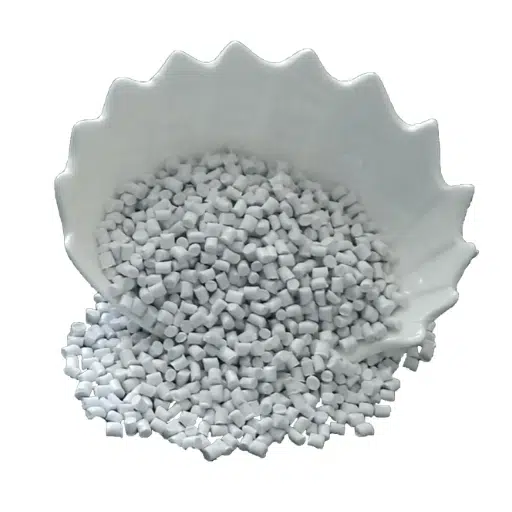
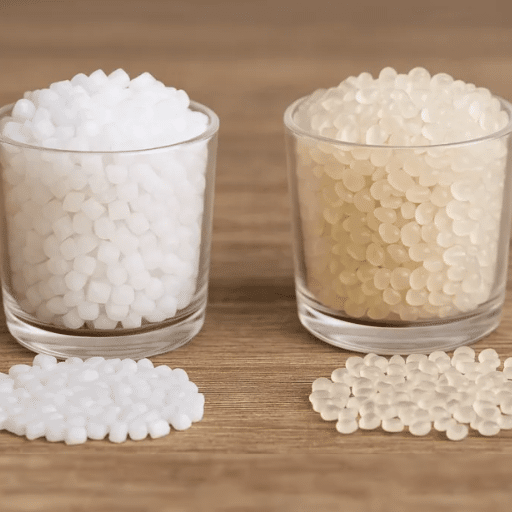
Once you choose TPE, the raw material arrives as pellets or granules for injection molding and extrusion, and pellet quality determines whether your line runs smoothly. Verify these five things with any supplier:
- Batch-to-batch melt flow consistency. A stable melt flow index prevents process drift. Ask for a certificate of analysis (COA) on every lot.
- Uniform pellet size and shape. Consistent pellets melt evenly and feed without bridging in the hopper.
- Hygroscopic handling. Many TPE grades absorb moisture; confirm your supplier ships dry material and can advise on drying conditions.
- Compliance documentation. For food contact, verify FDA 21 CFR and EU Regulation 10/2011. For medical parts, look for ISO 10993 and USP Class VI. Confirm RoHS and REACH for electronics and EU markets.
- Traceable quality systems. An ISO 9001-certified facility with documented testing gives you confidence that every batch meets specification.
These checks prevent real losses. A manufacturer we spoke with received a batch of elastomer tubing resin with absorbed moisture and watched a full production week disappear to brittle, rejected parts. A supplier with proper drying and batch control would have caught the problem before it reached the molding floor.
At Suzhou Yifuhui New Material Co., Ltd., we supply TPE and TPV pellets with strict batch-consistency control, FDA and EU compliant grades, and full documentation on request. As a direct source, we combine premium polymer granules with competitive bulk pricing and worldwide shipping, so you can switch your specification without switching your supply chain.
Frequently Asked Questions

Is TPE better than PVC?
For most modern flexible applications, yes, but it depends on the requirement. TPE wins on low-temperature flexibility, soft-touch feel, recyclability, and the absence of phthalates and halogens. PVC wins on raw material cost and oil resistance. Evaluate temperature, media, compliance, and budget before deciding.
Can TPE replace PVC?
In most flexible applications, yes. Styrenic TPE replaces flexible PVC in tubing, seals, grips, cable jackets, and consumer goods, especially where phthalate-free or halogen-free requirements exist. For higher heat and weathering, TPV is the stronger replacement. Confirm your specific temperature, chemical, and flame requirements against a grade datasheet.
What temperature range can TPE vs PVC handle?
Flexible PVC generally runs from about -20°C to +70°C continuous, with specialty wire grades to +105°C. Styrenic TPE runs from about -50°C to +100°C, with some grades to +125°C, and TPV extends to roughly +135°C. TPE also keeps its flexibility far better in the cold.
Does PVC contain phthalates?
Most flexible PVC does. Phthalates such as DEHP and DINP are the plasticizers that make PVC soft, and some are restricted under EU REACH and RoHS. Phthalate-free PVC made with alternatives such as DINCH, DOTP, or TOTM exists, but TPE avoids the question entirely because it needs no plasticizer at all.
Is PVC recyclable?
Technically yes, but it is difficult. The chlorine content and migrating plasticizers limit regrind to roughly 8 to 15% before surface defects appear, and PVC recycling streams are far less developed than those for polyolefins. TPE is more straightforwardly recyclable, with regrind reused at 20 to 50% ratios.
Is TPE more expensive than PVC?
Per kilogram, yes. Per finished part, often not. Because TPE is about 20 to 30% lighter than flexible PVC, the same mold volume uses less material, and faster cycles and higher regrind reuse close the gap further. In regulated markets, TPE can end up cheaper overall once PVC compliance costs are included.
Conclusion
The TPE vs PVC decision comes down to five factors. TPE wins on low-temperature flexibility, soft-touch feel, recyclability, and freedom from phthalates and halogens. PVC wins on raw material cost and oil resistance. Per part, the cost gap is far smaller than the per-kilogram price suggests. Regulation is moving steadily against flexible PVC in medical and consumer markets. And TPE pellet quality, from melt flow consistency to compliance documentation, determines whether the switch runs smoothly.
When Ana updated her Spanish customer’s specification, the change took one afternoon. Choosing the right material before you cut tooling takes even less.
Ready to evaluate TPE for your next part? Request a quote from Suzhou Yifuhui New Material Co., Ltd. for TPE and TPV pellets, or contact our polymer specialists for help matching a grade to your application. Our team responds within 24 hours, seven days a week, with certified materials and global shipping to keep your production line moving.