Last spring, Daniel, a product engineer at a power-tool maker in Ohio, specified “TPE” for a new soft-touch handle. His supplier shipped an SBS-based compound. The handle felt great in the showroom. Six weeks of UV exposure and a mild heat cycle later, it had yellowed, hardened, and started to crack along the parting line. His quality team flagged a field failure before launch, and the redesign cost the project about nine weeks.
Daniel had learned a lesson most engineers meet once: TPE-S is not a single material. It is a family. The letters on a datasheet can mean SBS, SEBS, or SEEPS, and each one behaves differently in heat, sunlight, oil, and on the molding press. Choosing the right one starts with a clear answer to the question, what is TPE-S, and how its grades differ.
This guide answers that question with real property numbers, a grade-by-grade breakdown of styrenic block copolymers, an SBS-versus-SEBS selection framework, and sourcing guidance from a materials supplier. By the end you will know what to specify, what to verify on a datasheet, and how to buy TPE-S pellets with confidence.
What Is TPE-S?

TPE-S (styrenic thermoplastic elastomer, also written TPS) is a thermoplastic elastomer built from styrenic block copolymers. It pairs hard polystyrene end-blocks, which melt and flow like plastic when heated, with soft elastomeric mid-blocks that return rubber-like flexibility and recovery. The result is a material that molds on standard plastics equipment, needs no vulcanization, and can be reground and reused like any other thermoplastic.
The ISO 18064 designation for this family is TPE-S, and the industry shorthand TPS means the same thing. You will also see the names of the underlying copolymers: SBS, SEBS, and SEEPS. Together these styrenic block copolymers form the largest and most cost-effective branch of the TPE tree.
TPE-S is one of six TPE families, alongside TPE-O, TPE-V, TPE-U, TPE-E, and TPE-A. When a spec simply says “TPE,” it most often means the styrenic grade, because it is the default choice for soft-touch and general-purpose flexible parts. For the full family comparison, our guide to TPE material properties walks through every member and how they differ.
Need to confirm a grade before you spec? Talk to our polymer specialists and we will help you verify what the letters on a datasheet actually mean for your part.
The Chemistry: SBS, SEBS, SEEPS, and SIS Explained
Styrenic TPEs are block copolymers made by linking hard styrene blocks and soft rubber blocks on the same chain. The hard blocks clump into physical crosslinks that give the material strength and hold its shape. The soft blocks give it stretch and recovery. Because those crosslinks are physical rather than chemical, heat breaks them reversibly, which is what makes the material meltable and recyclable.
SBS: The Cost-Effective Workhorse
SBS (styrene-butadiene-styrene) is the highest-volume member of the family. Its mid-block is polybutadiene, an unsaturated rubber that keeps cost low but leaves the material vulnerable to UV, ozone, and heat aging. SBS compounds typically run from about 25 to 45 Shore D hardness and serve at roughly -50 to +70 degrees C in continuous use. You will find SBS in footwear soles, general-purpose grips, and many commodity parts where extreme durability is not the driver.
SEBS: The High-Performance Standard
SEBS (styrene-ethylene/butylene-styrene) is hydrogenated SBS. Saturation removes the double bonds that cause SBS to age, and the payoff is a step change in performance: better heat resistance, far better UV and weathering resistance, lower compression set, and improved resistance to many chemicals. SEBS-based compounds reach hardnesses as low as about 5 Shore A for gel-like parts and up to roughly 60 to 70 Shore D for firm ones. Continuous service commonly spans -50 to +110 degrees C. When a soft-touch part must survive sunlight, heat, or years of service, SEBS is the standard answer. If you want the polymer science behind the acronym, HEXPOL’s TPE Academy explains the SBS-to-SEBS hydrogenation and the wider TPS family in detail.
SEEPS and SIS: The Specialists
SEEPS (styrene-ethylene-ethylene/propylene-styrene) is a refined hydrogenated copolymer prized for soft-touch feel, low odor, and clean processing in consumer goods and films. SIS (styrene-isoprene-styrene) is the adhesive specialist of the group, used mostly in pressure-sensitive adhesives and sealants rather than molded parts.
| Copolymer | Hydrogenated? | Relative Cost | Heat & UV Resistance | Typical Uses |
|---|---|---|---|---|
| SBS | No | Lowest | Limited | Footwear, grips, general-purpose parts |
| SEBS | Yes | Moderate | High | Soft-touch, automotive interior, medical, outdoor |
| SEEPS | Yes | Higher | High | Premium soft-touch, films, low-odor consumer goods |
| SIS | No | Low | Limited | Adhesives and sealants |
If you are comparing TPE-S with other TPE families rather than choosing within it, our TPE vs TPU vs TPV comparison shows where styrenics sit against the rest.
TPE-S Properties at a Glance

The numbers below are typical ranges for general-purpose TPE-S compounds. Specific grades vary by formulation and manufacturer, so always verify against the published datasheet for the grade you plan to buy.
| Property | Typical TPE-S Range |
|---|---|
| Hardness | ~5 Shore A to ~70 Shore D (most compounds 20A-90A) |
| Density | 0.89 – 1.20 g/cm³ |
| Continuous service temperature | -50 to +80/+110 degrees C (SEBS higher, SBS lower) |
| Short-term peak temperature | up to ~110 – 130 degrees C |
| Tensile strength | ~3 – 20 MPa (grade dependent) |
| Elongation at break | 300 – 900% |
| Compression set | Low to moderate; SEBS better than SBS |
| Oil and grease resistance | Moderate to poor (splash contact only for aggressive fluids) |
| Water, acid, and alkali resistance | Good |
| Recyclability | Yes (thermoplastic; typical regrind 10 – 30%) |
Three numbers carry the most weight for buyers. First, density: at roughly 0.9 to 1.2 g/cm³, TPE-S is lighter than flexible PVC and many thermoset rubbers, which means more parts per kilogram. Second, hardness span: few flexible materials cover gel-soft 5 Shore A through firm 70 Shore D from a single chemistry. Third, service ceiling: SEBS compounds hold up to about 100 to 110 degrees C continuous, which is why they replace plasticized PVC and thermoset rubber in demanding roles. As a grade-level reference, KIPP USA’s TPS material page lists commercial hardness and temperature data, and SpecialChem’s styrenic block copolymer category indexes suppliers and datasheets.
SBS vs SEBS: How to Choose the Right Grade
Picking between SBS and SEBS is the most common decision in the TPE-S family. The wrong call usually shows up the way it did for Daniel: as yellowing, hardening, or cracking long after the part looked right on the bench.
- Choose SEBS when the part sees sunlight, heat above about 70 degrees C, weathering, or a long service life. It also wins for clarity, low compression set, and adhesion in overmolding. Medical and food-contact grades are SEBS-based.
- Choose SBS when you need the lowest cost for an indoor, low-stress part such as a general grip, toy, or footwear component, and when the product will not face sustained UV or heat.
- Check oil exposure before you finalize any TPE-S grade. Both SBS and SEBS swell around oils and fuels. If a part sits in constant oil or grease, step up to TPV or reconsider the material entirely.
A quick heuristic for procurement: if a customer says “soft touch” and “outdoor” or “warm environment,” budget for SEBS. If they say “cost-sensitive, indoor, decorative,” SBS will usually do the job. When in doubt, ask your supplier to run the specific aging and compression-set tests your application needs, then compare numbers rather than guessing.
Processing and Overmolding TPE-S
TPE-S processes like a true thermoplastic, and that is one of its biggest manufacturing advantages. It melts in the barrel and sets in the mold with no vulcanization and no cure time, so cycle times run short, often 15 to 30 seconds. Typical melt temperatures sit around 170 to 220 degrees C with mold temperatures of 20 to 50 degrees C. Most SEBS compounds do not require pre-drying, though you should confirm against the datasheet for each grade.
Overmolding is where styrenic TPEs shine. In two-shot molding, a soft TPE-S layer bonds directly to a rigid substrate to create a single durable part with a soft-touch surface. Adhesion depends on the substrate:
| Substrate | TPE-S Adhesion | Guidance |
|---|---|---|
| Polypropylene (PP) | Excellent | Natural bond with SEBS-based compounds |
| Polyethylene (PE) | Excellent | Natural bond |
| Polystyrene (PS) | Good | Shared styrene chemistry |
| ABS | Good | Some grades need a primer or mechanical lock |
| Polycarbonate (PC) | Poor to fair | Needs compatibilizer or mechanical lock |
| Nylon (PA) | Poor to fair | Needs compatibilizer or mechanical lock; TPU is often better |
The takeaway for designers: if your substrate is polypropylene or polyethylene, TPE-S is the natural overmold choice. If it is PC or nylon, expect to engineer the bond, or consider TPU. For a full processing guide, see our TPE injection molding guide.
Choosing an overmold for a PP or ABS part? We stock both the TPE-S compound and the rigid substrate pellets, so you can source the pair from one supplier.
TPE-S Applications Across Industries

Styrenic block copolymers are everywhere, and the range of uses explains why the family is so widely specified.
- Automotive interior and EV: soft-touch trim, cup-holder liners, armrests, airbag covers, and door components. SEBS grades resist fogging, UV, and heat while cutting weight versus PVC.
- Consumer goods and electronics: overmolded grips, handles, power-tool housings, phone cases, wearable straps, and pen grips. TPE-S delivers the dry, non-tacky soft-touch feel consumers expect.
- Medical and healthcare: SEBS-based tubing, syringe plungers, seals, and masks. These grades pass USP Class VI and ISO 10993 and offer a phthalate-free, latex-free alternative to flexible PVC.
- Industrial and packaging: gaskets, caps, plugs, bottle seals, closures, and cable insulation where flexibility and sealing matter.
- Footwear: SBS and SEBS sole compounds, the largest single application segment of the styrenic block copolymer market.
Styrenic block copolymers account for roughly 18% of global thermoplastic elastomer consumption, and the market is projected to grow at about 4% annually through the early 2030s, according to Research and Markets. Automotive lightweighting and electric vehicles are among the fastest-growing demand drivers, alongside medical substitution for plasticized PVC.
For the medical and food-contact side of that PVC-substitution story, our TPE vs PVC material selection guide covers the regulatory and performance comparison in depth.
Food-Contact and Regulatory Compliance for TPE-S
Compliance is where TPE-S earns its place in regulated products. Because it needs no plasticizer to stay soft, there is no DEHP or phthalate chemistry to migrate out of the part, a growing advantage as restrictions tighten worldwide.
- Food contact: SEBS-based food grades are available to FDA 21 CFR 177.1810 (styrene block polymers) and 177.2600 (rubber articles), and to EU Regulation 10/2011 for food-contact materials.
- Toy safety: compounds can be formulated to EN 71-3 limits for migration of elements, which makes TPE-S common in toys and child-contact goods.
- Medical: biocompatible SEBS grades meet ISO 10993 and USP Class VI requirements, and can be supplied under ISO 13485 quality systems.
- General compliance: standard TPE-S is halogen-free by default and can be supplied to REACH and RoHS requirements. Flammability is typically UL 94 HB, with flame-retardant grades available for applications that need more.
When you evaluate a supplier, ask for the certificates that back these claims: FDA or EU food-contact letters, REACH and RoHS declarations, and test reports per batch. A supplier that keeps these on hand is a supplier you can design around.
How TPE-S Pellets Are Supplied and Quality-Checked
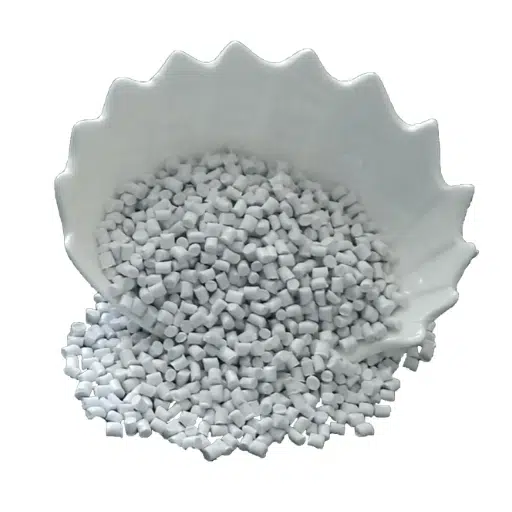
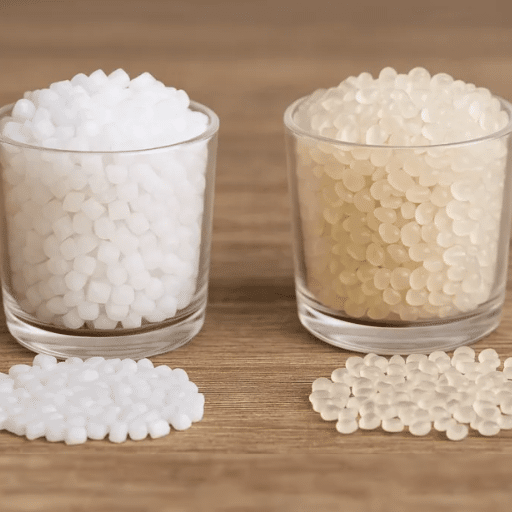
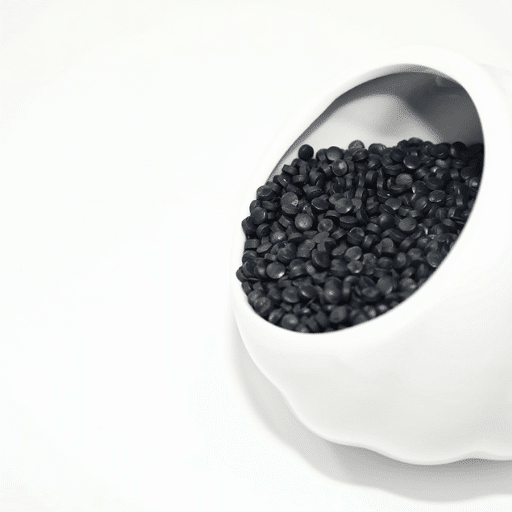
TPE-S reaches the factory as pellets or granules, ready for injection molding, extrusion, blow molding, or overmolding. The pellets themselves look similar across suppliers, which is why batch quality decides how smoothly your line runs.
Here is what a sourcing manager should verify before committing to a TPE-S supplier:
- Consistent melt flow index (MFI) from batch to batch. A drifting MFI changes fill and cooling behavior mid-run, which shows up as flash or short shots on the press.
- Uniform pellet size and shape. Even pellets melt evenly and feed reliably, with no bridging in the hopper.
- Reproducible hardness. Confirm the target Shore A or D value on the certificate of analysis for every lot, not just the first one.
- Certifications on hand. ISO 9001 for the quality system, plus REACH, RoHS, and FDA or EU documentation where your application needs it.
- Technical support for grade selection. The best supplier tells you which of their compounds fits your substrate, service temperature, and compliance needs, rather than selling you a single grade.
The styrenic TPE family is largely produced in Asia, and Asia-Pacific accounts for about half of global SBC manufacturing capacity. Buying direct from a Chinese supplier with rigorous batch controls can lower cost without sacrificing consistency, provided the supplier can document quality. Suzhou Yifuhui New Material Co., Ltd. supplies TPE and TPV pellets in a range of Shore hardness and melt flow specifications, with uniform pellet size, batch consistency control, and the certificates to back each lot. Our full portfolio also includes the PP, ABS, PC, and PA66 substrate pellets used in overmolding, so one partner can cover the whole two-shot system.
Request a quote for TPE-S or SEBS pellets and we will return detailed specifications, pricing, and shipping options within 24 hours. For a broader look at what separates a strong supplier from a weak one, our guide to choosing a TPE supplier walks through the evaluation checklist.
Frequently Asked Questions

What does TPE-S stand for?
TPE-S stands for styrenic thermoplastic elastomer, the ISO 18064 designation for thermoplastic elastomers based on styrenic block copolymers. It is also written TPS. SBS and SEBS are the two most common copolymers in the family.
Is TPE-S the same as SEBS?
No. TPE-S is the family name; SEBS is one member of that family, specifically the hydrogenated high-performance grade. SBS is another member. Think of TPE-S as the category and SBS, SEBS, and SEEPS as the specific chemistries within it.
What is the difference between TPE-S and TPV?
TPV (thermoplastic vulcanizate) is a separate TPE family made by dynamically vulcanizing rubber particles in a polypropylene matrix. Compared with TPE-S, TPV offers higher heat resistance, better oil and weathering resistance, and lower compression set, but it costs more and is never transparent. TPE-S wins on softness, colorability, clarity, and cost.
Is TPE-S food safe?
Food-contact grades of SEBS are available to FDA 21 CFR 177.1810 and 177.2600 and to EU Regulation 10/2011. Standard grades are not automatically food-safe, so confirm the specific grade and its certificates before using TPE-S in food contact.
What temperature can TPE-S withstand?
Continuous service typically spans -50 to about 80 to 110 degrees C depending on the grade. SEBS compounds hold the higher end of that range, while SBS grades are limited to roughly 70 degrees C. Short-term peaks can reach about 110 to 130 degrees C.
Does TPE-S bond to PP or ABS?
TPE-S bonds naturally and strongly to polypropylene and polyethylene. Bonding to ABS is good for many compounds, though some need a primer or mechanical lock. Polycarbonate and nylon are harder to bond and usually require a compatibilizer or mechanical anchoring.
Is TPE-S recyclable?
Yes. Because it is a true thermoplastic with no chemical crosslinks, TPE-S scrap and runners can be reground and reused, typically at 10 to 30% ratios with little property loss. Our guide to TPE recyclability covers the practical details.
Conclusion
TPE-S is the largest, most cost-effective family of thermoplastic elastomers, and the letters hide real differences. SBS delivers low-cost general-purpose flexibility. SEBS adds the heat, UV, and weathering resistance that demanding parts require. SEEPS and SIS serve specialized soft-touch and adhesive roles. None of them can be substituted blindly, because the wrong grade fails exactly where the right one would have held.
When you specify TPE-S, define the full requirement: service temperature, sunlight and oil exposure, hardness, substrate for overmolding, and regulatory target. Then verify those numbers against a datasheet and a certificate of analysis, not a sample board. Sourcing TPE-S or SEBS pellets for your next production run? Contact Suzhou Yifuhui New Material Co., Ltd. for certified grades across the Shore hardness and melt flow range, technical guidance on grade selection, and a competitive quote within 24 hours.