When Amara’s team at a Bay Area infusion-device startup picked flexible PVC for a new IV line, it ticked every box on the procurement sheet. PVC pellets were the cheapest option by a wide margin, the material had decades of regulatory history, and their contract molder could run it the next day. Eighteen months later, the same decision forced a redesign. A distributor in Germany rejected the product because the tubing released more than 10 micrograms per kilogram of body weight per day of plasticizer, the threshold that now triggers a benefit-risk assessment under the EU Medical Device Regulation. The reformulation cost them a full product cycle and a six-figure qualification budget.
That scenario is becoming routine. The TPE vs PVC medical devices decision used to be a cost question. Today it is a regulatory, biocompatibility, and sterilization question with a hard deadline attached. Flexible PVC is made soft by plasticizers, historically DEHP, that can migrate into the fluid path and patient tissue. Medical-grade TPE is soft without plasticizers at all. Regulators in Europe have put DEHP on a phase-out clock that ends on July 1, 2030.
This guide compares TPE and PVC for medical devices across chemistry, biocompatibility, sterilization, device risk class, cost, and sourcing. You will finish with a decision framework and a supplier checklist, so you can specify and source the right material before the deadline forces your hand.
New to the wider comparison? Start with our TPE vs PVC material selection guide → for the full manufacturing picture, then return here for the medical-device depth.
TPE vs PVC for Medical Devices: Key Differences at a Glance

Here is the fastest way to orient yourself. These ranges hold for standard commercial medical grades from major compounders.
| Property | Flexible PVC | Medical TPE (SEBS focus) |
|---|---|---|
| Plasticizer content | Requires plasticizers, ~30-40% by weight, historically DEHP | None; free of DEHP, phthalates, BPA, latex by formulation |
| Specific gravity | ~1.16-1.40 | ~0.88-1.05, roughly 25-30% lighter |
| Shore hardness | ~50-90 A, plasticizer-tuned, plus rigid grades | Broad, ~5-95 A, grade-dependent |
| Clarity | Crystal-clear | Clear grades available |
| Gamma sterilization | Yellows and embrittles, limited | Generally stable to ~50 kGy |
| EtO and e-beam | Compatible | Compatible |
| Autoclave | Limited, plasticizer loss | Selected autoclavable grades |
| Drug absorption | Known PVC drug-sorption issue | Low, no significant drug binding reported |
| Biocompatibility | USP Class VI and ISO 10993 grades exist | USP Class VI and ISO 10993-4/-5/-10/-11 etc. |
| Recyclability | Limited by plasticizer degradation | Fully recyclable thermoplastic |
| Relative material cost | Lowest | Higher per kg, often near parity per part |
Two rows settle most arguments for new single-use devices. Plasticizers: PVC cannot be flexible without them, and they can leach. Gamma stability: PVC yellows and embrittles under radiation, while medical TPE-S is generally stable to about 50 kGy. If your device is sterilized by gamma and sits on the shelf, those two rows point to TPE.
Not sure which medical grade fits your sterilization method? Our polymer specialists can review your device profile and point you to a batch-consistent medical TPE. Talk to an expert →
What Is Medical-Grade TPE?
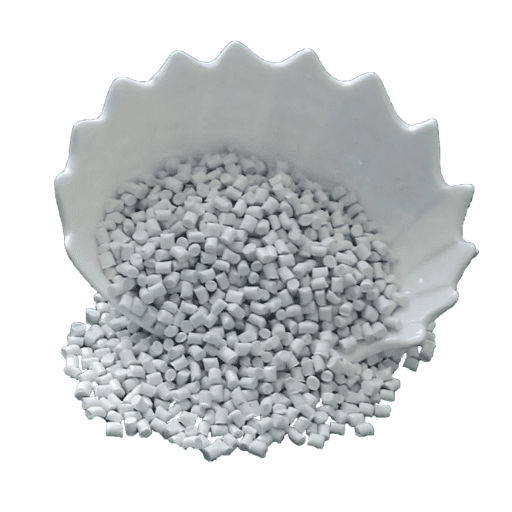
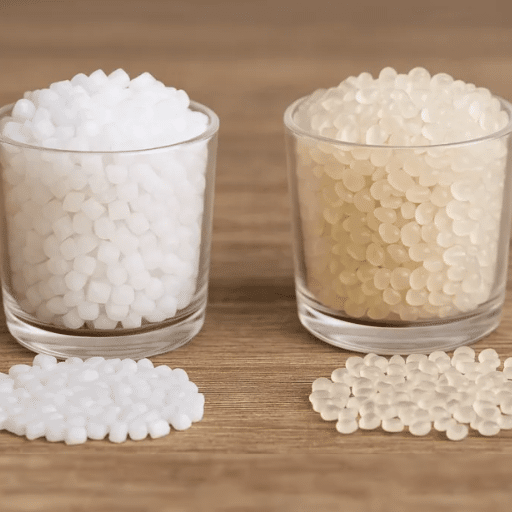
Thermoplastic elastomer (TPE) is a polymer family that behaves like rubber yet processes like a thermoplastic. It is supplied as solid pellets, melted on standard injection molding or extrusion lines, and cooled into parts. Because it is thermoplastic, offcuts and rejects can be reground and reused, which keeps waste low in high-volume production.
Medical-grade TPE is a specific subset formulated to pass ISO 10993 biocompatibility testing, often USP Class VI, and free of latex, phthalates, halogens, and PVC. The medical families matter more than the umbrella term:
- SEBS (styrenic block copolymers) is the largest segment in medical TPE, roughly 43% of market revenue, valued for cost-effective clarity and gamma stability.
- TPU suits infusion-set tubing and wearable pumps that need toughness.
- PEBA (TPE-A) is the fastest-growing family for thin, kink-resistant catheter shafts.
- TPV and TPO appear in some seals and overmolds but are more often opaque.
Key medical TPE lines to know include Teknor Apex Medalist MD, HEXPOL Mediprene, Colorite Cellene, KRAIBURG THERMOLAST H HC, HRS PHOENIX, and DuPont Liveo. Each carries published biocompatibility and sterilization data you can request before you spec.
The defining design window is duration. Medical TPE is validated for short-term body contact, typically under 24 hours, and built for single-use disposables. No TPE grade is currently approved for long-term implantation. That is not a deficiency; it is the material’s intended role.
Dive deeper into Shore hardness and grade selection with our What Is TPE Material? guide →.
What Is Medical-Grade Flexible PVC?
Polyvinyl chloride is a chlorinated thermoplastic. In its rigid form it is hard and brittle, which is why medical tubing, bags, and masks use flexible PVC. Flexibility only appears when a plasticizer is added, often at 30-40% of the formulation by weight. For decades that plasticizer was DEHP, di(2-ethylhexyl) phthalate.
Here is the property that drives the entire substitution debate: DEHP is not chemically bonded to the PVC chain. It is a physical additive that migrates over time and under stress into whatever the device touches, whether stored blood, an IV solution, or skin. PVC also absorbs certain drugs, which can reduce the delivered dose, and it discolors and embrittles under gamma sterilization.
PVC is not going away. It remains the lowest-cost medical polymer, bonds readily to molded connectors, and carries unmatched regulatory history. The nuance to understand is that even “DEHP-free” PVC still relies on alternative plasticizers such as DINCH, TOTM, BTHC, or DEHT, and trace DEHP can remain as a manufacturing byproduct. Eliminating the plasticizer entirely is exactly what a move to TPE accomplishes.
Phthalates and DEHP: Why the Industry Is Moving Away from Medical PVC

The pressure on flexible PVC is not marketing. It is a sequenced set of regulations, each with a date, that device teams now plan around.
How Plasticizers Work, and Why They Leach
DEHP makes PVC soft, but because it is only physically dispersed, it leaches into the fluid path. European regulators set a tolerable daily intake of about 48 to 50 micrograms per kilogram of body weight per day, a lifelong reference derived from reproductive-toxicity studies. High-exposure patients can approach or exceed that level: NICU neonates receiving multiple therapies and adult haemodialysis patients carry the highest burdens. That is precisely the population where a phthalate-free material adds the most clinical value.
The Regulatory Timeline for PVC and DEHP
| Date | Regulation | What It Means for Devices |
|---|---|---|
| July 22, 2021 | EU RoHS | DEHP restricted in medical electrical devices and cables |
| Dec 31, 2027 | EU MDR 2017/745 | CE transition deadline for high-risk legacy devices |
| Dec 31, 2028 | EU MDR 2017/745 | CE transition deadline for low- and medium-risk legacy devices |
| Jan 1, 2029 | Reg (EU) 2023/2482 | Final application date for DEHP in medical devices |
| July 1, 2030 | EU REACH Annex XIV | DEHP sunset date, use prohibited without authorization |
Two more rules sit above this table. Under EU MDR Annex I, section 10.4, a device containing DEHP or other CMR/endocrine-disrupting substances above 0.1% by weight must run a benefit-risk assessment that weighs safer alternatives first. A 2024 guidance requires that analysis when plasticizer release exceeds about 10 micrograms per kilogram of body weight per day. For context, industry bodies estimate that over 6 billion euros have been invested in DEHP substitutes, and most European PVC medical devices already run DEHP-free.
Blood bags are the notable holdout. DEHP stabilizes red-cell membranes during storage, so replacing it required matching that performance with new additive solutions. Recent European blood-service studies show DINCH and DEHT bags combined with next-generation storage solutions can match conventional hemolysis levels. That milestone effectively removes the last technical excuse for DEHP.
What “DEHP-Free PVC” Means, and Why It Still Isn’t TPE
A phthalate-free PVC compound is a real, lower-cost option for companies that must stay on PVC tooling. Switching to DINCH, TOTM, BTHC, or DEHT cuts plasticizer migration by an estimated 38.9% to 87.3% compared with DEHP. What it does not do is remove the chlorine backbone, the plasticizer system, or the migration mechanism entirely. Medical TPE removes all three at once.
Biocompatibility and Compliance: ISO 10993, USP Class VI, and FDA
Device teams do not select materials by feel; they select by standards. Here is what each one actually requires.
ISO 10993: What Each Part Tests
When a supplier says a grade “passes ISO 10993,” ask which parts. For a TPE vs PVC medical device comparison, the relevant ones are:
- ISO 10993-1 sets the risk-based framework for choosing tests.
- ISO 10993-4 covers hemocompatibility for blood-contact devices.
- ISO 10993-5 tests cytotoxicity, whether a material kills cells in culture.
- ISO 10993-10 tests sensitization and irritation.
- ISO 10993-11 tests systemic toxicity from absorbed substances.
- ISO 10993-18 covers chemical characterization, the extractables and leachables (E&L) workstream.
- ISO 10993-23 covers irritation from direct and indirect contact.
Established medical TPE lines publish ISO 10993-4/-5/-10/-11 data and USP Class VI results, exactly as established medical PVC does. The difference emerges in E&L. A plasticized polymer always has a migration story to document; a plasticizer-free TPE has a cleaner extractables profile from the start.
USP Class VI and the FDA 21 CFR Trap
USP Class VI is the strictest biological-reactivity standard for plastics, covering systemic toxicity, intracutaneous reactivity, and implantation. Both medical PVC and higher-end medical TPE can meet it.
Here is the error many articles repeat: FDA 21 CFR 177.2600 covers rubber articles for food contact, not tissue contact. Quoting it does not prove a material is safe against skin or in a wound. For patient contact, request USP Class VI and ISO 10993 data, and confirm which specific tests were run.
EU MDR and Quality Systems
If you sell in Europe, the EU MDR 2017/745 governs device safety, and pharma-contact parts may need European Pharmacopoeia 3.1.9. Add ISO 13485 for the supplier’s quality management system, plus RoHS and REACH for restricted substances. A compliant supplier hands you all of these documents on request.
Sterilization: Where TPE and PVC Really Diverge

Sterilization is the factor teams most often overlook, because a material that fails validation late costs a launch. Medical component manufacturers such as Saint-Gobain publish exactly this compatibility data for tubing and fluid paths. Here is how the two compare.
- Gamma and e-beam: Flexible PVC yellows and can embrittle under gamma, which is why gamma-sterilized single-use devices have been a primary TPE adoption driver. Medical TPE-S is generally stable to about 50 kGy, so parts come out of irradiation clear and functional.
- Ethylene oxide (EtO): Both materials tolerate EtO, the standard for single-use disposables that sterilize once.
- Autoclave (steam at 121-134°C): Flexible PVC degrades as heat drives out plasticizer. Only selected autoclavable TPE grades exist, and neither PVC nor TPE is the reusable-device answer. For 50-plus-cycle reprocessing, silicone remains the standard.
Sterilization decision matrix:
| Method | Flexible PVC | Medical TPE | Best for |
|---|---|---|---|
| Gamma | Limited, yellows/embrittles | Stable to ~50 kGy | Single-use, gamma-sterilized disposables |
| EtO | Compatible | Compatible | Single-use disposables |
| E-beam | Compatible | Compatible | High-volume single-use |
| Autoclave | Limited, plasticizer loss | Selected grades only | Reusable devices, use silicone instead |
If your device is reusable, neither flexible PVC nor TPE is the right destination. That decision belongs to the silicone family, and our TPE vs silicone for medical devices guide → covers the crossover in detail.
Medical Devices Where TPE Replaces PVC
The substitution is not hypothetical; it is already happening across the disposable device catalog. Teknor Apex’s Medalist medical TPE selector and independent coverage in MD+DI document working production examples.
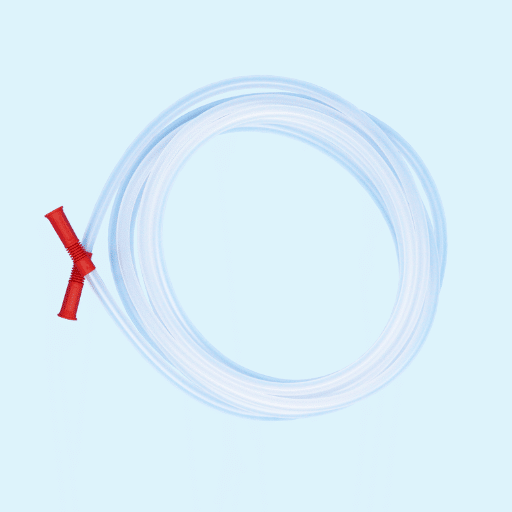
- IV infusion sets and fluid tubing: TPE sets do not absorb drugs the way PVC sets can, a documented clinical advantage for dose accuracy.
- Respiratory and oxygen masks: Clear TPE grades hold their shape during packaging and storage better than PVC.
- Drip chambers and filter housings: Molded TPE replaces flexible PVC in fluid-path components.
- Catheters and drainage tubing: Multi-lumen TPE designs serve short-term drainage and delivery.
- Peristaltic pump tubing: TPE grades deliver thousands of pump hours with low spallation.
- Films and fluid bags: TPE can be down-gauged, with a thinner film matching thicker PVC, cutting weight and material use.
Where does PVC still make sense? For high-volume, cost-critical disposables where plasticizer migration is not a clinical concern, where gamma is not used, and where legacy tooling and validated assemblies make a switch expensive. Those applications exist, and a good materials partner will tell you so honestly.
This same procurement audience often needs rigid implant-adjacent and orthopedic polymers. Yifuhui also supplies medical-grade UHMWPE →, so you can source multiple validated medical materials in one place.
Device Risk Class and Regulatory Pathway
Medical device teams think in risk classes, and no competitor guide maps material choice to them. Here is the shortcut:
- Class I (low risk): Manual instruments and simple disposables. TPE or PVC both appear; single-use TPE parts are common.
- Class II (moderate risk): IV sets, catheters, masks, and wound drains. This is the PVC-replacement hot zone, where a low-extractables, phthalate-free TPE simplifies new 510(k) and CE documentation.
- Class III (high risk and implantable): Neither flexible PVC nor TPE is the implant standard. Reusable and implanted devices route to silicone and other implant-grade families.
For a new filing, established medical TPE grades with published dossiers and FDA master files shorten submissions. A brand-new grade means budgeting for E&L and biocompatibility work, which industry analysts estimate at roughly $300,000 and nine months per program under ISO 10993-18. Plan that cost before you lock a grade.
TPE vs PVC Medical Device Cost: The Total Picture
PVC is cheaper per kilogram. That single fact has kept it in medical devices for a century. The total-cost picture is more balanced once you add density, sterilization yield, and compliance.
- Raw material: Flexible PVC compound runs about $1.20-1.90 per kilogram; medical-grade TPE-S runs about $2.50-5.00.
- Density and down-gauging: TPE is roughly 25-30% lighter than flexible PVC, and film can be down-gauged significantly. A 7-mil TPE film can match the performance of a thicker PVC film, which closes much of the per-part gap.
- Sterilization yield: Gamma-stable TPE produces less discoloration and scrap on irradiated lines than PVC.
- Recyclability: TPE regrind is reusable; PVC regrind is limited by plasticizer degradation over repeated heat history.
- Compliance: For devices sold in Europe, a DEHP-containing PVC now carries benefit-risk assessment, authorization, or replacement obligations with fixed dates. TPE removes that line item entirely.
For a worked cost model across seals, tubing, and molded parts, the TPE vs PVC pillar guide has the full cost-of-ownership analysis →.
How to Source Medical-Grade TPE Pellets: Supplier Checklist
Whether you switch now or later, the sourcing question is the same: how do you qualify a medical-grade TPE pellet supplier you can trust?
- Verify material certifications. Request USP Class VI and ISO 10993 test data, naming the specific parts, plus FDA-ingredient compliance, RoHS, REACH, and EU MDR readiness.
- Verify the quality system. A medical supplier should run ISO 13485, not just ISO 9001. Ask for a Certificate of Analysis and lot traceability.
- Check pellet consistency. Consistent melt flow index (MFI) and uniform pellet size translate directly to fewer machine jams and fewer rejected parts.
- Confirm sterilization documentation. Ask for data at your chosen method and at the end-of-life dose on finished assemblies.
- Request E&L data. A supplier with ISO 10993-18 chemical characterization available saves you months of validation.
- Evaluate logistics. Confirm minimum order quantity, lead time, global shipping, and how fast you get a technical answer.
That last point is where a direct-source supplier earns its place. Suzhou Yifuhui New Material Co., Ltd. supplies medical-grade TPE and TPV pellets with FDA- and EU-compliant formulations, batch-consistency control, competitive bulk pricing, and global shipping. When a sourcing manager needs a certified grade fast, our team returns a detailed quote within 24 hours.
Need a specification sheet or a sample quote for a medical TPE grade? Request a competitive quote or contact our polymer specialists →.
TPE vs PVC Medical Devices: Frequently Asked Questions

Does PVC contain phthalates?
Flexible PVC is made soft by plasticizers, and for decades the default was DEHP, a phthalate. Today many medical PVC compounds use alternative plasticizers such as DINCH or TOTM, but trace phthalates can remain, and the plasticizer system itself is still present.
Is TPE safe for medical devices?
Medical-grade TPE is formulated to pass ISO 10993 biocompatibility testing and often USP Class VI, and it is free of DEHP, phthalates, BPA, and latex. It is validated for short-term contact under 24 hours and single-use disposables, not long-term implantation.
Is TPE biocompatible?
Yes, in medical grades. Look for published ISO 10993 data naming the specific parts tested, such as ISO 10993-4, -5, -10, and -11, plus USP Class VI where your device requires it.
Why is DEHP being phased out of medical devices?
DEHP is an endocrine-disrupting substance that can migrate from PVC into fluids and tissue. The EU has set fixed deadlines, including a January 1, 2029, application deadline and a July 1, 2030, REACH sunset date, driving the shift to plasticizer-free materials like TPE.
Can TPE be sterilized by gamma?
Yes. Medical TPE-S grades are generally stable to about 50 kGy, which is a core reason gamma-sterilized single-use devices are moving from PVC, which yellows and embrittles, to TPE.
Is PVC or TPE better for medical tubing?
For a single-use, gamma-sterilized, fluid-path line, TPE removes plasticizer migration and drug absorption risk. For a cost-critical line with validated PVC assembly and no migration concern, PVC can still be the pragmatic choice.
Are blood bags still made of PVC?
Most blood bags remain PVC-based, but the industry is transitioning. DEHP-free PVC with DINCH or DEHT and next-generation storage solutions now matches conventional red-cell quality, removing the last barrier to a full phase-out.
Making the Right Material Choice
Three forces are converging on the TPE vs PVC medical devices decision. The clinical case against plasticizer migration is strongest in the patients who need protection most. The regulatory clock has hard dates, from the EU MDR transition deadlines in 2027 and 2028 to the DEHP authorization deadline of January 1, 2029, and the REACH sunset on July 1, 2030. And the technical gaps that once held PVC in place, gamma stability, drug absorption, and recyclability, have been closed by modern medical TPE grades.
PVC still wins where cost and legacy dominate and migration is not a concern. TPE wins for single-use, gamma-sterilized, fluid-path devices, which is precisely where the market is heading. Ask your supplier for the test data, run the sterilization validation early, and budget for E&L before you commit.
When your device resolves to a medical TPE, you want a supplier with the certifications and the consistency to keep your line moving. Suzhou Yifuhui New Material Co., Ltd. supplies certified TPE and TPV pellets with FDA- and EU-compliant grades, batch-consistent quality, competitive direct-source pricing, and global shipping. Get a quote within 24 hours →