Every year, surgeons perform more than 2.5 million hip and knee replacements worldwide. The bearing surface that lets those joints glide smoothly for 15 to 25 years is almost always the same material: medical grade UHMWPE. That fact surprises many procurement managers, because from the outside, this polymer looks like ordinary plastic.
If you source polymer resins for medical devices or contract manufacturers, you already know that looks are misleading. The difference between implant-grade UHMWPE and standard polyethylene is measured in millions of grams per mole, in parts-per-million purity, and in regulatory documentation that can make or break a production schedule. Choose the right grade, and your components pass biocompatibility testing, machining, and sterilization without surprises. Choose the wrong grade, and you risk FDA rejection, premature wear, or a costly line shutdown.
In this guide, you will learn exactly what medical grade UHMWPE is, why it dominates orthopedic bearings, which standards apply, and how to source it with confidence. We will cover resin grades, cross-linked and vitamin E-stabilized formulations, procurement checklists, and the supplier landscape. Whether you are qualifying a new resin or comparing UHMWPE against HDPE and PEEK, this article gives you the technical and commercial foundation you need.
Need a competitive quote on medical-grade UHMWPE resin, rods, or pellets? Contact our polymer specialists today for specifications, CoA samples, and 24-hour pricing.
What Is Medical Grade UHMWPE?

Medical grade UHMWPE, or medical grade ultra-high molecular weight polyethylene, is a linear polyolefin with a molecular weight typically above 3.1 million grams per mole. For perspective, standard high-density polyethylene (HDPE) usually falls between 200,000 and 500,000 g/mol. Those extra-long molecular chains give UHMWPE its signature combination of low friction, exceptional wear resistance, high impact strength, and chemical inertness.
Medical grade material is not simply “industrial UHMWPE sold to hospitals.” It is produced and handled under tighter purity controls, with full lot traceability, and with testing that supports long-term human implantation. The most common starting resins for implant applications are Celanese GUR 1020 and GUR 1050. GUR 1020 has a molecular weight around 3.5 million g/mol and is classified as Type I under ASTM F648. GUR 1050 sits near 5.5 to 6 million g/mol and is classified as Type II. Both are consolidated into rods, sheets, blocks, or fibers before machining into final components.
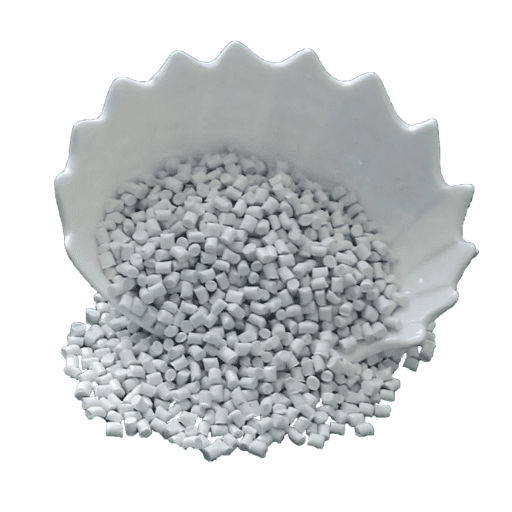
Procurement teams should understand the form factor, because medical UHMWPE is rarely supplied as free-flowing injection-molding pellets. It usually arrives as a fine resin powder that is compression molded or ram extruded into stock shapes, or as pre-machined blanks. For a deeper comparison of powder versus pellet supply chains, see our guide to UHMWPE powder vs pellets.
Why molecular weight matters
The molecular weight of polyethylene directly controls chain entanglement. Longer chains create a tougher, more abrasion-resistant surface. In a hip joint, that means the acetabular liner can withstand millions of walking cycles without generating wear debris that triggers inflammation. Lower-molecular-weight polyethylene simply cannot match that fatigue life.
Medical grade UHMWPE also differs from industrial grades in its extractables profile, ash content, and consistency. Implant-grade resin must meet ASTM F648 and ISO 5834 limits on trace metals, moisture, and volatile residues. Device-grade material may only need FDA food-contact or ISO 10993 biocompatibility clearance, depending on contact duration and body location. If you need a broader introduction to the base polymer, our complete guide to ultra high molecular weight polyethylene covers molecular structure, processing, and industrial applications.
Key Properties That Make UHMWPE Ideal for Medical Devices
Medical grade UHMWPE succeeds in implants because no single property carries the load. The material wins on a combination of wear, lubricity, toughness, and biological safety.
| Property | Typical Value | Why It Matters in Medicine |
|---|---|---|
| Molecular weight | >3.1 million g/mol | Long chains resist abrasion and fatigue |
| Density | 0.93-0.95 g/cm³ | Lighter than water; compatible with joint loading |
| Tensile strength | 20-40 MPa | Adequate for bearing surfaces |
| Elongation at break | >300% | Absorbs impact without cracking |
| Coefficient of friction | 0.05-0.14 dry | Self-lubricating; minimizes wear debris |
| Impact strength | Highest among thermoplastics | Survives drop and shock loads |
| Water absorption | <0.01% | Dimensionally stable in body fluids |
| Service temperature | -200°C to +90°C | Withstands sterilization and cryogenic storage |
| Chemical resistance | Excellent | Inert to bodily fluids and cleaning agents |
The most clinically important property is wear resistance. Conventional UHMWPE already outperforms standard polyethylene, but highly cross-linked versions can reduce wear by 70% to 90% compared with non-cross-linked implant material. That improvement translated directly into longer implant lifespans and fewer revision surgeries.
Biocompatibility is equally critical. UHMWPE is hydrophobic, chemically stable, and does not leach additives under normal conditions. Decades of clinical use support its acceptance for long-term implantation. However, biocompatibility is not automatic. It depends on the exact resin, processing aids, sterilization method, and any stabilizers such as vitamin E. For this reason, manufacturers should never assume that “medical grade” means “implant grade” without verifying the relevant ASTM or ISO designation.
Sterilization compatibility
Medical UHMWPE can be sterilized by gamma irradiation, ethylene oxide (EtO), gas plasma, and, in some cases, autoclave. Gamma sterilization is common because it also cross-links the polymer, improving wear resistance. The trade-off is oxidative embrittlement if free radicals remain trapped in the material. That is why modern implant grades are often melted after irradiation or stabilized with vitamin E.
Where Medical Grade UHMWPE Is Used

Orthopedic implants consume the largest share of medical grade UHMWPE. According to Grand View Research, the global UHMWPE market is expanding rapidly, with medical applications remaining the dominant end-use segment. Within that segment, knee replacement accounts for roughly 41% of demand, while hip replacement is the fastest-growing application at approximately 10.1% CAGR.
Orthopedic bearings
- Hip replacements: UHMWPE acetabular liners articulate against cobalt-chrome or ceramic femoral heads. The material is used in about 85% of hip replacements globally.
- Knee replacements: Tibial inserts and patellar buttons must withstand high contact stress and multidirectional sliding. Nearly all modern knee designs use UHMWPE bearings.
- Shoulder, ankle, elbow, and small-joint replacements: Smaller joints benefit from the same low-wear behavior.
- Spinal disc replacements: Some artificial discs use UHMWPE cores for their fatigue resistance.
Fibers, sutures, and surgical textiles
DSM Biomedical’s Ulteeva Purity line produces medical-grade UHMWPE fibers used in high-strength sutures, surgical cables, and mesh reinforcements. These fibers offer strength comparable to steel at a fraction of the weight, along with flexibility that metal cannot match. Applications include orthopedic sutures, cardiovascular textiles, and trauma cables.
Surgical instruments and device components
UHMWPE’s low friction and impact resistance make it useful for instrument handles, guides, spacers, and packaging inserts. In these cases, the material may only need ISO 10993 biocompatibility rather than full ASTM F648 implant certification.
Porous filters and vents
Sintered UHMWPE creates controlled-porosity filters for gas venting and fluid filtration in medical devices. These applications rely on the material’s chemical inertness and ability to be produced with consistent pore sizes.
When Elena, a procurement manager at a Midwest orthopedic contract manufacturer, switched her knee insert supplier in 2023, she assumed all “medical UHMWPE” stock shapes were equivalent. Her first production lot passed dimensional checks but failed oxidative stability testing after gamma sterilization. The root cause: the supplier had shipped conventional rather than highly cross-linked material. Elena lost six weeks and $40,000 in rework. The lesson now lives in her supplier qualification checklist: always confirm the resin grade, cross-linking level, and post-irradiation treatment in writing.
Standards, Regulations, and Quality Certifications
Medical grade UHMWPE is one of the most regulated thermoplastics in healthcare. The standards you need depend on whether the material will contact blood and bone for decades or simply touch skin for a single procedure.
ASTM F648
ASTM F648 is the standard specification for implant-grade ultra-high molecular weight polyethylene powder and fabricated forms. It defines two resin types:
- Type I: Lower molecular weight, typically GUR 1020.
- Type II: Higher molecular weight, typically GUR 1050.
The standard covers density, tensile yield strength, ultimate tensile strength, elongation, and impact strength. If you are sourcing material for long-term implants, ASTM F648 compliance is non-negotiable.
ISO 5834
ISO 5834 has two parts relevant to UHMWPE:
- ISO 5834-1: Powder form requirements.
- ISO 5834-2: Molded forms, sheets, and rods requirements.
Many international markets, especially Europe, require ISO 5834 certification even when ASTM F648 is also accepted. A supplier with both can simplify global device registrations.
ISO 10993
ISO 10993 governs biological evaluation of medical devices. Implant-grade UHMWPE must pass cytotoxicity, sensitization, irritation, and systemic toxicity tests appropriate to the contact duration and tissue type. For permanent implants, this typically includes a full battery of tests or a justified equivalence argument to a legally marketed predicate device.
FDA guidance
In May 2019, the FDA finalized guidance on the characterization of UHMWPE used in orthopedic devices. The document covers starting resin, consolidation method, terminal sterilization, biocompatibility, and shelf-life packaging. It also distinguishes conventional UHMWPE, highly cross-linked UHMWPE, and antioxidant-stabilized highly cross-linked UHMWPE. You can read the guidance summary at BoneZone.
Supplier certifications to request
When qualifying a medical UHMWPE supplier, ask for:
- ISO 13485 quality management system certification.
- Certificate of Analysis for each lot, showing molecular weight, density, tensile properties, and ash content.
- Resin traceability back to the original manufacturer, such as Celanese GUR.
- Sterilization validation data for your intended method.
- USP Class VI or ISO 10993 biocompatibility summary.
- Statement of compliance with ASTM F648 and/or ISO 5834.
If a supplier cannot provide these documents, the material is not suitable for implant use, regardless of price.
Cross-Linked and Vitamin E-Stabilized UHMWPE

Standard UHMWPE already resists wear, but cross-linking pushes performance further. In the late 1990s, manufacturers began irradiating UHMWPE to create covalent bonds between polymer chains. These cross-links restrict chain mobility, so the surface does not deform as easily under sliding stress.
How cross-linking works
Gamma irradiation or electron-beam treatment breaks carbon-hydrogen bonds and creates free radicals. Some of these radicals recombine to form cross-links. Typical radiation doses range from 50 to 100 kGy. Higher doses increase cross-link density but can also reduce crystallinity and fatigue strength if not balanced.
After irradiation, the material must be treated to remove residual free radicals. Two common approaches are:
- Remelting: Heating above the melting point to allow radicals to recombine. This improves oxidation resistance but can lower toughness.
- Annealing: Heating below the melting point to reduce radicals while preserving more crystallinity.
Vitamin E stabilization
Vitamin E, or alpha-tocopherol, is a biological antioxidant that scavenges free radicals. Adding it to UHMWPE before or after irradiation protects the polymer from oxidative degradation without the crystallinity loss associated with remelting. Studies show that as little as 0.05 wt% vitamin E can protect irradiated highly cross-linked UHMWPE against oxidation.
Clinical benefits include:
- Wear-rate reductions of 73% to 86% in knee designs compared with conventional UHMWPE.
- Better retention of fatigue strength than remelted cross-linked grades.
- Reduced risk of oxidative embrittlement over the life of the implant.
Commercial examples include Zimmer Biomet’s E1 antioxidant-infused technology. When specifying material, ask whether the supplier offers conventional, highly cross-linked, or vitamin E-stabilized highly cross-linked UHMWPE, and request wear-test data for the exact formulation.
Not sure which UHMWPE formulation fits your implant design? Our team can review your application and recommend the right grade. Request a technical consultation with material datasheets.
Medical Grade UHMWPE vs. HDPE vs. PEEK
Procurement teams often ask whether HDPE or PEEK can substitute for medical grade UHMWPE. The answer depends on the application.
| Material | Best Use Case | Key Advantage | Key Limitation |
|---|---|---|---|
| Medical grade UHMWPE | Joint bearings, wear surfaces | Lowest friction and wear among polyethylenes | Lower modulus than PEEK; creep under load |
| HDPE | Device housings, low-load components | Lower cost, easier processing | Poor wear resistance under sliding load |
| PEEK | Structural implants, spinal cages, surgical instruments | High strength, high temperature, radiolucent | Higher cost, higher friction than UHMWPE |
UHMWPE wins whenever two surfaces slide against each other under load. Its self-lubricating behavior generates less wear debris than HDPE and far less friction than PEEK. PEEK wins when structural strength, steam sterilization, or X-ray transparency matters. HDPE is acceptable for non-load-bearing, short-term, or cost-sensitive parts where wear is not a primary concern.
For a deeper comparison of UHMWPE and HDPE, read our article on UHMW vs HDPE.
Sourcing Medical Grade UHMWPE: A Procurement Checklist
Sourcing medical UHMWPE is different from buying commodity polyethylene. The documentation burden is higher, lead times are longer, and price alone is a poor selector.
1. Define the intended use
Start with the regulatory pathway. Is the component a permanent implant, a long-term surgical device, or a short-term instrument? Each use case demands a different grade and documentation package.
2. Specify the resin and grade
Request material by resin name and standard:
- Implant bearings: Celanese GUR 1020 or 1050, ASTM F648, ISO 5834.
- Cross-linked implant bearings: Highly cross-linked GUR 1020/1050, with remelt or vitamin E stabilization.
- Device components: ISO 10993-compliant medical UHMWPE, often FDA food-contact grade acceptable.
3. Request Certificates of Analysis
A CoA should include lot number, molecular weight, density, tensile properties, elongation, impact strength, and ash content. For cross-linked grades, ask for cross-link density and residual radical data.
4. Verify supplier certifications
ISO 13485 is the minimum for implant material suppliers. ISO 9001 may suffice for device-grade components. Ask for FDA registration numbers and any device master file references.
5. Confirm form factor and machining support
Decide whether you need resin powder, compression-molded sheet, ram-extruded rod, or near-net-shape blanks. A supplier that can also advise on machining tolerances and stress relief will save time during scale-up. Our UHMW processing guide explains the differences between compression molding, ram extrusion, and CNC machining.
6. Evaluate sterilization compatibility
Gamma, EtO, and steam sterilization each interact differently with UHMWPE. Confirm that the grade you choose has been validated for your sterilization method and dose.
7. Compare total landed cost
Implant-grade UHMWPE is more expensive than industrial UHMWPE and far more expensive than HDPE. However, using a lower grade to save money often creates larger costs in testing failures, recalls, or liability. Request quotes from at least three qualified suppliers and weigh price against documentation, lead time, and technical support.
For a broader look at pricing, MOQs, and supplier vetting across the UHMWPE market, see our UHMW plastic pellets buyer’s guide.
When Raj’s team at a Singapore-based device startup received three quotes for UHMWPE rod, the cheapest option was 30% below the others. The supplier claimed “medical grade” but could not provide ASTM F648 paperwork. Raj chose the mid-priced option with full Celanese resin traceability and ISO 13485 certification. His first submission to the notified body passed on the first review, and his production launch stayed on schedule.
Market Outlook and Leading Suppliers

The medical grade UHMWPE market was valued at approximately $2.9 billion in 2025 and is projected to grow at a compound annual growth rate of around 9.5% through 2035, according to Fact. MR. Knee replacement remains the largest application, while hip replacement is the fastest-growing segment. Asia Pacific is expanding quickest, driven by aging populations, rising osteoarthritis rates, and growing medical device manufacturing in China and India.
Leading suppliers include:
- Celanese Corporation: Producer of GUR 1020, 1050, and related medical UHMWPE resins.
- DSM Biomedical / Ulteeva Purity: Medical-grade UHMWPE fibers, membranes, and powders.
- Honeywell International: Spectra medical fibers and resins.
- Orthoplastics Ltd.: UK-based orthopedic UHMWPE specialist offering rods, sheets, and blocks.
- Kadeswara Healthcare: Global supplier of medical-grade UHMWPE stock shapes for implants.
- Regional Chinese and Indian manufacturers: Cost-competitive suppliers of device-grade and some implant-grade stock shapes.
Suzhou Yifuhui New Material Co., Ltd. supports medical device manufacturers with competitively priced medical grade UHMWPE resin, rods, and engineered pellets. Our team provides material certificates, lot traceability, and 24-hour technical response to keep your project moving.
Frequently Asked Questions
What is medical grade UHMWPE used for?
Medical grade UHMWPE is used primarily for orthopedic implant bearings, including hip acetabular liners, knee tibial inserts, and shoulder replacements. It is also used in surgical sutures, medical textiles, surgical instruments, and porous filters.
Is medical grade UHMWPE FDA approved?
UHMWPE itself is not “FDA approved” as a standalone material. Instead, FDA clears or approves finished medical devices that incorporate UHMWPE. The FDA’s 2019 guidance outlines characterization expectations for UHMWPE used in orthopedic devices, including biocompatibility, sterilization, and material processing.
How does medical UHMWPE differ from industrial UHMWPE?
Medical grade UHMWPE is produced and handled under stricter purity controls, with full lot traceability and certification to ASTM F648 or ISO 5834 for implant use. Industrial UHMWPE does not require the same biocompatibility documentation and may contain additives unsuitable for long-term implantation.
What is the difference between GUR 1020 and GUR 1050?
GUR 1020 is a Type I implant-grade UHMWPE with a molecular weight around 3.5 million g/mol. GUR 1050 is a Type II grade with a molecular weight around 5.5 to 6 million g/mol. GUR 1050 generally offers higher wear resistance and toughness, while GUR 1020 may machine more easily.
Can medical UHMWPE be sterilized by gamma radiation?
Yes. Gamma sterilization is common for UHMWPE and can also cross-link the material to improve wear resistance. However, gamma irradiation creates free radicals, so implant grades are usually remelted or stabilized with vitamin E to prevent oxidative degradation.
What does ASTM F648 mean?
ASTM F648 is the standard specification for implantable ultra-high molecular weight polyethylene powder and fabricated forms. It defines resin types, mechanical properties, and testing requirements for long-term orthopedic implants.
Is UHMWPE better than PEEK for implants?
UHMWPE is better for bearing surfaces that require low friction and wear resistance, such as hip and knee joints. PEEK is better for structural implants that need high strength, high temperature resistance, or radiolucency. The materials are complementary rather than interchangeable.
How long do UHMWPE implants last?
Modern highly cross-linked and vitamin E-stabilized UHMWPE bearings can last 15 to 25 years, depending on patient activity level, implant design, and material formulation. To learn more about UHMW Applications Across Industries, please click to view our accompanying guide: UHMW Applications Across Industries: A Comprehensive Guide for Manufacturers
Conclusion

Medical grade UHMWPE remains the gold standard for low-wear orthopedic bearings because it combines exceptional wear resistance, self-lubricating behavior, high toughness, and a long history of clinical safety. For procurement managers and design engineers, success depends on selecting the right resin grade, confirming ASTM F648 or ISO 5834 compliance, and partnering with suppliers who provide full documentation and traceability.
Key takeaways:
- Medical grade UHMWPE is defined by molecular weight above 3.1 million g/mol and strict purity standards.
- It dominates hip and knee replacement bearings, with growing use in sutures, surgical textiles, and instruments.
- Cross-linked and vitamin E-stabilized grades reduce wear by 70% to 90% compared with conventional polyethylene.
- Always verify ASTM F648, ISO 5834, ISO 10993, and supplier ISO 13485 certification before placing implant orders.
- UHMWPE, HDPE, and PEEK serve different medical roles; choose based on load, wear, temperature, and sterilization needs.
If you are sourcing medical grade UHMWPE for your next device or implant program, Suzhou Yifuhui can help. Request a custom quote today and receive material datasheets, CoA samples, and competitive pricing within 24 hours.