The conveyor wear strips at a major food-processing plant in Minnesota lasted eighteen months before they needed replacement. The maintenance team switched to a different engineering plastic, expecting better durability. Instead, the new strips absorbed moisture from daily washdowns, swelled beyond tolerance, and seized the line in just six weeks. The material they chose was Nylon. The material they needed was UHMW.
If you source polymer granules for manufacturing, you have probably faced a version of this decision. UHMW vs Nylon is one of the most common comparisons in wear-resistant plastics, yet the wrong choice can stall production, inflate costs, and damage supplier relationships. Both materials dominate industrial applications, but they excel in completely different environments.
This guide breaks down the technical and commercial differences between UHMW and Nylon so you can specify the right pellet grade with confidence. You will learn how friction, moisture, temperature, and machining requirements should drive your sourcing decision. You will also discover how to evaluate total cost of ownership beyond the price per kilogram.
What Is UHMW?

Ultra-High Molecular Weight Polyethylene (UHMW or UHMWPE) is a thermoplastic with a molecular weight that typically ranges from 3.5 to 7.5 million g/mol. That extreme chain length gives UHMW its signature combination of low friction, high impact resistance, and outstanding abrasion resistance. It belongs to the polyethylene family, but its performance sits far above standard HDPE.
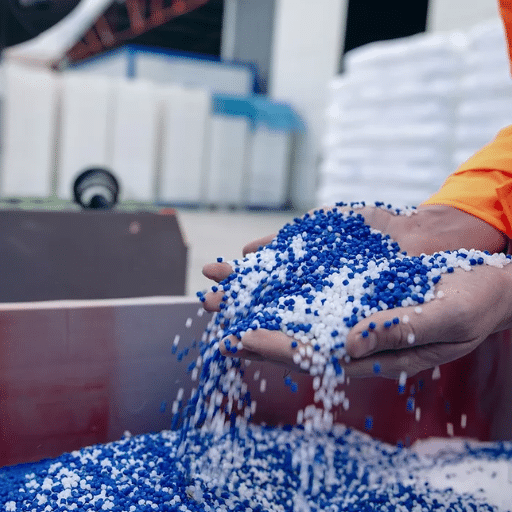
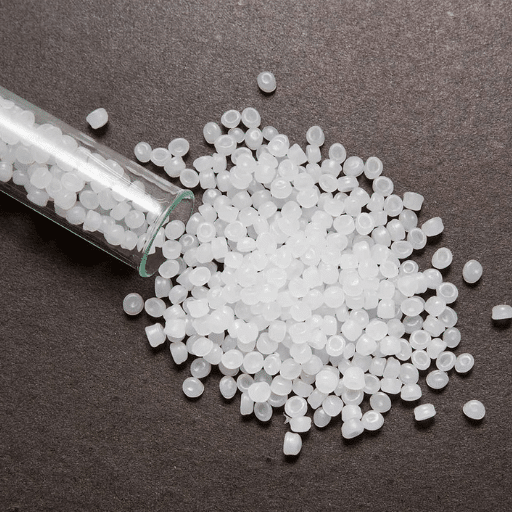
In pellet form, UHMW is supplied as a white or natural-colored granule suitable for compression molding, ram extrusion, and certain injection molding processes. It is not always the easiest material to process. Its high melt viscosity demands specialized equipment. Once formed, however, UHMW delivers a coefficient of friction as low as 0.10 to 0.20, making it one of the slipperiest unfilled thermoplastics available.
Key characteristics of UHMW include near-zero moisture absorption, excellent chemical resistance, and cryogenic toughness that remains intact down to -269 degrees Celsius. It is also FDA compliant for food contact in many grades, which explains its popularity in packaging and food-processing machinery. To learn more about What Is UHMW, please click to refer to our accompanying guide: What Is UHMW? Complete Guide to Ultra High Molecular Weight Polyethylene
What Is Nylon?
Nylon, or Polyamide (PA), is a semi-crystalline thermoplastic first developed as a synthetic silk replacement. Today it is one of the most widely used engineering plastics in the world. The two most common grades for industrial pellets are Nylon 6 and Nylon 6/6 (PA66). Both offer high tensile strength, stiffness, and fatigue resistance.
Unlike UHMW, Nylon absorbs significant moisture from the atmosphere. A standard PA66 pellet can absorb 1.5% to 3.0% water by weight, which causes dimensional swelling and a reduction in stiffness. This hygroscopic behavior is not a flaw. It is simply a property that must be managed through proper drying before processing and careful design for the end-use environment.
Nylon pellets process beautifully in standard injection molding and extrusion equipment. They fill complex molds with precision and hold tight tolerances after machining. Additives such as glass fiber, oil, and molybdenum disulfide can further tailor Nylon for specific loads, friction requirements, and thermal performance. Oil-filled Nylon, for example, reduces the coefficient of friction while retaining the structural rigidity that makes Nylon ideal for bearings and gears.
Head-to-Head Property Comparison

When procurement managers evaluate UHMW vs Nylon, the decision usually hinges on a handful of critical properties. The table below summarizes the key differences using typical values for unfilled grades.
| Property | UHMW | Nylon (PA6/66) | Advantage |
|---|---|---|---|
| Tensile Strength | 20 to 40 MPa | 60 to 90 MPa | Nylon |
| Flexural Modulus | ~110,000 psi | ~410,000 psi | Nylon |
| Coefficient of Friction | 0.10 to 0.20 | 0.28 to 0.40 | UHMW |
| Moisture Absorption | Less than 0.01% | 1.5% to 3.0% | UHMW |
| Impact Strength (Izod) | ~18 ft-lbs/in (no break) | ~1.2 ft-lbs/in | UHMW |
| Continuous Service Temp | Up to 80 degrees Celsius | 80 to 120 degrees Celsius | Nylon |
| Cryogenic Performance | Excellent to -269 degrees Celsius | Poor below -40 degrees Celsius | UHMW |
| Chemical Resistance (acids/alkalis) | Excellent | Moderate to poor | UHMW |
| Machinability | Difficult (gummy, burrs) | Easy (crisp, precise) | Nylon |
| Hardness | Shore D 64 | Shore D 80 / Rockwell M85 | Nylon |
These numbers tell a clear story. Nylon is stronger, stiffer, and easier to machine. UHMW is slipperier, tougher, and immune to moisture. The right choice depends on which properties your application values most.
Friction and Wear Resistance
If your part slides against metal or another plastic, UHMW is almost always the better choice. Its coefficient of friction rivals PTFE in many conditions, and its abrasion resistance is among the best of any thermoplastic. Conveyor guide rails, chute liners, and wear strips all benefit from UHMW’s self-lubricating surface.
Nylon offers good wear resistance too, but its higher friction means it generates more heat in sliding applications. In dirty or abrasive environments with grit and sand, Nylon’s greater hardness can actually resist embedding better than the softer UHMW. For clean sliding wear, UHMW wins. For abrasive wear in contaminated conditions, the gap narrows.
Moisture and Dimensional Stability
This is often the deciding factor. When Lin, a procurement manager at a marine equipment manufacturer in Singapore, sourced bushings for a dockside conveyor, she initially selected Nylon because of its compressive strength. Within three months of installation, the humid salt-air environment caused the Nylon bushings to swell by nearly 2%. The shafts jammed. Production stopped for forty-eight hours while her team sourced UHMW replacements that maintained exact dimensions in the same environment.
UHMW absorbs essentially no water. It does not swell, soften, or change dimensions in wet, humid, or submerged conditions. Nylon actively pulls moisture from the air and can grow measurably in high-humidity environments. If your application involves washdowns, marine exposure, or outdoor humidity, UHMW eliminates a major reliability risk.
Temperature and Thermal Performance
Nylon handles higher continuous operating temperatures, typically up to 120 degrees Celsius for stabilized grades. UHMW starts to soften around 80 degrees Celsius and has a lower heat deflection temperature. For under-the-hood automotive components or industrial ovens, Nylon is usually the safer choice.
At the other end of the spectrum, UHMW dominates. It retains flexibility and impact resistance at cryogenic temperatures where Nylon becomes brittle and prone to fracture. LNG handling equipment, freezer conveyors, and cryogenic storage systems routinely specify UHMW for this reason alone.
Applications: When to Choose Which
The best way to settle the UHMW vs Nylon debate is to map each material to its proven applications.
Choose UHMW For
- Conveyor wear strips and guide rails
- Chute, hopper, and truck bed liners
- Marine dock fenders and bumpers
- Star wheels and idler sprockets
- Food-processing machinery components
- Packaging equipment slides
- Cryogenic equipment liners
- Any application with constant water or chemical exposure
Choose Nylon For
- Gears, sprockets, and pulleys
- Bearings, bushings, and thrust washers (especially oil-filled grades)
- Structural wear pads under heavy static loads
- Precision-machined components requiring tight tolerances
- Automotive under-hood parts
- Rollers and sheaves
- Applications requiring high stiffness and fatigue resistance
The Hybrid Option: Oil-Filled Nylon
Some applications sit in the middle. A manufacturing engineer named David in Ohio needed bearings for a dry-running conveyor that carried moderate loads at room temperature. Pure Nylon produced too much friction. UHMW could not handle the compressive load without creeping over time. He specified oil-filled Nylon, which reduced the coefficient of friction closer to UHMW levels while retaining Nylon’s structural integrity. The bearings have now run for two years without replacement.
Oil-filled Nylon is worth considering when you need load-bearing capacity and lower friction in a single material. It will not match UHMW’s slickness, but it often provides the best compromise for precision bearings and bushings.
Processing Considerations for Pellet Buyers
How you plan to convert pellets into finished parts should influence your material choice.
UHMW pellets present processing challenges. Their extremely high melt viscosity makes conventional injection molding difficult or impossible for thick sections. Most UHMW parts are produced through compression molding or ram extrusion. If your facility relies on standard injection molding equipment, UHMW may require process adjustments or alternative forming methods. Some grades of UHMW can be injection molded into thin-walled parts, but you should verify melt flow index and equipment compatibility with your supplier before committing to a bulk order.
Nylon pellets flow easily into standard injection molds and extrusion dies. They process at conventional temperatures and fill complex geometries with excellent detail. This processing flexibility often translates to lower manufacturing costs and shorter lead times for molded Nylon components. However, Nylon must be dried thoroughly before molding. Moisture content above 0.2% can cause hydrolytic degradation, surface defects, and reduced mechanical properties. Budget for a desiccant dryer if you do not already have one.
Want to optimize your UHMW processing parameters? Review our detailed guide to UHMW injection molding and extrusion best practices to avoid common defects and maximize throughput.
Cost Analysis and Total Cost of Ownership

Raw material price is only the starting point. A complete UHMW vs Nylon cost comparison must include processing efficiency, part lifespan, maintenance frequency, and failure risk.
On a per-kilogram basis, standard UHMW and Nylon pellets often fall into a similar price bracket, though oil-filled or glass-filled Nylon grades can command a premium. UHMW may carry slightly higher material costs for specialized grades, but the gap is rarely the primary driver.
Processing costs frequently favor Nylon for injection-molded parts because of its easier flow and faster cycle times. UHMW compression molding takes longer and uses different equipment, which can elevate piece-part costs for smaller production runs.
Lifespan costs often swing the balance in the opposite direction. A UHMW wear strip on a bulk-material conveyor may last three to five times longer than a Nylon equivalent in a wet or abrasive environment. When Marcus at a Midwest aggregates facility switched from Nylon to UHMW liners, his replacement interval jumped from eight months to thirty-six months. The material cost was 15% higher. The total cost of ownership dropped by over 40%.
Factor in downtime costs too. A failed Nylon bushing that swells and seizes a shaft can halt an entire production line. UHMW’s dimensional stability eliminates that specific failure mode. For critical-path components, the reliability premium of UHMW often justifies any material cost difference.
Sourcing and Procurement Best Practices
Once you know which material fits your application, the next challenge is securing a reliable supply of consistent quality.
Specify the Exact Grade
Do not order “Nylon” or “UHMW” without a grade designation. For Nylon, state whether you need PA6, PA66, oil-filled, glass-filled, or heat-stabilized. For UHMW, specify molecular weight range, color, and any FDA or EU compliance requirements. The difference between a standard UHMW and a virgin FDA-grade UHMW can determine whether your parts pass regulatory inspection.
Request Batch Consistency Data
Ask your supplier for melt flow index reports, density certificates, and moisture content verification for every batch. At Suzhou Yifuhui New Material Co., Ltd., we test every lot of polymer granules to ensure uniform pellet size and melt characteristics. Inconsistent batches cause processing variations that lead to rejects and downtime.
Validate Global Shipping Logistics
If you source internationally, confirm that your supplier can deliver full container loads or partial shipments on schedules that match your production calendar. Engineering plastics are not commodities you can substitute at the last minute. A missed delivery of the correct PA66 grade can shut down a line just as surely as running out of steel.
Need help specifying the right grade? Contact our polymer specialists for tailored guidance on UHMW and Nylon pellet selection. We deliver detailed quotations and material data sheets within 24 hours.
Conclusion

The UHMW vs Nylon decision is not about finding the “better” plastic. It is about matching material properties to application realities. Nylon delivers strength, stiffness, and machinability for precision load-bearing parts. UHMW delivers slipperiness, impact toughness, and moisture immunity for wear surfaces and wet environments. To gain a deeper understanding of UHMW vs HDPE, please click to refer to our accompanying guide: UHMW vs HDPE: Which Engineering Plastic Is Right for Your Application?
Before you place your next pellet order, ask three questions. Will the part encounter water or high humidity? Does it need to slide or carry heavy static loads? What temperature range must it survive? The answers will point you to the right material.
If you are still evaluating options, our team can help. We supply premium UHMW and Nylon plastic pellets engineered to exact industry standards, with competitive pricing and reliable global delivery. Request a custom quote today and secure the material foundation your manufacturing line demands. To learn more about UHMW Material Properties: Complete Technical Specifications Guide, please click to refer to our accompanying guide.