A procurement manager at a Tier 1 automotive supplier placed separate orders for recycled polyester and polyamide pellets from two different sources. One shipment arrived with moisture levels too high for injection molding. The other lacked the intrinsic viscosity needed for the intended under-hood application. The result was a six-week delay, rework costs, and a warning from the OEM about missed sustainability milestones.
The mistake was not choosing recycled content. It was treating recycled polyester and polyamide as interchangeable commodities instead of distinct engineering materials with separate specifications, processing requirements, and supply dynamics.
If your team is sourcing recycled pellets to meet ESG targets, OEM mandates, or customer demands, this guide will help you make informed decisions. You will learn how rPET and rPA pellets differ, which grades suit which applications, what certifications matter, and how to avoid the most common procurement mistakes. By the end, you will have a practical framework for sourcing both materials reliably.
Need help selecting the right recycled pellets for your application? Contact our polymer specialists for a tailored recommendation and competitive quote.
What Are Recycled Polyester and Polyamide Pellets?

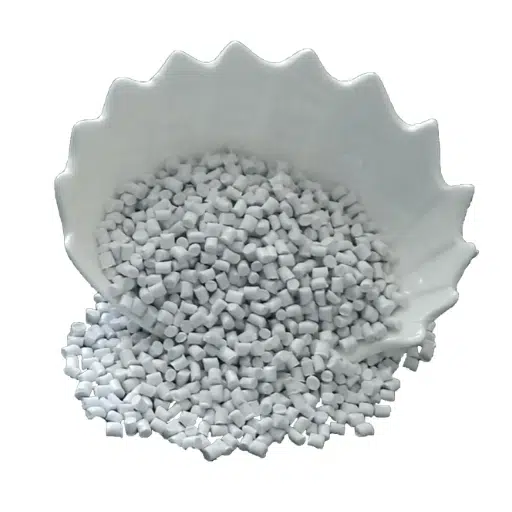
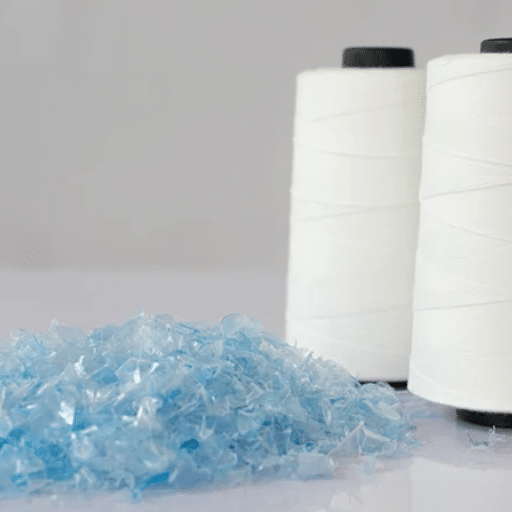
Recycled polyester pellets, commonly called rPET pellets, are made from post-consumer PET bottles, industrial film scrap, and post-industrial manufacturing waste. The material is cleaned, shredded into flake, melted, filtered, and extruded into uniform granules. Depending on the process, rPET can achieve near-virgin purity or remain suitable for non-food applications such as textiles, strapping, and industrial film.
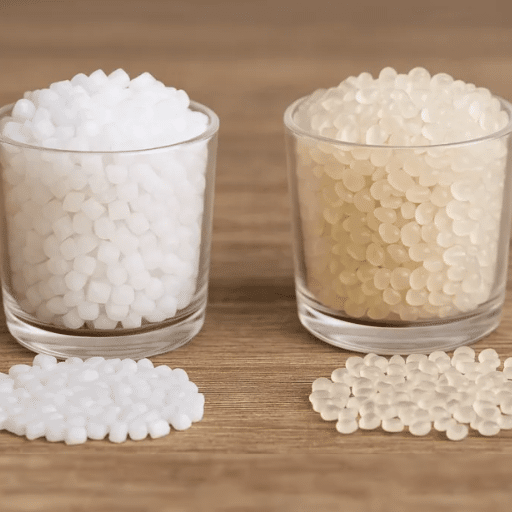
Recycled polyamide pellets, known as rPA pellets or recycled nylon pellets, are produced from fishing nets, carpet waste, industrial fiber scrap, and post-industrial nylon manufacturing waste. The most common grades are rPA6 and rPA66, which must be sorted carefully because their melting points and moisture behavior differ significantly. Advanced chemical recycling can depolymerize used nylon back to caprolactam and re-polymerize it into material with properties close to virgin resin. Chemical recycling of PET is also scaling, with companies such as Carbios developing enzymatic processes to restore monomer purity.
Both materials arrive in pellet form for a reason. Pellets are easier to handle, dose, and melt-process than flake. They reduce contamination risk, improve feeding consistency in injection molding and extrusion, and simplify inventory management. For manufacturers scaling recycled content across multiple product lines, pellets are the standard industrial feedstock. For a deeper comparison of how the two polymers differ, see our guide to recycled polyamide vs recycled polyester.
Key Grades and Specifications
rPET Pellet Grades
rPET is not a single product. The grade you choose must match the end use:
- Food-grade rPET: Suitable for beverage bottles, food containers, and blister packaging. Requires high intrinsic viscosity, low acetaldehyde, and FDA or EU food-contact approval.
- Textile/fiber-grade rPET: Used for apparel, home textiles, carpets, and fiberfill. Emphasizes color consistency and melt-spinning stability.
- Industrial/film-grade rPET: Used for strapping, sheet, film, and non-food packaging. Lower purity requirements but still demands consistent melt flow.
- Amorphous rPET: Used for thermoforming and clear packaging where low crystallinity matters.
Typical rPET specifications include a melting point of 250-260°C, density around 1.38 g/cm³, and intrinsic viscosity ranging from 0.70 to 0.84 dL/g depending on the application. For more details on PET grades, read our polyester pellets guide.
rPA Pellet Grades
Recycled polyamide grades vary by chemistry and source:
- rPA6: Melting point near 220°C. Common in textiles, carpets, and industrial components. More affordable than rPA66 but lower heat resistance.
- rPA66: Melting point near 255-262°C. Preferred for automotive under-hood parts, gears, bearings, and structural applications.
- rPA11 and rPA12: Lower moisture absorption and better chemical resistance. Used in fuel lines, cable sheathing, and specialty engineering parts.
- Glass-filled or mineral-filled rPA: Reinforced grades that recover stiffness lost during recycling, often used as metal replacements.
Density for rPA is typically around 1.14 g/cm³, making it lighter than rPET. Moisture absorption remains a critical specification: rPA6 can absorb 2-3% moisture in ambient conditions, which must be removed before processing. Learn more about available grades in our polyamide pellets guide.
Specification Comparison at a Glance
| Property | rPET Pellets | rPA Pellets |
|---|---|---|
| Base polymer | Polyethylene terephthalate | Polyamide (nylon) |
| Melting point | 250-260°C | 220-262°C depending on grade |
| Density | ~1.38 g/cm³ | ~1.14 g/cm³ |
| Moisture sensitivity | Moderate | High; must be dried before processing |
| Tensile strength retention | 90-95% of virgin | 85-92% of virgin |
| Primary feedstock | PET bottles, film scrap | Fishing nets, carpet waste, industrial scrap |
| Largest end use | Packaging and textiles | Automotive, textiles, engineering plastics |
Applications: Where Recycled Polyester and Polyamide Work Together
Many manufacturers do not choose between rPET and rPA. They use both across different parts of the same product or production program. Understanding where each material excels prevents costly mismatches.
Automotive
The automotive sector is one of the largest industrial consumers of both polymers. rPET appears in seat fabrics, carpets, insulation, and interior trim. rPA, especially rPA66, is used for under-hood components such as air intake manifolds, engine covers, cable ties, and structural brackets where heat and mechanical stress are significant. OEMs increasingly require recycled content in both categories, making dual sourcing a procurement reality.
Textiles and Apparel
rPET dominates the recycled apparel market. It appears in T-shirts, fleece jackets, sportswear, and outerwear. rPA, often marketed under names like ECONYL, is preferred for swimwear, activewear, and premium performance garments where abrasion resistance and elasticity matter. Brands such as Adidas, Nike, Patagonia, and Prada use both materials in different product lines.
Industrial and Engineering
rPA is the clear choice for gears, bearings, bushings, conveyor belts, and machine guards. Its superior abrasion resistance and fatigue performance make it suitable for moving parts. rPET serves in strapping, industrial film, and non-structural housings where cost and availability matter more than mechanical toughness.
Packaging
Food-grade rPET is widely used for bottles, trays, and containers. rPA appears less frequently in packaging alone but plays a role as a barrier layer in multilayer films and as a high-performance material for industrial closures and caps.
Case example: A sporting goods manufacturer needed both materials for a new sustainable product line. They selected rPET for the outer shell because of its stiffness and lower cost, and rPA66 for hinges and clips because of its fatigue resistance. Sourcing both from a single supplier with documented certifications reduced their qualification timeline by four weeks.
To learn more about Polyester Polyamide Copolymer, please click to refer to our accompanying guide: Polyester Polyamide Copolymer: A Manufacturer’s Guide to Sourcing Advanced Resins
Certifications and Compliance for Industrial Buyers

Certifications separate legitimate recycled pellets from unsubstantiated claims. For procurement teams, the right documentation protects against regulatory risk and customer audit failures.
GRS (Global Recycled Standard)
GRS is the most widely recognized certification for recycled content. It requires at least 20% recycled material, tracks chain of custody, and sets criteria for social and environmental processing. Most industrial buyers now expect GRS certification as a baseline.
ISCC PLUS
ISCC PLUS supports mass-balance certification, which is essential for chemically recycled materials. It allows manufacturers to claim recycled content even when virgin and recycled feedstocks are blended during production.
OEKO-TEX and REACH
For textiles and consumer goods, OEKO-TEX STANDARD 100 verifies that materials are free from harmful substances. REACH compliance is mandatory for products sold in the European Union.
FDA and EU Food-Contact Approval
Food-grade rPET must meet FDA requirements in the United States and EU Regulation 10/2011 in Europe. Not all rPET is food-safe. Buyers should request migration testing and compliance letters for any food-contact application.
Automotive Requirements
Automotive OEMs increasingly require IMDS reporting and specific recycled-content thresholds. According to industry estimates, 62% of automotive OEMs now mandate more than 20% recycled content in certain nylon components. Suppliers must provide lot traceability, material datasheets, and proof of recycled origin.
Processing Recycled Polyester and Polyamide Pellets
Recycled pellets do not behave exactly like virgin resin. Moisture, heat history, and contamination can degrade properties if processing parameters are not adjusted.
Drying Requirements
rPET must be dried to below 0.02% moisture before melt processing. Typical conditions are 130-150°C for 4-6 hours. Inadequate drying causes hydrolysis, which reduces molecular weight and leads to brittle parts.
rPA is more demanding. Because polyamides are hygroscopic, rPA6 and rPA66 must be dried to below 0.2% moisture, and ideally below 0.1%. Recommended drying temperatures range from 80-120°C depending on grade, with drying times of 4-12 hours. Moisture left in the resin will cause splay, bubbles, and hydrolytic chain scission, producing weak or failed parts.
Case example: A plastics processor in Eastern Europe switched to rPA66 for an automotive clip without extending drying time. Moisture-related defects pushed scrap rates from 3% to 14%. After installing a dedicated desiccant dryer and extending the drying cycle, scrap returned to acceptable levels. The lesson: recycled polyamide demands the same respect as virgin nylon, and sometimes more.
Melt Processing Windows
rPET processes at 270-290°C in injection molding and extrusion. It is sensitive to long residence times, which can yellow the polymer and reduce clarity. Venting and screw design should minimize degradation.
rPA processes from 230-300°C depending on whether the grade is PA6 or PA66. Heat stabilizers are often added to recycled grades to protect against oxidation during reprocessing. Mold temperatures for rPA are typically higher than for rPET to promote crystallization and surface finish.
Mold Design and Shrinkage
rPET shrinkage depends on crystallinity. Amorphous grades shrink less but may warp more. rPA shrinkage is generally higher and varies with moisture content, fiber reinforcement, and mold temperature. Engineers should use shrinkage data from the specific recycled grade, not virgin data, when designing tooling.
Can You Blend Recycled Polyester and Polyamide?
The short answer is yes, but only with the right compatibilization. rPET and rPA are not naturally miscible. Direct blending produces weak, phase-separated materials with poor mechanical properties and unpredictable processing behavior.
Reactive compatibilizers solve this problem. Common options include:
- Maleic anhydride grafted polymers: React with amine end groups on rPA and hydroxyl groups on rPET to create stable interfaces.
- Glycidyl methacrylate (GMA) copolymers: Epoxy groups react with both polymers during twin-screw extrusion.
- Ethylene-acrylic acid copolymers: Improve interfacial adhesion in some formulations.
Compatibilizers are typically added at 2-10% by weight using twin-screw reactive extrusion. The resulting rPET/rPA alloys can be used for automotive mixed-plastic parts, industrial pellets from multilayer film waste, and lower-specification structural components.
However, blending is not the right choice for most manufacturers. It adds complexity, requires specialized compounding equipment, and often produces material with properties inferior to either polymer alone. In most cases, the better strategy is to specify each polymer for the application where it performs best.
Sourcing Strategy: Cost, Availability, and Regional Supply
rPET Supply Dynamics
rPET benefits from a massive, well-established feedstream. Global PET bottle collection provides a steady supply, and mechanical recycling capacity is widespread. As a result, rPET is generally more available and lower in cost than rPA. Pricing is influenced by oil prices, virgin PET spreads, and regulatory demand.
According to market estimates, the global rPET market is expected to reach approximately USD 21.1 billion in 2026, growing at around 8.3% annually. Recycled PET pellets alone represent a segment of roughly USD 1.38 billion in 2026. If you want to benchmark these figures against real quotes and build a realistic budget, our Polyester and Polyamide Cost: 2026 Procurement Pricing Guide breaks down current pricing and the factors that drive it.
rPA Supply Dynamics
rPA is more constrained. Nylon waste streams such as fishing nets, carpet, and industrial fiber must be collected, sorted by chemistry, and cleaned before recycling. The global recycling rate for nylon remains below 5%, according to industry estimates. This limited supply means rPA is often priced at parity with or above virgin nylon, especially for high-purity grades.
The polyamide waste recycling market was valued at approximately USD 665.86 million in 2025 and is projected to grow to around USD 997.07 million by 2035. Recycled PA6 is a faster-growing segment, with estimates placing the market at USD 1.16 billion in 2024 and rising toward USD 2.51 billion by 2033.
Regional Considerations
- Asia-Pacific: Largest supply base for both rPET and rPA recycling, driven by textile manufacturing scale and growing collection infrastructure.
- Europe: Demand is heavily regulation-driven. The EU Packaging and Packaging Waste Regulation, Circular Economy Action Plan, and CBAM are pushing manufacturers toward recycled content.
- North America: Strong demand from automotive OEMs and beverage packaging producers. California’s recycled-content mandates for PET bottles are a notable driver.
Because these supply dynamics and regulations shift quickly, it helps to keep an eye on where the market is heading. Our Polyester and Polyamide Market Trends 2026: What Procurement Managers Need to Know explores the demand shifts and regulatory changes shaping sourcing decisions this year.
Procurement Checklist for Recycled Pellets
Use this checklist when qualifying a supplier for rPET, rPA, or both:
- Define the end use and required grade. Food contact, automotive, textile, or engineering applications each demand different specifications.
- Confirm recycled content percentage and source. Ask for the ratio of post-consumer recycled (PCR) to post-industrial recycled (PIR) content.
- Request certifications. GRS, ISCC PLUS, OEKO-TEX, FDA/EU food contact, and REACH are common requirements.
- Review the Certificate of Analysis (CoA). Check intrinsic viscosity, melt flow index, moisture content, tensile strength, and color.
- Verify processing recommendations. Drying times, melt temperatures, and screw designs may differ from virgin resin.
- Evaluate the supplier’s quality system. ISO 9001, ISO 14001, and IATF 16949 are strong indicators of consistent supply.
- Lock in logistics details. Packaging options include 25 kg bags, jumbo bags, and bulk containers. Confirm incoterms, lead times, and customs documentation.
- Request references or case studies. A reliable supplier should be able to demonstrate experience with similar applications.
Simplify your sourcing by consolidating rPET and rPA orders with one partner. Request a custom quote for GRS-certified recycled polyester and polyamide pellets.
FAQ: Common Questions About Recycled Polyester and Polyamide

What is the difference between rPET and rPA?
rPET is recycled polyethylene terephthalate, derived mainly from bottles and film. rPA is recycled polyamide or nylon, sourced from fishing nets, carpet waste, and industrial scrap. rPET is more widely available and lower in cost. rPA offers better heat resistance, abrasion resistance, and mechanical strength.
Can recycled polyamide match virgin nylon performance?
In many cases, yes. rPA can retain 85-92% of virgin tensile strength and heat resistance. Reinforced grades and chemically recycled rPA can come even closer to virgin properties.
Is recycled polyester food-safe?
Only food-grade rPET that meets FDA or EU food-contact requirements is suitable for food packaging. Not all rPET qualifies. Always request compliance documentation.
What certifications should I request from my pellet supplier?
At minimum, request GRS certification. Add ISCC PLUS for chemically recycled materials, OEKO-TEX for textiles, FDA/EU approval for food contact, and IMDS support for automotive.
How should I store recycled polyamide and polyester pellets?
Store both in a cool, dry place away from direct sunlight. Keep rPA sealed until ready for use because it absorbs moisture quickly. rPET is less hygroscopic but still benefits from sealed containers.
Which is more sustainable, rPET or rPA?
Both reduce carbon emissions compared to virgin resin. rPET can reduce CO₂ by 32-54%, while mechanical recycling of rPA can reduce CO₂ by 60-85%. The most sustainable choice depends on application longevity, processing yield, and end-of-life options.
Can I use rPET and rPA in the same facility?
Yes, but they require separate drying and handling systems to prevent cross-contamination. Shared equipment must be thoroughly cleaned between materials.
Conclusion
Sourcing recycled polyester and polyamide pellets is no longer a niche sustainability initiative. It is a core procurement capability for manufacturers serving automotive, packaging, textile, and consumer goods markets. The key is to treat rPET and rPA as distinct engineering materials, each with its own grades, certifications, processing requirements, and supply dynamics.
Remember these five points:
- Match the grade to the application. Food-grade rPET, fiber-grade rPET, rPA6, and rPA66 are not interchangeable.
- Demand proper certifications. GRS, ISCC PLUS, FDA/EU, and automotive IMDS requirements protect your supply chain.
- Control moisture. Inadequate drying is the most common cause of defects in both rPET and rPA processing.
- Source strategically. rPET offers volume and cost advantages; rPA offers performance and compliance with high-value applications.
- Partner with a reliable supplier. Consistent quality, transparent documentation, and responsive support matter more than price alone.
At Suzhou Yifuhui New Material Co., Ltd., we supply GRS-certified recycled polyester and polyamide pellets to manufacturers worldwide. Our team provides lot-specific CoAs, application guidance, and global logistics support to keep your production lines running. For a broader comparison of these polymers, see our complete polyamide vs polyester guide. Contact our polymer specialists today for a tailored sourcing recommendation and competitive quote.