Most sustainability guides will tell you recycled polyester is the easy choice for manufacturers. They are wrong, if your application involves heat, abrasion, or structural load. Recycled polyamide retains up to 92% of virgin tensile strength and is already mandated by 62% of automotive OEMs. The real question is not which is greener. It is which recycled pellet will survive your factory floor.
You already know that sustainability targets are reshaping material sourcing. Procurement managers face mounting pressure to integrate recycled content into supply chains. Yet choosing between recycled polyamide vs recycled polyester pellets without understanding their engineering differences can lead to part failure, production delays, and compliance gaps.
By the end of this guide, you will have a clear framework for selecting between rPA and rPET pellets based on your specific application, sustainability targets, and processing constraints. We will cover recycling rates, property retention, certifications, and cost. You will also see exactly when one material outperforms the other on the production line.
When Marcus, a sourcing manager at a Tier 2 automotive supplier in Guangdong, received an OEM mandate to source 30% recycled content for under-hood nylon components, he assumed rPET would be the obvious answer. It is cheaper, widely available, and carries strong sustainability branding. Three months into production, heat deflection failures at 150C started appearing in radiator end tank prototypes. The rPET simply could not handle the thermal cycling. Marcus switched to rPA66 with GRS certification. The parts passed validation, and his line hit the 30% recycled target without a single recall.
Stories like Marcus’s happen because recycled polyamide vs recycled polyester is rarely evaluated from a manufacturing perspective. This article fixes that gap.
Why Manufacturers Are Switching to Recycled Engineering Plastics

Regulatory pressure is the dominant driver. The EU Packaging and Packaging Waste Regulation (PPWR) mandates increasing recycled content quotas. Automotive OEMs from BMW to Ford now require recycled thresholds in nylon components. Corporate ESG targets push procurement teams toward circular feedstock regardless of sector.
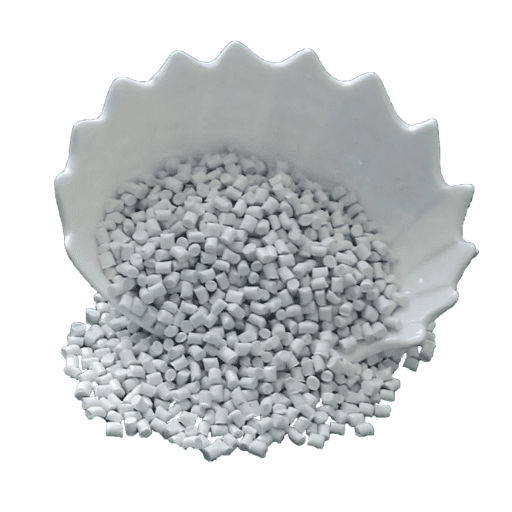
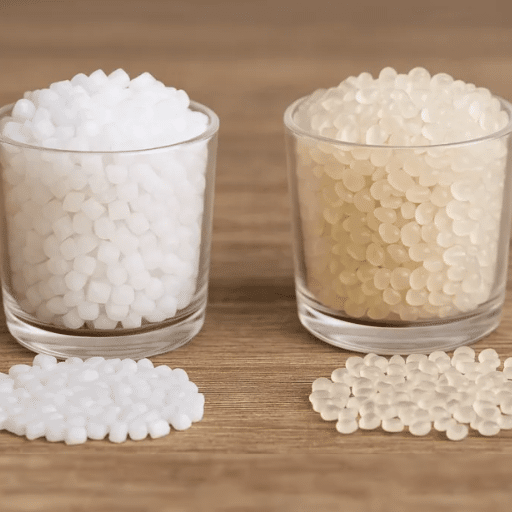
The pellet form factor matters more than most buyers realize. Flakes and regrind are inconsistent in size, melt flow, and contamination levels. Standardized pellets, whether rPA or rPET, deliver predictable processing behavior. They feed cleanly into injection molding hoppers, extrusion lines, and blow molding systems. For manufacturers, pellets reduce scrap rates and stabilize cycle times compared to raw recycled flake.
Recycled polyamide vs recycled polyester both offer meaningful carbon reductions over virgin resin. Recycled PET cuts CO2 emissions by 32-54% versus virgin PET, according to industry lifecycle analyses. Recycled polyamide achieves even steeper reductions, 60-85% for mechanically recycled grades and 50-70% for chemically recycled material. Virgin nylon production is notoriously carbon-intensive at roughly 6-8 kg of CO2 per kilogram of resin. Switching to rPA can transform the environmental profile of a component.
Need help sourcing certified recycled pellets for your production line? Our polymer specialists can match you with GRS-verified rPA or rPET grades that meet your exact specifications. Contact us via LiveChat or request a custom quote within 24 hours.
rPET (Recycled Polyester): Feedstock, Properties, and Processing
Recycled polyester pellets dominate the sustainable plastics market. The global rPET market was valued at approximately $15.5 billion in 2024 and continues to expand as packaging and textile demand grows.
Feedstock Sources and Recycling Pathways
Roughly 99% of rPET feedstock comes from post-consumer PET bottles. These bottles are collected, sorted, washed, and ground into flake. Mechanical recycling then melts, filters, and extrudes the flake into uniform pellets. This pathway is mature, cost-effective, and scalable.
Chemical recycling is gaining traction in 2025. Carbios is scaling enzymatic depolymerization to a 40,000-tonne-per-year reference plant. Loop Industries and Ioniqa are expanding solvent-based processes that break PET down to monomers and repolymerize it into virgin-quality resin. For manufacturers requiring food-contact or ultra-high purity, chemical recycling is becoming a viable option.
Engineering Properties of rPET Pellets
In well-controlled mechanical recycling, rPET retains 90-95% of virgin PET properties. Tensile strength, flexural modulus, and melting point stay largely stable. The material remains hydrophobic, with moisture absorption below 0.5%. That low hygroscopicity simplifies storage and processing.
One concern is crystallinity degradation. Each reprocessing cycle can shorten polymer chains and reduce crystallization rates. For non-critical applications like packaging trays, consumer goods housings, and interior automotive trim, this effect is negligible. For high-load structural parts, manufacturers should specify reprocessed grades with chain extender additives or opt for chemically recycled material.
Common Industrial Applications
rPET pellets excel in packaging, textiles, electronics housings, and interior automotive components. At K 2025, Engel demonstrated thin-wall food-contact cups molded with 30% food-grade rPET, proving the material can meet stringent regulatory demands. Indorama Ventures targets offtaking 750,000 tonnes of reclaimed PET annually, signaling massive supply security for buyers.
rPA (Recycled Polyamide): Feedstock, Properties, and Processing
Recycled polyamide occupies a smaller but higher-value niche. The global rPA market was approximately $0.68 billion in 2026 and is projected to reach $1.08 billion by 2035. Growth is driven by automotive mandates, industrial demand, and expanding fishing net and carpet collection programs.
Feedstock Sources and Recycling Pathways
rPA feedstock comes from three main streams: post-industrial manufacturing scrap, fishing nets and carpet waste, and post-consumer textile fibers. Unlike PET bottles, nylon waste is highly distributed and requires more sophisticated sorting. PA6 and PA66 must be separated before reprocessing because blended grades produce unpredictable mechanical properties.
Mechanical recycling of rPA involves shredding, washing, rigorous drying, melt extrusion, and pelletizing. Drying is absolutely critical. Polyamide absorbs moisture rapidly, and moisture levels above 2% during melt processing can cause hydrolytic chain scission. That degradation drops molecular weight and reduces mechanical performance by up to 9%.
Chemical recycling offers a compelling alternative for contaminated or mixed waste. Nylene operates North America’s only commercial nylon 6 depolymerization unit, achieving an 84% recovery yield by breaking rPA back to caprolactam monomer. Aquafil’s ECONYL process chemically regenerates PA6 from fishing nets and carpet waste, producing virgin-quality polymer that BMW, Mercedes-Benz, and Ford already use in production vehicles.
Engineering Properties of rPA Pellets
Recycled polyamide retains 85-92% of virgin tensile strength when properly sorted, dried, and reprocessed. Heat resistance above 170C is preserved in quality grades. Abrasion resistance and fatigue performance remain exceptional, which is why rPA dominates gears, bearings, and under-hood applications.
The trade-off is unchanged hygroscopicity. rPA absorbs 3.5% moisture at saturation, just like virgin PA. That means identical drying requirements before processing. It also means parts exposed to humid environments will experience dimensional changes. Engineers must account for this in mold design and tolerance stacking.
Common Industrial Applications
rPA pellets are preferred for automotive under-hood components, electrical connectors, industrial gears, cable ties, and structural brackets. Over 62% of automotive OEMs now mandate recycled content thresholds exceeding 20% in nylon components. Recycled nylon is not a compromise in these applications. It is a compliance requirement.
Recycling Rates and Market Availability
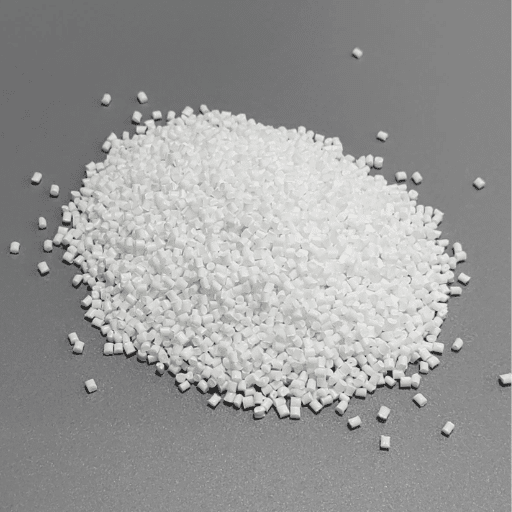
The availability gap between these two materials is stark. Understanding it helps procurement teams set realistic sourcing timelines.
| Metric | rPET | rPA |
|---|---|---|
| Global Recycling Rate | 25-30% | ~5% or less |
| Primary Feedstock | Post-consumer bottles | Fishing nets, carpet scrap, industrial fiber |
| Market Size (2024-2026) | ~$15.5 billion | ~$0.68 billion |
| Projected Growth (CAGR) | Strong | ~5.2% through 2035 |
| Bulk Availability | High, global | Limited, specialized suppliers |
| Typical Lead Time | 2-4 weeks | 4-8 weeks |
rPET benefits from a massive, centralized feedstream. Bottle deposit schemes and municipal collection programs create reliable supply. rPA relies on decentralized collection of fishing nets, carpet removal, and industrial scrap. That limits volume but also means rPA commands a premium and attracts suppliers with stronger traceability and certification standards.
For procurement managers, the practical takeaway is simple. If you need large volumes quickly, rPET is easier to source. If you need engineering-grade performance in demanding applications, rPA is worth the longer lead time and higher price.
Property Retention After Recycling
Manufacturers rightly worry that recycled polymers will underperform. The data tells a more nuanced story.
| Property | Virgin PET | rPET (Mechanical) | Virgin PA66 | rPA66 (Mechanical) |
|---|---|---|---|---|
| Tensile Strength (MPa) | 55-75 | 50-70 | 80-85 | 70-78 |
| Flexural Modulus (GPa) | 2.0-2.5 | 1.8-2.3 | 2.8-3.2 | 2.5-2.9 |
| Melting Point (C) | 250-260 | 250-260 | 260-265 | 260-265 |
| Moisture Absorption (%) | <0.5 | <0.5 | 2.5-3.5 | 2.5-3.5 |
| Abrasion Resistance | Moderate | Moderate | Excellent | Excellent |
| Impact Resistance | Moderate | Moderate | High | High |
rPET maintains thermal properties almost identically to virgin because the melting point is a molecular constant. Mechanical properties show minor degradation depending on the number of prior reprocessing cycles. rPA66 shows slightly more variation in tensile strength because moisture exposure history and sorting quality vary more across feedstock batches.
The key to maximizing property retention is supplier quality control. Reputable suppliers like Star Plastics offer reNova rPA grades with UL-validated recycled content at 25%, 50%, 75%, and 100%. These grades are compounded with stabilizers to protect against thermal degradation during reprocessing. Buyers should always request batch-specific datasheets and mechanical test reports.
Certifications and Compliance for Industrial Buyers
Certifications separate marketing claims from verified recycled content. Procurement managers should demand documentation at the quotation stage.
Global Recycled Standard (GRS) is the most widely recognized certification for recycled plastics. It requires a minimum of 20% recycled content and enforces chain-of-custody tracking from waste source to finished pellet. GRS also covers social and environmental processing criteria.
ISCC PLUS applies to chemically recycled materials using mass balance accounting. It is essential if your supplier uses depolymerization or pyrolysis pathways and blends recycled monomers with virgin feedstock.
UL Validated marks, such as those on Star Plastics reNova products, provide third-party verification of exact recycled percentages. This is particularly valuable for automotive and electronics OEMs that audit supplier claims.
OEKO-TEX Standard 100 focuses on chemical safety. It tests for harmful substances in the final pellet and is relevant for food-contact, toy, and medical device applications.
For automotive suppliers, OEM-specific requirements often exceed general certifications. Many OEMs now require ISO 14001 environmental management at the supplier facility level, plus detailed recycled content declarations by weight.
Not sure which certifications your customers require? Our team reviews OEM specifications daily and can recommend the exact certification package you need. Send us your requirements and we will return a compliant material proposal within 24 hours.
Cost Comparison for Bulk Buyers

Price is always a factor, but the comparison is not as simple as cost per kilogram.
rPET pellets typically trade at a 10-20% discount to virgin PET when oil prices are moderate. Virgin PET is tied closely to paraxylene and ethylene feedstock costs. When crude oil drops, virgin PET becomes cheap and rPET margins compress. When oil rises, rPET becomes more competitive.
rPA pellets are often priced at parity with virgin PA or even at a slight premium. The limited feedstream, rigorous sorting requirements, and smaller production scale all contribute to higher unit costs. However, in applications where rPA replaces virgin PA, the cost difference is usually absorbable within the total part cost. For a radiator end tank or engine mount bracket, the polymer cost is a fraction of the total bill of materials.
Processing costs also differ. rPA requires the same drying infrastructure as virgin PA, 80-120C for 4-6 hours to reach <0.2% moisture. rPET needs minimal drying. On the other hand, rPET may require higher injection pressures or longer cycle times if crystallinity is degraded. The net processing cost difference depends heavily on part geometry, mold design, and the specific recycled grade.
| Cost Factor | rPET | rPA |
|---|---|---|
| Raw Material vs Virgin | 10-20% lower | At parity or slight premium |
| Drying Energy | Low | Moderate (same as virgin PA) |
| Scrap / Regrind Rate | Low | Low to moderate |
| Certification Premium | Minimal | Moderate (GRS, UL) |
| Tool Wear | Similar to virgin | Similar to virgin |
For buyers evaluating recycled polyamide vs recycled polyester on total cost of ownership, the decisive factor is application fit. Using rPET in a high-heat automotive part because it is cheaper is a false economy. One recall or warranty claim will erase years of material savings.
Which Should You Choose? A Decision Framework
The right material depends on four variables: operating environment, mechanical demands, volume requirements, and compliance targets.
Choose rPET pellets when:
- Your application operates below 120C continuously
- You need hydrophobic behavior and minimal moisture sensitivity
- You require large volumes with short lead times
- Your parts are packaging, consumer goods housings, or interior automotive trim
- Cost per kilogram is a primary constraint
- You are fulfilling textile, packaging, or general consumer product mandates
Choose rPA pellets when:
- Your application faces temperatures above 150C
- You need high abrasion resistance, fatigue strength, or structural load capacity
- Your parts are under-hood automotive, industrial gears, bearings, or electrical connectors
- You are complying with automotive OEM recycled content mandates
- You can manage drying requirements and moisture-controlled storage
- Part longevity and durability justify a material premium
Consider blended or hybrid approaches:
Recent research shows that adding a small percentage of rPA to rPET can improve elongation at break and crystallization temperature. For non-critical components where neither pure material is ideal, hybrid compounds may offer a balanced property profile at mid-range cost.
When Li Wei, a plant manager at an electronics enclosure factory in Shenzhen, evaluated recycled polyamide vs recycled polyester for a new line of server housing panels, he started with rPET due to lower pricing. The prototypes passed drop tests and thermal aging. But static discharge during assembly created surface dust attraction that complicated cleanroom protocols. Switching to an rPA66 grade with carbon fiber filler solved the static issue and still met the client’s 25% recycled content target. The unit cost increased by 8%, but assembly throughput improved by 14%. The net savings were immediate.
Frequently Asked Questions

Is recycled polyamide better than recycled polyester?
It depends entirely on the application. Recycled polyamide outperforms recycled polyester in high-heat, high-abrasion, and structural load applications. Recycled polyester is superior for moisture resistance, cost-sensitive projects, and large-volume sourcing.
Which has a lower carbon footprint, rPA or rPET?
Recycled polyamide achieves a larger percentage reduction versus its virgin counterpart, 60-85% for mechanical recycling compared to 32-54% for rPET. However, virgin nylon starts from a much higher baseline of 6-8 kg CO2 per kg. The absolute carbon savings depend on the quantity used.
Can recycled engineering plastics match virgin performance?
Quality rPET retains 90-95% of virgin properties. Quality rPA retains 85-92%. The gap is usually negligible for non-critical applications. For safety-critical or highly stressed parts, specify certified grades with batch test reports.
What certifications should I demand from my recycled pellet supplier?
At minimum, request GRS certification for mechanical recycling or ISCC PLUS for chemical recycling. For automotive or electronics, add UL validation. For sensitive applications, request OEKO-TEX Standard 100 compliance.
Is rPA or rPET better for injection molding?
rPET is easier to process because it requires minimal drying. rPA demands the same rigorous drying as virgin PA but produces tougher, more heat-resistant parts. For simple, low-stress parts, rPET is the practical choice. For demanding engineering components, rPA is the only viable option.
How do I prevent moisture degradation in recycled polyamide?
Store rPA pellets in sealed containers with desiccant. Dry at 80-120C for 4-6 hours before processing to reach <0.2% moisture. Process immediately after drying. Do not leave dried material in the hopper for extended periods.
Conclusion
The recycled polyamide vs recycled polyester decision is not a sustainability popularity contest. It is an engineering choice with real consequences for part performance, production efficiency, and compliance.
rPET offers volume, availability, and low moisture sensitivity. It is the right choice for packaging, consumer goods, and interior applications where cost and hydrophobic behavior matter most. rPA offers heat resistance, abrasion performance, and structural toughness. It is the right choice for automotive, industrial, and electrical applications where durability under stress is non-negotiable.
Before you source either material, map your application’s temperature range, mechanical load, moisture exposure, and certification requirements against the property tables in this guide. Then request batch-specific datasheets from your supplier. To gain a deeper understanding of Polyamide vs Polyester and Polyamide vs Polyester Mechanical Properties, please refer to our accompanying guide.
Ready to source certified recycled pellets? At Suzhou Yifuhui New Material Co., Ltd., we supply GRS-verified rPA and rPET grades for injection molding, extrusion, and blow molding applications. Our technical team reviews your specifications and returns a compliant material proposal with competitive pricing within 24 hours. Contact us via LiveChat, WhatsApp, or our quote request form today.