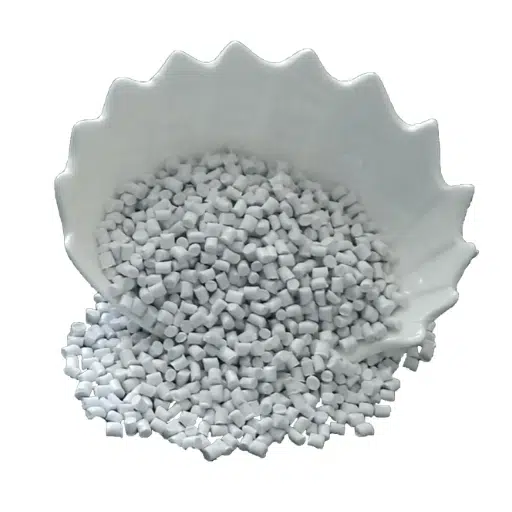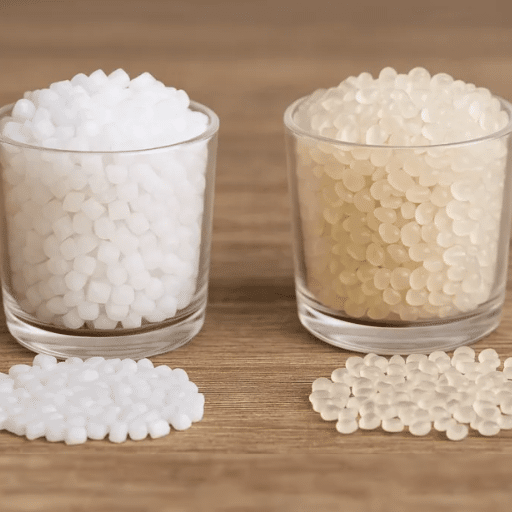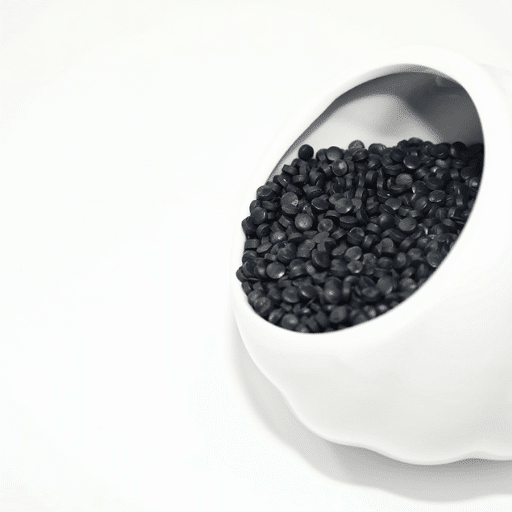
Most guides that compare polyamide to polyester miss the point. They tell you which fabric feels better in activewear. Never do they to tell you which pellet will survive 10,000 thermal cycles in an engine; if you source polymer resins for manufacturing, this is the only test that matters.
Chen Wei, a procurement manager at an automotive supplier in Guangdong, learned the hard way. In the last quarter of 2024, he switched polyamide pellets on his under-hood connector contract to polyester pellets. The difference in price amounted to $1.20 per kilogram. The finance team was very happy with the savings. Six months later, the connectors began cracking at 150 degrees Centigrade during summer road tests. The recall cost the company $2.3 million. Wrong polymer selection at the pellet level led to catastrophic failure.
Another textile comparison will not bring you any further. You need a technical framework that will help you choose between polyamide and polyester pellets, depending on application, processing method, and budget. This guide gives you precisely that. During implementation, you will be able to understand the chemical differences, mechanical trade-offs, thermal limits, and cost realities governing the choice for industrial applications.
What Is Polyamide (Nylon)?
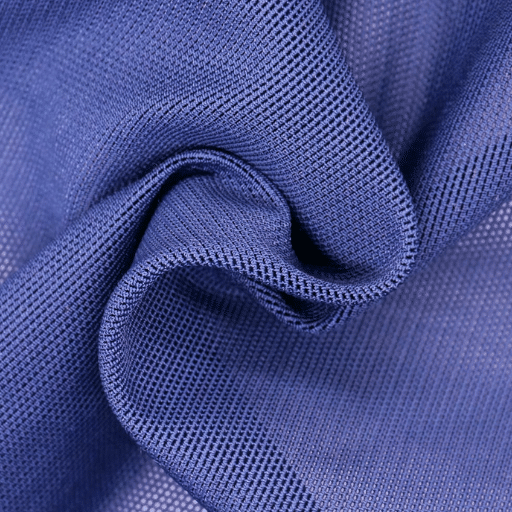
Polyamides are thermoplastic polymers blooming with amide linkages on its molecular backbone. The choice of industrial PA that one can get in the typical market is that of PA6 (polycaprolactam) and PA66 (polyhexamethylene adipamide). They both give exceptional muscle power and resistance for wear and are also thermally stable. But common problems should be taken great care about in the products that the polymer makes. If you need a broader overview of grades, sourcing factors, and specification points, see Polyamide Pellets: The Complete Sourcing and Specification Guide.
PA6 bags slightly more moisture than PA66 but both are materialistically hygroscopic. A standard PA66 pellet that’s been left to just idle under atmospheric environment for 48 straight hours can come up with a water content of 2.5%. The moisture present in it during processing temperatures toward injection molding will inevitably initiate some chain hydrolysis. It results in a brittleness in parts having silver streaks popping up on them. When again water content of the plastic goes away to less than 0.2%, proper drying is a must.
Polyamide pellets are premium from a material storage perspective. Virgin PA66 typically costs 30-50% more than commodity-grade PET. The price is dictated by raw material costs and the energy-intensive polymerization process. The premium is justified when the application demands high heat resistance, good abrasion resistance, or structural load-bearing capacity. But it may not be justified if the needs are cosmetic housings or any low-stress application.
Suzhou Yifuhui stocks PA-6 and PA-66 in various intrinsic viscosity grades from unfilled and glass-filled to other elastomeric forms. Our team may match suitable grades to the requirements of your processing equipment and end-use applications. Mt. Polymer specialists are on hand to assess material datasheets for use in your applications.
What Is Polyester (PET/PBT)?
Polyester refers to a family of ester functional-group-based polymeric constructs. In the pellet form, polyethylene terephthalate (PET) and polybutylene terephthalate (PBT) are extensively produced. PET has been evaluated for its strong dimensional stability, chemical resistance, and electrical insulation. PBT has traded some tensile strength of PET for much better material fill characteristics and crystallization rates during an injection process. For a fuller breakdown of PET, PBT, and PETG resin options, see Polyester Pellets: Complete PET, PBT & PETG Buyer’s Guide.
Unlike polyamide, polyester is hydrophobic. PET tracks over 0.5% of anhydrous condition. Just this single quality obviates the somewhat troublesome necessity for drying infrastructure that polyamide absolutely requires. An added value resulting from this quite substantial time saving, for high-rate operations that carry out a 24-hour operating cycle, would be increased overall throughput through in-house processing.
Unfilled PET and PETG have much lower shrinkage during cooling than nylon. Typical mold shrinkage for unmodified PET vs PA46 is between 0.2 and 0.8%, while PA66 part shrinkage is between 0.8 and 1.5%. For some companies with high scrap and rework rates, PET’s lack of shrinkage makes molding tight-tolerance components like electrical connectors or optical housings both cost-effective and technically feasible.
However, issues arise regarding the temperature. The continuous operating temperature of the majority of standard grades of neat PET stop at approximately 120°C. PA66 is distinguished by its ability to withstand constant temperatures up to 150°C, and in some cases up to 180°C. This difference can be quite significant for automotive under-the-hood parts or industrial equipment subjected to “near-heat” applications.
Polyamide vs Polyester: Chemical Structure Comparison
The performance divergence between these polymers starts at the molecular level. The basic structural units following the link are quite distinct in nature. Thus, there are numerous crucial industrial concerns initiated by the amide bond rather than the ester bond which starts with the polymer structure. For a dedicated deep dive into this topic, read Polyamide vs Polyester: Chemical Structure, Properties, and How to Choose.
Amide linkages give rise to a pattern of extensive hydrogen bonding between adjacent polymer chains. In PA66, of the roughly 50% of amide bond groups, hydrogen bonding occurs at room temperature. These intermolecular forces function as physical crosslinks and serve to constrain chain mobility. They enable sharper values of tensile strength, modulus, and heat resistance. This will be the hydrogen bonding network responsible for the tensile strength of PA66 amounting to 82 MPa, whereas the standard PET is way back near 55 MPa.
Hydrogen bonding also explains polyamides’ moisture sensitivity. Water molecules insert themselves between amide groups and disrupt the hydrogen bond network. In PA6s saturated within, 30% of tensile modulus is lost. Neither will the polymer permanently degrade; drying it will restore its original properties. Nevertheless, looking at the fact, it is conceivable to specify that it must be considered in the entire supply chain accordingly.
Esters, linking polyester, do not have any capabilities of hydrogen bonding. Packing through van der Waals forces results in a more flexible and less-modulus polymer that also has a greater chemical resistance. Esters do handily survive the damaging hydrolysis of neutral pH. PET will see solvents that will begin to stress-crack the PA over time-automotive and other industrial chemicals and solvents.
Crystalline differences are also there. PA66 crystallizes very quickly, reaching around 30-40% crystallinity in molded parts. PET crystallizes more slowly unless it is enhanced with nucleating agents. Slow crystallization may lead to amorphous surface layers with lower chemical resistance. Processors wishing to use PET in chemically aggressive applications need to ascertain from the supplier that the resin has been treated with an appropriate nucleating agent package and maximize mold temperature to ensure complete crystallization.
Mechanical Properties Comparison

Mechanical performance often drives material selection for structural components. The table below summarizes typical values for virgin, unreinforced grades. If you want a separate engineering-focused breakdown of strength, stiffness, wear, and impact data, see Polyamide vs Polyester Mechanical Properties: An Engineering Comparison.
|
Property |
PA66 |
PET |
Advantage |
|---|---|---|---|
|
Tensile Strength |
82 MPa |
55 MPa |
PA66 (+49%) |
|
Tensile Modulus |
2,900 MPa |
2,800 MPa |
Comparable |
|
Elongation at Break |
45% |
50% |
PET (+11%) |
|
Flexural Strength |
105 MPa |
85 MPa |
PA66 (+24%) |
|
Impact Strength (Izod, notched) |
5.5 kJ/m² |
4.0 kJ/m² |
PA66 (+38%) |
|
Abrasion Resistance (Taber, CS-17) |
15 mg/1000 cycles |
45 mg/1000 cycles |
PA66 (3x better) |
The data paints quite a clear picture. Polyamides are the sure winner in strength, stiffness, and wear resistance especially. PA comes up on top for gears, journal surfaces, and sliding components. An injected gear made of PA66 running against its steel counterpart will last two to three times longer in most tests compared to a PET equivalent.
Early 2025 saw a wear incidence with production engineer Liu Mei from a Shenzhen electronics factory. She molded cable guide channels with PET to reduce material cost. The channels displayed an unacceptable level of wear groove formation after 200,000 insertion cycles. She then changed over to PA66 GF30 (30% glass filled). Glass reinforcement increased modulus to 9500 MPa, reducing wear rates by 70%. The part life crossed one million cycles. Material cost was allowed to increase by $0.80 per part. Prevented downtime and replacement labors after final wear savings will amount to $4.50 per unit across the product life.
In some fatigue tests, a specific cyclic mode, PET offers better fatigue properties. The lower modulus of PET leads to more constant deformation before formation of stress concentrations. Looking for snap-fits and living hinges, higher elongation with superior fatigue endurance of PET would certainly outperform normal PA. The important thing is matching the material to the specific stress state and not falling back on top stronger polymer.
Again, reinforced with glass fiber, both materials could now appear in a different perspective. A 30% glass loading is going to raise the tensile modulus by factor two and raise the deflection temperature by somewhere between 40 and 60 degrees Celsius. NIR plastics here are two high engineering grades which are PA66 and PET. Still, the former is stronger, as a whole. The latter, on the other hand, has much better surface looks and lower warpage in thin wall applications.
Thermal Properties & Heat Resistance
Thermal metrics create boundaries within applications where some materials may be from the PA territory and some from the PET territory. If any thermal metrics are misunderstood or mischaracterized, then specification errors are likely to occur. For a more detailed temperature-focused analysis, see Polyamide vs Polyester Heat Resistance: A 2026 Engineer’s Guide.
Melting points can be extreme limits for processing and brief exposure. About 220 degrees Celsius, PA6 can melt and run down. Approximately 265 degrees Celsius is a melting temperature for PA66. PET margins are generally from 250 degrees Celsius up to 260 degrees (the different grades of PET determine its actual melting point), depending on grade and crystallinity. All three require barrel temperatures near or above their respective melting points for processing. At service, parts must never be continuously held at temperatures close to their melting points.
Another indicator could be the heat deflection temperature (HDT) under a 1.8 MPa load. Standard PA66 products achieve an HDT of 70 to 80 degrees Celsius. By contrast, the unmodified form of PET reaches 65 to 75 degrees Celsius. Glass also markedly bridges the gap. For instance, PA66 GF30 reaches an HDT of 250 degrees Celsius; PET GF30 achieves 220 to 240 degrees. For the under-the-hood of vehicles application, where 150 degrees Celsius ambient temperature is normal and spike loads of 200 degrees Celsius sometimes occur, PA66 GF30 would be the better choice.
The critical temperature should be service temperature for continuous operation. Thus, PA66 performs well at 150 degrees Celsius under continuous operation. PET sustains yet at only 120 degrees Celsius. PBT, as a PA alternative in electrical connectors, has an upper range from 130 to 140 degrees Celsius. Engineers who choose PET for work at such elevated temperatures around 120 degrees Celsius either have to buckle and accept a lower-performance expectation or switch to heat-stabilized PET with antioxidants.
Thermal expansion makes a difference in the composite of plastic and metal. The coefficient of the linear thermal expansion of PA66, that is, CLTE, is 80-90 x 10^-6 /K. PET’s CLTE is (60-70) x 10^-6/K. The good black aluminum has 23 x 10^-6 /K. Neither plastic material is a good match for metal. But PET’s somewhat lower thermal expansion does impart fewer stresses into plastic-to-metal bonding regions while the assembly goes under thermal cycling. This property could result in lower occurrences of crack initiation with time for sensor housings and connector bodies that are secured into aluminum blocks.
Fire resistance requirements serve as another filtration. These materials are flammable. PA66 achieves UL 94 HB rating in neat grades and V-2 in flame-retardant grades. PET achieves HB and can go up to V-0 with appropriate modifications. Generally, for electronics housings that require V-0, this flame-retardant PET on the market will be more accessible and cost-effective than an equivalent PA.
Moisture Absorption & Environmental Resistance
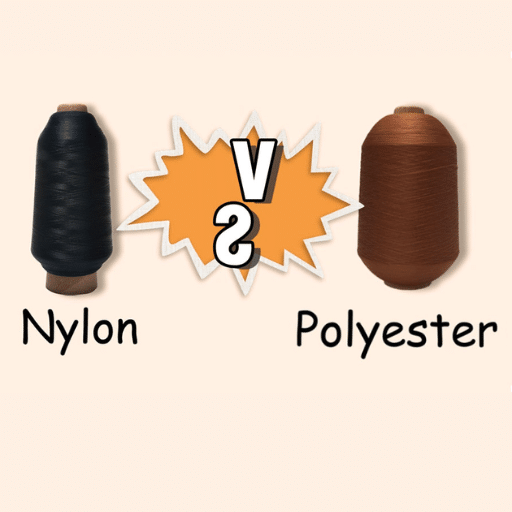
No single property difference creates as great a production headache as water absorption. It’s simple: polyamide likes water; polyester doesn’t. No plastic nylon producer can overlook this essential fact. It determines the design of drying infrastructure, storage conditions, and adjustments for working through different seasons.
Then, PA66 takes up to around 2.5% of moisture by weight at 50% RH, 23 degrees Celsius. PA6 is a bit higher at around 3.5%. If no hygroscopic shortcuts are undertaken prior to (re) processing, moisture activity starts below 75 degrees Celsius, i.e., it very well frolics at the initial stages of melting. If the device set-up does not allow for timely drying activities, it will appear as water vapor (not just vapor, right?), otherwise, inappropriately put around the mold melting zone. These 3 conditions: low molecular weight, processing, and then debonding of the polymer, all conspire against an item already doomed which already deserves a detraction. If one manages to see through the dark veil formed by them, an additional input is sure to cause a great deal of harm.
A pre-drying process usually serves the purpose. This pre-treatment means bringing PA pellets down to below 0.2% moisture content before reaching the injection barrel. It would be customary to dry these resins for about 4 to 6 hours-on pellets of all sizes-depending on the size and superfluous moisture that determines the initial process. Plants operating under ambient conditions and high relative humidity may need a treatment flow of more duration or the safekeeping of desiccated storage totes. Acquisition of drying equipment, use of energy, and use of floor space must be factored into the cost of doing business.
PET campaigners, conversely, attain fine transformation at as much as 0.2%-0.4%, or less, general moisture as against that of PA. Drying in Nature certainly does not have nearly the atrocious connotations that PA possesses. Most of the PET chips (just as extrusion grade) need nominal drying (1-2 hr at 120-140 degrees C); they can be processed directly from greased packages stored in a controlled environment. Simple processing represents a high benefit, particularly in case of fast-paced operations and just-in-time manufacturing models.
Chemical resistance comes out a painted story, yet with a different hue. Weak acids, alcohols, oils, and greases are spelled out as being resisted more or less by the PET when compared with PA. PA could handle alkalis and some solvents better than PET. The actual winner, to be determined by the specific application, is difficult to determine. Since a fluid often spells the difference alterna-tively, the application will tell which is a victor-is either PA66’s brake fluid or PET’s battery acid. It is essential to consider the specific environment of exposure while selecting materials for inhabitation of currencies and chemical compatibility tables should be consulted.
Without amendment, UV resistance cannot be enjoyed by either the competing lot-torse materials of the standard category. Both PA and PET undergo deterioration due to excessive UV exposure. Indoor applications need UV-stabilized materials, possibly with carbon black or hindered amine light stabilizers (HALS). This category will extend rather elaboratively with several polyester and low-valent transitional metal compounds in part PA6-UV stabilized grades that are much common. Outdoor engineering grades of PET are here, but not as prevalent. For structural applications, especially for long periods out of doors, neither unmodified polymer is acceptable.
Cost Analysis for Manufacturers
Material selection eventually boils down to a financial decision. Knowing the full cost scenario helps to avoid situations where Chen Wei would save $1.20 per kilogram and end up losing $2.3 million. For a procurement-focused pricing breakdown, see Polyamide vs Polyester Cost: A Manufacturer’s Pricing and Procurement Guide.
Raw material costs are tied heavily to the direction of crude oil derivatives, caprolactam supply (for PA6), and adipic acid availability (for PA66). As at the start of 2026, a typical virgin pellet would set you back:
|
Material |
Price per kg (approximate) |
Relative Cost |
|---|---|---|
|
Standard PET |
1.20−1.20−1.60 |
Baseline (1.0x) |
|
Standard PA6 |
1.80−1.80−2.40 |
1.4x – 1.6x |
|
Standard PA66 |
2.20−2.20−3.00 |
1.6x – 2.0x |
|
PET GF30 |
1.60−1.60−2.10 |
1.2x – 1.4x |
|
PA66 GF30 |
2.80−2.80−3.80 |
1.9x – 2.5x |
Processing costs intervene on their own: PA applications require more equipment with drying, longer cycle times because of higher mold-shrinkage/deformation-related controls, and more frequent maintenance of molds due to abrasive wear. On the other hand, PET materials result in faster cycles, employ less drying, and produce dimensions that remain more stable.
Tool life is yet another characteristic that varies. The abrasiveness of PA66 promotes mold wear, with emphasis on damage to gate inserts and sliding cores. Maintenance of the mold itself will diminish the life of the tooling by 20-30% when running PA66 at high volumes compared to PET. In a program that spans a million shots, the costs of tooling accumulate into the tens of thousands of dollars for the difference.
The single most important metric is the total cost of ownership (TCO). TCO encompasses raw materials, process energy, drying costs, waste, tooling amortization, and downstream failure costs. PET continually wins in TCO for low-temperature nonstructural housings. This is in sharp contrast to the event of an extreme-temperature and loadbearing structural component. The higher cost of raw material in PA66 is well offset by longer service and lesser field failures.
Ready to compare real pricing for your application? Contact our team for a detailed quotation on PA6, PA66, PET, or PBT grades matched to your specifications. We deliver transparent pricing within 24 hours.
Injection Molding Considerations
Shop-floor reality versus datasheet theory is depicted by the process plastic behavior. The molding window for both polymers indeed reaches the conclusion of a successful mass injection, but the window ranges are quite distanced from each other and parameters are very different for the two materials. If your focus is shop-floor processing, also review Polyamide vs Polyester Injection Molding: A Processor’s Guide.
You set barrel temperatures for PA66 to be ~270-290°C, contrary to those for PET (260-280°C). There is some overlap among them. However, the narrower molding window of PA66 makes deviation from this range dreadfully imperative. For PA degradation to initiate, hot spots above 300°C might cause the polymer to discolor, and in turn, the viscosity would drop significantly. On the other hand, PET has a relatively much higher tolerance against overheating but is susceptible to hydrolysis if the moisture content in the PET exceeds 0.02%.
Since a narrow range of mold temperature makes a difference to PA66, mold temperatures of 60-80°C crystallize dewaxing and finish keen details. On the other hand, PET, owing to its crystalline grade, starts work at 120-140°C. While an amorphous PET grade can be run at somewhat lower molding temperatures, it compromises on chemical resistance. Higher mold temp. for PET means increased cooling times and greater energy costs per shot.
Shrinkage and warpage are the issues that both materials face. Higher shrinkage from PA66 (0.8-1.5%) demands generous draft angles and uniform wall thickness. PET’s lower shrinkage (0.2-0.8%) allows it to handle rather tight tolerances but with the possible side effect of sink marks, due to poor gate design. Fiber reinforcement-as in any other material with fibers-introduces anisotropic shrinkage. Such small fibers align along the direction of flow, causing varying shrinkage in the regions parallel and perpendicular to flow. Choosing not to consider fiber orientation in mold design leads to warped parts.
Cycle times tend to favor PET in most situations. Of all the major contributing factors, the most important consideration is the speed with which the material crystallizes and how much energy it actually absorbs during the process. A common PET thin-wall container mold may run a cycle in 8 to 12 seconds. At the same time, a similar-sized PA66 item ran in a 12 to 18-second cycle. This is especially significant with a 64-cavity mold and three-shift operation. In these three shifts, it produces nearly millions of extra parts.
Wear of screw and barrel is a hidden cost in the processing of PA. The abrasiveness of PA 66 is causing the wearing of screw flights, check rings, and nozzles. To prolong the lifespan for as long as possible, bimetallic barrels and hardened screws are a great addition but have a higher cost to capital. PET is friendlier to the equipment. Machine shops using both pursue the strategy of safeguarding their general-purpose fleet from unnecessary wear and cross-contamination by dedicating specific machines to PA.
Applications: When to Choose Polyamide vs Polyester

The right material depends on the specific demands of the application. Below is a decision framework based on industry experience.
Choose Polyamide When:
- Operating temperatures exceed 120 degrees Celsius continuously
- The part bears structural loads or experiences cyclic fatigue
- Wear resistance and low friction are critical (gears, bearings, bushings)
- Chemical exposure includes alkalis, greases, or brake fluid
- Impact resistance is a primary requirement
Choose Polyester When:
- Dimensional precision and low shrinkage are critical
- The application requires excellent electrical insulation
- Chemical exposure includes acids, solvents, or oils
- Processing speed and throughput are prioritized
- UV stability or optical clarity are required (PET specifically)
- Cost constraints favor lower material pricing
Automotive Applications
Automobiles consume the biggest share of polymers. PA66 and PA6 stand as the preferred materials for underbonnet applications. The manifold, radiator tanks, engine covers, and cable fixings have been designed to withstand heat because they are made of polyamides. In the interior trimming, lighting housing, and non-structural panels, PET or PBT are usually utilized to save on costs. For a closer look at resin selection in vehicle programs, see Polyamide vs Polyester in Automotive Applications: A Manufacturing Guide.
Electronics and Electrical
PET is dominant in electric connector housings because of its outstanding insulation and resistance to soldering temperatures. PBT is a substitute for it in such applications, offering a combination of better flow and thin-wall designs. PA66 captures higher amperage in connector houses and circuit breakers, with the requirement of high tolerance to heat justifying high expense.
Industrial Machinery
A popular choice in gear and bearing applications is PA66. It has a self-lubricating ability that can be increased with the appropriate amount of molybdenum disulfide or PTFE additives, which minimizes the need for external lubrication. PET has found its way into pump housings, valve bodies, and filter components where hydrophobicity is required rather than mechanical loadstance.
Consumer Goods
PET is the primary material used for packaging, bottles, and cosmetic houses. Its exceptional clarity, barrier properties, and approval for food contact make it an excellent choice. PA makes its debut in high-performance sports equipment, power tool housings, and appliance components, where robustness is more important than price.
Sustainability Considerations
Recycled PET (rPET) is widely available and cost-competitive. Recycled polyamide (rPA) is available in the market but in volumes far lower than rPET and priced higher. Where either works technically, rPET usually wins the sustainability battles because of better recovery rates and less processing energy. But for PA, longer service life can often eat into its higher environmental production cost in durable goods applications. For recycled resin trade-offs in more detail, read Recycled Polyamide vs Recycled Polyester: A Manufacturing Guide to rPA and rPET Pellets.
FAQ: Common Questions Answered
Is polyamide the same as polyester?
The key differences in properties which despite outward appearances appear quite similar are between polyamids and polyesters. ReferentialAction is an amide bond(-CONH-) in its basic chemical structure and better known as nylon, while water repellant polyester is an ester bond(-COO-) entity which includes polyethylene terephthalate(PET)and polybutylene terephthalates (PBT). Needless to say that they are not inter-changed in their applications for engineering.
What is the difference between polyamide and polyester?
As hitherto pointed out, the fundamental difference is that of their respective chemical structures which give unique features for water absorption, mechanical properties, and physical stability in treating the different benefits, depending on the application. Polyamide is stronger and more resistant to heat but has water-absorbing characteristics. Polyester is more dimensionally stable and highly chemical-resistant to acids, with an added bonus of being hydrophobic. The choice in manufacturing will depend on temperature exposure, the load upon convention, the chemicals to be faced, and the available processing conditions.
Is polyamide stronger than polyester?
There isn’t any one that can be selected as the best one. In terms of heat endurance, load bearability, and resistance from wear and tear, polyamide gets an upper hand over polyester. And, polyester on its part races fast in dimensional stability, acid resistance, and processing simplicity. Thus, the “best” material is one that meets your specific application environment requirements with the least total cost of ownership.
Which is more expensive: polyamide or polyester?
Feelings will be, polyamide is the hotter stuff. Virgin PA66 costs typically 30 to 50% more than PET. The gap grows when glass-filled grades are compared. However, the price of raw material is not the only expense to be concerned about. In calculating the total cost, consideration must be given to the processing efficiency, scrap rates, tool life, and field failure costs.
Can polyamide and polyester be recycled?
Yes, both can be, with some available recycled rPET and less common, and costlier reuse nylons or rPAs. Property degradation would occur during reprocessinganyways, and the condition would depend on heat histories, contaminants present, and the oral pedigree chosen for the recycled material i.e. post-industrial or post-consumer.
Is polyester or polyamide better for injection molding?
Polyamide generally requires more than most attention for some kind of moisture control, longer cycles, a much better mold design technique. Polyester is easier to process, dries less, runs faster cycle times, and provides more dimensionally stable components. Polyamide’s superior properties may be great for the additional processing hurdles to be justified for parts under higher loads and higher temperatures.
How do I choose between PA and PET for my application?
Let’s kick off by looking at temperature. At temperatures of over 120 degrees Celsius, PA is light-headed. Next, check out the levels of loading and wear based on the application: If the application is of a structural or sliding nature, PA is indicated. Thirdly, chemical resistance is followed by dimensional tolerances and the original budget constraints among the criteria to be taken into consideration. One could now request material datasheets for both options together with a prototype run if there is still time before deciding on the production tools.
Conclusion

The polyamide versus polyester debate can not rely on a mere popularity contest, but rather on engineering optimization that has clear dollar-and-cent price tags. Chen Wei was forced to absorb a $2.3 million recall charge, having made a $1.20 per kilogram acceleration in changing the formula that ignored thermal requirements. Liu Mei-and the problem with the cable guide-is solved in matching wear resistance to the one true failure form.
Draw out a very simple framework. “Start with temperature. If you need continuous service above 120 degrees [Celsius], polyamide is the safer starting point. Now evaluate mechanical load. In terms of strength and wear, PA is the better choice for structural and wear applications. Check chemical exposure: Acid and oils like PET; alkaline and greases like PA. Factor in processing. PET offers simpler drying, faster cycles, and better dimensional stability. Follow this with total cost of ownership numbers, for the raw material price is just the entry fee.”
At a German firm specializing in industrial components, a sourcing director, Maria Santos, describes how her sourcing team goes about suitable material selection: one by one, each application area has its sheets listing in order of preference—temperature, load, chemical exposure, and tolerances. The polymer with the highest overall weighting is then selected. Where some other materials are similar, both are developed into prototypes allowing actual performance measurement to be determined. Data-based decision making, not mood-based.
Your operation deserves such a rigorous approach. The right pellet will drive your production schedule, product quality, and your bottom line.
Ready to select the optimal material for your next project? Contact Suzhou Yifuhui’s polymer specialists today. We provide detailed material datasheets, processing guidelines, and competitive quotations for PA6, PA66, PET, PBT, and reinforced grades. Our technical team responds within 24 hours. Request your custom quote now.
For additional engineering plastic comparisons, explore our guides on polycarbonate vs acrylic pellets and polypropylene vs ABS.