The procurement manager at his Shenzhen company discovered an alarming situation after he studied his production report. His team selected polypropylene pellets as their material choice for a new automotive interior component because they wanted to reduce production expenses. The parts began to break after six weeks of full production when they underwent standard impact tests. The application required PP to maintain its expected impact toughness which it failed to deliver. The company solved its problem through ABS pellets which required 40000 RMB expenses for scrapped tools and resulted in a delay for an important client delivery.
Wei’s experience represents a common occurrence in the industry. The choice between polypropylene and ABS creates manufacturing challenges for engineers because they need to make decisions which engineers find difficult to make. Thermoplastics operate as workhorse materials which exist in two separate categories. Global markets consume both materials in substantial quantities. The incorrect selection of materials for your application will lead to several negative outcomes which include financial losses and product defects and difficulties with vendor partnerships.
This guide provides a comparison which uses data analysis to assess injection molding operations and bulk purchasing processes. The materials show different processing behaviors which affect their total ownership costs and actual performance results. The evaluation process for pellet suppliers teaches you how to achieve competitive pricing for bulk purchases while maintaining consistent quality in your batches.
Want personalized guidance on material selection for your next production run? Speak with our polymer specialists via LiveChat for tailored recommendations based on your exact specifications.
What Are Polypropylene and ABS?

The production floor testing shows different results because the fundamental properties of PP and ABS materials lead to distinct operational outcomes.
Polypropylene (PP) Pellets
Polypropylene exists as a semi-crystalline thermoplastic polymer which industrial manufacturers create from pure propylene monomers. The material exists in two forms which manufacturers create as homopolymer PP and copolymer PP. The first form delivers superior stiffness and heat resistance while the second form delivers better impact strength and flexibility under low-temperature conditions.
PP stands as the second most commonly produced plastic material in the world while polyethylene ranks first. The material has gained popularity because it combines three unique characteristics which include low density and excellent chemical resistance and fatigue endurance. Manufacturers create PP products which range from food containers to automotive bumpers and living hinges that can flex thousands of times without breaking.
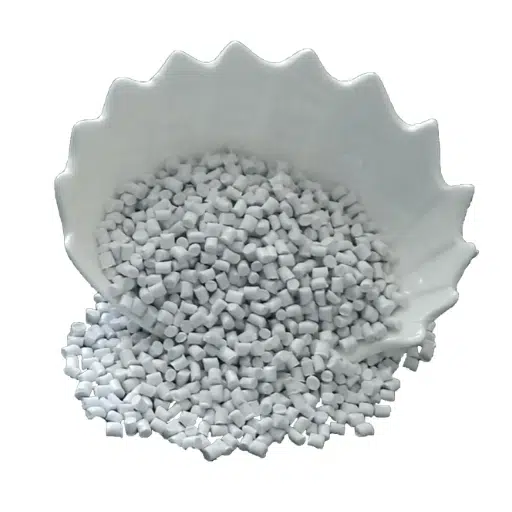
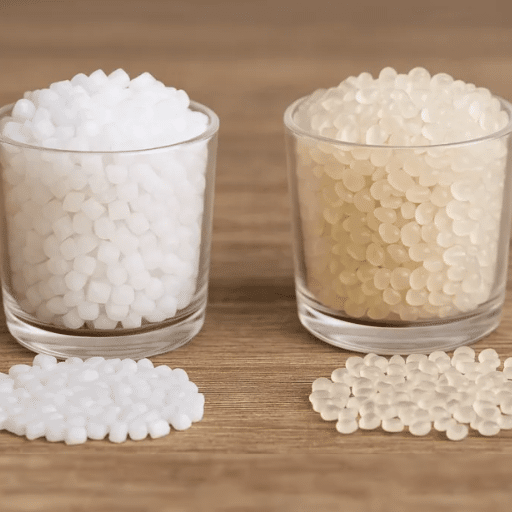
The material exists in pellet form which shows PP granules as small uniform cylinders or discs that have a surface resembling wax. The material needs no drying process because it can be processed directly which helps to simplify operational procedures while decreasing necessary machinery costs.
ABS (Acrylonitrile Butadiene Styrene) Pellets
The material known as ABS functions as an amorphous terpolymer which combines three separate monomeric components. Acrylonitrile provides the material with chemical protection and abilities to withstand high temperatures. The material delivered through butadiene enables the creation of products which withstand forceful impacts without breaking. The material known as styrene provides the product with both strength and a shiny surface appearance.
The three-part molecular structure of ABS enables its use as an engineering plastic which engineers can use to create products for consumer markets and electronic devices and automotive interior components. The material known as ABS does not form crystalline structures which define PP. The material shrinks uniformly because of its amorphous structure which creates uniform shrinkage patterns in all directions that mold operators can expect during molding operations.
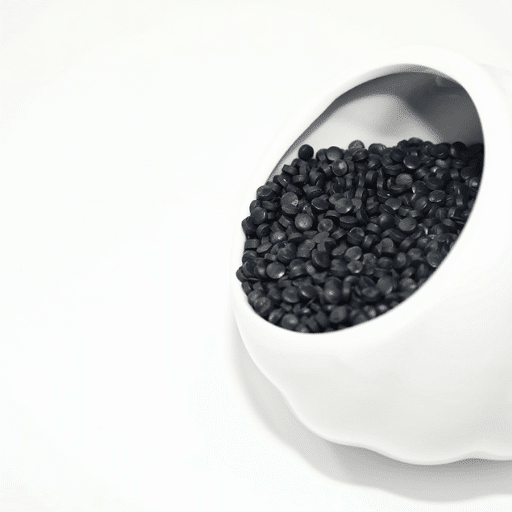
The texture of ABS pellets creates a more solid and weighty sensation than the texture of PP granules. The pellets exhibit a glossy and smooth appearance which remains constant throughout their unprocessed state. The material known as ABS absorbs water from its environment. It must be dried to below 0.1% moisture content before processing to prevent cosmetic defects and structural weaknesses.
Side-by-Side Property Comparison
The real differences between these materials show up in performance data. The table below summarizes the key properties procurement managers and engineers need to compare.
|
Property |
Polypropylene (PP) |
ABS |
Manufacturing Implication |
|---|---|---|---|
|
Density |
0.90-0.92 g/cm3 |
1.03-1.08 g/cm3 |
PP parts weigh roughly 15% less, reducing shipping costs |
|
Tensile Strength |
25-40 MPa |
40-50 MPa |
ABS offers higher structural load capacity |
|
Impact Strength (Izod) |
20-80 J/m |
200-400 J/m |
ABS absorbs significantly more energy before fracture |
|
Flexural Modulus |
1.0-1.6 GPa |
2.0-2.5 GPa |
ABS resists bending deformation better |
|
Heat Deflection Temp |
80-110C |
90-100C |
Comparable; specific grades vary widely |
|
Chemical Resistance |
Excellent (acids, bases, solvents) |
Moderate (sensitive to ketones, esters) |
PP dominates in chemical contact applications |
|
Shrinkage Rate |
1.0-2.5% (anisotropic) |
0.4-0.9% (isotropic) |
ABS delivers tighter tolerances; PP risks warpage |
|
Surface Finish |
Matte, waxy |
High gloss, smooth |
ABS needs minimal finishing for cosmetic parts |
|
Raw Material Cost |
Lower (commodity pricing) |
Higher (20-40% premium) |
PP reduces material spend significantly |
Featured snippet optimization: Polypropylene functions as a lightweight thermoplastic material which possesses semi-crystalline characteristics and demonstrates both exceptional chemical resistance and resistance to fatigue failure. ABS functions as an amorphous terpolymer which delivers exceptional impact resistance and structural strength while maintaining a high-quality surface appearance.
Many buyers do not recognize the importance of density for their purchasing decisions. PP stands as one of the lightest commodity plastics because its density measures 0.90 g/cm3. The manufacturer who ships more than 100000 components every year gains a 15 percent weight reduction benefit which results in decreased shipping expenses and simplified assembly line operations compared to ABS.
Density provides only partial information about the subject matter. ABS outperforms PP in nearly every mechanical property category that matters for structural applications. Its tensile strength runs 40-50 MPa compared to PP’s 25-40 MPa. Its Izod impact strength can reach 400 J/m, roughly five to ten times higher than standard PP grades. The material will endure better than ABS when it experiences drops or impacts or flexural loads.
Chemical resistance reverses the advantage. PP demonstrates strong resistance to acids and bases and most organic solvents. ABS degrades when exposed to ketones, esters, and certain hydrocarbons. For chemical processing equipment, battery cases, or laboratory containers, PP is almost always the safer choice.
Processing Requirements: What Manufacturers Need to Know

The value of material properties becomes irrelevant when a production line fails to process resin with proper efficiency. Plant managers find their most captivating point of interest in the polypropylene versus ABS discussion.
Drying and Preparation
PP provides an immediate operational benefit through its capacity to deliver benefits. Processors can begin their work with polypropylene because it does not require drying procedures. The production process can start immediately after operators load PP pellets into the hopper. The system achieves three benefits through this method because it removes the need for desiccant dryers while decreasing energy usage and allowing faster production transitions.
ABS requires a different method to achieve successful results. The process of drying ABS pellets needs to reach a moisture level below 0.1% through desiccant dryer usage. The operation of ABS without proper drying leads to splay marks combined with silver streaking and a decrease in mechanical strength. The operation needs to spend between 5,000 and 50,000 for initial drying equipment which will also incur ongoing energy expenses.
Need help calculating the total equipment and energy costs for your material switch? Contact our technical team for a free processing economics assessment tailored to your facility.
Melt Processing Parameters
PP processes at lower temperatures which range from 190C to 230C while using mold temperatures between 20C and 60C. The material can flow into thin-walled sections and complex geometric shapes because its viscosity is lower than other substances. The rapid cooling process of PP leads to quick crystallization which helps decrease production time and increase manufacturing output.
ABS requires higher melt temperatures which range from 220C to 250C and requires mold temperatures between 50C and 80C. The material needs higher injection pressure because its viscosity prevents complete mold filling. ABS takes more time to cool down because it does not have the quick crystallization ability that PP possesses. The typical cycle times for ABS range from 15 seconds to 30 seconds depending on the shape of the part which makes them longer than the cycle times of PP.
PP provides faster processing times which result in increased production efficiency for businesses that need to optimize every second of their cycle times. A packaging manufacturer from Guangdong experienced a 12% increase in parts-per-hour production after switching their thin-walled container material from ABS to PP because chemical compatibility between the two materials required the application to make this change.
Shrinkage and Dimensional Stability
The high shrinkage rate of 1.0% to 2.5% in PP creates significant difficulties for producing parts that require exact dimensions. The mold shrinkage shows anisotropic behavior because it contracts at different rates according to the mold flow direction. The directional behavior of the material creates an increased risk of warpage especially in components that have flat surfaces or thin walls.
The material ABS exhibits a shrinkage range of 0.4% to 0.9% which occurs through isotropic contraction. The uniform shrinkage pattern across all directions enables ABS to provide superior predictability for manufacturing precision components. Proper mold design enables ABS to achieve tolerances that extend plus or minus 0.1 millimeter. The use of advanced mold features such as sequential valve gates or gas assist with PP production requires an extra tooling expense that ranges from 5000 to 20000.
Regrind Tolerance and Scrap Economics
Scrap happens. Molding operations generate waste through the accumulation of runners and gates and defective parts. Your material budget depends on how each material handles regrind processes.
PP accepts 25% to 50% regrind content without major property degradation. The molecular structure of the material shows outstanding capacity to endure multiple heating cycles. The high regrind tolerance of this material enables operations which use runners as 20% to 30% of their shot weight to achieve significant reductions in their need for fresh materials.
ABS degrades more quickly with reprocessing. Most applications limit regrind to 10% to 25% of the total blend. Beyond that boundary, impact strength and surface gloss show measurable reduction. ABS’s lower regrind tolerance raises your material expenses when your scrap rates increase and your part designs create large runner systems.
Applications: When to Choose PP vs ABS
The right material depends entirely on what your part must do. Use the decision framework below to match material capabilities to application requirements.
Choose Polypropylene Pellets When:
- Chemical resistance is essential for all applications. PP protects against acids and bases and organic solvents which were harmful to ABS material. PP is used in battery cases and chemical containers and laboratory equipment.
- The project operates with a primary focus on reducing costs. The raw material cost of PP generally falls between 20% and 40% below the price of ABS. The price difference between the two materials increases when used for larger production of standard parts.
- The design needs to support living hinges and repeated flexing operations. The material properties of PP enable hinges to operate through thousands of flexing cycles without experiencing any breakage. ABS material breaks when it undergoes repeated bending movements.
- The product needs to meet both food contact standards and FDA requirements. The market offers affordable food-grade PP materials in various grades. Food-grade ABS exists but is less common and more expensive.
- The company needs to prioritize lightweight materials for its shipping operations. The 0.90 g/cm3 weight of PP material enables businesses to decrease shipping expenses while enhancing employee handling capabilities.
- The facility lacks any equipment for drying purposes. The no-dry requirement of PP material benefits operations by decreasing equipment needs and reducing equipment costs.
Choose ABS Pellets When:
- The main requirements for success in this project are impact strength and rigidity. The automotive industry uses ABS plastic because it provides exceptional toughness for interior trim and power tool housings and protective helmets.
- The quality of a surface finish increases when it reaches premium standards. ABS produces high-gloss surfaces which come directly from its molding process. The material requires only basic preparation for paint and plating and printing applications.
- Dimensional precision is essential. The material shows low uniformity shrinkage which makes ABS the best option for producing parts with high precision requirements.
- The process needs either adhesive bonding or assembly work. The material ABS bonds easily with cyanoacrylate and epoxy and solvent welding adhesives. PP needs surface energy to decrease which requires either flame or plasma or corona treatment before users can start bonding.
- The process requires decorative finishing work. ABS helps your part which needs painting and metallization and silk-screening because it cuts down secondary processing expenses.
Liu Wei, a plant manager at a consumer electronics facility in Dongguan, learned this distinction the hard way. To achieve 30% material cost savings his team selected PP as the material for manufacturing a handheld device housing. The team found that the standard adhesive used by the company for rubber grip inserts could not bond with PP. The company switched to ABS material which solved the bonding problem but required them to create a new mold design. The lesson? The process of selecting materials needs to consider surface energy and finishing requirements before starting the tooling stage.
Cost Analysis and Total Cost of Ownership

Most buyers begin their purchases by checking the price of raw materials which sellers charge for each kilogram of their products. Most buyers stop their buying process at that point. The decision leads to a situation which results in expensive financial losses.
Markets worldwide sell PP granules at prices which are 20% to 40% lower than the market price of ABS pellets. The differential creates monthly savings which amount to thousands of dollars for a mold which operates with 500 kilograms of resin throughout each day. Procurement managers who concentrate only on purchase price evaluation use polypropylene as their main material.
The total cost of ownership provides a complete solution. The hidden factors should be examined. The equipment and energy requirements for drying operations need to be evaluated. ABS requires desiccant drying at 80C for 2 to 4 hours before processing. The facility which operates two shifts every day needs 10% to 15% additional energy when it performs drying operations for every kilogram of material that goes through the drying process. PP’s energy savings from raw material costs are reduced because of the energy difference between the two materials which exists throughout the year.
The combination of faster PP crystallization times with its ability to produce shorter cycle times creates economic benefits for businesses. A two-second cycle reduction on a mold running 300,000 shots annually frees up roughly 167 hours of machine time. The standard machine operations create a value for that capacity which ranges from 2,500 to 2,500 to 5,000 per year per mold.
The regrind recovery process enables PP to process 25 to 50 percent regrind material while ABS limits processing to 10 to 25 percent regrind material which results in cost advantages for operations that handle high scrap material. An operation that produces 15 percent runner scrap can recycle almost all of its scrap material for use in PP production. The excess regrind which results from ABS production needs to be either sold at a lower price or thrown away.
The high shrinkage and warpage tendencies of PP materials necessitate advanced mold systems which engineers should use to create their required product designs. The usage of hot runner systems together with sequential valve gating and gas-assist technology results in increased initial expenses for mold development. “ABS”‘s shrinkage pattern enables designers to create less complex mold systems which maintain the same part design.
PP requires surface treatment before any painting printing or adhesive assembly work. Equipment and labor needs plus engineering time requirements increase through the use of flame treatment and corona discharge and plasma activation. The use of these steps is not necessary for ABS production.
PP shows better performance than ABS because it requires fewer raw materials and achieves faster production times. ABS provides better results than other materials because it maintains dimensional accuracy while producing simple finishing processes. The choice between your two options depends on the specific part design and production volume and product quality standards you require.
Ready to see how these cost factors apply to your specific project? Request a custom quote for PP or ABS pellets, and our team will model your total cost of ownership including processing economics.
Quality Control and Compliance
The importance of maintaining consistent pellet quality matches the significance of selecting appropriate materials. Buyers frequently fail to recognize that production difficulties increase when different production batches generate inconsistent results.
The grade classification for polypropylene needs verification before you make your purchase. Homopolymer PP delivers better stiffness and heat resistance compared to its reduced low-temperature impact strength. Random copolymer PP enhances both visibility and adaptable features. Block copolymer PP provides maximum impact protection throughout different temperature conditions. The supplier must supply exactly what you need while supplying certification for melt flow index, density, and mechanical properties according to established standards.
The first material that needs inspection in the incoming ABS shipment process is its moisture content. Defects occur because materials start to absorb moisture when they experience any moisture during their shipment or storage process. The supplier needs to provide proof that they package ABS material inside bags which prevent moisture from entering together with desiccant inside those packages. Production will not start until the incoming lots pass testing with a moisture analyzer.
The two materials offer special material grades which meet the requirements of high-performance applications. Food-grade PP material meets the FDA and EU regulations which permit direct contact with food. The flame-retardant ABS grades achieve UL94 V-0 and V-1 ratings which apply to electronics and appliance use. The UV-stabilized versions of both substances maintain their outdoor durability under sun exposure while ABS needs stronger stabilizer packages to remain stable during extended sun contact.
We subject every PP and ABS pellet batch at Suzhou Yifuhui New Material Company to our comprehensive quality control process. Our testing protocols verify melt flow index, density, tensile strength, and moisture content against exact specifications. The shipment includes analysis certificates which enable your team to check product quality at your facility.
Sustainability and Recycling Considerations

The world is experiencing increased pressure from regulations to implement circular economy practices. Organizations now consider material recyclability when choosing sources because they require more than just cost and performance data. The recycling process for polypropylene results in complete recycling through municipal and industrial recycling systems. The recycling facilities worldwide recognize its resin identification code 5 as its valid identification. Post-industrial PP regrind maintains its value because it can undergo multiple reprocessing cycles without losing essential properties. The PP material gives manufacturers a competitive advantage because it helps them achieve sustainability certifications and fulfills customer environmental demands.
The recycling process for ABS exists as a technical possibility which creates major difficulties. The resin identification code for this material is 7 which most recycling facilities refuse to accept. The recovery rates for ABS material fall between 50% and 60% which represents a major decline compared to PP. ABS material requires specialized recycling facilities for separation and reprocessing because its logistics create greater complications and the recovered material usually sells at lower market prices.
The carbon footprint per manufactured part decreases because polypropylene requires lower processing temperatures throughout its life cycle. The process of melting and molding requires less energy which results in reduced emissions for every kilogram of final product. The processing advantage results in cumulative benefits for companies which disclose their sustainability reports together with their Scope 3 emissions data at high product manufacturing levels.
Conclusion
The polypropylene vs abs decision requires evaluation of material performance for specific application needs and existing processing methods and budget constraints. Choose polypropylene when chemical resistance and low cost and fast cycle times and recyclability drive your project needs. Choose ABS when impact strength and dimensional precision and surface finish and assembly compatibility represent the most important factors.
The introduction contains a lesson from Wei that we need to remember. The wrong choice cost 40,000 RMB and a delivery that arrived later than expected. The right choice, made with complete data, would have identified the impact requirement upfront and specified ABS from the start.
Before you finalize your next material specification, review these five decision factors:
- Mechanical requirements: Does your part need high impact strength and rigidity, or is chemical resistance more critical?
- Processing economics: Do you have drying equipment? How much does cycle time affect your cost per part?
- Dimensional needs: Can your mold design accommodate PP’s higher shrinkage, or do you need ABS’s stability?
- Finishing plans: Will the part require painting, printing, bonding, or plating?
- Total cost of ownership: Have you modeled energy, regrind, tooling, and secondary operations beyond raw material price?
At Suzhou Yifuhui New Material Co., Ltd., we supply both premium polypropylene pellets and high-impact ABS granules engineered to exact industry standards. The technical team provides material selection assistance throughout the entire week and we promise to deliver a complete quotation within a 24-hour time frame.
Request a custom quote for PP or ABS pellets today and secure the reliable material foundation your manufacturing operation demands.