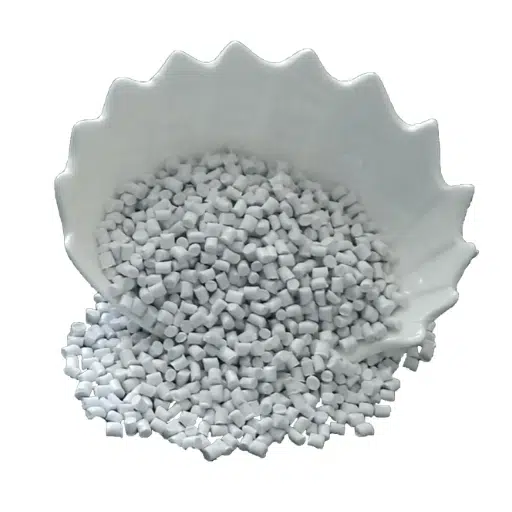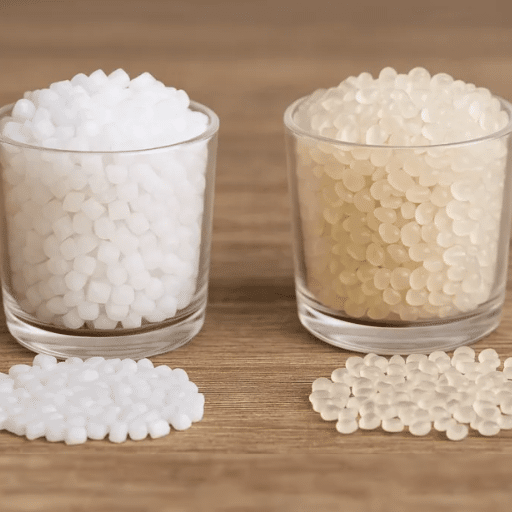
The average vehicle contains 150 to 200 kilograms of plastics, yet the difference between polyamide and polyester in automotive applications is not a matter of preference. It is a matter of physics. One absorbs moisture and thrives under the hood. The other repels water and dominates the cabin. Choose wrong, and your component fails where it matters most.
If you source polymer pellets for an automotive program, you have probably faced the same briefing sheet twice in the same week: one program manager demanding PA66 for an under-hood bracket, another asking if PET could cut costs on an interior trim piece. Both questions are valid. Both demand precise answers. This guide maps exactly which polymer belongs in which automotive subsystem, with market data and processing insights you can take straight to your supplier.
Here is what we cover: how polyamide and polyester behave in pellet form, where each polymer wins inside a vehicle, why safety systems split the choice between them, and how circular-economy grades are reshaping sourcing strategy in 2026. By the end, you will have a clear decision framework for your next program.
Need automotive-grade pellets for a program launching this quarter? Request a custom quote for PA or PET pellets and our polymer specialists respond within 24 hours.
What Automotive Polyamide (Nylon) Brings to the Table
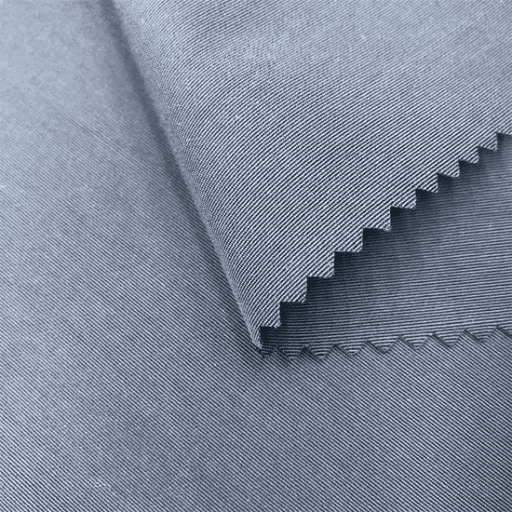
Polyamide, commonly called nylon in North American supply chains, is a semi-crystalline thermoplastic built from repeating amide linkages. In automotive manufacturing, the workhorse grades are PA6, PA66, PA12, and glass-filled variants of each.
PA66 sits at the top of the automotive hierarchy. Its melting point near 262°C and excellent resistance to hydrocarbons make it the default choice for under-hood components that see heat, oil, and vibration simultaneously. PA6, with a lower melting point around 220°C, serves cost-sensitive applications where extreme heat is not the primary threat. PA12 occupies a specialized niche: its moisture absorption sits at roughly 1.5 percent, far below PA6’s 9 to 10 percent, which makes it the preferred grade for fuel lines and pneumatic tubing where dimensional stability in wet environments matters.
The defining strength of polyamide in automotive use is toughness. It absorbs impact without brittle failure. It resists abrasion under load. It handles automotive fluids, from engine oil to brake fluid, with minimal degradation. For a complete breakdown of grades and specifications, see our polyamide pellets sourcing guide.
The weakness is equally well known. Polyamide is hygroscopic. Exposed to ambient humidity, PA6 can absorb up to 2.5 percent moisture in a matter of days. That moisture plasticizes the resin, lowering stiffness and causing dimensional changes that can push precision parts out of tolerance. Proper drying before processing is not optional.
What Automotive Polyester (PET/PBT) Brings to the Table
Polyester in automotive manufacturing primarily means polyethylene terephthalate (PET) and polybutylene terephthalate (PBT). Both are semi-crystalline thermoplastics built from ester linkages, and both deliver properties that complement polyamide rather than compete with it directly.
PBT is the engineering-grade workhorse. It offers excellent dimensional stability, very low moisture absorption below 0.5 percent, and strong resistance to UV radiation and color change. Glass-filled PBT, often designated PBT-GF30, achieves stiffness and heat resistance that rival some polyamide grades while maintaining the hydrophobic character that makes polyester predictable in humid environments.
PET dominates the textile side of the automotive world. Seat covers, floor carpets, headliners, and acoustic insulation panels all rely on PET fiber in massive volumes. According to industry estimates, polyester holds roughly 42 percent of the automotive textile market versus polyamide’s 26 percent. The reasons are straightforward: PET costs less, resists sunlight degradation better, and maintains colorfastness through years of dashboard heat.
The trade-off is toughness. Polyester does not match polyamide on impact resistance or abrasion durability. It can be notch-sensitive, meaning sharp corners or stress concentrators initiate cracks more readily than in nylon.
Head-to-Head: Polyamide vs Polyester for Automotive Use
When procurement teams compare polyamide vs polyester automotive grades, the decision rarely comes down to a single property. It is a matrix of mechanical, thermal, environmental, and economic factors.
| Property | Polyamide (PA6/PA66) | Polyester (PBT/PET) |
|---|---|---|
| Melting Point | PA6 ~220°C; PA66 ~262°C | PBT ~223°C; PET ~250-260°C |
| Moisture Absorption | 0.9-2.5% (PA66) to 9-10% (PA6) | <0.5% |
| Tensile Strength (Dry) | ~80-85 MPa | ~50-60 MPa (unfilled) |
| Impact Resistance | High; absorbs shock without cracking | Moderate; notch sensitive |
| Abrasion Resistance | Superior | Good |
| UV Resistance | Moderate to poor | Excellent |
| Dimensional Stability in Humidity | Moderate (swells with moisture) | Excellent |
| Chemical Resistance to Oils/Greases | Excellent | Good to excellent |
| Relative Cost (Automotive Grades) | Higher | Lower to moderate |
Mechanical Performance Under Load
Polyamide wins on toughness. Its ability to deform under impact and return to shape makes it ideal for parts that see vibration, collision, or repeated stress cycling. Polyester wins on stiffness and creep resistance. Under sustained load at moderate temperatures, PBT retains its shape better than PA6.
Thermal Limits in the Engine Bay
PA66 holds a clear advantage for sustained high-temperature service. It retains mechanical properties at temperatures where PBT begins to soften. Reinforced PET can match PA66 on short-term heat exposure, but for continuous duty above 150°C under the hood, polyamide remains the safer choice. For a deeper thermal comparison, see our polyamide vs polyester heat resistance analysis.
Environmental Resistance
This is where the two polymers diverge most sharply. Polyamide absorbs moisture, which can be an advantage in self-lubricating applications but a liability in tight-tolerance electrical housings. Polyester repels water, maintaining dimensions and dielectric properties in humid engine bays or tropical climates.
Under-Hood Applications: Why Polyamide Dominates
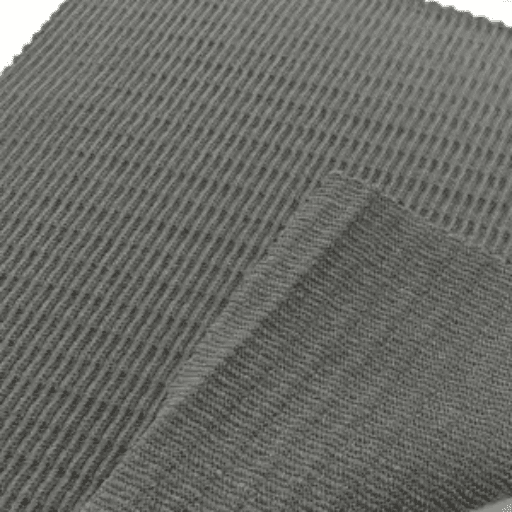
When Marcus Chen, a sourcing manager at a Tier 1 supplier in Shanghai, reviewed the material specification for a new fuel delivery module in early 2025, the choice was already clear on the engineering drawing: PA12 for the fuel lines, PA66-GF30 for the mounting brackets. The program had tested PBT for the brackets to save 12 percent on material costs, but the parts failed thermal cycling at 150°C after only 800 cycles. Polyamide passed 10,000 cycles without cracking. Marcus locked in the PA66 order and moved on.
That story repeats across under-hood portfolios worldwide. Polyamide dominates because the engine bay is a hostile environment: heat, oil, fuel, vibration, and moisture all coexist. PA66 handles it.
Fuel lines and brake lines rely on PA11 and PA12 specifically because these grades combine low moisture absorption with excellent resistance to hydrocarbons. PA12 tubing resists gasoline, diesel, and ethanol blends while maintaining flexibility across temperature swings from -40°C to 125°C.
Air intake manifolds and engine covers use glass-filled PA6 and PA66. The glass reinforcement pushes stiffness above 8 GPa, matching some metal stampings at a fraction of the weight. Heat resistance up to 200°C allows these parts to survive continuous exposure to under-hood temperatures.
Gears, bushings, and bearings exploit polyamide’s self-lubricating character. As the material absorbs a small amount of moisture, the surface becomes slightly slippery, reducing friction in dynamic assemblies. Polyester cannot replicate this behavior.
Cooling system components such as radiator end tanks and thermostat housings use PA66 for its resistance to glycol-based coolants and its ability to withstand pressure spikes without brittle failure.
Polyester struggles in these environments because its lower toughness and notch sensitivity create failure risks under impact or thermal shock. PBT can serve in low-stress under-hood brackets, but for primary structural or fluid-handling components, polyamide remains the standard.
Interior and Textile Applications: Why Polyester Leads
If under-hood territory belongs to polyamide, the passenger cabin belongs to polyester. The reasons are economic, aesthetic, and environmental.
Seat covers and upholstery consume roughly 25 percent of automotive PET usage. Polyester fiber resists UV degradation from sunlight streaming through windshields. It holds dye consistently across large production lots. It costs less than polyamide fiber by a meaningful margin. The result is that virtually every mass-market vehicle uses polyester upholstery as standard.
Floor coverings and carpets absorb roughly 45 percent of automotive PET fiber demand. PET carpet fiber resists staining, cleans easily, and withstands the abrasion of shoes and cargo sliding across the surface day after day.
Headliners, parcel shelves, and boot liners all favor PET nonwoven or woven constructions for their light weight, moldability, and acoustic dampening properties. PET can be thermoformed into complex shapes at relatively low temperatures, making it ideal for large interior panels.
Acoustic insulation panels rely on PET fiber mats because the fiber structure traps sound without adding significant weight. OEMs increasingly specify recycled PET nonwovens for these applications to meet sustainability targets.
Polyamide is rarely specified for interior textiles because it lacks the UV stability and colorfastness that OEM warranty standards demand. A seat cover that fades or yellows after two summers of sun exposure triggers warranty claims. Polyester does not.
Safety Systems: Airbags, Seatbelts, and Crash Components
The global automotive airbag fabric market is valued between USD 2.6 billion and 3.3 billion, and material selection here is not arbitrary. According to market analyses from Stratview Research, polyamide holds a 52.3 percent share of the airbag fabric market, while polyester holds 31.7 percent.
Airbag fabrics favor PA66 because of a property called foldability. When an airbag deploys, the fabric must unfold from a tightly packed module in milliseconds without tearing. PA66’s higher elongation at break and superior heat resistance allow it to survive the hot gases of deployment while unfolding cleanly. Polyester airbag fabrics exist and are growing, driven largely by sustainability initiatives. In September 2024, Autoliv introduced airbag cushions using 100 percent recycled polyester, proving the material can meet deployment standards while lowering carbon footprint.
Seatbelts use both materials. Polyamide provides the high tensile strength needed for the load-bearing webbing. Polyester may appear in secondary straps or decorative stitching where load requirements are lower.
Tire construction illustrates how the two polymers cooperate. Polyester serves as the carcass ply, the body of the tire, where stiffness and dimensional stability matter most. Polyamide serves as the cap ply, the overlay on the steel belts, where toughness and fatigue resistance are critical.
Electrical and Precision Components: The Polyester Advantage

Modern vehicles contain kilometers of wiring, dozens of sensors, and hundreds of electrical connectors. In this domain, polyester wins for one simple reason: dimensional stability in humid environments.
Electrical connectors and housings use PBT because it absorbs virtually no moisture. A connector that swells by even 0.1 millimeter can lose contact pressure, creating electrical resistance, heat, and eventual failure. PBT maintains its dimensions across humidity swings from desert to tropical conditions.
High-voltage EV connectors increasingly use PBT-GF30. The glass reinforcement provides the stiffness needed for large connector bodies, while the base resin delivers the electrical insulation and tracking resistance required at 800V and above.
Sensors and precision housings demand the same stability. A camshaft position sensor housing that warps with humidity shifts the sensor target alignment and throws engine timing codes. PBT eliminates that risk.
Polyamide is rarely used for precision electrical housings because its moisture absorption causes dimensional drift. Even PA66, the most stable common grade, absorbs enough moisture to move tight tolerances out of spec.
Sustainability and Circular Economy: Recycled Options in 2026
Sustainability is no longer a marketing slide. It is a sourcing requirement. OEMs now embed recycled-content minimums directly into platform sourcing agreements, and Tier 1 suppliers must prove material provenance to qualify for new programs.
Recycled PET (rPET) has the most mature automotive supply stream. The Audi A3 uses seat covers made from up to 89 percent recycled polyester. The Audi Q8 e-tron features up to 27 components manufactured from recycled materials, including interior panels and wheel arch liners. According to market projections, the global recycled polyester market is expected to reach USD 9.57 billion by 2026. The European automotive interior textile recycling market alone was valued at USD 147.6 million in 2025 and is forecast to reach USD 358.4 million by 2036.
Recycled polyamide (rPA) is advancing rapidly through chemical recycling. At K 2025, BASF unveiled two pilot projects for recycling PA6 from end-of-life vehicles. In partnership with ZF Group, BASF used depolymerization to break used oil pans down to caprolactam monomer, repolymerize it, and mold a stabilizer link for Mercedes-Benz that met the same standards as virgin material. This matters because roughly 200 kilograms of plastic per vehicle currently goes to incineration rather than recovery.
For procurement teams, the practical implication is clear. rPET is available now in automotive grades for interior applications. rPA is emerging for under-hood and structural parts, but supply chains are less mature and volumes are smaller. For a full comparison of recycled options, see our recycled polyamide vs recycled polyester guide.
How to Select and Procure Automotive Pellets
When Elena Vasquez took over material sourcing for a European OEM’s interior program in 2024, her first task was auditing the pellet supply chain for 14 different components. She found that three suppliers were delivering PET with inconsistent intrinsic viscosity, causing voids during injection molding. One polyamide supplier shipped pellets at 0.4 percent moisture, double the 0.2 percent maximum her process required. Elena consolidated the supply base to two qualified vendors with certified drying and testing protocols. Scrap rates dropped from 2.8 percent to 0.7 percent in one quarter.
Her framework is the one we recommend to every automotive buyer:
1. Map the application environment. Is the part under the hood or in the cabin? Does it see continuous heat above 120°C? Will it contact fuels, oils, or coolants? Does it carry electrical current or require tight dimensional tolerances?
2. Match the grade to the specification. PA66-GF30 for structural under-hood brackets. PA12 for fuel lines. PBT-GF30 for electrical connectors. PET fiber or nonwoven for interior textiles.
3. Verify automotive certifications. Ensure your supplier can provide IMDS data, REACH compliance documentation, and ELV (End-of-Life Vehicle) certificates. Automotive programs demand traceability that consumer-grade resin suppliers often cannot provide.
4. Demand batch consistency. Automotive production lines run on tight tolerances. Pellet melt flow rate, moisture content, and additive dispersion must stay within narrow bands lot after lot. Ask for Certificates of Analysis with every shipment.
5. Plan for global logistics. Automotive supply chains span continents. Your pellet supplier must deliver reliably to your molding facility, whether that facility is in Detroit, Stuttgart, or Shenzhen. Delays cost more than the material itself.
At Suzhou Yifuhui, we supply automotive-grade PA6, PA66, PA12, PET, and PBT pellets with full certification packages, batch-tested consistency, and global shipping coordination. Our technical team supports material qualification from spec review through PPAP submission.
Running a material qualification for a new automotive program? Contact our polymer specialists for datasheets, CoA samples, and competitive pricing within 24 hours.
FAQ: Common Questions About Polyamide and Polyester in Cars

Is polyamide or polyester better for automotive use?
Neither is universally better. Polyamide excels in under-hood, safety, and fluid-handling applications where toughness and heat resistance matter. Polyester excels in interior, electrical, and textile applications where dimensional stability, UV resistance, and cost efficiency matter. The right choice depends on the specific subsystem.
Why is nylon used in car airbags instead of polyester?
PA66 dominates airbag fabric because it combines high foldability, heat resistance, and tear strength. When an airbag deploys, the fabric must unfold from a compact module under extreme heat and pressure without rupturing. Polyester airbags exist and are growing, particularly in recycled variants, but PA66 remains the commercial standard.
Can recycled polyester be used in automotive interiors?
Yes. Recycled PET is already widely used in automotive interiors. The Audi A3 uses seat covers with up to 89 percent recycled polyester content. The supply chain for automotive-grade rPET is well established, and OEMs increasingly mandate recycled content for interior textiles.
Which polymer is better for fuel lines?
Polyamide, specifically PA11 or PA12, is the standard for automotive fuel lines. These grades offer the lowest moisture absorption in the polyamide family while maintaining excellent resistance to gasoline, diesel, and ethanol blends. Polyester is rarely used for fuel lines because it lacks the flexibility and impact resistance needed for pressurized tubing.
How does moisture affect polyamide under-hood parts?
Moisture absorption causes polyamide to swell and lose stiffness. In under-hood applications, this effect is manageable if the resin is properly dried before processing and if the part design accounts for dimensional variation. Some under-hood PA parts actually benefit from slight moisture absorption, which improves impact resistance and reduces brittleness.
Is polyester suitable for under-hood applications?
PBT can serve in select under-hood applications such as electrical connectors, sensor housings, and low-stress brackets where dimensional stability is critical and temperatures stay moderate. However, for primary structural components, fluid-handling parts, or applications above 150°C continuous service, polyamide remains the safer choice.
What is the cost difference between PA66 and PBT for automotive?
Virgin PA66 typically costs 30 to 50 percent more than virgin PBT on a per-kilogram basis. However, total cost of ownership includes processing energy, drying requirements, tool life, and scrap rates. For some applications, PBT’s lower processing cost can offset the material price gap.
How do I choose between PA and PET for my automotive component?
Start with the operating environment. High heat, oil exposure, or impact loading points to polyamide. Dimensional precision, electrical insulation, or UV exposure points to polyester. Cost and sustainability targets may shift the decision toward recycled grades of either material. When in doubt, run parallel qualification tests on both resins.
Conclusion
The polyamide vs polyester automotive decision is not a popularity contest. It is an engineering equation. Polyamide wins where toughness, heat resistance, and fluid compatibility are non-negotiable: under the hood, in fuel systems, and inside airbag modules. Polyester wins where stability, UV resistance, and cost efficiency drive the specification: in the cabin, behind the dashboard, and inside electrical housings.
The most successful procurement teams do not treat these materials as competitors. They treat them as specialists. They map the vehicle subsystem, match the environmental load, select the grade, and lock in a supplier who can guarantee batch consistency at automotive scale. To learn more about the mechanical properties of polyamide vs. polyester, please click to refer to our accompanying guide: Polyamide vs Polyester Mechanical Properties: An Engineering Comparison
At Suzhou Yifuhui, we stock both polyamide and polyester pellets in grades qualified for automotive programs worldwide. Our team provides datasheets, certification packages, and technical support through every stage of material qualification. If you are preparing specs for a new program or reviewing alternatives for an existing one, we are ready to help.