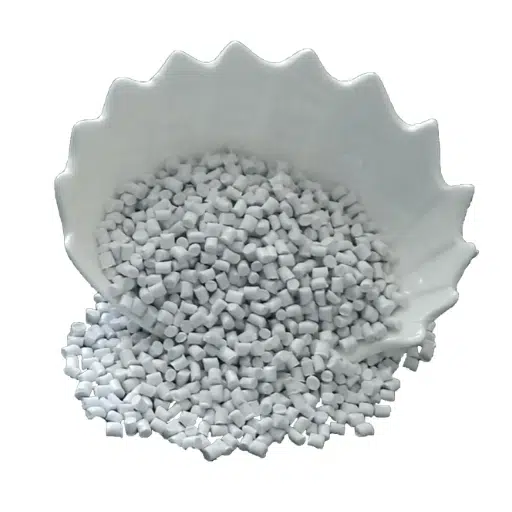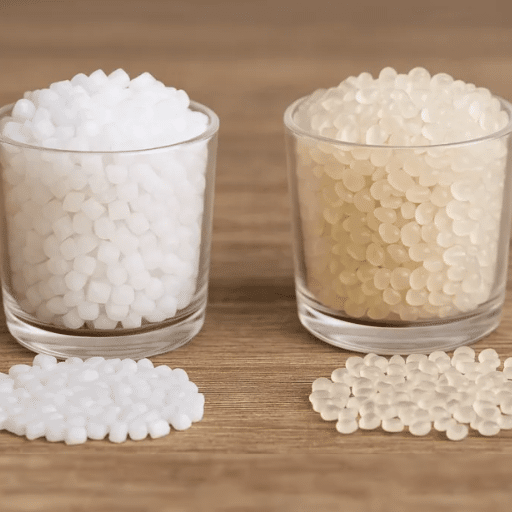
A single electric vehicle battery pack can contain more than 300 plastic connector housings, retention clips, and cable-management parts. Many of those parts come from two polymer families that most procurement teams still buy from separate suppliers. When polyester and polyamide electronics sourcing is split, specifications drift, lead times conflict, and a single resin shortage can shut down an entire assembly line.
You already know that PBT and polyamide are workhorse engineering plastics. What is less obvious is how often they belong in the same material program. The best electronics manufacturers do not choose one polymer family. They pair them instead. PBT provides dimensional stability for precision housings. Polyamide delivers toughness for structural clips and high-temperature connectors.
This guide explains where each material delivers the most value in electronics, how to select the right grades, and why sourcing both from one supplier reduces risk. You will learn the specific components that rely on PBT, PET, PA6, PA66, PA46, and PA9T. You will also learn the compliance standards that matter for connectors, consumer devices, and EV systems.
Want to simplify your electronics resin sourcing? Request a custom multi-resin quote and our polymer specialists will recommend the right PBT and polyamide grades for your program.
Why Polyester and Polyamide Electronics Programs Need Both Polymers

No single thermoplastic can satisfy every requirement in a modern electronic device. PBT offers low moisture absorption, excellent dimensional stability, and fast molding cycles. Polyamide delivers higher heat resistance, better toughness, and strong mechanical retention under load. These properties are complementary. That is why a typical electronics program specifies both. If you want to see how these two polymer families work together across a full production strategy, our complete guide to sourcing and using both thermoplastic families walks through the fundamentals in detail.
Consider a standard automotive control module. The connector housing must maintain tight tolerances across humidity and temperature swings. That is a job for glass-filled, flame-retardant PBT. The wire harness clips that hold the bundle in place must survive vibration and repeated flexing. That calls for PA66. The same module needs two distinct polymer families. Each solves a different engineering problem.
Linda Park, a sourcing manager at a Tier 1 electronics supplier in Shenzhen, learned this the hard way. Her team had been buying PBT from one compounder and PA66 from another to chase the lowest per-kilogram price. Then the PA supplier changed its glass-fiber source without notice. Eight thousand clips molded out of spec and failed vibration testing. The redesign delay cost six weeks. Linda consolidated both materials with a single supplier who understood the full module. Her incoming defect rate dropped by 45%.
The broader benefit is supply chain resilience. Using both polyester and polyamide across an electronics platform spreads risk across resin markets. If benzene-based feedstock costs spike and push PA66 prices higher, a manufacturer with a balanced PBT program has more negotiating leverage. If paraxylene supply tightens and affects PET or PBT, a diversified PA portfolio provides flexibility.
For a deeper comparison of when to choose one material over the other, see our polyamide vs polyester mechanical properties comparison. If your goal is to manage polyester and polyamide electronics procurement as one program, our complete sourcing guide covers storage, quality control, and cost strategy. To gain a deeper understanding of Polyester and Polyamide Market Trends 2026: What Procurement Managers Need to Know, please click to refer to our accompanying guide.
PBT Electronics: Where Polyester Wins
Polybutylene terephthalate (PBT) is the dominant engineering plastic for electrical and electronics applications. According to Mordor Intelligence, electrical and electronics end uses account for approximately 53.1% of global PBT demand. The segment is growing at around 4.95% CAGR. The reason is simple: PBT gives engineers a rare combination of low moisture uptake, stable dimensions, good electrical insulation, and fast crystallization for short injection molding cycles.
Connector Housings and Relay Bodies
PBT GF30 is often described as the default connector material. Its moisture absorption can be as low as 0.02-0.2% for glass-filled grades. That means contact pins stay aligned and electrical resistance stays predictable over the product lifetime. Flame-retardant PBT grades also meet UL94 V-0 requirements at wall thicknesses down to 0.4 mm. This makes them ideal for miniaturized connectors.
Coil Formers and Transformer Skeletons
These parts need electrical insulation, mechanical strength, and resistance to soldering heat. PBT’s balance of dielectric strength and dimensional stability makes it a common choice for coil bobbins, transformer housings, and relay frames.
Sensors, Switches, and Fuse Boxes
PBT resists automotive fluids, solvents, and humidity. It performs well in under-hood sensors, appliance switches, and fuse holders. Its fast crystallization also supports high-volume production with short cycle times.
Consumer Electronics Chargers and Ports
Smartphone chargers, laptop ports, and USB-C housings often use PBT. The material holds fine details, accepts flame-retardant additives without losing surface quality, and keeps costs under control.
Polyethylene terephthalate (PET) is less common than PBT in molded electronics. However, it offers a higher melting point, around 260°C compared to PBT’s 225°C. PET appears in capacitor films, high-wear electrical components, and some high-temperature housings where its stiffness and heat resistance justify the processing trade-offs.
Polyamide Electronics: Where Polyamide Wins

Polyamide, commonly called nylon, is not as dimensionally stable as PBT in humid environments. However, it brings superior toughness, heat resistance, and mechanical strength. The global polyamide market is expected to reach approximately USD 46-47 billion in 2026, according to Grand View Research, with strong demand from electrical and electronics applications.
Wire Harness Clips and Cable Ties
PA66 is the standard material for cable ties, wire clips, and retention features that must flex without breaking. Its high tensile strength and fatigue resistance keep wire bundles secure through years of vibration and thermal cycling.
High-Temperature SMT Connectors (PA46, PA9T, PPA)
Standard PBT cannot survive surface-mount technology (SMT) reflow temperatures, which can exceed 260°C. Semi-aromatic polyamides such as PA46, PA9T, and polyphthalamide (PPA) handle these conditions. They also maintain low moisture absorption relative to PA6 and PA66. These grades are common in board-to-board connectors, high-density headers, and high-amperage terminals.
EV Battery and Charging Components
The shift to electric vehicles has intensified demand for polyamide in electronics. Nexeo Plastics notes that PA6, PA66, PA46, and PPA are used in battery enclosures, charging station power management components, thermal management parts, and sensor housings. Some Asian EV programs are replacing PA66 with PBT in specific battery-pack components. However, PA remains dominant wherever continuous heat or mechanical load is high. For more on this crossover, see our guide on polyester and polyamide in automotive manufacturing.
Motor Housings and Thermal Management Parts
Electric motors, inverters, and power electronics generate heat that softens lower-performance plastics. Glass-filled PA66 and PA46 provide the stiffness and heat resistance needed for motor housings, cooling modules, and busbar supports.
PBT vs Polyamide Connectors: A Property Comparison for Electronics
The choice between PBT and polyamide usually comes down to three factors: moisture, heat, and mechanical load. The table below summarizes how the most common electronics grades compare.
| Property | PBT GF30 | PA66 GF30 | PA46 GF30 | PA9T / PPA |
|---|---|---|---|---|
| Moisture absorption | 0.02-0.2% | 1.5-2.5% | 2.0-3.0% | 0.5-1.5% |
| Heat deflection temp. (1.8 MPa) | 180-220°C | 230-260°C | 280-300°C | 270-290°C |
| Dimensional stability | Excellent | Good when dried | Good when dried | Excellent |
| Toughness / impact | Moderate | Excellent | Very good | Good |
| Electrical insulation | Excellent | Good | Good | Good |
| SMT reflow compatibility | Limited | Limited | Yes | Yes |
| Relative cost | Low-medium | Medium | Medium-high | High |
| Best applications | Connectors, relays, sensors | Clips, ties, structural parts | High-temp connectors | SMT headers, EV parts |
This table explains why polyester and polyamide electronics programs rarely substitute one for the other. Each family occupies a distinct performance zone. PBT wins where moisture and dimensional precision matter. PA wins where heat, toughness, or mechanical retention dominates. Sometimes the smartest design does not pick a side at all. When a part needs the strengths of both polymers in one component, our design-engineering guide to dual-material parts shows how to combine polyamide and polyester successfully.
Flame Retardancy and Compliance in Electronic Components

Electronics-grade plastics must meet strict safety and environmental standards. Choosing the wrong grade can block market entry or trigger costly recalls.
UL94 V-0 and Halogen-Free Requirements
Most connector housings and device enclosures require a UL94 flammability rating, often V-0 at the relevant wall thickness. Both PBT and polyamide can be formulated with halogen-free flame retardants based on phosphorus-nitrogen systems. These help manufacturers meet RoHS, REACH, and GB/T requirements while avoiding corrosive combustion byproducts.
RoHS, REACH, WEEE, and IEC Considerations
Restricted substances rules shape material selection across the electronics industry. Lead, cadmium, mercury, and certain flame retardants are tightly controlled. A qualified supplier should provide material declarations, compliance certificates, and test reports for every lot.
Automotive Electronics: AEC-Q200 and IATF 16949
Components destined for vehicles often require AEC-Q200 qualification for passive devices. Material suppliers may also need IATF 16949 quality management certification. If you supply into automotive electronics, confirm that your resin partner can document traceability, batch consistency, and change control.
A single documentation gap can delay a program by months. That is why many procurement teams now require complete certification packages before they approve a new resin source.
How to Source Polyester and Polyamide Electronics Pellets
Material selection is only half the challenge. The other half is building a supply chain that delivers consistent quality on time.
Specifying the Right Grade
Start with the end-use requirement, not the polymer name. A connector housing may need PBT GF30 with UL94 V-0 and a specific color. A wire clip may need PA66 with 25% glass fiber and heat stabilization. An SMT connector may need PA9T or PPA. The grade specification should include base resin, reinforcement level, flame-retardant system, color, and any OEM-specific approvals.
Why Moisture Management Matters for PA
Polyamide absorbs moisture from ambient air. That affects dimensions and mechanical properties. PA6 can absorb 2.5-3.5% moisture, while PA66 absorbs slightly less. Parts must be dried before processing. Molded parts may also require conditioning before final inspection. PBT absorbs less than 0.2% moisture in most grades. That makes it more forgiving in humid assembly environments.
Documentation and Certification Checklist
Before qualifying a supplier, request:
- Material datasheet with full mechanical, thermal, and electrical properties
- UL yellow card or equivalent flammability certification
- RoHS, REACH, and halogen-free declarations
- Lot traceability and Certificate of Conformance
- IATF 16949 or ISO 9001 quality certification
- Change-control policy for formulations
Benefits of a Single Multi-Resin Supplier
Consolidating PBT and polyamide with one supplier simplifies purchasing, reduces documentation mismatches, and improves negotiation leverage. You also gain access to technical specialists who can recommend the right grade for each application instead of simply fulfilling orders. If you are not sure how to evaluate and shortlist the right partner, our practical guide on how to choose a polyester and polyamide supplier breaks down the criteria that matter most.
Market Trends Driving Polyester and Polyamide Electronics Demand

Several trends are reshaping the market for polyester and polyamide electronics materials.
EV and 5G Growth
Electric vehicles and 5G infrastructure need high-voltage connectors, base station housings, and power management components. These parts must combine electrical insulation with heat and flame resistance. Both PBT and high-performance polyamides are seeing increased demand as a result.
Miniaturization and Thin-Wall Molding
Devices are getting smaller, and wall thicknesses are shrinking. High-flow PBT and low-warpage PA grades enable thinner, lighter connectors without sacrificing mechanical performance.
Shift from PA66 to PBT in Some EV Battery Components
In Asia, some EV battery-pack programs are moving from PA66 to PBT for certain housings. PBT absorbs less moisture and resists battery electrolytes better. This shift makes multi-resin sourcing even more important.
Recycled and Bio-Based Grades
Sustainability targets are pushing demand for recycled PA6 and bio-based PBT. A 2026 report from Verified Market Research projects the recycled PA6 market to grow at 6.8% CAGR through 2033, with electronics accounting for a growing share.
Frequently Asked Questions
What are the main uses of polyester and polyamide electronics materials?
Polyester, mainly PBT, is used for connector housings, relay bodies, coil formers, sensors, switches, and charger ports. Polyamide, including PA6, PA66, PA46, and PA9T, is used for wire harness clips, cable ties, high-temperature SMT connectors, EV battery components, and motor housings.
Why is PBT preferred over polyamide for connector housings?
PBT absorbs far less moisture than standard polyamides. Its dimensional stability keeps contact pins aligned, and its fast crystallization supports short injection molding cycles. These properties make PBT the default choice for most connector housings.
When should I choose polyamide instead of PBT for electronics?
Choose polyamide when the application needs higher heat resistance, greater toughness, or better mechanical retention under load. PA46, PA9T, and PPA are especially useful for SMT reflow connectors and EV components that see continuous heat.
What compliance standards apply to engineering plastics electronics materials?
Common standards include UL94 flammability ratings, RoHS and REACH substance restrictions, WEEE recycling directives, IEC standards, and automotive requirements such as AEC-Q200 and IATF 16949.
Conclusion

The most reliable polyester and polyamide electronics material programs do not force a choice between polyester and polyamide. They use PBT where dimensional stability, low moisture, and electrical insulation matter. They use polyamide where toughness, heat resistance, and mechanical retention dominate.
Key takeaways:
- PBT GF30 is the default material for precision connector housings, relays, and sensors.
- PA66, PA46, PA9T, and PPA excel in clips, cable ties, high-temp connectors, and EV components.
- Moisture management is the critical difference: PBT is forgiving; PA requires drying and conditioning.
- Compliance documentation matters as much as material properties for electronics applications.
- Sourcing both polymer families from one supplier reduces risk, simplifies documentation, and improves supply chain resilience.
At Suzhou Yifuhui New Material Co., Ltd., we supply premium PBT, PET, PA6, PA66, PA46, and specialty polyamide pellets engineered to meet exact electronics industry standards. Our technical team is available seven days a week to help you select the right grades and keep your production lines moving.
Ready to consolidate your electronics resin sourcing? Contact our polymer experts today for a custom quote and material recommendation.