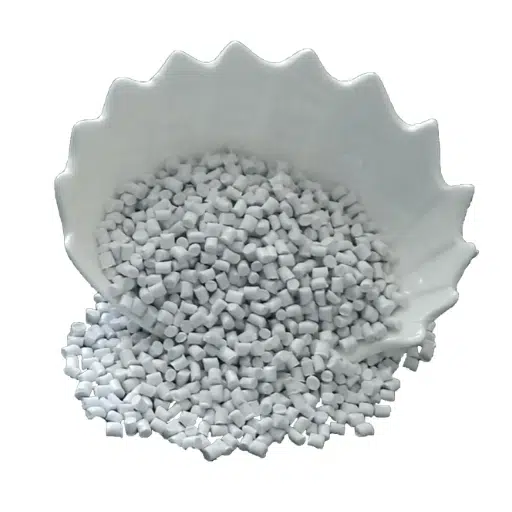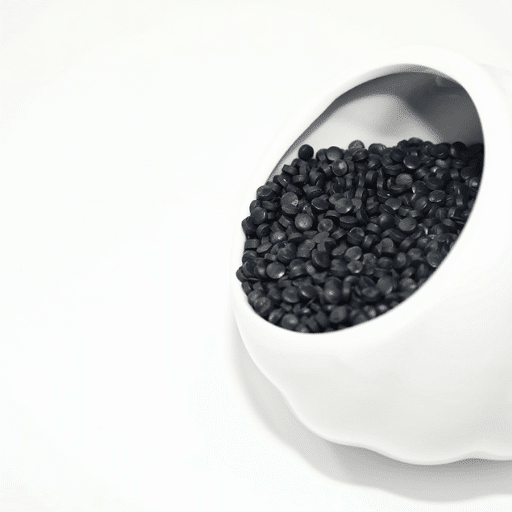
Search for “polyamide polyester combination” and you will find endless guides to microfiber towels and hiking shirts. Engineers do not need fabric advice. They need to know if a PA66 core will survive a PBT overmold, how to match thermal expansion, and where to source both resins. This is that guide.
A polyamide polyester combination in engineering plastics is not a fabric blend. It is a deliberate design choice where one product uses both polymer families to capture strengths that neither material delivers alone. PA brings toughness, fatigue resistance, and self-lubricating wear surfaces. Polyester brings dimensional stability, low moisture uptake, and fast cycle times.
When Elena Voss, a senior design engineer at a Tier 2 automotive supplier, inherited a connector program in early 2025, the housing kept failing humidity testing in PA66. The same geometry in PBT held tolerances but cracked under snap-fit insertion force. Her fix was not choosing one material. It was using both. The housing became PBT-GF30. The internal latch became PA66-GF30. The assembly passed 2,000 thermal cycles and 500 mating cycles without a single failure.
This guide shows you how to make that same call. You will learn when to combine polyamide and polyester in a single product, how to design the interface for reliable adhesion, how to match thermal expansion to prevent failure, and how to source both resins from one supplier. If you are evaluating a broader material selection between the two families, our polyamide vs polyester guide covers the head-to-head comparison.
Why Choose a Polyamide Polyester Combination Design?

No single polymer wins every battle. Smart product design assigns each material to the job it does best. That is the core logic behind a polyamide polyester combination.
Polyamide excels where parts see mechanical stress, abrasion, or impact. Gears, bearings, snap-fit clips, and structural brackets favor PA6 or PA66 because the polymer yields rather than fractures. Polyester dominates where dimensional stability, electrical insulation, or chemical resistance matters. Connector housings, sensor enclosures, and precision components favor PET or PBT because the material holds tight tolerances across humidity swings.
The polyamide polyester combination lets you engineer performance exactly where you need it. You use premium PA only in high-stress zones. You use cost-effective polyester everywhere else. The result is a product that outperforms a single-material design at a lower total cost.
There is also a risk-mitigation angle. Dual-material programs create dual-sourcing leverage. If one resin market tightens, you have established volumes and qualified tooling in the other family. That flexibility matters when feedstock prices swing 20% in a quarter. For more on managing those swings, see our 2026 resin price volatility strategy guide.
Ready to explore dual-material sourcing for your next program? Request a custom quote for PA and PET/PBT pellets and receive technical data sheets within 24 hours.
Typical PA + PET/PBT Part Architectures
The polyamide polyester combination, sometimes called a dual-material PA polyester design, appears in five common architectures. Each solves a different design problem.
Rigid substrate with soft overmold. A PA66 structural core provides strength and heat resistance. A polyester-based TPE overmold provides grip, sealing, or vibration damping. Power tool handles and appliance knobs use this pattern. The rigid core survives drop tests. The soft overmold survives the user’s hand.
Connector housing with internal latch. PBT-GF30 forms the outer housing because it holds tolerances across humidity ranges. PA66-GF30 forms the internal latch or spring because it survives thousands of mating cycles without cracking. This is the architecture Elena Voss used on her connector program.
Structural frame with precision insert. A PA frame provides toughness and impact resistance for mounting and handling. A PBT or PET insert provides the precision interface for electrical contacts, optical alignment, or threaded fasteners. Industrial sensor housings and meter enclosures often follow this pattern.
Hybrid fiber and textile structures. Outside injection molding, manufacturers combine PA and polyester fibers in the same product. A rope with a polyamide core and polyester sheath balances strength, elasticity, and UV resistance. Similar hybrid approaches appear in conveyor belts and filtration media.
Two-shot molded assemblies. A PBT body provides dimensional stability for a housing. A PA flexible hinge provides living-hinge durability that polyester cannot match. The two-shot process bonds the materials in a single tool, eliminating assembly labor.
Overmolding and Multi-Shot Molding for Polyamide Polyester Combination Parts

Overmolding is the most common way to physically join polyamide and polyester in one part. The process is not complicated, but the rules are strict.
Sequential overmolding versus two-shot molding. Sequential overmolding molds the substrate, cools it, then reinserts it into a second tool for the overmold. Two-shot molding uses a rotating platen to inject both materials in one machine cycle. Two-shot produces stronger bonds because the substrate stays warm. Sequential overmolding offers more material flexibility because you can use any combination of resins.
Material pairing rules. This is where most designs fail. PA substrates bond best with polyamide-based TPE. PBT substrates bond best with polyester-based TPE. The chemistry has to match. A PA66 substrate with a polyester-based TPE will delaminate under thermal cycling. A PBT substrate with a PA-based TPE will peel at the interface.
Temperature differential requirement. The substrate melt temperature should be at least 40°C above the overmold material. This ensures the overmold can flow and bond without remelting the substrate excessively. For a PA66 substrate with a melt point of 265°C, the overmold should process at 225°C or lower.
Surface preparation and mold design. Substrate surfaces should be clean, dry, and free of mold release. Textured surfaces improve mechanical interlocking. Mold designers should avoid deep undercuts on the substrate that would trap the overmold material and create stress risers.
Common defects and troubleshooting. Delamination usually means wrong TPE chemistry or insufficient substrate temperature. Bubbles at the interface mean moisture in the substrate. Warping means CTE mismatch between the two materials. Each defect has a distinct signature and a distinct fix.
When Marcus Chen, a process engineer at a consumer electronics molder, tried to overmold a polyester-based TPE onto a PA66 substrate without checking chemistry compatibility, the parts passed visual inspection. Three months later, field returns showed the grip layer peeling off after thermal cycling. The fix was switching to a PA-based TPE. The scrap cost before the correction exceeded $18,000. Electronics programs put these material pairings under especially tight scrutiny, so if your project sits in that space, our Polyester and Polyamide Electronics: A Multi-Resin Sourcing Guide breaks down the sourcing and qualification steps that keep failures like this off the line.
Bonding, Adhesion, and Compatibility
The polyamide polyester combination fails when designers ignore interfacial chemistry. Polyamide and polyester do not naturally bond. Their polymer chains are chemically incompatible. The amide groups in PA and the ester groups in polyester do not form strong intermolecular bonds at the interface.
The solution is a compatibilizer. Maleic anhydride grafted polymers, such as MAH-g-SEBS or MAH-g-PP, react with amine or hydroxyl end-groups on the substrate surface. During injection molding at 200–280°C, the compatibilizer forms covalent bonds that lock the two materials together.
Ester-exchange reactions can also occur at the interface when polyester-based TPE meets PBT. The ester groups on both sides exchange chains under heat and shear, creating a true chemical weld. This is why polyester-based TPE bonds so well to PBT.
Peel strength benchmarks tell the story. Properly compatibilized TPE on PA66 achieves 12–18 kg/cm. The same TPE on PBT achieves 10–15 kg/cm. Without compatibilizer, both values drop below 3 kg/cm and the bond fails in service.
Surface treatment options include plasma treatment, corona discharge, and chemical primers. These work for adhesive bonding or painting, but for overmolding, compatibilizer chemistry is the standard approach.
Thermal Expansion and Dimensional Matching
Thermal expansion mismatch is the silent killer of dual-material parts. When two materials expand and contract at different rates, the interface accumulates stress with every thermal cycle. Enough cycles and the interface cracks.
The table below compares typical CTE values for unfilled and glass-filled grades.
| Material | CTE (Unfilled) | CTE (30% GF) | Shrinkage |
|---|---|---|---|
| PA6 | 80–100 µm/m·°C | 20–40 µm/m·°C | 0.7–1.5% |
| PA66 | 80–110 µm/m·°C | 20–40 µm/m·°C | 0.7–2.0% |
| PBT | 70–90 µm/m·°C | 20–35 µm/m·°C | 1.5–2.2% |
| PET | 70–90 µm/m·°C | 20–35 µm/m·°C | 2.0–3.0% |
Notice that glass fiber loading brings CTE values closer together. A PA66-GF30 and PBT-GF30 pair can run through automotive thermal cycling (-40°C to +125°C) with manageable interfacial stress. An unfilled PA66 against an unfilled PBT will see larger mismatch and higher failure risk.
Moisture adds another layer of complexity to the polyamide polyester combination. PA absorbs 1.2–3.5% moisture at saturation, causing dimensional growth of 0.5–1.2%. PBT absorbs less than 0.2%. In a dual-material part, the PA side grows in humidity while the PBT side stays stable. That differential creates internal stress even without temperature change.
Design rules for managing this mismatch:
- Avoid asymmetric geometries that concentrate stress at the interface.
- Use ribs and bosses to distribute load across the bond line.
- Specify glass fiber loading to bring CTE values closer.
- Post-condition PA parts before assembly to stabilize dimensions.
- Run thermal cycling tests on prototype assemblies before production.
Cost vs. Performance Tradeoffs

The polyamide polyester combination is not always the cheapest path. Material cost, processing cost, and tooling cost all shift when you move to dual-material design.
Virgin PA66 trades at roughly $3.50–4.50 per kilogram. Unfilled PBT sits at $2.20–2.80. PET is lower at $1.80–2.40. Glass-filled grades add 20–40% across the board. On material alone, PBT offers a 15–30% savings versus equivalent PA grades.
Processing costs favor polyester. PBT crystallizes faster and runs on cooler molds, which cuts cycle time and energy consumption. PA demands hotter molds and longer drying, which raises both machine-hour cost and utility cost.
Tooling is the wild card. A two-shot mold for a PA+PBT part costs significantly more than a single-cavity tool for a one-material part. For low-volume programs, the tooling premium may not pay back. For high-volume programs, the elimination of assembly labor and the reduction in warranty returns often justify the investment.
When does a single material with additives beat a dual-material design? When the performance gap between the two zones is small, when volume is low, or when the assembly is simple enough that a mechanical fastener solves the problem. Dual-material design earns its cost when the interface itself must be seamless, when the part sees thermal cycling, or when assembly labor dominates the cost stack.
For a detailed per-kg price comparison between the two families, read our polyamide vs polyester cost analysis.
Case Examples: Polyamide Polyester Combination in Practice
Automotive electrical connector. A Tier 1 supplier molds connector housings in PBT-GF30 for dimensional stability and humidity resistance. The internal latch spring is PA66-GF30 because it survives 500+ mating cycles without cracking. The assembly passes -40°C to +125°C thermal cycling with zero interfacial failures. Sourcing both resins from one supplier cut qualification time by six weeks. Because programs like this carry demanding validation requirements, our Polyester and Polyamide in Automotive Manufacturing: A Multi-Resin Sourcing Guide walks through the resin selection and multi-resin sourcing decisions that automotive teams face on parts exactly like this one.
Power tool handle. A hand-tool manufacturer uses PA66 as the rigid structural core. A polyester-based TPE overmold provides the soft-touch grip. The PA-based chemistry ensures the overmold bonds chemically to the core, surviving 1M+ flex cycles and repeated drop tests from 2 meters.
Appliance control knob. A white-goods OEM molds the precision body in PBT for tight tolerances and glossy finish. A PA flexible detent ring provides snap engagement and wear resistance against the switch shaft. The knob survives 100,000 actuation cycles with no degradation in tactile feedback.
Industrial cable connector. A heavy-duty connector combines a PA66 strain relief with a PBT weather-sealed housing. The PA component handles cable flexing and abrasion. The PBT component maintains IP67 sealing across humidity and temperature swings. The combination rated to 10,000 insertion cycles without seal degradation.
These examples share a pattern. The polyamide polyester combination is not about mixing materials randomly. It is about assigning each polymer to the zone where it performs best, then engineering the interface so the two zones survive together.
Sourcing Both Resins for Dual-Material Programs
A polyamide polyester combination part fails if either resin lot is inconsistent. Sourcing both materials from one supplier is not just administrative convenience. It is quality assurance.
When you source PA and PET/PBT from separate distributors, you get separate quality systems, separate COA formats, and separate traceability. A single supplier standardizes documentation across both resin families. That consistency reduces incoming QC workload and simplifies audits. If you are still deciding who to partner with, our guide on how to choose a polyester and polyamide supplier walks through the qualification criteria that matter most for dual-material programs.
Specifications to request for PA grades: moisture content, MFI, glass fiber percentage, tensile strength, impact strength, and drying recommendations.
Specifications to request for PET/PBT grades: intrinsic viscosity (IV), moisture content, glass fiber percentage, dielectric strength, flame rating (UL94), and processing window.
Quality control for dual-material programs: verify both resins before the first production run. Check that PA moisture is below 0.2% and PBT moisture is below 0.03%. Confirm that glass fiber percentages match the approved design. Document lot numbers for both materials on the same assembly record. Because both resins are moisture-sensitive, proper handling before molding is just as critical as the incoming check. See our complete guide to storing polyester and polyamide pellets to keep moisture within spec and avoid interface defects on the line.
Lead time and logistics: consolidated sea freight from Asia to North America or Europe typically runs 4–8 weeks. A single supplier can combine both resin orders into one container, cutting per-kg freight costs and simplifying customs clearance.
At Suzhou Yifuhui, we stock PA6, PA66, PBT, and PET grades so procurement teams can cover multiple BOM lines from one source. Every lot ships with a Certificate of Analysis and recommended processing parameters. Our technical team reviews dual-material designs at no charge. Browse our polyamide pellet grades and polyester resin catalog to see available specifications.
FAQ

Can you combine polyamide and polyester in one part?
Yes. The most common methods are overmolding, two-shot molding, and multi-component assembly. The key is matching material chemistry at the interface and managing thermal expansion differences between the two resins.
What is the difference between a polyamide polyester blend and a dual-material part?
A blend is a single resin where PA and polyester are melt-mixed together, often with a compatibilizer. A dual-material part uses two distinct resins in different zones of the same product. Blends are rare in engineering applications because PA and polyester are chemically incompatible without heavy compatibilization. If you want to go deeper into the melt-mixed route, our guide to the polyester polyamide copolymer explains how these advanced resins are engineered and sourced.
Can you overmold TPE onto polyamide?
Yes, but the TPE should be polyamide-based. PA substrates bond best with PA-based TPE through compatibilizer chemistry and molecular interdiffusion. Polyester-based TPE on PA will delaminate under thermal cycling.
Can you overmold TPE onto PBT?
Yes. PBT substrates bond well with polyester-based TPE through ester-exchange reactions at the interface. The substrate melt temperature should be at least 40°C above the overmold processing temperature for reliable bonding.
How do you bond polyamide and polyester?
The standard approach is compatibilizer chemistry. Maleic anhydride grafted polymers react with surface groups on both resins during injection molding, forming covalent bonds at the interface. Surface treatments like plasma or corona discharge can also improve adhesion for adhesive bonding.
Does nylon and PBT shrink at the same rate?
No. PA shrinkage ranges from 0.7–2.0% and is anisotropic, meaning it differs in flow and cross-flow directions. PBT shrinkage ranges from 1.5–2.2% and is more isotropic with nucleated grades. Glass fiber loading reduces and stabilizes shrinkage for both materials.
What is a polyamide polyester alloy?
An alloy is a compatibilized blend of PA and polyester designed to behave as a single material. True alloys are rare because the two polymer families are chemically incompatible. Most commercial “alloys” are actually PA/polyolefin or polyester/polyolefin blends, not PA/polyester combinations.
Is a polyamide polyester combination the same as a fabric blend?
No. A fabric blend weaves or knits two different fibers together, like an 80/20 polyester-polyamide microfiber towel. A polyamide polyester combination in engineering plastics uses two distinct resins in a molded or assembled product. The design rules, processing requirements, and failure modes are completely different.
Conclusion
The polyamide polyester combination is a design strategy, not a compromise. It lets you put PA toughness where the part takes abuse and polyester stability where the part must hold tolerances. The interface between the two materials is where the design succeeds or fails.
Three rules govern every successful polyamide polyester combination program. Match the chemistry at the bond line. Match the thermal expansion through material selection and glass fiber loading. Source both resins from one supplier with unified quality documentation.
At Suzhou Yifuhui New Material, we supply PA6, PA66, PBT, and PET pellets engineered for consistent performance in dual-material applications. Every lot ships with a Certificate of Analysis, moisture content verification, and processing recommendations. Our technical team reviews mold designs, overmolding compatibility, and material selections at no charge.
Get started on your next dual-material program today. Request a custom quote for PA and PET/PBT pellets and receive detailed technical data sheets within 24 hours.