A 0.05 mismatch in intrinsic viscosity can… scrap an entire injection molding run, like really. And still most polyester pellet specifications never quite make it to the procurement manager’s desk, until something goes sideways on the production line.
If you’ve ever inherited a “polyester” purchase order, without fully knowing whether the resin was bottle grade fiber grade, or engineering grade, you already get it. Polyester is the most-produced thermoplastic on earth. But the phrase “polyester pellets” covers at least six separate resin families and yeah, each one comes with its own completely different processing rules.
This guide sort of walks through every major polyester pellet type, the critical specifications buyers should verify, and the supplier questions that separate a dependable shipment from a very expensive defect report. By the end you’ll know which polyester family actually fits your application, what to insist on in the Certificate of Analysis, and how to evaluate a polyester resin supplier in under 24 hours.
What Are Polyester Pellets?
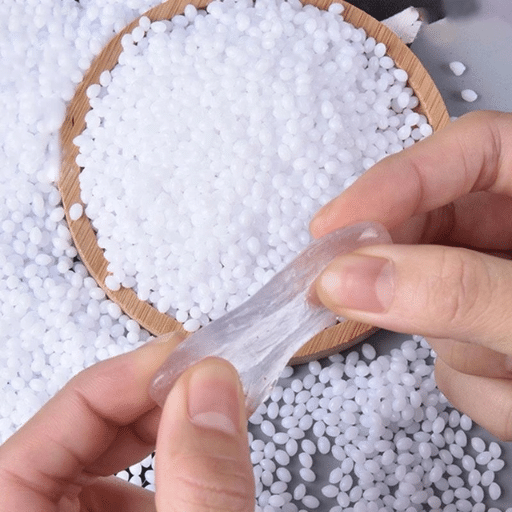
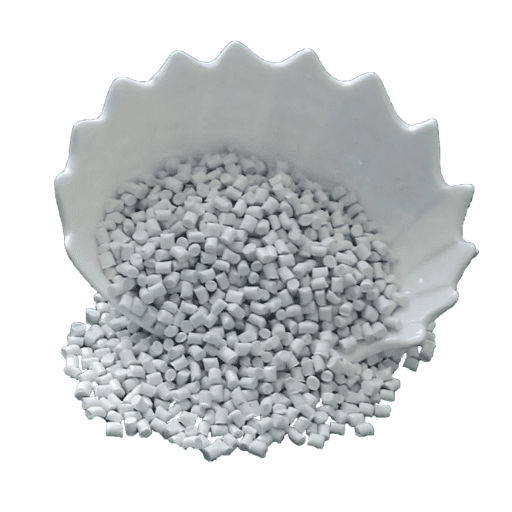
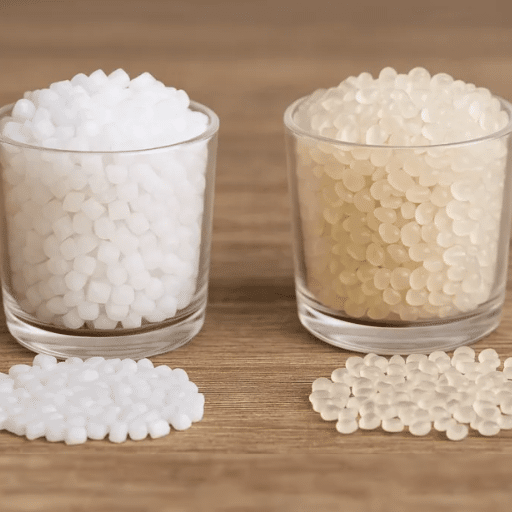
Polyester pellets are these small, kind of uniform thermoplastic granules made from polyester polymers, most often polyethylene terephthalate (PET) and other engineering relatives, sort of. Manufacturers typically create them by reacting purified terephthalic acid (PTA) with monoethylene glycol (MEG). Then the polymer is melted first, it cools down, and processors cut it into bead-like or cylindrical pieces with sizes meant for what comes after—melt processing, mostly.
So yeah the pellet is the foundational form. Pretty much every polyester bottle, fiber, film, automotive connector, and even a 3D printed prototype starts as a bag, gaylord , or bulk railcar full of these tiny resin granules. And that uniformity, it really matters because it supports steady melting, reliable melt flow, and stable cycle times once the resin reaches an extruder or an injection molding press. For a deeper understanding of polyamides and polyesters, please refer to our accompanying guide: Polyamide vs Polyester: Complete Guide for Industrial Applications & Plastic Pellets
The Chemistry Behind Polyester
The chemistry part is basically polycondensation. That means PTA plus MEG, with water being released as the byproduct. By tweaking catalysts, residence time , and molecular weight, producers can end up with resins that behave very differently. PBT is a common example, it swaps out MEG for 1,4-butanediol. That swap gives a polyester that can crystallize faster and tends to show better dimensional stability.
Pellet Versus Finished Polyester
But pellets aren’t really the final thing. They get melted and then extruded into bottle preforms, biaxially oriented films, monofilament yarns, or engineering components. Buyers have to match the pellet’s grade and intrinsic viscosity to the downstream process. If you use bottle-grade PET on a fiber line, or fiber-grade PET on a stretch-blow line, it almost always leads to defects, you know.
Need help matching a polyester grade to your application? Talk to our polymer specialists on LiveChat for a same-day grade recommendation.
The Main Types of Polyester Pellets
Most procurement requests for “polyester pellets” actually mean one of six resin families. Knowing which one your engineering team needs eliminates 80% of sourcing confusion.
PET (Polyethylene Terephthalate)
PET resin pellets are basically the workhorse of the polyester family, they kind of run the show for beverage bottles , food packaging, polyester fiber and biaxially oriented films. Bottle grades , fiber grades, and film grades look similar at first, because they have the same base chemistry but then they get different in intrinsic viscosity, IV, comonomer levels, and those additive packages you don’t really notice until you need performance.
PBT (Polybutylene Terephthalate)
PBT is the engineering polyester, and it crystallizes faster than PET. That’s why it’s often chosen for injection molded parts where short cycle times matter and tolerances need to stay tight. When you add glass, usually around 15% to 30% glass fiber, you get a default-ish material for automotive electrical connectors, sensor housings, and appliance components.
PETG (Glycol-Modified PET)
PETG takes PET and swaps in more specific glycol chemistry , it replaces part of MEG with cyclohexanedimethanol (CHDM). The outcome is a clear, impact resistant copolyester that doesn’t really crystallize during processing, so it remains optically transparent. You’ll find PETG used for medical device housings, retail signage , and 3D printing filaments, mostly because people want clarity and toughness together.
PCT and PCTG
PCT, short for polycyclohexylenedimethylene terephthalate, along with its glycol modified variant PCTG, pushes polyester toward higher service temperatures. These grades can tolerate short term heat exposure that would destabilize standard PET, which is why they show up in cookware, LED reflectors, and hot fill packaging.
PEN (Polyethylene Naphthalate)
PEN swaps terephthalate for naphthalate, which boosts barrier properties and heat resistance quite a lot. PEN films are often strong fits for flexible electronics, hot fill bottles aimed at premium beverages, and specialty industrial belts. That said the cost is higher , so PEN tends to be limited to situations where regular PET genuinely can’t do the job.
Quick Comparison Table
|
Resin |
Typical IV (dL/g) |
Melt Temp (°C) |
Best-Fit Application |
|---|---|---|---|
|
Bottle-grade PET |
0.72 to 0.85 |
255 to 270 |
Beverage bottles, hot-fill jars |
|
Fiber-grade PET |
0.59 to 0.65 |
250 to 265 |
Apparel, technical textiles |
|
Film-grade PET |
0.60 to 0.70 |
250 to 265 |
BOPET film, food packaging |
|
PBT |
0.80 to 1.20 |
220 to 240 |
Auto connectors, sensors |
|
PETG |
0.70 to 0.80 |
230 to 250 |
Medical housings, signage |
|
PCT / PCTG |
0.65 to 0.80 |
285 to 295 |
High-temp packaging, LED |
Virgin vs. Recycled Polyester Pellets

Recycled PET, also called rPET, has gone from a sort of side sustainability thing into a mainstream procurement category. Big brands now specify something like 30% up to 100% rPET content in their packaging, so if you buy polyester pellets, you actually need a working feel for both feedstocks , not just one.
How Virgin PET Pellets Are Produced
Virgin PET pellets start with monomers made from petroleum, mainly PTA and MEG, that get combined in continuous-flow polycondensation reactors. After that , the molten polymer gets pushed through very fine dies, then it cools down in a water bath, and finally it gets chopped into small pellets which are then dried and packed into bags for transport. Because the inputs plus the process conditions are kept tight , quality stays very predictable.
How Recycled Polyester Pellets Are Sourced
Recycled polyester pellets begin as post-consumer waste, usually clear PET bottles collected through municipal recycling programs. Then processors sort the material, wash it , flake it, decontaminate it, and re-pelletize what’s left. In many cases, advanced solid-state polymerization (SSP) brings back intrinsic viscosity and reduces leftover contaminants, so you end up with rPET pellets that can satisfy strict food-contact rules.
FDA-Grade rPET for Food Contact
For food-contact applications, rPET must comply with FDA 21 CFR 177.1630 and earn a no-objection letter from the FDA’s recycling program. European buyers reference EFSA opinions and EU Regulation 282/2008. Reputable rPET producers like Evergreen and Alpek (with its Single Pellet Technology blending up to 25% rPET into virgin PET) maintain documentation libraries to streamline buyer compliance reviews.
When to Specify Virgin, Recycled, or Hybrid
Specify virgin PET when the color, clarity and processing window are non negotiable, like it s not even a discussion. Specify rPET when sustainability obligations or brand commitments really pull the levers. Specify a hybrid blend, for instance 10% to 50% rPET mixed with virgin PET when you want the sustainability narrative but you can’t afford to lose the consistent performance you get from virgin resin.
Critical Specifications Every Buyer Should Verify
The Certificate of Analysis (COA) is where polyester procurement either succeeds or fails. Five specifications matter most.
Intrinsic Viscosity (IV): The Single Most Important Spec
Intrinsic viscosity kind of (sort of) tells the typical molecular weight vibe for the polymer chain. When IV is higher, it usually means the chains are more extended, melt strength gets better, and the mechanical behavior is also better overall. But with lower IV you get quicker melt flow and processing gets easier. For bottle-grade PET, you generally see something like 0.72 to 0.85 dL/g, while tire-cord polyester can go past 1.0 dL/g, so yeah it’s not even close in some cases.
Real example then: Marcus, procurement manager at a European still water bottler, took delivery of three pallets of PET pellets in March 2025, and he accepted them without really checking the batch IV. Then the stretch-blow line essentially stalled for a full shift. The COA showed an IV average around 0.78 dL/g, but pallet-to-pallet variation was roughly ±0.04 dL/g. Just that spread, it was enough that the preforms started cracking right at the gate, and the damage was about $42,000 in scrap plus downtime, before the lot got pulled, and replaced with new material.
So, bottom line: ask for IV documentation for each pallet, not only the lot average. Also reject shipments when the pallet IV variance is more than ±0.02 dL/g on bottle-grade PET, because the process does not care that it was “close enough”, it only cares about consistency.
Moisture Content and Drying
PET , PBT, and PETG are kind of hygroscopic, they absolutely like grabbing water, a bit too much. Once you push them above like ~0.02% moisture, you start seeing hydrolytic degradation happen, and the molecular weight goes down, the mechanical strength get weaker too, so you can end up with those nasty splay defects. With bottle-grade PET, the moisture goal is under 50 ppm, not “kinda”, more like strictly. Most of the time it’s reached by drying around 160 to 180°C, with desiccant air, and you want the dewpoint at -40°C or lower.
Color (L*, a*, b*) and Acetaldehyde
Bottle-grade PET pretty much lives or dies by optical clarity , you know like real transparency, not just “good enough”. Color readings in CIELAB terms (L*, a*, b*) really should show up on the COA every single time, it’s kind of mandatory. Acetaldehyde, usually called AA, is also a big deal for drinkable uses because leftover AA can mess with delicate stuff like still water. So for water bottles, set AA at under 1 ppm and be explicit.
Mechanical Properties
Engineering types, especially glass-filled PBT, are usually judged by tensile strength, flexural modulus, and notched Izod impact numbers on the COA. With about 30% glass-filled PBT you can often see tensile strength around 135 MPa and flexural modulus near 9,500 MPa, though the exact figures will wiggle depending on the supplier, and the additive package too.
Regulatory Compliance
Food-contact, medical, and electrical applications all come with their own regulatory hoops. Typical listings you’ll see include FDA 21 CFR 177.1630 for PET, 21 CFR 177.1660 for PBT, EU 10/2011 for food contact plastics, REACH for EU chemical rules, and UL 94 V-0 for flame behavior in electrical housings.
Polyester Pellet Applications by Industry
Polyester’s reach across modern manufacturing is unrivaled. Knowing which grade serves which sector accelerates supplier shortlist creation.
Beverage and Food Packaging
Bottle-grade PET with IV between 0.78 and 0.85 dL/g is sort of the global go-to standard for carbonated soft drinks, water, and juice containers. In hot-fill, people generally end up pushing toward higher IV numbers and more crystallizable PET grades, because of the thermal stress. Across the world, beverage packaging alone eats up more than 30 million metric tons of PET every year, based on industry monitoring from S&P Global Commodity Insights.
Textile and Apparel Fibers
Fiber-grade PET with IV between 0.59 and 0.65 dL/g lays down the groundwork for polyester yarn, microfibre, and nonwoven textiles. Recycled polyester fiber made from ocean-bound feedstock has turned into a pretty lucrative corner, especially for outdoor gear, and performance apparel makers.
Engineering Components
Glass-filled PBT plastic pellets, pretty much dominate automotive electrical connectors, ignition coils, and sensor housings. When Anna (a Tier 1 automotive engineer) reworked an under-hood connector in late 2024, she went from 15% glass-filled PBT to 30% glass-filled PBT, and that change removed a 2.3% warpage defect on the molding line. Her cost per part went up by about 8%, but warranty-claim expenses fell by 40% within the next six months.
Suzhou Yifuhui supplies engineering polyester grades alongside our complete catalog of engineering plastic pellets, giving multi-resin sourcing teams a single point of contact for PA66, POM, PC, and polyester procurement.
Electrical and Electronics
PBT ’s dielectric strength flame retardancy options, and dimensional stability kind of make it the main polyester in electronics, not really surprising. PET films are commonly used as the substrate for flexible circuits and capacitor dielectrics. PETG is also gaining share for medical device housings, where autoclave or gamma sterilization compatibility matters more than people think.
Films, Sheets, and 3D Printing
Biaxially oriented PET, or BOPET film, ends up covering food packaging , flexible electronics, and reflective insulation. PETG sheet thermoforms into clamshell packaging and clear retail signage. Then there is PETG filament, it ’s become a handy alternative to PLA and ABS in 3D printing , because it brings strength flexibility and a more straightforward printability, without the usual warping.
How to Process Polyester Pellets Without Defects
Material is only half the story. Processing discipline turns good pellets into good parts.
Drying Schedules
- PET bottle grade: 160 to 180°C, four to six hours , dewpoint -40°C, target moisture under 50 ppm .
- PBT: 120 to 140°C, three to four hours , dewpoint -40°C, target moisture below 0.02%.
- PETG: 65 to 75°C, four to six hours , dewpoint -40°C, target moisture below 0.04%.
So, honestly, just skipping or cutting the drying time is the main reason for polyester defects, like splay, air pockets, and also fragile, brittle components.
Injection Molding Parameters
Run PET and PBT with melt temperatures in the manufacturer’s recommended window (usually 270 to 295°C for PET, 240 to 260°C for PBT). Keep residence time under five minutes , so you dont push thermal degradation too far. Use moderate back pressure to prevent voids while also avoiding hot spots that can singe the polymer.
Avoiding Hydrolytic Degradation
Hydrolysis shortens polymer chains , yep it really does. For every 0.01% rise in moisture above the drying spec, IV can drop by about 0.02 to 0.04 dL/g during processing. So, check incoming pellet moisture, dryer dewpoint, and hopper residence time as one linked system, not as separate little tests.
Regrind and Recycle Ratios
Most polyester uses handle 10% to 25% in-house regrind mixed with virgin resin , as long as the regrind is clean and dry and clearly free of contamination. For bottle-grade PET , the regrind is often limited to around 5% since IV decay compounds accumulate after each heating history, or so to speak after each thermal passage.
How to Choose a Polyester Pellet Supplier
A supplier’s quote is only as good as the documentation, lead time, and support behind it. Procurement managers should evaluate five factors.
Quality Documentation You Should Demand
- Certificate of Analysis (COA) with pallet-level IV, moisture, color, and ash data.
- Material Safety Data Sheet (MSDS) updated to current regulations.
- Food-contact or regulatory letters for applicable grades.
- Production lot traceability linking the COA to a specific production date and reactor batch.
- Third-party compliance certificates (FDA, EU, REACH, UL) where applicable.
Lead Time and Global Shipping
Asian-origin polyester normally lands at European ports somewhere around 28 to 35 days FOB by sea freight, while North American routes tend to take 30 to 40 days. If you move it by air freight the lead time can drop to about seven to 14 days, but the cost premium is substantial , obviously. Some suppliers that keep bonded warehouses in your area can tighten the effective lead time down to days not weeks.
Minimum order quantities and packing
For packaging you’ll usually see 25 kg sacks, 750 kg gaylord boxes with foil liners, 1,250 kg octabins, and even bulk railcars for higher volume buyers. Solid suppliers can cover volumes from one pallet (roughly 1,000 kg) to multi-container moves, and the pricing model often rewards aggregation, meaning you get better terms when you consolidate shipments.
Clear pricing vs quote-only suppliers
A lot of polyester suppliers basically bury price information behind a “request quote” submission, and that slows the procurement folks who want to compare several vendors quickly . On the other hand, a transparent polyester resin supplier may publish indicative price bands or promise a 24-hour quote turnaround, which saves buyers time on the full project cycle.
Why Suzhou Yifuhui Delivers Competitive Polyester Pellets Globally
At Suzhou Yifuhui New Material Co., Ltd we produce and also distribute a wide assortment of polyester pellets for PET, PBT, PETG, and similar engineering resins nearby. Our quality assurance group checks each batch for IV, moisture, and shade targets before anything ships out, and then our transport network connects manufacturing partners across Europe, North America, Southeast Asia, and Latin America too. When Kenji, who is a sourcing director at a Japanese consumer electronics OEM, needed 40% rPET blended PBT to satisfy a 2025 sustainability pledge, our technical crew sent over a validated sample within 12 days , and the complete container arrived within roughly five weeks.
Ready to source polyester pellets without surprises? Request a custom quote and receive detailed specifications, transparent pricing, and shipping options within 24 hours.
Frequently Asked Questions

Are polyester pellets recyclable?
Yes. PET, PBT, and PETG are all mechanically recyclable. PET has the most mature recycling infrastructure globally, with rPET widely accepted for food-contact applications once it passes FDA or EFSA decontamination requirements. According to NAPCOR, U.S. PET bottle recycling rates have moved above 33% and continue to grow as bottle-to-bottle capacity expands.
What is the price range for polyester pellets per kg?
The price kinda moves around, since crude oil, PTA and MEG markets do their own thing. For example, bottle-grade virgin PET is usually in the 1.10 and1.10 to1.60 per kg FOB Asia, while rPET tends to sit about 0.20to0.20to0.50 per kg higher than virgin PET, depending on what grade it is, and where it’s shipping. For glass-filled PBT engineering grades, you may see something like 2.50to2.50to4.50 per kg. For exact spot pricing, request a current quote because it changes quickly.
How long can polyester pellets be stored?
If polyester pellets are properly packed, they stay processable roughly 12 to 24 months, assuming sealed bags, kept under 25°C and around 60% relative humidity. After one bag is opened, moisture absorption starts quietly. So you should re seal and re dry opened material before running it, even if it looks fine.
What’s the difference between bottle grade and fiber grade PET?
Bottle-grade PET generally has higher intrinsic viscosity, around 0.72 to 0.85 dL/g, because it needs melt strength for stretch-blow molding of bottles. Fiber-grade PET usually has lower IV, about 0.59 to 0.65 dL/g, so it spins more smoothly through thin fiber dies. Trying to swap them, even slightly, almost always shows up as issues during processing.
Are polyester pellets food safe?
Certain PET, PBT, and PETG grades can be FDA and EU compliant for food-contact use, assuming the supplier provides documentation that matches the relevant requirements. Often that means FDA 21 CFR 177.1630 for PET, but don’t assume—always confirm. Before you specify a polyester pellet for food, beverage, or pharma use, request food-contact certification, included in the COA, so you’re covered with paperwork not just promises.
Conclusion: Source Polyester Pellets with Confidence
Polyester pellets power more global manufacturing than any other thermoplastic, sure, but the phrase kinda hides six separate resin families, each one with its own intrinsic viscosity band, drying needs, and regulatory profile. If you treat polyester like it is one commodity—just “the same stuff” you’ll end up absorbing scrap waste downtime, warranty costs, the whole headache. On the other hand if you treat every grade like it’s an engineered material, with clear documented specs , then your production line stays calm predictable. To learn more about Polyamide Pellets and the Mechanical Properties of Polyamide vs. Polyester, please refer to our accompanying guide.
Five reminders to keep beside each polyester purchase order:
- First, pin down the resin family (PET, PBT, PETG, PCT, PCTG, or PEN) before you even look at a quote.
- Check the intrinsic viscosity at the pallet level, not only the lot level, because that matters more than people think.
- Make sure the drying requirement actually matches your dryer’s dewpoint and its capacity, not just the brochure number.
- Ask for the regulatory paperwork upfront for any food-contact use, medical use, or electrical work.
- Pick a supplier who replies within 24 hours and can provide traceable batch documentation, otherwise you’re guessing.
For procurement teams ready to consolidate polyester sourcing with a manufacturing partner who delivers transparent pricing and reliable global shipping, our specialists stand by seven days a week. Request your custom polyester pellet quote today, or explore our recycled and engineering polymer catalog to see how a single supplier can simplify your entire polymer supply chain.
Suzhou Yifuhui New Material Co., Ltd. supplies premium polyester pellets and engineering plastics to manufacturers in over 40 countries. Our technical team is available via form, email, WhatsApp, and LiveChat with a guaranteed 24-hour response.