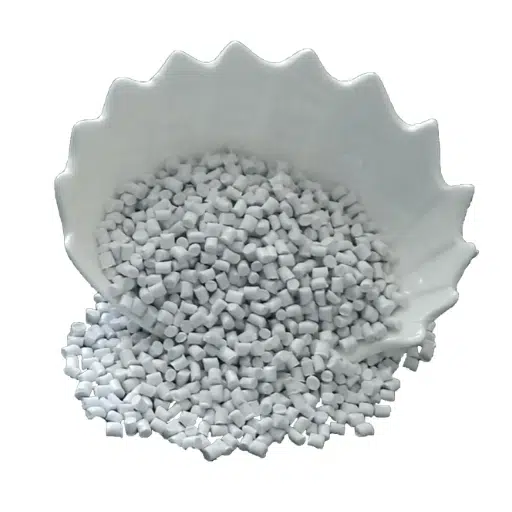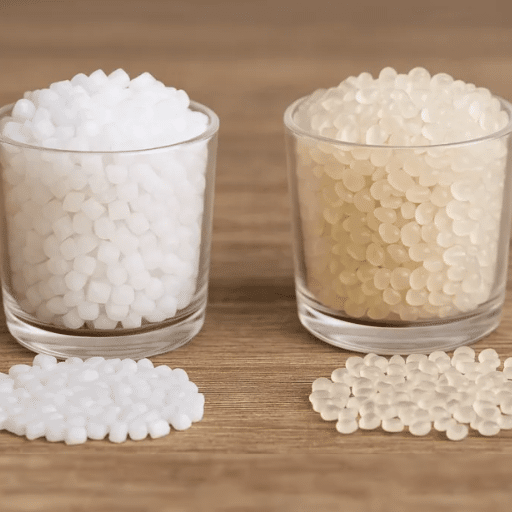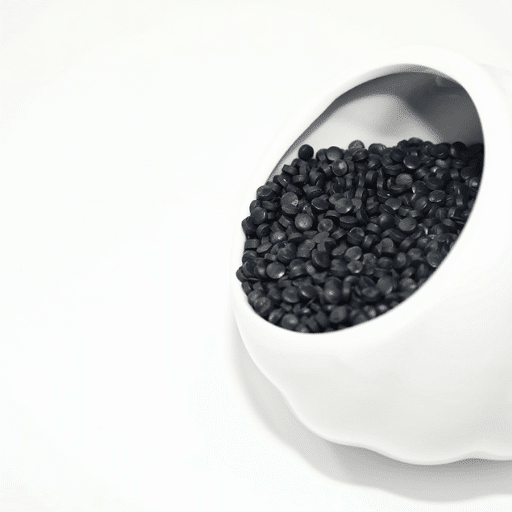
TPE injection molding seemed simple to Priya when she switched her press from rigid ABS last spring. She kept the barrel temperatures identical. The first 2,400 soft-touch handles flashed at the parting line, and 400 more stuck so firmly that operators pried each one free. Her reject rate hit 17% before she opened the grade data sheet and found what the ABS settings had been hiding: TPE is a family of materials, not one material, and every family demands its own processing window.
That story repeats on shop floors every week. Most molders assume TPE behaves like a soft plastic. In reality, injection molding is how more than 63% of all TPE volume becomes a finished part, and it is also where most TPE problems start.
Wrong temperatures cause flashing and flow marks. Skipped drying ruins hygroscopic grades. Poor venting burns the end of the cavity. Each defect traces back to a specific setting, and each setting depends on which TPE family you run.
This guide gives you the complete process playbook. You will learn machine selection, family-by-family temperature charts, pressure, speed, and shrinkage parameters, mold design rules, and a defect-to-fix reference you can keep next to the press. You will also learn how to source injection-molding-grade TPE pellets with the batch consistency that keeps your line stable.
Need a TPE grade matched to your machine and part? Talk to our polymer specialists →
What Is TPE Injection Molding?

Thermoplastic elastomer injection molding is the process of melting TPE pellets and injecting them under pressure into a mold to form flexible, rubber-like parts. Because TPEs are thermoplastics, they melt and re-mold on standard plastics injection machines, giving rubber elasticity with plastic processing speed and full scrap recyclability.
The chemistry behind it matters for your settings. Every TPE contains hard, crystalline domains that melt at processing temperature and act as heat-reversible crosslinks, plus soft, rubbery segments that provide flexibility. That two-phase structure is why a TPE part feels like rubber but cycles like a thermoplastic. There is no vulcanization step, no long cure, and no crosslinked scrap.
Compare that to thermoset rubber. A rubber part can sit in a heated mold for 2 to 5 minutes while it cures. A TPE part often completes its entire fill and cool cycle in 15 to 30 seconds. That speed, combined with the ability to regrind sprues and runners, is the core economic argument for TPE injection molding across automotive seals, soft-touch grips, cable strain reliefs, and overmolded electronics.
For a deeper look at TPE families and their mechanical properties, see our TPE material properties guide →. For the broader material decision, compare the full TPE vs Silicone material selection guide →.
TPE Injection Molding Temperature Chart
Temperature is where TPE injection molding succeeds or fails. The ranges below are consolidated from leading compounders including HEXPOL →, KRAIBURG TPE →, and RTP Company. Always confirm the exact numbers against your grade’s technical data sheet, because the window varies by family and hardness.
| TPE Family | Barrel Range | Melt Temp | Mold Temp | Drying | Processing Notes |
|---|---|---|---|---|---|
| SEBS (TPE-S) | 170°C to 240°C | 190°C to 230°C | 15°C to 60°C | 60°C to 80°C for 2 to 4 h (some grades none) | High injection velocity; transparent grades run tight at 180°C to 190°C |
| SBS (TPE-S) | 170°C to 200°C | 150°C to 200°C | 15°C to 45°C | As above | Never exceed 220°C; medium injection speed |
| TPV (TPE-V) | 220°C to 260°C | 230°C to 260°C | 30°C to 70°C | 80°C to 82°C for 4 h | Shear-thinning; fill in 0.5 to 2 seconds |
| TPU (TPE-U) | 190°C to 230°C | 190°C to 220°C | 20°C to 50°C | Critical: 80°C to 100°C for 3 to 4 h, below 0.02% moisture | Hydrolyzes in the barrel if wet |
| TPEE/COPE (TPE-E) | 230°C to 250°C | 230°C to 250°C | 40°C to 60°C | 80°C to 100°C for 2 to 4 h | Highest heat resistance, about 150°C continuous |
Two details make this table practical. First, set your tpe processing temperature profile in an upward parabola: feed zone lowest, middle zone hottest, front and nozzle slightly lower. A typical profile runs 150°C to 170°C at the feed, 170°C to 190°C in the middle, and 180°C to 200°C at the front, with the nozzle at 170°C to 190°C to prevent drooling and stringing. Second, the family rules are non-negotiable: SBS must never cross 220°C or it oxidizes and crosslinks, while TPV and TPEE need the hottest barrels in the family.
A medical tubing molder we supply once skipped the drying step on a TPU grade to save 90 minutes of oven time. The first batches looked clean. By mid-afternoon, silver streaks radiated from every gate and tensile strength dropped below spec.
Moisture had flashed to steam in the barrel, and the polymer had started to hydrolyze. The lesson stuck: for TPU, drying is part of the process, not a suggestion.
Machine Selection for TPE Injection Molding
You do not need specialized equipment to run TPE. You do need to size a standard machine correctly and protect the melt from dwell time.
Clamping Force, Shot Size, and Screw
Rule of thumb for clamping force is 1.5 to 3 tons per square inch of projected area, with 2 tons per square inch a safe minimum. Keep the shot at 25% to 75% of barrel capacity so the melt does not stagnate between shots. Use a standard 3-zone polyolefin screw with a compression ratio of 2:1 to 3:1, and run screw speed between 50 and 200 rpm. If you use color masterbatch, raise backpressure to 20 to 100 bar so the pigment disperses evenly.
Residence Time and Purging
TPE degrades when it sits too long in a hot barrel. Keep residence time under 8 to 10 minutes at processing temperature. Longer dwell produces a distinctive smell, frothing, discoloration, and a measurable loss of mechanical properties.
Purge with polypropylene or polyethylene, and keep the machine PVC-free, because residual PVC contamination degrades TPE. For grades softer than about 50 Shore A, a needle-valve nozzle prevents drool and stringing at the nozzle tip.
Key Processing Parameters for TPE
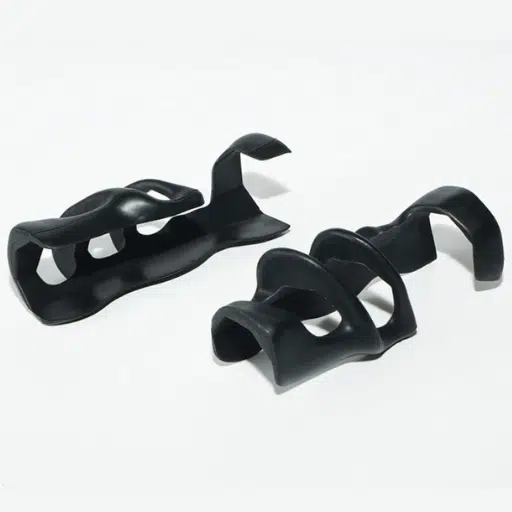
With the machine sized correctly, dial in these parameters in order. The troubleshooting methodology from RTP Company and HEXPOL is consistent: drying first, then temperature, then speed and pressure, then the mold, and finally hold pressure.
Injection Pressure, Speed, and Fill Time
TPE is shear-thinning, so fill speed matters more than pressure. Target a fill time of 0.5 to 2.0 seconds. Set injection pressure roughly 21 to 28 bar above the pressure needed to reach 95% fill, which usually lands between 200 and 1000 bar for standard grades. High-temperature grades like HIPEX-type TPEs can need 1200 to 2000 bar.
Injection speed depends on the family. SBS prefers medium speeds. SEBS needs high speeds so the melt does not cool before the cavity fills. Use a multi-stage profile that starts slow to vent air, then speeds up, which suppresses flow marks at the gate.
Hold and Back Pressure
Keep hold pressure low to start, around 40% to 60% of injection pressure. Increase pack time until part weight stops rising, then stop. That weight plateau marks the point where extra hold only adds cycle time. Backpressure should sit between 20 and 100 bar, higher when color masterbatch demands better dispersion.
TPE Shrinkage Rates by Family
TPE shrinks more than most rigid thermoplastics, and the value depends on family and hardness. Factor these tpe shrinkage ranges into your tool steel before you cut metal:
| Family | Typical Shrinkage |
|---|---|
| SEBS | 1.5% to 2.5% |
| SBS | 1.0% to 2.0% |
| TPV | 1.3% to 1.8% |
| TPU | 1.5% to 3.0%, hardness-dependent |
| TPEE | 1.5% to 2.5% |
Compare those to ABS at 0.4% to 0.7% and you see the design trap. An overmolded TPE layer shrinks far more than its rigid substrate, so differential shrinkage drives warpage and edge lift unless the geometry, wall thickness, and cooling are balanced for it.
TPE Injection Molding Mold Design Guidelines
Mold design is the single most effective lever for defect prevention. Getting these rules right eliminates more problems than any process tweak.
Wall Thickness and Uniformity
Keep wall sections uniform, typically 1.0 to 3.0 mm. Avoid thick sections, which create sink marks and voids as the core cools. For overmolded layers, hold 1 to 3 mm and add generous radii at transitions so peeling stress never concentrates on a sharp corner.
Gates and Runners
TPE flows best through larger gates, at least 0.5 mm thick. Side gates and submarine gates work well, and fan gates distribute material evenly across parts that need high flatness. Avoid sprue gating on production or aesthetic parts because cold slug risk is high.
On standard runners, use about 3 degrees of draft, and with soft SBS or SEBS grades skip Z-type puller pins in favor of undercut pins, reverse-taper cold wells, or slot-bar pullers. Oversized runners are a hidden cycle-time killer, so rightsize them.
Venting, Draft, and Ejection
Vent depth should be 0.01 to 0.025 mm, with 0.025 mm the practical maximum. Too shallow traps gas and causes burns and short shots. Too deep causes flash. Place vents at the end of fill and at weld line locations.
Add 1 to 3 degrees of draft per side so soft parts release cleanly, and texture the ejector pins and mold surface to break the grip of tacky TPE. Uniform cooling channels keep dimensions stable and shorten the cycle.
Overmolding-Specific Design Notes
If you are overmolding TPE onto a rigid substrate, two rules dominate. Match the TPE family to the substrate: SEBS bonds to PP and PE, TPV bonds to PP, and TPU bonds to ABS, PC, and nylon. Higher melt and mold temperatures improve bond strength, and both materials must be pre-dried.
Preheat metal inserts to about 100°C before the shot, and validate the bond after 24 hours of conditioning, not right off the press. For the full picture, read our TPE vs Silicone overmolding guide →.
TPE vs TPU Injection Molding: Processing Differences to Know
Every TPE family processes differently, and the differences decide your settings and your reject rate. The comparison below also covers TPV and TPEE, which sit at the hot end of the processing window.
| Material | Ease of Molding | Drying Discipline | Temp Ceiling | Best Use |
|---|---|---|---|---|
| TPE-S (SEBS) | Easiest, widest window | Low | 80°C service | Soft touch, overmolding to PP |
| TPE-S (SBS) | Easy, but tight ceiling | Low | Max 220°C processing | Toys, general goods |
| TPU | Needs strict control | Mandatory | 120°C service | Abrasion parts, tubing, cables |
| TPV | High melt temp | Moderate | 135°C service | Seals, weatherstrips, underhood |
| TPEE | Hottest barrel | Moderate | 150°C service | Hose, bellows, high-heat parts |
The practical takeaways: SEBS is the most forgiving and the cheapest, which is why it dominates consumer soft-touch parts. TPU delivers the best abrasion and oil resistance but demands the most processing discipline, and it costs 30% to 60% more per kilogram. TPV gives the best compression set and weathering at a hotter melt temperature, making it the go-to for automotive seals →. For a full family-by-family comparison of hardness and service temperature, refer back to the TPE material properties guide linked earlier.
10 Common TPE Injection Molding Defects and How to Fix Them

When a defect appears, work the troubleshooting order: drying, temperature, speed and pressure, mold, then hold pressure. These ten faults cover the majority of TPE rejects.
- Flash. Excess material escapes the parting line. Lower injection pressure and speed, advance the V-P switchover, reduce barrel and mold temperature, repair parting-line gaps, or raise clamping force.
- Short shots. The cavity does not fill completely. Increase shot size, improve venting, and balance runners in multi-cavity molds.
- Flow marks. Striped gloss differences on the surface. Raise injection speed and mold temperature, enlarge the gate, and add texture where needed.
- Silver streaks. Radial streaks from the gate, usually moisture or volatiles. Dry the material properly and lower the barrel temperature.
- Sink marks and voids. Recessed areas over thick sections. Increase hold pressure, cool faster, and gate directly into thick sections.
- Burn marks. Discoloration at the end of fill from trapped, adiabatically compressed air. Improve venting and reduce injection speed.
- Sticking and poor ejection. Soft parts resist demolding. Increase draft, cool fully before ejection, texture the pins, and check for insufficient cooling.
- Weld lines. Weak seams where flow fronts meet. Raise melt and mold temperature, relocate the gate, and vent at the weld line.
- Non-uniform color. Poor masterbatch dispersion or long residence. Increase backpressure, batch-mix the blend, and stabilize the cycle.
- Blooming and stickiness after aging. Additives migrating to the surface. Lower melt temperature, reduce shear, choose compatible stabilizers, and purge the barrel before pauses.
TPE Injection Molding Cycle Time and Economics
Cycle time is where TPE pays for itself. A typical cycle runs a 0.5 to 2.0 second fill, a pack phase two to three times the fill time, and 10 to 30 seconds of cooling, for a total of 15 to 30 seconds per part. Thermoset rubber needs 2 to 5 minutes of in-mold cure plus deflashing. That difference is a 50% to 70% throughput gain, and it is the reason injection molding dominates the TPE industry at more than 63% of total processing volume.
Regrind economics add to the case. Clean sprues and runners can be reground and reused at up to 20% of the feed, with SEBS tolerating regrind best. Do not use regrind in overmolding, because it compromises bond strength. Long residence time and oversized runners both waste material and degrade the resin, so rightsizing the runner and keeping the melt moving protects both quality and cost.
There is also a sustainability angle. TPE scrap is fully recyclable because there is no crosslinking, which is a growing requirement from OEMs under pressure to cut plastic waste. The global TPE market was about $30 billion in 2025 and is projected to pass $57 billion by 2033, with automotive the largest end-use sector at roughly a third of demand. Much of that growth flows through the injection molding press.
Sourcing Injection-Molding-Grade TPE Pellets: Supplier Checklist
Your process settings are only as good as the pellets feeding them. When you qualify a TPE supplier, verify five things:
- Melt flow consistency. A stable melt flow index batch to batch prevents process drift and shot-to-shot variation.
- Hardness and grade match. Confirm the Shore hardness and TPE family actually fit your application and your barrel profile.
- Uniform pellet size and shape. Consistent pellets feed without bridging and melt evenly.
- Documented compliance. Check ISO 9001, RoHS, and REACH, plus FDA food-contact compliance (21 CFR 177.2600) → or EU food contact where your part requires it.
- Processing guidance. Ask for the technical data sheet with drying and temperature recommendations for the specific grade, not generic TPE advice.
When Tomas, a plant manager in Guadalajara, switched to a supplier who documented melt flow on every certificate of analysis, his shot weight drift disappeared and scrap fell from 6% to 1.4% over two quarters. Pellet consistency turned out to be the cheapest process improvement he ever made.
At Suzhou Yifuhui New Material Co., Ltd., we supply injection-molding-grade TPE and TPV pellets → across SEBS, SBS, and TPV families, with batch consistency control and uniform pellet sizing built into production. Our specialists can review your barrel profile and recommend a grade that matches your machine. We ship globally and return pricing and material data within 24 hours.
Asian sourcing has tightened batch control over the past several years, so molders in Europe and the Americas can now buy consistent TPE grades with faster lead times than a single-region supply chain can offer.
Ready to qualify a TPE grade for your press? Request a specification sheet and quote from our specialists.
Frequently Asked Questions
Does TPE need to be dried before injection molding?
Most TPE grades benefit from drying, and hygroscopic families like TPU and TPEE require it. Standard SEBS grades may run without drying, while TPU needs 3 to 4 hours at 80°C to 100°C to stay below 0.02% moisture. When in doubt, dry the material.
What temperature do you injection mold TPE?
Most TPEs process in a 170°C to 240°C barrel window. SEBS runs 190°C to 230°C, SBS must stay below 220°C, TPV runs 220°C to 260°C, and TPU runs 190°C to 230°C. Mold temperature usually sits at 20°C to 60°C.
Why is my TPE part flashing?
Flash comes from excess pressure, too-fast injection, a late V-P switchover, low clamping force, or a parting-line gap. Reduce pressure and speed, advance the switchover, repair the gap, or move to a larger machine.
What is the shrinkage rate of TPE?
TPE shrinks 1.5% to 3% depending on family and hardness. SEBS runs 1.5% to 2.5%, SBS 1.0% to 2.0%, TPV 1.3% to 1.8%, and TPU up to 3%. Design your tool steel around these values.
Can TPE regrind be reused?
Yes, up to about 20% of the feed for clean sprues and runners, with SEBS most tolerant. Avoid regrind in overmolding because it weakens the bond. Keep residence time short to prevent pigment and property loss.
What is the difference between TPE and TPU injection molding?
TPE usually refers to SEBS-based material, which is softer, cheaper, and easier to mold. TPU is one TPE type that delivers better abrasion and oil resistance but costs more and requires mandatory drying and strict temperature control to avoid hydrolysis.
How long is a typical TPE injection molding cycle?
A typical cycle runs 15 to 30 seconds: 0.5 to 2 seconds to fill, a pack phase two to three times the fill time, and 10 to 30 seconds of cooling. Thin-wall SEBS parts can come in under 15 seconds, while thick TPV and TPU parts sit at the longer end of the window.
Conclusion
TPE injection molding rewards preparation. Match the barrel and mold temperatures to the specific TPE family, respect drying for hygroscopic grades, size the machine and screw correctly, and design the mold around shrinkage, venting, and wall thickness.
The five things to remember: every TPE family has its own processing window, SBS must never exceed 220°C, TPU must be dried or it degrades, venting depth belongs between 0.01 and 0.025 mm, and pellet consistency from your supplier drives process stability as much as your settings do.
If you are setting up a TPE or TPV molding program, work with a supplier who carries the full family and can back the grade with data. We keep certified injection-molding-grade pellets in stock, provide processing guidance, ship globally, and respond to quote requests within 24 hours. Request a custom TPE quote →