When Dana’s team moved their first liquid silicone rubber (LSR) part to a conventional injection press, they kept the barrel settings from their nylon job. The plastic barrel ran hot, the mold ran cool, and the results were predictable in the worst way. Material scorched in the nozzle, flashed across every parting line, and 3 of every 10 parts came out tacky to the touch. It took a failed validation run and two lost weeks before anyone said what the LSR data sheet implied: this material is molded backwards.
That inversion is the heart of LSR injection molding. Unlike a thermoplastic, liquid silicone is kept cold in the barrel, around 20 to 40°C, and the mold is heated to 150 to 200°C so the material crosslinks chemically into its final shape. Get that thermal inversion wrong and you get scorched runners, flash, and parts that never cure. Get it right, and LSR delivers features and tolerances that most plastics can’t touch.
This guide is the complete process playbook. You’ll learn how LSR injection molding works, the machine and metering equipment it demands, the consolidated process parameter table, cold-runner mold design, a defect-to-fix reference, cleanroom requirements for medical parts, and how LIM compares to TPE injection molding on cycle time, tooling, and cost. You’ll also learn how to qualify an LSR molder, and when a thermoplastic elastomer route serves you better. For the broad material decision between silicone and TPE, start with our TPE vs Silicone material selection guide →.
Planning a flexible part and unsure whether LSR or TPE fits? Talk to our polymer specialists →
What Is LSR Injection Molding?

LSR injection molding (also called Liquid Injection Molding, or LIM) is the process of injecting a two-part, platinum-cured liquid silicone rubber into a heated mold, where it cures irreversibly into flexible, heat- and biocompatibility-critical parts. Unlike plastic molding, the LSR is kept cold in the barrel (20 to 40°C) and the mold is heated (150 to 200°C) to trigger cross-linking.
That definition carries three facts that drive every decision downstream. First, LSR is a two-part system, part A and part B, mixed in a precise 1:1 ratio. Second, it’s a thermoset. Heat drives a platinum-catalyzed vulcanization that crosslinks the polymer chains permanently, so a cured part can’t be re-melted, reground, or recycled into new pellets.
Third, the thermal inversion is deliberate: cold in the barrel prevents premature cure, and the hot mold causes the cure to happen exactly where you want it, in the cavity.
The payoff is why medical, automotive, and electronics buyers put up with the specialized equipment. LSR fills walls down to about 0.25 to 0.3 mm, holds tolerances near ±0.05 mm, survives continuous service from -50°C to +200°C per Fictiv →, and is the biocompatibility gold standard for patient-contact parts. For the material-level comparison of silicone versus TPE, our LSR vs TPE guide → walks through the full property trade-off.
LSR Injection Molding Process Parameters
Every LIM process comes back to one table. These ranges are consolidated from leading LSR processors and equipment references, and you should always confirm exact values against your grade’s technical data sheet, because the lsr injection molding temperature window shifts with Shore hardness (roughly 10 to 80 Shore A depending on grade) and filler content.
| Parameter | Typical Range | Notes |
|---|---|---|
| Barrel temperature | 20 to 40°C (chilled) | Prevents premature cure |
| Cold runner temperature | 5 to 25°C | Keeps LSR liquid to the gate |
| Mold / cavity temperature | 150 to 200°C (range 140 to 220°C) | Precision ±1°C, zoned control |
| Cure time | 3 to 5 s per mm wall thickness; 10 to 30 s typical | Thin parts under 20 s possible |
| Total cycle time | 10 to 90 s | Versus minutes for compression molding |
| Mixing ratio (A:B) | 1:1, error under 0.5% | Ratio drift equals failed vulcanization |
| Shot size | 40 to 80% of barrel capacity | Avoids stagnation and scorching |
| Screw L/D ratio | 20:1 to 22:1 | Low compression around 1:1, transport not compression |
| Injection pressure | 250 to 10,000 psi (low) | Low viscosity fills easily |
| Clamping force | 0.5 to 1 ton per sq in projected area | Lower than plastics; flash is the risk, not fill |
| Shrinkage | 2 to 4% (+0.5 to 0.7% if post-cured) | High thermal expansion coefficient |
Two details make this table practical. Mold temperature is the lever that controls cure speed and part quality, and you need zoned control to about ±1°C, because drifting hot causes flash and tacky or blistered surfaces, while drifting cold leaves under-cured parts. And cure time scales with wall thickness at roughly 3 to 5 seconds per millimeter, which is why thin-wall LSR parts cycle in under 20 seconds while thick gaskets run closer to 90.
LIM Equipment: Metering Units and Injection Machines

LSR is nearly water-thin before it cures. That single fact explains why LIM demands equipment a standard thermoplastic press does not provide.
Metering and Mixing System
Part A (the base polymer), part B (the platinum catalyst), and optionally part C (pigment) are pumped from drums into a static mixer that homogenizes them immediately before injection. The mixing ratio must hold at 1:1 with an error under 0.5%, because ratio drift is the hidden process failure that produces tacky, under-cured parts you cannot detect until they leave the press. Color is introduced upstream of the mixer so it blends fully before the shot.
The Injection Unit
A standard thermoplastic screw fails on LSR for a simple reason. The liquid flows backward over the screw flights, so the machine can’t meter a consistent shot.
LSR injection molding machines use a specialized screw and barrel with tight tolerances, spring-loaded or mechanically locking non-return valves that seal instantly, and shut-off nozzles that prevent drooling between shots. The screw runs at an L/D of 20:1 to 22:1 with a low compression ratio near 1:1, because the unit transports material rather than compressing and melting it. Cooling jackets hold the barrel at 20 to 40°C throughout.
Vertical and horizontal LIM machines both exist. Vertical machines shine for insert molding and LSR overmolding, where a substrate or metal insert sits in the mold while the silicone cures around it.
Why Cold Runners Matter
The economics here decide whole tooling strategies. Because cured LSR is a thermoset, any material that cures in the runner is permanent scrap. It can’t be reground or reused.
A cold runner keeps the silicone liquid all the way to the gate, which eliminates runner waste and enables near-zero-scrap, flash-free production. That tooling premium is why molders budget carefully: most recover the added cold-runner cost within about six months at production volumes.
LSR Cold Runner Mold Design
Mold design is where LSR parts are won or lost. The mold has to deliver liquid silicone to every cavity while keeping it cold until the gate, then let it cure in a 150 to 200°C cavity, all while resisting a material that leaks through gaps smaller than a human hair.
Closed (Valve-Gated) Versus Open Cold Runner Systems
Closed systems use needle or valve pins, typically 0.5 to 0.8 mm, to open and close each gate. They give precise cavity-by-cavity balancing at lower injection pressures, which makes them the recommendation for multi-cavity, high-volume tools. Open systems rely on high-shear shrink nozzles for slightly faster fill and higher cavity density, but the runners must be naturally balanced because there is no valve to correct flow differences. For the thermoplastic side of mold design, our TPE injection molding guide → covers venting depths, gates, and draft that apply to the rigid and flexible parts you pair with LSR.
Thermal Isolation
The cold runner sits inside a mold whose cavity plates run at 150 to 200°C, so isolating those zones is the core engineering challenge. Titanium alloys such as TiAl6V4, plus insulation plates, separate the cold manifold from the heated cavity. When isolation fails, the runner heats, the LSR cures early, and you get scorched slugs instead of parts. Deep or complex cavities also benefit from vacuum venting down to about -0.095 MPa, which evacuates trapped air before the silicone arrives. Newtop Custom Silicone → covers the valve-gate and vacuum-venting options in depth.
Mold Steel, Surface Finish, and Venting
Use hardened tool steel such as H13 or S136 for production tools, stainless grades for medical and food contact, and aluminum only for low-volume prototyping. LSR is mildly abrasive, so chrome, nickel, or PTFE-and-nickel coatings extend tool life.
Parting lines must be machined to extreme precision because LSR leaks through gaps as small as about 0.005 mm, which is why flash is the number one design risk. Vent channels typically run 1 to 3 mm wide and only 0.004 to 0.005 mm deep, with vacuum assist for complex parts. A light texture or EDM finish helps release; highly polished surfaces cause sticking, while PTFE coatings reduce silicone adhesion. Keep gates small, roughly 0.2 to 0.5 mm, to avoid jetting.
How to Set Up an LSR Injection Molding Run
A disciplined setup sequence prevents most LIM problems before the first good part drops.
Step-by-Step Setup Sequence
- Verify the A:B ratio calibration and the condition of the static mixer before startup.
- Confirm barrel cooling (20 to 40°C) and cold-runner cooling (5 to 25°C) are live before the first shot.
- Bring the mold to 150 to 200°C with ±1°C zoned control, and confirm vacuum venting is operational.
- Set the injection profile: slow to the gate to avoid jetting, medium fill, then slow at end-of-fill so trapped air can vent.
- Keep the shot at 40 to 80% of barrel capacity, and monitor holding pressure for 0.5 to 4 seconds (3 to 6 seconds for F-LSR grades).
- Map the processing window with a small design of experiments before locking work instructions.
Post-Curing
Some high-spec grades need a post-cure oven step to drive off volatiles and stabilize compression set, and if your grade calls for it, design your tool steel with the extra 0.5 to 0.7% shrinkage allowance in mind. Not every LSR grade requires post-cure, so verify the grade’s data sheet rather than assuming.
8 Common LSR Injection Molding Defects and How to Fix Them

When a defect appears, work the troubleshooting order: mix ratio and contamination first, then mold temperature uniformity, then the injection profile, then tooling, then clamping force. These eight faults cover the majority of LSR rejects.
- Flash. Low-viscosity LSR leaks into parting lines or around ejector pins. Increase clamping force, tighten mold precision, lower mold temperature, reduce the shot, and add labyrinth or gutter vents.
- Short shots. The cavity does not fill. Raise injection speed and pressure, improve venting or switch to vacuum, balance gates in multi-cavity tools, and keep the runner cold so the material stays liquid.
- Air bubbles or voids. Trapped air in deep cavities. Use vacuum venting, slow the end of fill, and relocate gates to thick sections so air has a path out.
- Premature cure (scorch) in the runner or gate. Mold temperature too high, injection too slow, or poor thermal isolation. Lower mold temperature, speed up injection, and verify cold-runner cooling and titanium isolation.
- Tacky or under-cured surface. Mold temperature too low, wrong A:B ratio, or platinum-catalyst poisoning from sulfur or tin contamination. Raise mold temperature, verify the ratio, and eliminate contamination sources from previous materials.
- Flow marks. Turbulent fill or jetting through a small gate. Slow the fill to the gate, enlarge or reposition the gate, and use a multi-stage injection profile.
- Burn marks. Trapped air compressing in dead zones. Improve venting, add vacuum, and reduce fill speed.
- Delamination or weak bond (overmolding). Substrate too cold or incompatible. Preheat the substrate to 40 to 150°C, verify the self-bonding grade’s compatibility, add mechanical interlocks, and overmold within 4 to 24 hours of substrate molding.
A medical device molder once traced a string of tacky catheter grips back to a shared press that had run a sulfur-cured material the week before. The platinum catalyst in the LSR was poisoned by residual sulfur, and no temperature change could fix it. Only a full barrel purge and line flush restored the cure. Contamination sits at the top of the troubleshooting order for a reason.
LSR Injection Molding for Medical Devices: Cleanroom and Compliance
Healthcare is the largest LSR end-use segment at roughly 38% of demand, per Fortune Business Insights →, and silicone injection molding dominates medical production because LIM delivers precision, flash-free output, and automation that compression molding cannot match. If your part touches a patient, plan for the cleanroom and the compliance stack from day one.
Expect ISO Class 7 or 8 cleanrooms for most devices, with ISO Class 7 minimum for Class III implantables. On the quality side, look for ISO 13485 quality management, ISO 10993 biocompatibility evaluation, and USP Class VI reactivity testing. Process validation in the form of IQ, OQ, and PQ is standard, and molders monitor production with SPC. Typical medical parts include catheters, respiratory masks, pacemaker lead boots, cochlear implant seals, drug-delivery components, continuous glucose monitor patches, and IV components.
Tolerances are where LSR separates from conventional rubber. Liquid silicone injection molding holds around ±0.01 to 0.05 mm, against roughly ±0.2 mm for high-consistency rubber compression molding per SIMTEC Silicone →, at the cost of higher tooling investment. For the medical-device material decision between silicone and TPE, our TPE vs Silicone for Medical Devices guide → compares sterilization behavior, biocompatibility, and economics in depth.
LSR Injection Molding Applications Across Industries
LSR’s temperature resistance, sealing performance, and biocompatibility make it the default for parts that must survive heat, chemicals, and repeated sterilization.
| Industry | Typical Components | Process Consideration |
|---|---|---|
| Automotive | Seals, gaskets, O-rings, sensor encapsulation, headlight optics, EV battery seals | Largest application segment, about 35.8% of demand; long-term compression-set sealing |
| Baby care | Pacifiers, bottle teats, teething rings | No plasticizers, BPA, or latex; survives hundreds of dishwasher and sterilization cycles |
| Consumer electronics | Keypads, buttons, wearable seals, waterproof housings, LED optics | RoHS and REACH compliance expected |
| Medical | Catheters, respiratory masks, implantable seals, drug-delivery components | Cleanroom, ISO 13485, ISO 10993, USP Class VI |
| Industrial | Gaskets, diaphragms, peristaltic pump components | Chemical resistance; precise tolerance control |
Notice how often LSR overmolds onto a rigid engineering plastic. A silicone seal over a polycarbonate or PPS substrate is common in electronics and automotive, which is why pairing an LSR supplier with a rigid-substrate pellet source matters. If you need PC, PA66, POM, or ABS pellets for the substrate side, our engineering plastic range → covers the rigid half of the assembly.
LSR vs TPE Injection Molding: Cycle Time, Tooling, and Cost

This is the decision most buyers actually face, so let’s be direct about the numbers. Liquid silicone rubber injection molding is a specialized, premium process. TPE injection molding runs on standard equipment. Both produce flexible parts, and the right choice depends on your service conditions and volume.
Cycle time is the first gap. TPE parts typically cycle in 15 to 30 seconds because they cool like a thermoplastic, while LSR parts run 30 to 90 seconds because the mold must stay hot long enough for the chemical cure to finish. LSR is still far faster than high-consistency rubber compression molding, which needs minutes in the press, but it won’t match TPE throughput.
Tooling cost is the second gap. A standard TPE mold might run $15,000 to $40,000, while LSR injection molding tooling with cold runners and precision venting runs $35,000 to $100,000 or more, and two-shot overmolding tooling costs 1.5 to 2 times a single-shot tool.
The compensating factor is scrap and unit cost. TPE sprues and runners can be reground and reused up to about 20%, but a cold-runner LSR tool eliminates runner waste entirely, and a multi-cavity tool can push per-part cost below $0.50 at high volume. The cold-runner premium typically pays back within six months.
The honest heuristic used across the industry is prototype in TPE, validate in LSR. Build and test your design in a fast, cheap TPE, then switch to LSR when the application demands its strengths.
- Choose LSR when the part faces sustained heat above 120 to 150°C, repeated sterilization, long-term compression-set sealing, biocompatibility, or micro-features down to 0.25 mm.
- Choose TPE when the part runs at moderate temperatures, volume is high and cost-driven, recyclability matters, or you want to mold on standard equipment. For a full economic breakdown of the flexible-materials decision, revisit our LSR vs TPE guide → for the material trade-offs and the TPE injection molding guide → for the thermoplastic process.
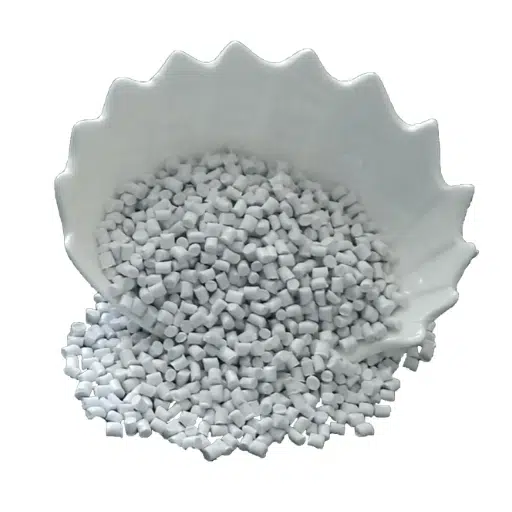
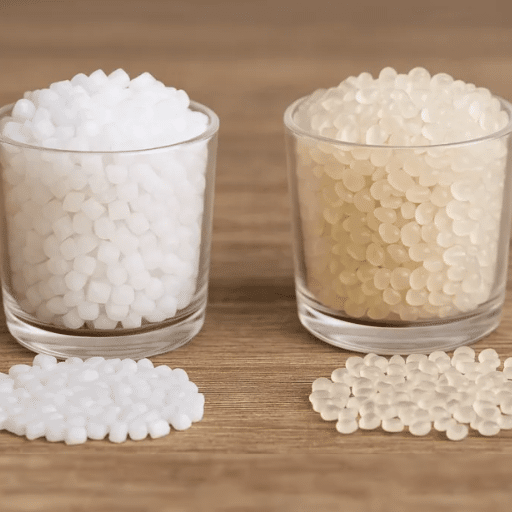
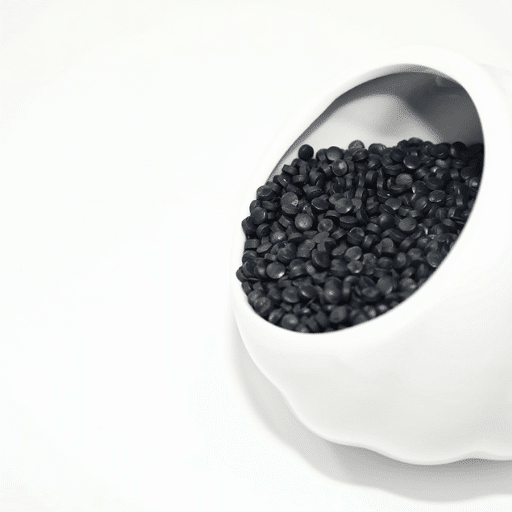
On the TPE side of that decision, Suzhou Yifuhui New Material Co., Ltd. supplies injection-molding-grade TPE and TPV pellets → across SEBS, SBS, and TPV families, with batch consistency control and uniform pellet sizing built into production. A stable melt flow index batch to batch is what keeps your fill and cycle repeatable, and it is the same discipline a cold-runner mold demands from the silicone side.
How to Qualify an LSR Molder or Silicone Supplier
When your application resolves to LSR, the molder you choose is your process. Qualify them the way you would qualify any critical material partner. A complete checklist covers six questions.
- Cure chemistry. Verify platinum-cured LSR (not peroxide-cured) for medical, electronics, and baby-care applications where byproducts and consistency matter.
- Documentation. Confirm the grade data sheet, post-cure capability, and lot traceability for every batch.
- Cleanroom class. Confirm ISO Class 7 versus 8 and ask which standard drives the classification.
- Compliance. Check ISO 13485, ISO 10993, and USP Class VI where your part needs them, plus IATF 16949 and PPAP for automotive.
- Process validation. Ask for IQ, OQ, and PQ evidence and current SPC data on the part family you plan to run.
- Tooling capability. Confirm cold-runner and vacuum-venting experience, because those determine flash, scrap, and per-part cost.
To be fully transparent: Suzhou Yifuhui doesn’t supply LSR. It’s a liquid silicone, not a pellet, and we stay honest about that. We’re a neutral materials partner.
When your application resolves to LSR, the checklist above is how you qualify a molder. When it resolves to TPE or TPV, we supply certified pellets with batch-consistency control, global shipping, and a competitive quote within 24 hours.
Frequently Asked Questions

What is LSR injection molding?
LSR injection molding, also called Liquid Injection Molding (LIM), is the process of injecting a two-part, platinum-cured liquid silicone into a heated mold, where it crosslinks irreversibly into a finished part. The material is kept cold in the barrel and the mold is heated to trigger curing.
How does liquid silicone injection molding work?
Part A and part B are pumped in a 1:1 ratio, mixed in a static mixer, and injected through a cold runner into a mold heated to 150 to 200°C. The heat triggers platinum-catalyzed vulcanization, and the part cures in seconds before ejection.
What temperature is LSR injection molded at?
The barrel runs chilled at 20 to 40°C and the cold runner at 5 to 25°C. The mold runs at 150 to 200°C, controlled to about ±1°C in zones. This thermal inversion is what makes LSR injection molding different from plastic molding.
Does LSR flash?
Yes, LSR is prone to flash because it is very low viscosity and leaks through gaps as small as about 0.005 mm. Precision parting lines, adequate clamping force, and micro-vents control it, and cold-runner valve-gated tools routinely produce flash-free parts.
Why does LSR use a cold runner?
Cured LSR is a thermoset and can’t be reground or reused. A cold runner keeps the material liquid all the way to the gate so nothing cures in the runner, eliminating permanent scrap. The tooling premium typically pays back within six months.
How long is the LSR molding cycle time?
Typical cycles run 10 to 90 seconds depending on wall thickness. Cure time scales at roughly 3 to 5 seconds per millimeter of wall, so thin parts cycle in under 20 seconds while thick gaskets run closer to 90. TPE cycles faster at 15 to 30 seconds.
What is the difference between LSR and TPE injection molding?
LSR is a thermoset that cures chemically in a heated mold with a cold runner and specialized equipment. TPE is a thermoplastic that cools on standard equipment and is fully regrindable. LSR wins on heat, sterilization, biocompatibility, and sealing; TPE wins on cost, speed, and recyclability.
Is LSR recyclable?
No. LSR is a thermoset, so cured parts and runners can’t be re-melted or reground into new material. This is why cold runners matter so much for scrap control. TPE, by contrast, is fully recyclable because it never crosslinks.
Conclusion
LSR injection molding rewards preparation at every level. Keep the material cold in the barrel and cold runner, heat the mold to 150 to 200°C with zoned precision, invest in valve-gated cold-runner tooling with micro-vents and vacuum assist, and protect platinum cure chemistry from contamination.
The five things to remember: LSR is a thermoset, so runner waste is permanent and cold runners are essential; mold temperature drives cure speed and must stay within a tight window; flash is the number one design risk because the material leaks through tiny gaps; medical parts demand cleanroom and compliance discipline from ISO 13485 to ISO 10993; and LSR beats TPE on heat, sterilization, and sealing while TPE beats LSR on cycle time, cost, and recyclability.
When performance demands LSR, qualify a molder against the six-question checklist above. When your application can use a thermoplastic elastomer, TPE or TPV pellets deliver faster cycles, lower tooling cost, and full recyclability. To gain a deeper understanding of TPE vs Silicone for Automotive Seals and Gaskets: A Material Selection Guide, please click to view our accompanying guide.
Comparing LSR and TPE for your part? Suzhou Yifuhui New Material Co., Ltd. supplies certified TPE and TPV pellets with consistent melt flow, global shipping, and a competitive quote within 24 hours, and our polymer specialists can help you qualify the right molding route. Request a competitive quote →