Ask five tubing suppliers whether TPE beats silicone and you will get five confident answers, half of them contradictory. One will insist silicone outlasts TPE in every pump; another will show you a low-spallation TPE grade engineered to run longer than silicone ever could. The truth is that both materials are excellent, and the right TPE vs silicone tubing choice depends on how you sterilize, connect, and stress the line.
Priya, a bioprocess engineer at a cell-culture facility, learned this the hard way. Her team had always spec’d platinum-cured silicone tubing, the industry gold standard. Then they needed a fully closed, sterile fluid path that could be welded together on the production floor.
Silicone cannot be welded, so every connection required a mechanical clamp and a sterility risk. She switched to a weldable TPE manifold and cut both assembly time and contamination events in a single validation run.
By the end of this guide, you will know exactly where TPE vs silicone tubing diverge across temperature range, sterilization cycles, weldability, pump life, chemical resistance, gas permeability, and cost. We will walk through a side-by-side comparison table, application guidance for medical, food, industrial, and laboratory use, a peristaltic pump deep dive, and a sourcing checklist you can hand to your supplier.
TPE vs Silicone Tubing at a Glance
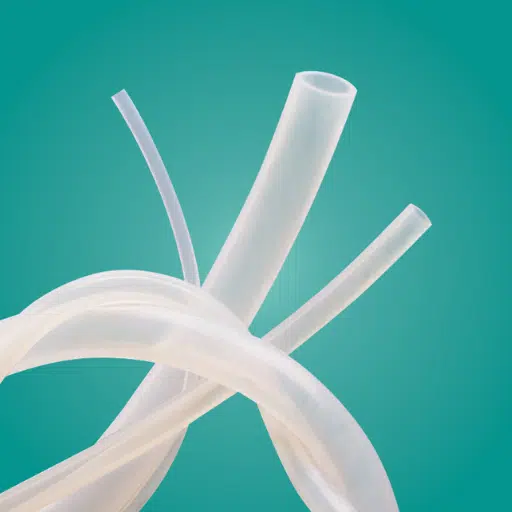
Here is the fast answer for engineers and procurement teams comparing the two materials.
| Property | TPE Tubing | Silicone Tubing |
|---|---|---|
| Material type | Thermoplastic elastomer | Thermoset rubber |
| Operating temperature | -45°C to +135°C (ultra-low grades to -86°C) | -60°C to +220°C (some grades to ~260°C) |
| Sterilization cycles | 15-20 typical; gamma-stable | 50+ across autoclave, EtO, gamma |
| Weldable / heat-sealable | Yes, enables aseptic connections | No, needs adhesives or fittings |
| Shore hardness | 55-75 A typical, tunable | ~50 A, down to Shore 00 |
| Gas permeability | Low, better oxygen/CO2 barrier | High |
| Kink resistance | Good; soft grades can kink | Excellent |
| Peristaltic pump life | Low-spallation grades claim parity or better | Excellent elastic recovery |
| Cost per meter | ~0.80−0.80−1.20 | ~1.50−1.50−3.00 |
| Recyclable | Yes | No |
| Best use cases | Single-use bioprocess, welded manifolds, food transfer | Medical critical fluid, autoclaved reusable lines, pump segments |
Read the table as a decision tool, not a scoreboard. The two swing factors are how you sterilize the line and whether you need welded, closed connections. Everything else follows from those. For a broader property and processing comparison, start with our complete TPE vs Silicone material selection guide.
Want to see how a specific grade behaves in extrusion? Browse our TPE and TPV pellet range or ask our polymer specialists for a datasheet.
Understanding TPE and Silicone Tubing
Before comparing, it helps to know what each material actually is, because the chemistry drives every difference below.
What Is TPE Tubing?
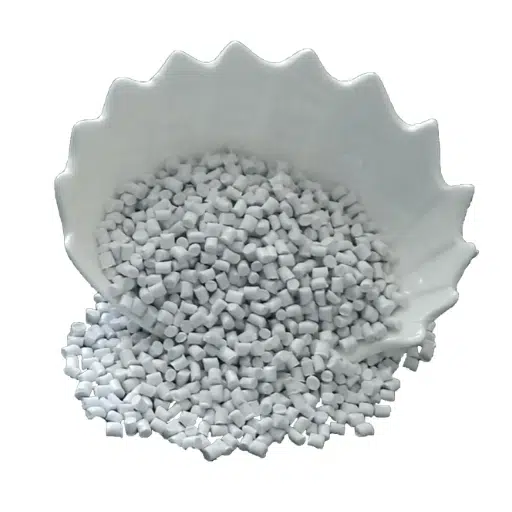
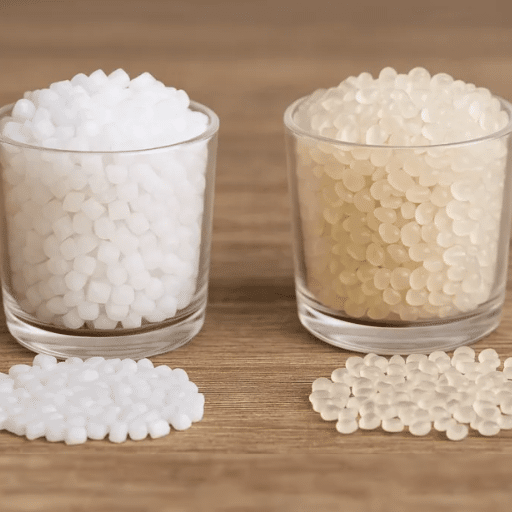
TPE, or thermoplastic elastomer, combines rubber-like elasticity with the processing efficiency of plastic. Tubing extruders run it through standard thermoplastic equipment with no curing step, which is why it is fast, energy-efficient, and recyclable. It is not a single material but a family, and the grade you choose changes the final properties.
The main families matter for tubing. SEBS and SBS grades deliver soft-touch flexibility for general and food applications. TPV, a dynamically vulcanized EPDM/PP blend, adds heat and chemical resistance for tougher duty. TPU-based TPE brings oil resistance and abrasion resistance for industrial lines.
Hardness and melt-flow index determine how a grade extrudes and how flexible the finished tube feels. For a full breakdown of the family, see our TPE vs TPU vs TPV guide and our TPE material properties guide.
What Is Silicone Tubing?
Silicone rubber is a thermoset. During manufacturing it is vulcanized into a cross-linked silicon-oxygen network, and that network cannot be re-melted, re-formed, or welded once cured. That single fact explains most of its strengths and its one major limitation.
Platinum-cured silicone offers the lowest extractables of any tubing material, which is why it dominates critical medical and biopharma fluid transfer. Peroxide-cured grades are more economical for general use. The material’s inertness and enormous temperature window, roughly -60°C to +220°C, make it the reference standard wherever purity and repeated autoclaving are non-negotiable. As Saint-Gobain Medical notes, silicone’s cross-linked structure also gives it exceptional elastic memory, which is why it springs back so well in pump rollers.
Key Differences Between TPE and Silicone Tubing

This is where the two materials separate in practice. Each factor below maps to a real engineering decision.
Temperature and Sterilization
Silicone wins on heat, decisively. It survives repeated autoclaving, ethylene oxide, and gamma irradiation, often for 50 or more cycles, because the cross-linked backbone tolerates the stress. TPE handles roughly -45°C to +135°C, and most grades degrade after 15-20 heat-sterilization cycles. Sustained exposure above about 140°C can cause brittleness or warping.
If your tubing is single-use and gamma-sterilized, TPE is more than sufficient. If your line is reprocessed and autoclaved dozens of times, silicone is the only practical choice. This single criterion resolves most medical and laboratory comparisons.
Weldability and Aseptic Connections
This is TPE’s decisive advantage, and it is the reason single-use bioprocessing has shifted heavily toward thermoplastic elastomer tubing. TPE is thermally weldable and heat-sealable, even across different TPE brands, so operators can create sterile, closed connections on the production floor. Sartorius, for example, sells tube welders designed specifically for TPE and PVC, not silicone.
Silicone cannot be welded or heat-sealed. Joining it requires mechanical connectors, adhesives, or primers, each of which introduces a potential contamination point in an aseptic process. If your application demands welded manifolds or closed-system transfer, TPE is the answer. Freudenberg Medical’s HelixFlex TPE tubing is engineered around exactly these welded, closed-system connections.
Flexibility, Kink Resistance, and Pump Performance
Silicone offers excellent elastic recovery and resists collapse even at tight bends, which reduces kinking risk in peristaltic pumps. TPE is tunable across a wide hardness range, but softer grades may kink without thicker walls or reinforcement.
In pumps, the claims get loud and conflicting. Some suppliers state TPE fails two to three times faster than silicone under roller stress. Others market low-spallation medical TPE grades that reduce particle shedding and claim flex life at parity or better. Both can be true for different grades.
The practical answer is to validate a candidate grade against your actual pump head and cycle, not to trust a brochure.
Gas Permeability and Chemical Resistance
TPE is a better gas barrier. Its lower permeability to oxygen and carbon dioxide protects gas-sensitive fluids, which matters in bioreactors and analytical applications where dissolved gas concentrations affect results. Silicone is more permeable and may require thicker walls when gas ingress is a concern.
Chemically, both are generally good with aqueous solutions. Silicone can swell in some solvents. TPE offers formulation-dependent options with strong resistance to acids, bases, and high-purity water, though continuous exposure to certain organic solvents, alcohols, esters, ketones, and aromatic hydrocarbons is not recommended. Always verify a grade against the exact fluid you are pumping.
Cost and Recyclability
TPE carries a lower upfront cost, roughly $0.80-$1.20 per meter versus $1.50-$3.00 for silicone, and it is recyclable. Scrap from TPE extrusion can be reground and reprocessed, which improves material yield and supports sustainability programs. Silicone flash is not recyclable. Cole-Parmer’s tubing material comparison documents the same cost spread across silicone, TPE, PVC, and TPV.
But the lower sticker price is not the whole story. Silicone’s longer reusable life, typically 3-5 years versus 1-2 for TPE in reusable applications, can produce a lower total cost of ownership where parts must survive repeated sterilization. For a full cost model including tooling and lifecycle math, see our TPE vs Silicone cost comparison.
Which Is Better for Peristaltic Pump Tubing?
The peristaltic pump is where the silicone-versus-TPE debate gets personal, because pump tube failure is expensive. A burst or a particle shed in a diagnostics line means a rerun, a recalibration, and possibly a lost sample batch.
The conventional wisdom favors silicone. Its elastic recovery is legendary, and it holds flow stability through millions of roller compressions. That is why most general-purpose and reusable pump segments are silicone.
The counterargument is increasingly compelling. Medical TPE grades engineered for low spallation reduce the microscopic particle shedding that silicone can exhibit over time, and their lower gas permeability protects shear- and gas-sensitive fluids. In single-use pump loops, where the segment is replaced between batches, TPE can match or beat silicone flex life at a lower cost and without welding limitations.
The hybrid approach is worth considering. A common pattern in modern diagnostic and bioprocess equipment is a low-spallation thermoplastic main run with a short silicone segment only where the pump rollers need elasticity. That way you get TPE’s barrier, weldability, and cost where it matters, and silicone’s recovery where it matters. Validation on your specific pump head and cycle is the only reliable way to settle the question for your application.
TPE vs Silicone Tubing by Application

Different industries weight the factors above differently. Here is how the choice typically plays out.
Medical and Biopharmaceutical
For critical fluid transfer, IV lines, and implant-adjacent applications, silicone remains the standard because of its purity, biocompatibility, and sterilization tolerance. For single-use assemblies, sterile welded manifolds, and gamma-sterilized systems, TPE is often the better fit. Medical-grade TPE carries USP Class VI and ISO 10993 certifications, so compliance is available if you choose the right grade. Our TPE vs Silicone for Medical Devices guide covers the regulatory trade-offs in depth.
Food and Beverage
Both materials offer food-grade options. Silicone is the safer choice where lines are steam-sterilized or boiled, because TPE’s lower heat ceiling can be exceeded. TPE suits cold and hot liquid transfer under roughly 100°C where weldability, cost, and recyclability matter more. Verify any grade against FDA 21 CFR 177.2600 and EU Regulation 10/2011 for direct food contact.
Industrial and Chemical Transfer
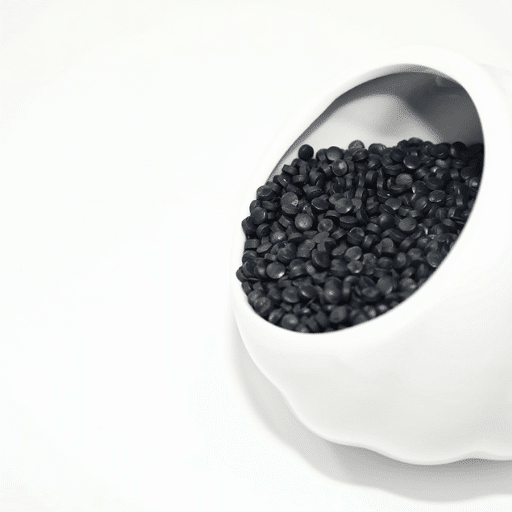
TPE grades can be formulated to resist specific chemicals, and black UV-stabilized grades handle outdoor use well. Silicone handles aqueous streams and high-temperature caustic solutions. Match the material to your fluid chemistry and your process temperature rather than defaulting to one or the other.
Laboratory and Analytical
Silicone is a dependable general-purpose pump and vacuum line. TPE’s low gas permeability makes it valuable where you need to protect samples from oxygen or carbon dioxide ingress. Both are widely available in the tight tolerances analytical work requires.
How to Select a TPE Tubing Supplier and Grade
If the application leans toward TPE, the next question is where the tubing comes from, and that starts one step upstream: the pellet. Every branded TPE tube on the market was extruded from a raw thermoplastic elastomer pellet, and the grade you specify dictates the performance you get.
Choosing the Right TPE Pellet Grade for Extrusion
Match Shore hardness and melt-flow index to your tubing wall thickness and flexibility targets. A thinner wall generally needs a grade with enough melt strength to hold dimension. Specify the family by your environment: SEBS for soft-touch and food contact, TPV for heat and chemical resistance, TPU-based TPE for oil and abrasion resistance. Confirm certifications before you commit, and request a Certificate of Analysis for every lot.
Raw Material vs Finished Tubing
Here is the sourcing insight most comparison articles skip. If you extrude tubing yourself, buying TPE pellets directly from a polymer supplier gives you control over grade, batch traceability, and bulk pricing, and it removes the markup built into branded finished tubing. If you buy finished tubing, ask your converter to document the exact grade so you can verify it matches your specification.
Sourcing Checklist
Protect your production line with these five checks.
- Consistent melt flow and pellet size. Uniform pellets prevent extrusion pressure drift and wall-thickness variation.
- Drying guidance. Hygroscopic TPU-based TPE grades need proper drying; confirm your supplier ships dry or provides parameters.
- Documentation. Ask for a Certificate of Analysis, ISO 9001 certification, and RoHS, REACH, FDA, or EU compliance papers.
- Bulk terms. Request MOQ, Incoterms, and freight line so you can compare like-for-like.
- Responsive support. A supplier that answers material compatibility questions within 24 hours saves you from costly trial-and-error.
At Suzhou Yifuhui New Material Co., Ltd., we supply SEBS, SBS, TPV, and TPU-based TPE pellets across a range of Shore hardness and melt-flow specifications, backed by batch consistency control and global shipping. Our how to choose a TPE supplier guide walks through the full audit, or contact our polymer specialists to discuss your extrusion line.
Frequently Asked Questions

Is TPE tubing better than silicone?
Neither is universally better. Silicone wins on heat resistance, repeated sterilization, biocompatibility, and durability. TPE wins on sterile weldability, lower gas permeability, lower cost, and recyclability. The right choice depends on your sterilization method and whether you need closed, welded connections.
Can TPE tubing be autoclaved?
Some medical-grade TPEs tolerate autoclaving at 121°C, but most degrade after 15-20 cycles. If your line is reprocessed and autoclaved repeatedly, silicone is the more reliable choice.
Is silicone tubing weldable?
No. Silicone is a thermoset and cannot be thermally welded or heat-sealed. Aseptic connections require mechanical connectors, adhesives, or primers, which is why single-use bioprocess systems favor weldable TPE.
What tubing is best for peristaltic pumps?
Silicone offers excellent elastic recovery and long reusable life. Low-spallation medical TPE grades are engineered for single-use pump loops and can match or beat silicone flex life. Validate a candidate grade against your specific pump head and cycle.
Is TPE tubing food grade?
Yes. Food-grade TPE formulations meet FDA 21 CFR 177.2600 and EU Regulation 10/2011 for food contact, though migration-test performance varies by formulation. Confirm the certification for the specific grade you specify.
Is TPE or silicone tubing more expensive?
TPE costs less up front, roughly $0.80-$1.20 per meter versus $1.50-$3.00 for silicone. Silicone’s longer reusable life can lower total cost of ownership in sterilized, high-usage applications.
Conclusion: Choose on Sterilization and Connections
The TPE vs silicone tubing decision comes down to three questions. How do you sterilize the line? Do you need welded, closed connections? And what is your real cost model across the tube’s service life?
Answer those honestly and the material chooses itself.
Three takeaways to carry into your next specification:
- Silicone for heat, purity, and repeated sterilization; TPE for welded single-use systems, gas barrier, cost, and recyclability.
- Validate pump-life claims on your own pump head, because conflicting supplier data means grades, not materials, are really being compared.
- Source raw pellets directly when you extrude in-house, and demand a documented grade with certifications when you buy finished tubing.
Every production line deserves a material choice backed by data, not marketing. Request a custom quote today and our team will return transparent TPE or TPV pellet pricing within 24 hours, supported by batch-consistent quality and reliable global shipping. To gain a deeper understanding of LSR vs TPE: Properties, Processing, and Cost Guide and LSR Injection Molding: Process Parameters, Mold Design, and Defect Troubleshooting, please refer to our accompanying guides.