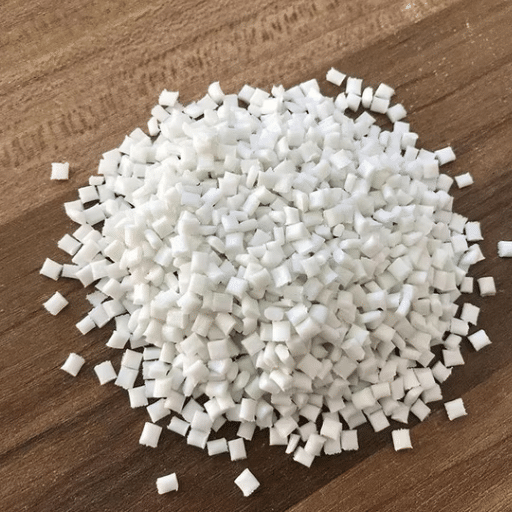
A purchase order arrived at a packaging plant outside Rotterdam with a single line item: “PE pellets, 20 tonnes, film grade.” No density. No melt flow index. No grade code.
The buyer, a sourcing manager named Priya, had inherited the supplier relationship three weeks earlier. She assumed the specification was complete. It wasn’t.
The resin that arrived was HDPE, a rigid grade suited to blow-molded bottles. Her line ran blown film. It wouldn’t form a stable bubble, and the order sat in the warehouse for nine weeks while the two companies argued over who had specified it wrong.
That gap between “PE” and the right PE is why this guide exists. Polyethylene covers a family of materials that behave very differently in a mold, in a die, and in the finished product.
This article answers what polyethylene is and how its chemistry produces three commercial families. It shows what those families cost you in performance, and how to write a specification that gets the right pellets the first time. You’ll finish with a property table, a grade-selection matrix, and the food-contact rules that govern PE in packaging.
What Is Polyethylene?

Polyethylene is a thermoplastic polymer made by linking thousands of ethylene (C₂H₄) molecules into long chains of carbon and hydrogen. Its chemical formula is written (C₂H₄)ₙ. It belongs to the polyolefin family, is semi-crystalline, and is the most widely used plastic in the world.
That definition matters less than the number attached to it. Industry estimates put global polyethylene pellet production at roughly 143 million tonnes in 2025, with 2026 output forecast near 149 million tonnes. Market value crossed US$161 billion in 2025 and is projected to reach US$208 billion by 2031. No other polymer family operates at that scale.
The reason is simple economics. Ethylene comes from cracking ethane, a major component of natural gas, or from petroleum refining. The feedstock is abundant and cheap, and the polymerization chemistry is well understood after ninety years of industrial practice.
A Short History of PE
German chemist Hans von Pechmann produced a waxy polyethylene residue in 1899, but it had no commercial use. Low-density polyethylene (LDPE) arrived in 1933 at Imperial Chemical Industries in England, and its first major job was radar cable insulation during World War II.
High-density polyethylene (HDPE) came in 1953, when Karl Ziegler developed the catalyst system that later bore his name alongside Giulio Natta. Linear low-density polyethylene (LLDPE) followed in 1968 from Phillips Petroleum. Those three processes created the families that dominate the market today.
What Is Polyethylene Made Of? Structure and Branching
The property differences between PE types trace back to one structural variable: how much the polymer chains branch.
From Ethylene Monomer to Polymer Chain
Ethylene is a two-carbon molecule with a double bond. Under heat, pressure, and a catalyst, that double bond opens and links to the next ethylene unit. Repeat the reaction thousands of times and you get a polyethylene chain.
A single commercial PE molecule can contain more than 500 ethylene subunits. The chain is chemically simple, just carbon atoms in a backbone with two hydrogen atoms attached to each. That simplicity is what makes the material so predictable and so easy to process.
Why Branching Determines Density
Here’s the important part. Some processes produce chains with side branches; others produce nearly straight chains. Branched chains can’t pack together tightly, so the material has more amorphous space and lower density. Linear chains pack closely, crystallize more fully, and produce a denser, stiffer material.
Therefore, branching controls density, density controls crystallinity, and crystallinity controls almost every property you care about: stiffness, melting point, barrier performance, and transparency.
- More branching → lower density → softer, more flexible, lower melting point
- Less branching → higher density → stiffer, stronger, higher melting point
Keep that relationship in mind. Every type below is a point on that scale.
Types of Polyethylene: HDPE, LDPE, LLDPE, and More

Five grades cover the overwhelming majority of industrial demand, with a handful of specialty variants for specific applications.
| Type | Density (g/cm³) | Crystallinity | Melting Point | Stiffness | Transparency | Typical Process |
|---|---|---|---|---|---|---|
| LDPE | 0.91–0.93 | Low | 105–115 °C | Low | Translucent | Film extrusion |
| LLDPE | 0.91–0.94 | Low–medium | 120–125 °C | Medium | Translucent | Film extrusion |
| MDPE | 0.926–0.94 | Medium | 125–130 °C | Medium–high | Opaque | Pipe, blow molding |
| HDPE | 0.94–0.96 | High | 120–130 °C | High | Opaque | Injection, blow, pipe |
| UHMWPE | 0.93–0.94 | High | 130–136 °C | Very high | Opaque | Ram extrusion, compression |
LDPE (low-density polyethylene) has the most branching and the lowest density. It is soft, tough, and easy to extrude into thin film. Grocery bags, shrink wrap, and squeeze bottles are its natural applications. The HDPE vs LDPE distinction comes down to how much the chains branch, and it drives every downstream property.
LLDPE (linear low-density polyethylene) has a linear backbone with short, uniform branches. It matches LDPE’s flexibility but delivers higher tensile strength and much better puncture resistance. Most modern stretch film and heavy-duty sack film uses LLDPE.
MDPE (medium-density polyethylene) sits between the two. It is rigid enough for pressure pipe and flexible enough to resist cracking. Gas distribution lines and utility piping are its main uses.
HDPE (high-density polyethylene) takes the opposite approach: minimal branching and the highest crystallinity of the mainstream grades. It is stiff, strong, and chemically resistant. Milk jugs, detergent bottles, water pipe, crates, and geomembranes all rely on it.
UHMWPE (ultra-high-molecular-weight polyethylene) uses the same chemistry as HDPE but with chain lengths measured in millions of repeat units rather than thousands. That molecular weight produces exceptional wear and impact resistance, which is why UHMWPE versus HDPE is rarely a close call in wear applications. It also makes the material nearly impossible to injection mold, which is why it ships as powder or is processed by ram extrusion. Our guide to ultra-high-molecular-weight polyethylene covers that family in depth.
Specialty grades include XLPE (cross-linked polyethylene), used for high-voltage cable insulation and hot-water pipe; VLDPE for frozen-food film; and PE-RT for raised-temperature piping.
One naming note worth settling. Polythene is the same polymer as polyethylene. The term is standard in the UK, India, and several other markets. If a specification says polythene, it means PE, and you should confirm which density grade is intended before quoting.
Key Properties of Polyethylene
Polyethylene’s property profile is unusually consistent across the family, which is why engineers reach for it first.
| Property | Typical PE Value | Engineering Implication |
|---|---|---|
| Density | 0.91–0.96 g/cm³ | Lightweight; strength-to-weight favors PE over most metals |
| Melting point | 105–136 °C by grade | Low heat resistance; not for hot-fill above grade limits |
| Glass transition | ≈ −120 °C | Retains toughness in deep cold; excellent for frozen applications |
| Water absorption | <0.01% | Dimensionally stable when wet; no pre-drying required |
| Chemical resistance | Excellent vs. acids, alkalis, solvents | Non-polar structure resists most aggressive media |
| Dielectric constant | ≈ 2.3 | Outstanding electrical insulation |
| Coefficient of friction | Low | Self-lubricating; useful for liners and slide strips |
| Shrinkage | 1.5–5.0% | High; demands generous mold design allowances |
| UV stability | Poor without additives | Requires carbon black or UV stabilizers for outdoor service |
Two properties deserve emphasis for anyone writing a specification.
Water absorption is negligible. PE absorbs almost no moisture, so it needs no drying before processing. That removes an entire process step, and an entire class of defects, from the production line.
Shrinkage is high and grade-dependent. PE shrinks between 1.5% and 5.0% as it cools, more than most engineering plastics. Scaling an HDPE tool from an LDPE part drawing without recalculating shrinkage is a reliable way to produce out-of-tolerance parts for an entire run.
How to Specify Polyethylene Pellets by Grade and Process
This is where most sourcing errors happen. The specification that matters contains two numbers, not one.
Melt flow index (MFI), also written MFR or MI, measures how easily the molten polymer flows. It is reported in grams per 10 minutes at a standard temperature and load, typically 190 °C and 2.16 kg for polyethylene. Low MFI means high molecular weight, high melt strength, and better environmental stress crack resistance (ESCR). High MFI means easy flow into complex molds and thin walls.
Pair MFI with density and you have a working specification. Our guide to plastic granules and pellets explains the physical form the material arrives in, which matters for handling and conveying systems.
| Process | Typical Grade | Density (g/cm³) | MFI (g/10 min) | Notes |
|---|---|---|---|---|
| Injection molding | HDPE | 0.94–0.96 | 5–20 | Higher MFI fills thin walls; balance against warpage |
| Blown film | LDPE / LLDPE | 0.91–0.94 | 0.5–4 | Low MFI supports bubble stability |
| Blow molding | HDPE | 0.94–0.96 | 0.2–0.5 | High molecular weight for melt strength and ESCR |
| Pressure pipe (PE80/PE100) | HDPE | 0.94–0.96 | 0.2–0.5 | PE100 offers higher minimum required strength |
| Rotomolding | LLDPE / MDPE | 0.93–0.94 | 3–6 | Requires narrow particle size distribution |
| Wire and cable | LDPE / LLDPE | 0.92–0.93 | 0.2–2 | Cleanliness and dielectric consistency are critical |
Consider what this means in practice. For example, an HDPE injection grade at MFI 20 and a blow-molding grade at MFI 0.3 are nominally the same polymer, yet they are not interchangeable. One flows into a thin-walled crate mold; the other holds its shape as a parison under its own weight. Ship the wrong one and you have Priya’s problem.
What to require on a supplier’s paperwork. A valid Certificate of Analysis should carry the lot number, measured density, measured MFI, and the test method used. Those two numbers decide whether the resin will run on your equipment.
If a supplier can’t produce per-lot data for both, treat the quotation as unverified. Our HDPE plastic pellets range ships with per-lot documentation covering density, MFI, and certification.
Is Polyethylene Food Safe?
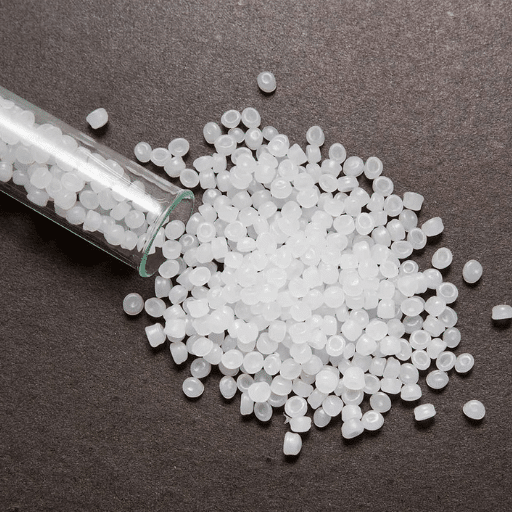
Yes. Virgin polyethylene is food safe, and HDPE (resin code 2) and LDPE (resin code 4) are approved for food contact in most major markets. Three conditions apply. The material must be a virgin or certified food-grade grade. It must be used within its temperature limits, and the finished article must comply with the relevant regulation.
| Market | Regulation | Key Limits |
|---|---|---|
| United States | FDA 21 CFR 177.1520 | Density 0.85–1.00; extractables ≤5.5%; ≤2.6% for cooking containers |
| European Union | EU 10/2011, EC 1935/2004 | Overall migration limits; substance-specific restrictions |
| China | GB 4806.7-2023 | Migration, heavy metals, total migration limits |
The US rule is worth reading in full at 21 CFR 177.1520. It sets the density window and the extraction limits that define what counts as compliant PE for food contact.
Virgin PE contains no BPA and no phthalates. Those additives appear in other polymer families, not in polyethylene’s basic formulation. That difference is a large part of why PE dominates food packaging.
The Recycled PE Caveat
Recycled polyethylene is not automatically food safe. Post-consumer material can carry contaminants from its previous life, and colorants or additives from a non-food application may remain in the stream. Because of that, recycled PE faces a different approval path than virgin resin.
In the United States, recycled PE requires case-by-case review by the FDA. Approved grades receive a Letter of No Objection (LNO), and the approval specifies the permitted feedstock and the conditions of use. Some approved grades are cleared for hot-fill and boiling-water applications; many are not. Where the application also demands wear resistance, our food-grade UHMWPE page covers the compliant grades.
For a food-contact project, ask the supplier for the LNO reference or an equivalent EU or China approval. For consumer heating questions, our article on whether LDPE is microwave safe covers the practical limits.
Is Polyethylene Recyclable?
Yes, and it’s one of the more economically recycled plastics. The resin identification system, introduced in 1988, assigns polyethylene two codes.
- Code 2, HDPE: milk jugs, detergent bottles, pails, grocery bags
- Code 4, LDPE: film, cling wrap, squeezable bottles, bread bags
- Code 7, Other: where UHMWPE is typically classified
Reprocessing splits into two paths. Mechanical recycling sorts, washes, and re-melts PE into regrind, producing PCR (post-consumer recycled) and PIR (post-industrial recycled) grades. Chemical recycling, by contrast, breaks the chains back toward feedstock, which handles contaminated or mixed streams that mechanical methods cannot.
One clarification prevents a common misunderstanding. A resin code identifies the material type only, not a guarantee that a local recycling program will accept a given item. Thin LDPE film, in particular, is difficult to process in many municipal systems. Our comparison of PE and PVC pellets examines how these two families differ in industrial recycling.
Is Polyethylene Biodegradable?
No. Polyethylene resists microbial breakdown, and a discarded PE item can persist in a landfill for decades to centuries. Its durability is what makes it valuable in a pipe or geomembrane and problematic in a litter stream.
The practical answer is recycling rather than degradation. Bio-based polyethylene, made from sugarcane ethanol instead of fossil feedstock, offers a lower-carbon route but is chemically identical to conventional PE. It isn’t biodegradable either, though it recycles in the same streams.
What Is Polyethylene Used For?

Packaging accounts for the largest share of demand, at roughly 54% of total polyethylene consumption. Film grade alone represents close to 48% of pellet consumption. Beyond packaging, PE’s chemical resistance, moisture barrier, and electrical insulation properties open a wider set of applications.
- Packaging: films, bags, shrink wrap, bottles, closures, containers, caps, geomembranes
- Construction: water and gas pressure pipe, conduit, pipe fittings, flooring
- Wire and cable: insulation and jacketing for power and telecommunications
- Automotive: fuel tanks, fluid lines, interior components, battery housings
- Medical: tubing, IV components, diagnostic kits, sterile packaging
- Consumer goods: toys, cutting boards, housewares, storage containers
- Industrial: chemical tanks, chute liners, bushings, truck bed liners, pallets
Notice how the list maps back to density. Flexible film wants LDPE or LLDPE, rigid pressure pipe and structural tanks want HDPE, and wear-critical liners want UHMWPE. Once the application is defined, material selection is rarely a judgment call.
Polyethylene vs Polypropylene: A Quick Note
PE and PP belong to the same polyolefin family and often compete for the same part. Three differences decide most of these contests.
| Property | Polyethylene (HDPE) | Polypropylene (PP) |
|---|---|---|
| Density (g/cm³) | 0.94–0.96 | 0.90–0.91 |
| Melting point | 120–130 °C | 160–170 °C |
| Rigidity | Moderate | Higher |
| Low-temperature toughness | Excellent to −40 °C | Poor below −10 °C |
| Typical uses | Bottles, pipe, tanks, film | Food containers, caps, automotive trim, straws |
Choose PP for higher temperature resistance and stiffness, such as a container holding hot contents. Choose PE for low-temperature toughness and moisture resistance. Our PP plastic pellets range covers the other side of that decision, and the Xometry comparison details their mechanical differences.
Polyethylene Pellets from Suzhou Yifuhui
Suzhou Yifuhui New Material Co., Ltd. supplies HDPE and standard polyethylene pellets to manufacturers across packaging, construction, automotive, and consumer goods sectors. We stock injection, film, blow-molding, and pipe grades, alongside UHMWPE and recycled HDPE.
Every shipment includes a Certificate of Analysis with measured density and MFI per lot, so the paperwork matches your process sheet. Our technical team verifies grade selection before you commit to a volume, and we ship internationally to keep lines supplied.
If you need to confirm a density grade or compare MFI ranges across suppliers, our polymer specialists are available seven days a week with a 24-hour response guarantee.
Frequently Asked Questions

What is polyethylene used for?
Polyethylene is used mainly for packaging such as films, bags, and bottles, which accounts for about 54% of global demand. It also serves in water and gas pipe, wire and cable insulation, automotive fuel tanks, medical tubing, and consumer goods.
Is polyethylene food safe?
Virgin polyethylene is food safe. HDPE (code 2) and LDPE (code 4) are approved for food contact under FDA 21 CFR 177.1520 in the US and EU 10/2011 in Europe. Recycled PE requires specific regulatory approval before food-contact use.
Is polyethylene recyclable?
Yes. HDPE carries resin code 2 and LDPE carries code 4. Both are mechanically recycled into new products, and chemical recycling handles contaminated streams. A resin code identifies the material but does not guarantee local collection.
Is polyethylene the same as polythene?
Yes. Polythene is simply the term used in the UK, India, and other markets for polyethylene. The polymer is identical, though you should always confirm which density grade a specification intends.
Is polyethylene biodegradable?
No. Polyethylene resists microbial breakdown and can persist in landfills for decades to centuries. Bio-based PE made from plant feedstock is chemically identical and equally non-biodegradable, though it is recyclable.
Is polyethylene microwave safe?
Generally no, unless the container is specifically labeled microwave safe. PE softens well below boiling temperatures, and chemical migration increases sharply above roughly 71 °C. Remove LDPE cling film before reheating food.
The Right PE Starts with Two Numbers
Polyethylene is a thermoplastic made from ethylene, classified by density into families that perform very differently. Understanding that family structure is what separates a specification that works from one that stalls a production line.
Five points to carry into your next sourcing decision:
- Polyethylene is the world’s highest-volume plastic, with 2026 output forecast near 149 million tonnes
- Chain branching controls density, and density controls stiffness, melting point, and barrier performance
- LDPE and LLDPE serve flexible film; HDPE serves rigid parts and pressure pipe; UHMWPE serves wear applications
- Density and melt flow index together define a usable specification, so require both on every Certificate of Analysis
- Virgin PE is food safe under FDA 21 CFR 177.1520, but recycled PE needs a Letter of No Objection first
Priya’s problem was never the material. It was a specification with one word where it needed two numbers. Add density and MFI to the line item, and the argument disappears.
Ready to source polyethylene pellets with verified density and MFI data on every lot? Request a custom quote and our specialists will confirm the right grade for your process within 24 hours.