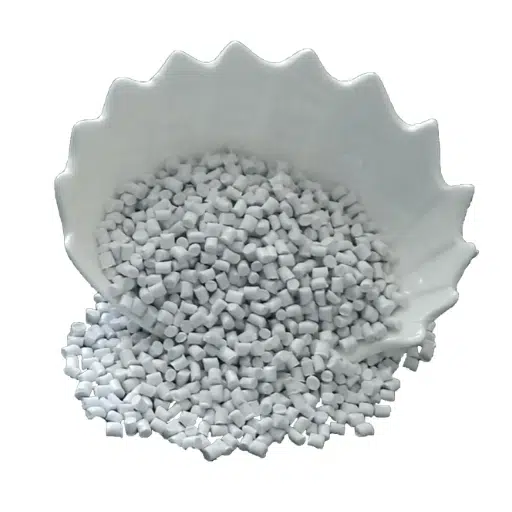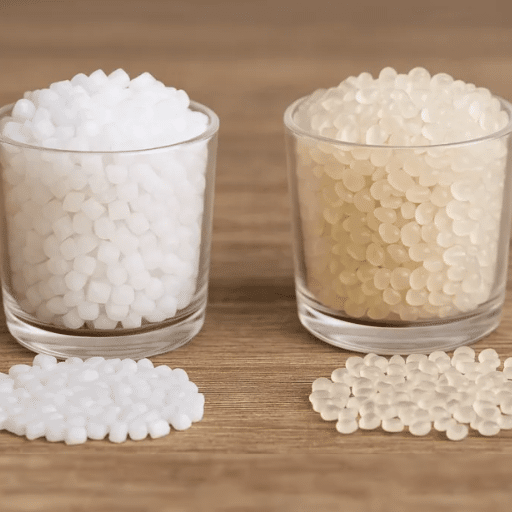
Marcus Chen saw a chance to spare his shop twelve extra cents per piece. By switching from a glass-filled PA66 gear housing to a PBT grade, he was mulling over the 4-cavity tool location without changing the mold temp. Six hours afterwards, the technician had to be prying warped parts from a 45-deg.-C mold, for PBT, necessitating 80 deg. C.
His scrap run cost him $3,400 in lost material and press time. You do not just burn resin money if you link an inappropriate polymer with a press machine.
If you have been standing at a press machine, uncertain whether to use polyamide or polyester for your injection molding, you know totally what I am trying to pipe on about. Both of these materials flow well—ridiculously well and make superstrong parts.
At the same time, they have vastly different drying requirements, shrink behaviors, and cycle times—any one of which can make or break the job accounting! This so reminds me to offer you some firm ground from which to stand in the form of rough processing guidelines, paramount mold design rules, and the basics of costing that you might then take directly to the shop floor.
Of course, this is exactly what you will be able to learn about: the behavior of PA and PBT in the melt, rate of its flow in the mold, the quality characteristics-in sulphur behavior of each, and the formulation of the real cost per part beyond the price tag of the resin. So the reader will obviously have the acrylic-grade to request in arrival of his next quotation. If you want a broader material-selection foundation before getting into processing details, see Polyamide vs Polyester: Chemical Structure, Properties, and How to Choose.
Want a head start on material selection? Browse our PA6, PA66, and PBT pellet grades with full technical data sheets.
Injection Molding Processing Parameters at a Glance

Let’s have a look at the numbers. The range of typical parameters is listed in the table below for unfilled and for 30% glass fiber-loaded. Just remember, the actual setup will be close to the particular part-specific and material-type acceptance criteria, though the guidelines noted here bring one very close to being in the ballpark for the first shot.
|
Parameter |
PA6 (Unfilled) |
PA6-GF30 |
PBT (Unfilled) |
PBT-GF30 |
PET-GF30 |
|---|---|---|---|---|---|
|
Melt Temp (°C) |
230–260 |
270–290 |
240–260 |
250–270 |
270–290 |
|
Mold Temp (°C) |
60–80 |
80–120 |
40–80 |
60–100 |
100–120 |
|
Drying Temp (°C) |
80 |
80–100 |
120–140 |
120–140 |
140–170 |
|
Drying Time (hrs) |
4–6 |
4–6 |
3–4 |
3–4 |
4–6 |
|
Shrinkage (%) |
0.7–1.5 |
0.3–0.7 |
1.5–2.2 |
0.2–0.8 |
0.2–1.0 |
|
Cycle Time Index |
100 (baseline) |
105 |
80 |
85 |
95 |
See the pattern? PBT crystallizes faster on a cooler mold. This fact automatically qualifies short cooling sections and low energy bills. PA requires hotter molds and a longer residence time. It toughens up the material against the impact, which is an advantage in many heavyweight applications which PBT will never be able to match.
The drying interval is not less important. PA, due to its very high absorption of moisture, must be dried to about 3,5% at saturation. PBT takes very little water from the atmosphere at all, but hydrolyses upon moisture delivery (like from the melt). Both harden up the material but the causal mechanisms are completely different when dry poorly.
Drying Requirements and Moisture Sensitivity
You cannot cheat the drying process, be it by any part material.
PA6 gets to your factory with about 0.15-0.30% surface moisture. Leave it inside a gaylord in a humid state over a weekend, and the surface moisture could climb above 0.5%. Injection mold it with any moisture like that, and you will find splay, voids, with tensile strength dips more toward 20–40%.
The remedy is simple–dry at 80°C desiccant for 4–6 hrs until your capacitance meter reads down to 0.2%, the more brittle PA66 being that it needs 80–105°C yet holds less moisture at saturation than PA6. Its melt is more susceptible to hydrolysis. Don’t cut down on the drying cycle.
PBT and PET dry at higher levels: 120–170°C based on the grade, but with shorter steps in the window. Here the risk is not ambient absorption; it is the moisture still remaining from production or bad packaging.
PBT hydrolyzes quick after hitting 250°C upon toll breach of 0.03%. The finished part would appear perfect when it leaves the press-and only two weeks into the assembly stage, a few light bend cycles give rise to a crack. A little too late for hydrolytic breakdown.
On every truck at Suzhou Yifuhui there is a certificate of moisture content for every lot of PA and PBT pellets, which means you know exactly what you are dumping into the hopper. For large-volume runs, we suggest inline desiccant drying with closed-loop conveying. These purposes start accordingly in paid upfront expenses, with driest excess on about three months with most 500-ton presses.
Need help sizing a drying system for your resin? Contact our technical team for a free process audit .
Mold Design Considerations
The wall thickness, gate location, and draft angle change as you switch from PA to PBT. Without addressing the changes, molders are likely to lay the seeds of warp, sink, and poor surface finish that will haunt them for the life of a tool.
PA is fine in flow but suffers from anisotropic shrinkage. The molecules line up in the flow direction and introduce a different shrink effect than parallel and perpendicular axes. A rectangular PA66 box will contract 0.8% along flow and up to 1.4% across flow at 60°C.
Such imbalances crank lids, cant bosses, and break snap fits. How to treat it: Molds kept hot (80-100°C for unfilled, max 120°C for GF grades), even wall thickness, generous corner radii.
To your advantage, PBT presents a slightly easier shoe in mold design. Its greater recrystallization speed leads to fast stiffening, so you can run cooler mold without a lengthy dwell. While 1°–1.5° of draft generally suits most PA parts, 0.5°–1.0° is sufficient for PBT. PBT also allows for thinner walls, even down to 0,4 mm in nucleated grades, which makes it suitable for tiny electrical connector designs.
|
Design Parameter |
PA Recommendation |
PBT Recommendation |
|---|---|---|
|
Mold Temperature |
80–120°C |
40–80°C |
|
Draft Angle |
1.0–1.5° |
0.5–1.0° |
|
Minimum Wall Thickness |
0.5 mm |
0.4 mm (nucleated) |
|
Gate Type |
Edge or submarine |
Pin or edge |
|
Corner Radii |
Generous (0.5× wall) |
Moderate (0.3× wall) |
|
Cooling Channel Balance |
Critical (prevent warp) |
Important (faster freeze) |
On modeling a 16-cavity connector tool for an automotive customer, Elena Voss selected PBT-GF30 and a cold runner that has balanced flow. The mold temp was regulated at 70°C.
PA66-GF30 would necessitate an increased cooling line temperature of 100°C and also a larger cold slug well to deal with melt slow freeze-off. By using PBT, 0.8 seciper 16 cavities are of time savings on cycle time production. It resulted in 213 more machine hours per year in a production volume of 600,000 shots.
Cycle Time and Production Efficiency

Whereby PBT takes the Advantages of Cycle Time. It is not a marginal advantage, but it is quantifiable in output part-per-hour and labor-seconds per part-counter.
One role PBT finishes faster is at the instance it is crystallized versus a parallel material such as nylon 6. The resin case in PBT that is in a 60°C mold without fillers will freeze somewhere between 12 to 18 seconds. PA6 varies at 80°C with the above geometry, needing 18 to 25 seconds. The time savings of cooling could be as big as 20%—a 35% advantage before taking into consideration the boil difference between mold and melt.
Then, the math starts to get lots of fun at an annual multiplier. Let’s say a 20-second cycle was determined for the PA vis-à-vis the 15 seconds for one molding cavity of automotive sensor housing. The 85% machine time with a set on a 200-ton press gives PBT an extra 122,400 parts per year. Even using the most economical machine-hour rate of a quarter, accumulated savings are easily over $8,500 per annum for one mold.
PA fights back with toughness. LMs, gear teeth, snap fit clips are certainly going to give extension life in PA; the material is gonna be suitable for yield rather than fracture. Part failure in the field is hardly acceptable. It all depends about what is gonna happen with this part once it is ejected. For a guide on polyamides and polyesters, please read: Polyamide vs Polyester: Complete Guide for Industrial Applications & Plastic Pellets.
If your team is comparing load-bearing behavior, impact strength, and fatigue life in more depth, read Polyamide vs Polyester Mechanical Properties: An Engineering Comparison.
Regrind ratios also favor PBT for high-volume scrap recycling.
|
Regrind Factor |
PA |
PBT |
PET |
|---|---|---|---|
|
Max Regrind Ratio |
10–15% |
20–25% |
10–20% |
|
Drying Required Before Reuse |
Yes |
Yes |
Yes |
|
Property Retention at Max Ratio |
Good |
Excellent |
Good |
|
Common Issue |
Moisture pickup |
IV drop if overheated |
Crystallinity loss |
High-volume in-mold labeling like the Stackmold, a process where labels are produced using extrusion molds situated on the stationary mold side and during the same cycle are imprinted with a special in-mold mold tool, that tool is then opened and the labels are transferred to the cavity side of each of the rotating mold spindles.
Dimensional Stability and Tolerance Control
One of the things that confounds the vast majority of moulders is the fact that a moulded PA part will vary in dimensions after processing but that a PBT part will not do so.
PA is hygroscopic—it is able to absorb atmospheric moisture until the equilibrium is reached. This is usually reached at about 2.5-3.5% by weight under different ambient conditions. When absorbed, moisture causes dimensions to increase, and as such, the percentage of growth normally lies between 0.5 and 1.2 according to grades and geometry.
An electric housing moulded to 50.00 mm in dry PA66 could measure 50.35 mm after being stowed for two weeks on a warehouse shelf. The dielectric end of the properties is influenced by added moisture softening amidic radicals.
PBT and PET absorb about 0.2% moisture under the same conditions. Moulded dimensions are maintained for months. Hence, PBT has reasonably carved a niche in precision connector applications, each almost with tolerances of 0.05 mm-an impurely stiff resistance. The material rarely disputes with your gage.
Creep resistance follows a similar story. Under a stress load at 80°C, PA66 visibly creeps out over 1,000 hours. In contrast, PBT-GF30 does better in holding this creep.
At elevated temperatures, PET-GF30 excels over both at long-term load-bearing. Here, when a component is continuously loaded in a hot environment, it would be best to choose between PET or PBT. If long-term thermal performance is the deciding factor for your part, this deeper guide may help: Polyamide vs Polyester Heat Resistance: A 2026 Engineer’s Guide.
One caveat is the water absorption brought by PA which, in fact, is not an entirely negative quality.
Regarding bearing and bushing functions, the absorbed water works as a built-in lubricant. In a somewhat humid area, PA66 gears stay in action long after PBT gears have stopped, while the coefficient of friction of the surface lessens due to the increased moisture content. The very same “weakness” just becomes a strength if it finds the right counterpoise.
Tool Wear and Maintenance
Tools wear by abrasion. Glass fiber-wears them even faster. How often mold cavities are pulled for weld repair depends on whether PA or PBT is selected.
Unfilled PA and PBT will not wear tool steel to any significant extent. H13 or P20 will process either material for millions of shots with very little visible wear.
But introduce 30% glass fiber, and the scenario changes. GF-PA is measurably more abrasive than GF-PBT simply by lunar bird-sidebar analysis-again on account of the fiber orientation and higher viscosity melt dragging particles across cavity surfaces. A tool running GF-PA undergoes a necessary weld touch-up at about 800,000 shots. The same job in GF-PBT has quite often kept running beyond 1.2 million shots before any maintenance procedures.
Aluminum molds are good for prototype and low-volume work when paired with unfilled PBT. Because of its higher shrinkage and tougher ejection, PA can gall aluminum surfaces relatively early. In making a study for design, PBT is the more forgiving of prototyping resins.
Corrosion with either family can be avoided with adequate drying. Wet PA may release trace caprolactam monomer that plates in hot runners over time. Wet PBT releases acidic degradation products able to pit gate inserts. One root fact links these few issues: insufficient drying.
Cost-per-Part Analysis for Mold Operations
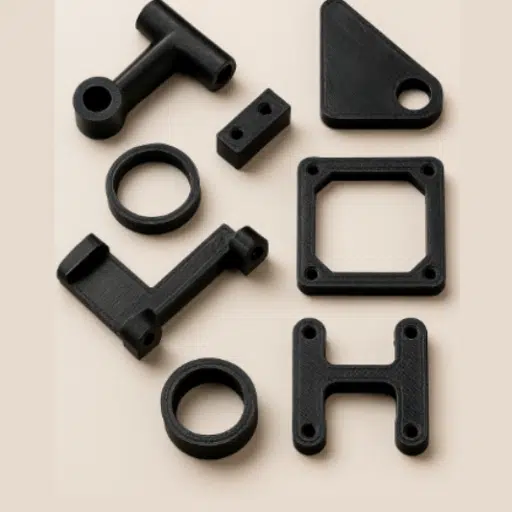
Just the beginning, the price of resin cost. True cost involves energy, cycle time, scrap, regrind handling, and tooling amortization.
At the onset, do a roughage of something to the order of $2.80 to $3.50 per kg for virgin PA6. PA66 comes at around $3.50 to $4.50. Non-filled PBT around $2.20 to $2.80 with PET slightly cheaper, hovering at around $1.80 to $2.40.
Glass-filled grades add between 20 and 40 percent across the board. In terms of feedstock costs, PBT will accrue to a 15–30 percent saving compared to an equivalent PA grade.
Energy costs come in and then increase the gap. PA mold operates hotter hence draws more watts into heating the hot oil or rods in the electric cartridge heaters. A mold at 100°C would, for an already established rule of thumb, be about 25–30% more in energy use than an equivalent mass mold in operation at 70°C. For a typical 6,000-hour production year, the mold with the hotter casting presents a drop in steel in the range of $400–600.
Cycle time savings are the real hitters. One can receive an extra $0.05 per part in the saving of costs with a four-second advantage. An annual 250,000 parts would recover $12,500 in machine burden only, in most cases, more than the material saving.
Tool wear is the quintessential determinant towards favoring PBT over glass-filled applications. If GF-PA requires cavity weld repair at 800,000 shots, with GF-PBT hitting 1.2 million, then tooling costs amortized across the parts produced also dip 33% in favor of PBT. This is not a mere dent on tooling costs, especially for a multi-cavity tool costing around $180,000.
Dr. David Okonkwo stooped to calculate numbers for a tier-two lighting supplier in March last year. Their reflector housing had been specified in PA66-GF30 at $3.20 per pound. He presented a quote on PBT-GF30 costing $2.45 per pound.
The cycle time was reduced from 22 seconds down to 17 seconds. Their annual volume was 480,000 parts. Total cost per part dove from $0.41 to $0.31.
The client changed their mind, and David’s shop secured their business for three years.
Ready to calculate true cost for your next molding program? Request a custom pellet quote with volume pricing.
Application Selection Matrix for Injection Molders
Use the guideline to provide assistance on material selection for quotes that fall within this range.
Automotive Under-Hood Components
The choice: PA66-GF30 or PA6-GF30. These offer heat resistance up to 150°C, have excellent oil and grease compatibility, and, have many proven intake manifolds and engine cover applications. Molding note: consider mold temperatures of 100–120°C as well as a severe drying regime. For application-specific examples in vehicle programs, see Polyamide vs Polyester in Automotive Applications: A Manufacturing Guide.
Electrical Connectors & Relay Housings
The choice: PBT-GF30. This material is known for its steady dielectric properties amongst differing humidity counts, quick cycles, and great flow for thin walls. Molding note: molds at 60–80°C are fine; it is appreciated to have hot runners.
Precision Gears & Bearings
The choice: PA66 or PA46. Apart from self-lubricating wear surfaces, it excels in endurance fatigue. Molding note: central gating for coregistration; post-molding treatment for enhanced toughness.
Thin-Wall Consumer Electronics
The choice: High-flow PBT or nucleated PET. These materials show excellent potential throughout flow length-to-thickness ratios and good surface finish. Molding note: nucleated PET needs molds at temperatures of 100°C and up for crystallization control.
Structural Hangers and Stand-offs
Preferred: PA66-GF30 or PET-GF30. High rigidity and creep resistance under continuous loads. Molding note: PET can handle higher continuous temperatures, while PA66 lends better impact resistance.
Food/Drug and Medical Items
Winner: PA12 or FDA-compliant PBT. Low extractable media and broad resistance against chemicals. Molding note: make sure all certifications are provided prior to production; both groups have grades that can meet compliance.
Nothing in the matrix is definitive. A connector under the hood that may see 140°C might buck the trend in favor of PBT even if it would be less tenable for PA. If the conditions for a gear in a dry enclosure with a controlled climate are not known, assume the component might run provided the loads are light enough for PBT. Go for prototype shots and thermal cycle validations in all cases.
Troubleshooting: Common Defects and Causes

Splay, warpage, and short shots look similar across materials. The root causes differ.
|
Defect |
PA Cause |
PBT Cause |
Fix |
|---|---|---|---|
|
Splay / Silver Streaks |
Moisture in resin |
Moisture or degraded resin |
Extend drying; reduce residence time |
|
Warping |
Differential shrinkage + moisture loss |
Uneven cooling or shrinkage |
Raise mold temp; balance cooling channels |
|
Short Shots |
Moisture-induced viscosity rise |
Cold mold or slow injection |
Dry resin properly; raise mold temp 10°C |
|
Brittle Parts |
Over-drying (100°C+ 8+ hrs) |
Hydrolysis or overheating |
Reduce drying to 4–6 hrs; keep melt below 265°C |
|
Sink Marks |
High volumetric shrinkage |
Thick sections cooling slowly |
Add ribs; increase hold pressure; gas-assist |
Mostly PA portrays splay as moisture. You are to lengthen drying time, verify the color of your desiccant bed, and ensure that the hopper lid is rigidly closed.
For PBT, moisture would be the first suspect but further investigations would show also possibility of degraded resin. If you have checked for drying, find the right temperature to minimize residence times in the barrel. PBT will start degrading when left for over six minutes at 270°C.
PA warping is produced by differential shrinking and post-mold moisture loss. This can be solved by increasing the mold temperature to limit the stresses that are trapping in.
PBT warping may be from uneven cooling or too much shrinking. Nucleated grades would help. Balance the cooling channels and make sure the core and cavity temperatures differ by less than 5°C for both materials.
PA short shots usually relate to moisture-induced viscosities. Dry the material before filling it, or decrease the viscosity. PBT short shots are usually an indication of either a cold mold or insufficient injection speed. It is usually provided to increase fill rate before raising the melt temperature.
Brittle PACs cover dry out, and as a result, they break. Eight hours for drying at 100°C is a clear stop point, and four to six hours is the best.
PBT becomes brittle when hydrolyzed or overheated. Confirm temperatures of drying and time, remembering that the melt temperature is surely below 265°C for unfilled grades.
Both families reveal sinks in thick sections; however, in POM, sinks are usually smaller because of lower volumetric shrinkage. In PBT, the thick area is an excellent target for gas-assisted molding.
Conclusion
When you know little about thermoplastics, deciding between polyamide and polyester can be daunting. The polymer you choose is based on the mechanical properties of the plastic, which must satisfy the behavior of the plastic-considering a particular part, the workings of the machine, and cost-effectiveness.
The abbreviated perspective is to select PA if you need strength, best fatigue performance, and self-lubricating wear surfaces, provided you can manage the drying and post-mold dimension movement. Select PBT when cycle time, minimum dimension change, and high insulation are key under consideration. PET is selected for being the highest resistant polyesters when it comes to operation at high temperatures and for resisting creep up to that high temperature-cycle.
While in negotiation, perform an activity-based analysis of the true system of deadly costs. Often, the only cost that may come to the mind will be material price, but energy consumption, quick cycle time, regrind value, and tool wear will pay off. Oftentimes, the cheap resin is the most expensive. For readers who want to continue comparing chemistry, performance, heat limits, automotive fit, and total cost, these companion guides are useful next steps: Polyamide vs Polyester Cost: A Manufacturer’s Pricing and Procurement Guide.
The team at Suzhou Yifuhui New Material produces PA6, PA66, PBT, and PET pellets used for consistent injection-molding performance. For verification of calibration, content of moisture and processing parameters recommended, a Certificate of Analysis is attached to every shipment. Their engineering group reviews mold and material selection. Operations Assistance is free.
Get started on your next molding program today. Request a custom quote for PA or PBT pellets and receive a detailed technical data sheet within 24 hours.