When Dana’s team at a Minneapolis medtech startup specified TPE for a reusable wound drain, the choice looked easy. TPE pellets cost half as much as medical silicone, molded in seconds, and bonded cleanly to the polypropylene connector. Then the sterilization validation came back. After just three autoclave cycles at 121°C, the drain flange had warped and the seal leaked. The device was redesigned in platinum-cured silicone, and the launch slipped by a full quarter.
That is the quiet trap hiding in the TPE vs silicone medical devices decision. Both materials feel soft, flexible, and biocompatible in the hand, so teams often pick by cost or by feel. But TPE is a thermoplastic pellet that melts and remelts, while silicone is a thermoset that cures permanently. That single chemical difference decides everything downstream: how many times the part survives sterilization, how long it can touch the body, which FDA risk class it fits, and what the unit economics look like.
This guide compares TPE and silicone for medical devices across biocompatibility, sterilization, regulatory compliance, device risk class, cost, and sourcing. You will leave with a decision framework and a supplier checklist, so you can specify the right material the first time.
New to the wider material family? Start with our TPE vs Silicone material selection guide → for the full manufacturing comparison, then come back here for the medical-device depth.
TPE vs Silicone for Medical Devices: Key Differences at a Glance

Here is the fastest way to orient yourself. These ranges hold for standard commercial medical grades from major compounders.
| Property | TPE | Silicone |
|---|---|---|
| Material type | Thermoplastic, solid pellets | Thermoset, solid HCR or liquid LSR |
| Raw form | Pellets, room-temperature storage | Cured components or A/B liquid, refrigerated |
| Biocompatibility | Medical grades, ISO 10993, USP Class VI | Platinum-cured gold standard, ISO 10993 + USP Class VI |
| Body contact duration | Short-term, under 24 hours | Long-term and implantable |
| Autoclave sterilization | 1-2 cycles before deformation | 50+ cycles at 121°C |
| EtO / gamma sterilization | Yes, 1-2 cycles | Yes, repeated |
| Temperature range | -40°C to 100°C (TPV to 135°C) | -60°C to 200°C |
| Compression set | 30-60% | 10-30% |
| FDA device class fit | Class I and II, single-use | Class I, II, and III, reusable + implantable |
| Recyclability | Regrind and reprocess | Not recyclable once cured |
| Relative material cost | Lower, $2.50-5.00/kg | Higher, $4-8/kg |
| Typical device applications | Syringe seals, IV tubing, masks, wearable sensors | Catheters, peristaltic pump tubing, implants, drains |
Two rows settle most arguments. Sterilization: silicone survives 50+ autoclave cycles, while most TPEs fail after 1-2. Contact duration: silicone is approved for implants and long-term skin contact, while TPE is limited to short-term exposure under 24 hours. If your device is reusable or stays in contact with the body, those two rows decide the material.
Need help narrowing down a medical-grade material for your specific device? Our polymer specialists can review your sterilization method and contact profile. Talk to an expert →
What Is Medical-Grade TPE?
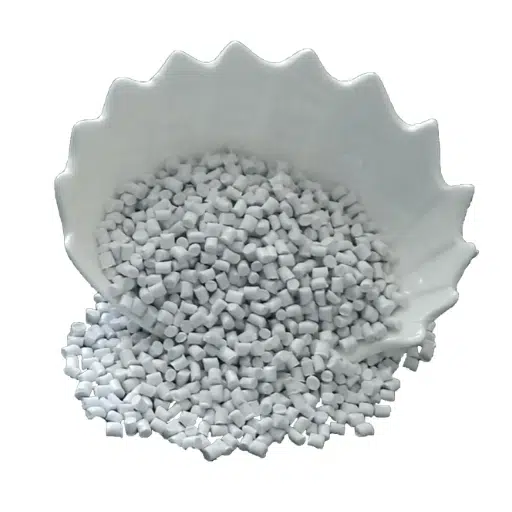
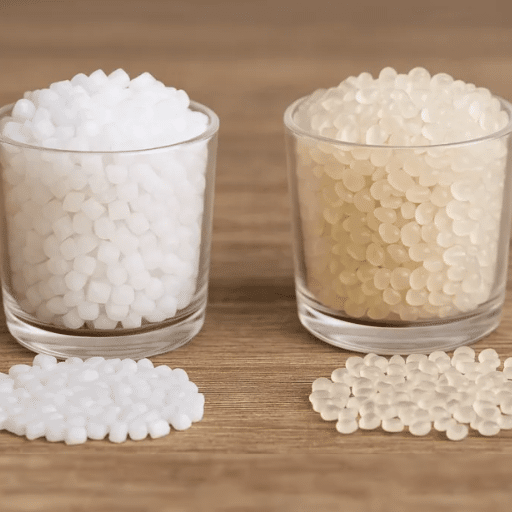
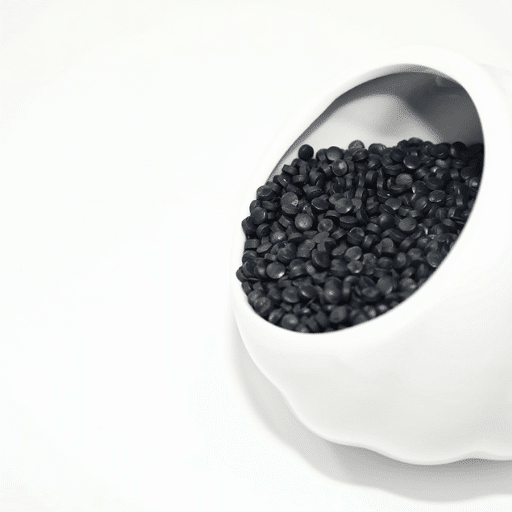
Thermoplastic elastomer (TPE) is a polymer family that combines rubber-like elasticity with plastic processing efficiency. It is supplied as solid pellets, melted on standard injection molding machines, and cooled into parts. Because it is thermoplastic, scrap can be reground and reused, which keeps waste low in high-volume production.
Medical-grade TPE is a specific subset. It is formulated to pass ISO 10993 biocompatibility testing, often meets USP Class VI, and avoids latex, phthalates, halogens, and PVC. Common medical families include SEBS (styrenic block copolymers), TPV (thermoplastic vulcanizates), and TPU (thermoplastic polyurethane). Each behaves differently, so “TPE” is never a single material.
Key medical TPE lines to know:
- KRAIBURG TPE THERMOLAST H HC series, built for healthcare and medical device use.
- Teknor Apex Medalist MD series, including gamma- and autoclave-tolerant grades .
- HEXPOL Mediprene A2 series, which bonds to ABS and PC for multi-component devices.
- CELLENE (Colorite Compounds), silicone-, latex-, and phthalate-free medical TPE.
- PHOENIX (HRS Solution), SEBS-based grades from 15A to 95A Shore for disposables.
The defining limit is duration. Medical-grade TPE is validated for short-term body contact, typically under 24 hours, and is built for single-use disposables. No TPE grade is currently approved for long-term implantation. That is not a quality problem; it is the material’s intended design window.
Dive deeper into the material family with our What Is TPE Material? guide → for Shore hardness, melt flow, and grade selection.
What Is Medical-Grade Silicone?
Silicone rubber is a thermoset elastomer built on a silicon-oxygen backbone. In medical devices it appears in two forms: solid high-consistency rubber (HCR) for molded or extruded parts, and liquid silicone rubber (LSR) for high-volume injection molding. Both cure irreversibly through a platinum or peroxide reaction, so once cured, silicone cannot be remelted or recycled.
Medical-grade silicone is the gold standard for biocompatibility. Platinum-cured grades pass USP Class VI and the full ISO 10993 battery, including systemic toxicity, intracutaneous reactivity, and implantation tests. Established suppliers such as Dow (SILASTIC) and Wacker (ELASTOSIL) maintain FDA master files, which can simplify regulatory submissions.
Because silicone tolerates repeated sterilization and long-term contact, it dominates reusable devices, catheters, implants, and peristaltic pump tubing. The trade-off is cost and processing. LSR requires specialized mixing and metering equipment, heated molds, and longer cure cycles, so per-part costs run higher than TPE.
For a side-by-side processing comparison, see our LSR vs TPE guide →.
Biocompatibility and Regulatory Compliance

Medical device teams do not pick materials by feel. They pick by standards. Here is what actually matters for both materials.
ISO 10993: What Each Part Tests
ISO 10993 is the family of standards for biological evaluation of medical devices. When a supplier says “passes ISO 10993,” ask which parts:
- ISO 10993-1 sets the risk-based framework for selecting tests.
- ISO 10993-5 tests cytotoxicity, whether a material kills cells in culture.
- ISO 10993-10 tests sensitization and irritation from skin contact.
- ISO 10993-11 tests systemic toxicity from absorbed substances.
- ISO 10993-23 covers irritation from direct and indirect contact.
Medical-grade silicone typically passes the full set, including the demanding implantation tests. Medical-grade TPE commonly passes ISO 10993-5, -10, and -23, which supports short-term and single-use devices.
USP Class VI and the FDA 21 CFR Trap
USP Class VI is the strictest biological-reactivity standard for plastics, covering systemic toxicity, intracutaneous reactivity, and implantation. Both medical silicone and higher-end medical TPE can meet it.
Here is the error many articles repeat: FDA 21 CFR 177.2600 covers food-contact rubber articles, not tissue contact. Quoting it does not prove a material is safe for a wound or an implant. For patient contact, the relevant proof is USP Class VI and ISO 10993 data. Verify the specific claim your supplier is making.
EU MDR and Regional Standards
If you sell in Europe, the EU MDR 2017/745 governs device safety, and pharma-contact parts may need to meet European Pharmacopoeia 3.1.9. Add ISO 13485 for the supplier’s quality management system, plus RoHS and REACH for restricted substances. A compliant supplier should hand you all of these documents on request.
Regulatory snapshot:
| Standard | TPE | Silicone |
|---|---|---|
| ISO 10993-5 (cytotoxicity) | Yes, medical grades | Yes |
| ISO 10993-10/-11/-23 | Often | Yes |
| USP Class VI | Higher-end grades | Yes |
| FDA 21 CFR 177.2600 | Food contact only | Food contact only |
| Long-term implant approval | Not available | Yes |
Sterilization Compatibility: The Deciding Factor
Sterilization is the single biggest factor device teams overlook. If your device must be reprocessed, the material has to survive the method, the dose, and the cycle count. Medical component manufacturers like Saint-Gobain publish exactly this compatibility data for tubing and fluid paths. Here is how the two compare.
- Autoclave (steam at 121-134°C): Silicone survives 50+ cycles and is the standard for reusable instruments. Most TPEs deform and warp after 1-2 cycles, which is why autoclaving generally disqualifies TPE for reusable devices.
- Ethylene oxide (EtO): Both materials tolerate EtO. TPE handles roughly 1-2 cycles, ideal for single-use disposables that sterilize once.
- Gamma and e-beam: Silicone tolerates gamma up to about 50 kGy. TPE is radiation-compatible but dose-dependent; high doses can stiffen or embrittle some grades. Validate at the end-of-life dose on finished assemblies.
Sterilization decision matrix:
| Method | TPE | Silicone | Best for |
|---|---|---|---|
| Autoclave | 1-2 cycles | 50+ cycles | Reusable devices |
| EtO | 1-2 cycles | Repeated | Disposables and reusables |
| Gamma | Dose-dependent | Up to 50 kGy | Single-use, packaged |
| E-beam | Yes | Yes | High-volume disposables |
Dana’s wound drain failed because nobody checked the autoclave cycle count before spec. A quick conversation with a material supplier would have caught it, and the quarter-long delay would never have happened. That is the practical value of treating sterilization as a spec, not an afterthought.
FDA Device Risk Classes and Material Selection
Every medical device is classified by risk and intended use. The class determines the regulatory pathway and, in practice, the material that makes sense.
- Class I (low risk): Manual instruments, exam gloves, some tubing. Low scrutiny, high volume. TPE is a natural fit for cost and molding speed.
- Class II (moderate risk): Syringes, catheters, IV sets, wound drains, infusion components. Requires a 510(k) submission. Both materials appear here: TPE for single-use disposables, silicone for reusable components.
- Class III (high risk): Implants, pacemaker leads, heart valves. Requires a PMA submission with clinical evidence. Silicone dominates because of its implantable biocompatibility; TPE is not approved for long-term implantation.
Device class mapping:
| FDA Class | Example devices | Typical material fit | Pathway |
|---|---|---|---|
| Class I | Manual instruments, low-risk tubing | TPE, standard plastics | General controls |
| Class II | Syringes, catheters, IV sets | TPE (single-use), silicone (reusable) | 510(k) |
| Class III | Implants, pacemaker leads | Silicone | PMA |
Material choice also shapes submission timelines. Silicone grades from Dow and Wacker have established FDA master files, which can shorten regulatory review. A newer TPE grade may need extractables and biocompatibility data generated fresh, so factor that into your schedule.
Medical Applications: Where TPE Wins, Where Silicone Wins

Once you know the sterilization method and contact duration, the application picture clears up.
Single-Use Disposables: TPE’s Sweet Spot
TPE is built for high-volume, cost-sensitive, single-use devices. Typical parts include syringe plungers and gaskets, IV and respiratory tubing, drug-delivery components, wound-care dressings, wearable sensor housings, and soft-touch grips. It wins because it molds in tens of seconds on standard equipment, bonds cleanly to rigid plastics like PP and ABS in two-shot overmolding, and can be reground. For a disposable device sterilized once with EtO or gamma, TPE often beats silicone on both price and speed.
Reusable and Implantable Devices: Silicone’s Sweet Spot
Silicone is the choice when a device is reused, implanted, or touches the body long-term. Peristaltic pump tubing, catheters, surgical drains, ventilator circuits, and implantable components all rely on silicone’s repeated-sterilization tolerance, low compression set, and clean extractables profile. The higher upfront cost pays back over years of reuse.
Hybrid Designs: The Common Best Practice
The best answer is often both materials in one device. A common architecture uses a thermoplastic main fluid run with a short silicone segment at the pump rollers, where elasticity matters most. Another pairs rigid plastic connectors with silicone at the patient interface for comfort. Plan the hybrid at the start. Swapping a single component to a different material late in development is far more expensive than designing both materials in from day one.
Here is what that looks like in practice. A device maker at a trade show described converting a pump valve insert from thermoset silicone to a custom TPE grade. The result: faster cycle times, two-shot molding that eliminated a separate assembly step, a 20% weight reduction, and recyclable scrap. The company saved roughly $175,000 per year. The key was that the part was a single-use, moderate-temperature application where TPE’s limits did not matter. Component manufacturers report the same pattern;
TPE vs Silicone Medical Device Cost Comparison
Cost is rarely about the price per kilogram. It is about total cost per sterilized, functional part.
- Raw material: TPE runs $2.50-5.00/kg; medical silicone and LSR run $4-8/kg.
- Specific gravity trap: TPE is about 0.89 g/cm³ versus silicone’s 1.12. That means roughly 20% more parts per kilogram of TPE, an easy-to-miss saving.
- Per-part cost: Medical TPE parts typically land at $0.10-0.50; medical LSR parts at $0.30-0.80 for disposables.
- Tooling: TPE molds run $15k-40k on standard machines. LSR molds run $30k-80k with specialized mixing and precision venting.
- Total cost of ownership: For single-use disposables, TPE wins decisively. For a reusable device sterilized 50+ times, silicone’s longer life, 3-5 years versus 1-2 years, can lower annual cost by 30-40% despite the higher upfront price.
Match the cost model to the business model. A disposable at $0.10 per part scales differently than a reusable at $0.50 per part that lasts four years.
How to Source Medical-Grade TPE Pellets: Supplier Checklist
If your device resolves to TPE, the material’s quality depends entirely on the pellets you buy. Use this checklist before committing to a supplier.
- Verify material certifications. Request USP Class VI and ISO 10993 test data, plus RoHS and REACH. Do not accept a food-contact FDA reference as proof of tissue safety.
- Check the quality system. A medical-grade supplier should operate under ISO 13485, not just ISO 9001.
- Request a CoA and lot traceability. Every lot should trace back to raw materials and production records.
- Confirm pellet consistency. Ask about melt flow index (MFI) stability and pellet-size uniformity. Inconsistent pellets cause process drift and rejected parts on your molding line.
- Verify sterilization documentation. Make sure the grade is documented for your chosen method, whether EtO, gamma, or e-beam.
- Confirm supply terms. Review minimum order quantities, lead times, and global shipping reliability before you design around a material.
If your device instead resolves to silicone, work with a qualified silicone compounder or LSR molder and ask the same questions: cure chemistry (platinum versus peroxide), USP Class VI and ISO 10993 data, post-cure capability, and cleanroom controls.
Suzhou Yifuhui New Material Co., Ltd. supplies medical-grade TPE and TPV pellets with FDA- and EU-compliant formulations, batch consistency control, and a global shipping network. We do not supply silicone (it is a liquid compound, not a pellet), so we stay objective: when the application points to silicone, we will tell you what to look for in a qualified silicone supplier.
Frequently Asked Questions

Is TPE safe for medical devices?
Yes, when used within its intended window. Medical-grade TPE passes ISO 10993 and often USP Class VI, making it safe for short-term body contact under 24 hours and single-use disposables. It is not approved for long-term implantation, so match the material to the contact duration.
Is TPE biocompatible?
Medical-grade TPE is biocompatible for its intended use, validated to ISO 10993-5 (cytotoxicity) and often ISO 10993-10 and -23. It is latex-free and available without phthalates or halogens. Always verify the specific test data for the grade you select.
Can TPE be sterilized by autoclave?
Most TPEs survive only 1-2 autoclave cycles before warping or losing seal performance. If your device needs repeated steam sterilization, silicone is the reliable choice. For single-use disposables sterilized once, EtO or gamma works well for TPE.
Is silicone better than TPE for medical devices?
It depends on the device. Silicone wins for reusable, implantable, or long-term-contact devices because of repeated sterilization and superior biocompatibility. TPE wins for high-volume single-use disposables where cost, molding speed, overmolding, and recyclability matter.
Can TPE be used for implants?
No. No TPE grade is currently approved for long-term implantation. Medical silicone remains the standard for implantable applications. TPE is best reserved for short-term and single-use components.
What medical devices use TPE?
Common TPE applications include syringe plungers and gaskets, IV and respiratory tubing, drug-delivery components, wound-care dressings, wearable sensors, and soft-touch overmolded grips. All are short-term or single-use.
Is TPE or silicone better for medical tubing?
For reusable, repeatedly sterilized tubing like peristaltic pump lines, silicone is the established choice. For single-use fluid-delivery tubing sterilized once, modern medical TPEs offer clarity, flexibility, and significant cost savings.
Is silicone safe for medical devices?
Platinum-cured medical silicone is one of the most tested materials in healthcare. It passes USP Class VI and ISO 10993, including implantation tests, and has decades of clinical history in catheters, drains, and implants.
Conclusion: Make the Right Material Choice the First Time
Choosing between TPE and silicone for medical devices comes down to three questions. What sterilization method and cycle count does the device face? How long does it touch the body? And what device risk class is it in?
Choose TPE when the device is a single-use disposable, sterilized once with EtO or gamma, with short-term contact under 24 hours, and cost and molding speed matter. Choose silicone when the device is reusable, repeatedly sterilized, long-term-contact, or implantable, and failure is not an option. And remember that many of the best devices use both materials in a hybrid design.
Start with the sterilization spec. It is the question that saves you from Dana’s quarter-long delay, the specification that turns a launch on time, and the decision that keeps a device safe for the patient who depends on it.
Ready to source medical-grade TPE or TPV pellets for your device? Contact Suzhou Yifuhui New Material Co., Ltd. and get a competitive quote within 24 hours, backed by certified grades and a global shipping network. Request a custom quote →
For another medical-polymer perspective, explore our medical-grade UHMWPE guide → for high-wear orthopedic and device applications.