The “cheaper” material can cost you more per finished part, and the “premium” one can cut your annual spend in half. That’s the real TPE vs silicone cost story, and most price sheets don’t tell it.
It’s a fair assumption that TPE, typically priced at $2.50-$5.00/kg, beats silicone at $4.00-$8.00/kg. But the per-kilogram sticker price is only the opening move. By the end of this guide, you’ll know exactly where TPE vs silicone cost truly diverges, across raw material, tooling, cycle time, scrap, and total cost of ownership. We’ll walk through an at-a-glance comparison, the specific gravity trap that flips your per-part math, real production cost examples, and the break-even volumes where silicone becomes the smarter buy.
When Ana, a sourcing manager at a European electronics contract manufacturer, compared TPE vs silicone cost for a smartwatch band program, she did what most buyers do. She pulled the per-kilogram prices, picked TPE, and moved on.
Her molder quoted a standard cold-runner tool, her cycles ran in under 30 seconds, and her per-part material cost landed near $0.02. The silicone route needed a heated LSR tool, 60-second cycles, and roughly double the material spend. For a 200,000-unit program, the material and processing gap alone saved her team about $40,000 before the lower mold investment and faster payback.
TPE vs Silicone Cost at a Glance

Here’s the fast answer for busy procurement teams.
| Cost Factor | TPE (Thermoplastic) | Silicone / LSR (Thermoset) |
|---|---|---|
| Raw material price | 2.50−2.50−5.00/kg (about 9-60 RMB/kg by grade) | 4.00−4.00−8.00/kg (about 30-80 RMB/kg) |
| Specific gravity | ~0.89 g/cm³, roughly 20% more parts per kg | ~1.12 g/cm³ |
| Mold cost | 5,000−5,000−20,000 (standard cold runner) | 8,000−8,000−30,000+ (hot runner plus temperature control) |
| Processing cost per part | 0.05−0.05−0.15 | 0.15−0.15−0.30 |
| Cycle time | Tens of seconds, no curing | 30-120 seconds per shot, plus 2-4 hours post-cure |
| Material utilization | 85-90%, regrind is recyclable | Above 95%, but cured flash cannot be recycled |
| Total production cost | 3,000−3,000−6,500 per 10,000 pieces | 5,500−5,500−11,000 per 10,000 pieces |
| Tooling payback | 3-6 months | 6-12 months |
Read the table as a stack, not a single row. TPE wins on every upfront line. Silicone earns its premium only when the application forces the comparison into lifecycle territory, which we will cover shortly. For a full side-by-side of properties and processing, start with our complete TPE vs Silicone material selection guide and LSR vs TPE: Properties, Processing, and Cost Guide.
Raw Material Cost: TPE vs Silicone Price per kg
Raw material is where most comparisons stop, so let us give it the depth it deserves.
2026 TPE Pellet Prices by Grade
TPE is not one material. It’s a family, and the price spread inside the family is enormous. China market prices for 2026, quoted ex-factory in yuan per ton, break down roughly as follows:
- SBS-based TPR (general purpose): 13,000-22,000 RMB/ton
- SEBS-based general injection grade (30-90A): 18,000-32,000 RMB/ton
- SEBS-based overmolding grade (PP/ABS): 25,000-40,000 RMB/ton
- SEBS-based food grade (FDA): 35,000-55,000 RMB/ton
- TPV (EPDM/PP): 28,000-45,000 RMB/ton
- TPU-based TPE: 30,000-60,000 RMB/ton
- Medical grade (ISO 10993): 60,000-120,000 RMB/ton
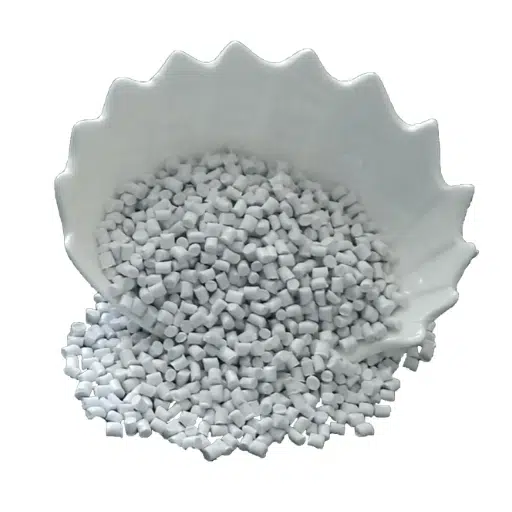
Convert those to U.S. dollars and commodity TPE lands around $2.50-$5.00/kg, while food-grade, TPV, and medical grades push toward $6-$15+/kg, overlapping the silicone range. The lesson: never compare two TPE quotes without comparing the specification, Shore hardness, and certifications behind them. A “70A TPE” can cost 15 RMB/kg as an SBS commodity or 28 RMB/kg as an SEBS-grade from a different supplier. If you want to understand what actually drives those grade differences, our TPE Material Properties: Complete Guide to Types and Uses breaks down each family and where it fits best.
2026 Silicone and LSR Prices
Silicone rubber and liquid silicone rubber (LSR) sit higher, typically $4.00-$8.00/kg, or 30,000-80,000 RMB/ton in the China market, with medical-grade LSR at the top of the range. Silicone doesn’t have the same grade spread as TPE, but it consistently starts above commodity TPE. Add the logistics detail: silicone raw material often needs cold storage, while TPE granulate stores at ambient temperature. Small advantage for TPE, but it compounds on multi-container orders.
The Specific Gravity Trap: TPE vs Silicone Cost Per Part
Here’s the step most buyers skip. TPE has a specific gravity of about 0.89, while silicone sits near 1.12. For the same part volume, you consume roughly 20% more silicone by weight.
Run the math on a real part. A 5-gram part molded in TPE consumes 5 grams. The same part in silicone weighs about 5.6 grams because you buy material by weight but use it by volume.
At TPE’s $3/kg and silicone’s $6/kg, the TPE material cost is $0.015 per part. The silicone material cost is $0.0336, more than double, before a single second of machine time.
This is why comparing TPE vs silicone cost on a per-kilogram basis alone is misleading. Convert to cost per part using the actual part volume, and the gap widens in TPE’s favor. Add in faster cycles and recyclable regrind, and TPE parts commonly run 40-50% cheaper than equivalent LSR parts in high volume. That finding shows up across manufacturing cost models.
Tooling, Equipment, and Processing Costs

Beyond raw material, the two materials diverge sharply on the shop floor.
Mold Costs
The tpe vs lsr tooling cost gap starts in the mold. TPE runs on standard injection molding equipment with conventional cold-runner molds priced at 5,000−5,000−20,000. Silicone and LSR require specialized tooling with hot-runner systems and precise temperature control, typically 8,000−8,000−30,000, and precision medical applications can climb to 30,000−30,000−80,000. LSR molds also demand careful venting and vacuum design to control flash, which adds design time and cost.
Machinery and Facility Investment
If your molder already runs thermoplastics, TPE needs no new capital. Silicone injection molding requires dedicated LSR metering and dispensing units, heated platens, cold storage for raw material, and often post-cure ovens. That capital lands somewhere: in the tooling quote, the hourly machine rate, or your part price.
Cycle Time and Scrap
TPE cycles in the lower tens of seconds because there is no curing step. Silicone needs 30-120 seconds per shot in a mold held at 160-200°C, and some grades require 2-4 hours of post-curing. KRAIBURG TPE estimates TPE cycles run roughly 50% shorter than LSR. On energy, TPE skips the vulcanization step entirely.
Scrap tells a similar story. TPE sprues, runners, and trimmings can be reground and reused, pushing material utilization to 85-90% with minimal waste. Cured silicone flash cannot be recycled, and while LSR material utilization can exceed 95%, every gram of waste is lost value. Many of these tooling and processing tradeoffs show up clearly in soft-touch parts, which we detail in our TPE vs Silicone Overmolding guide. For a detailed look at machine setup and parameters, see our TPE injection molding guide and LSR injection molding guide.
Total Production Cost: TPE vs Silicone at Scale
Let us put the pieces together with a production model based on 1 million parts per year, a benchmark used across the manufacturing industry.
| Cost Item | TPE | Silicone |
|---|---|---|
| Material cost | 2.50−2.50−5.00/kg | 4.00−4.00−8.00/kg |
| Processing cost | 0.05−0.05−0.15 per part | 0.15−0.15−0.30 per part |
| Mold cost | 5,000−5,000−20,000 | 8,000−8,000−30,000 |
| Total per 10,000 parts | 3,000−3,000−6,500 | 5,500−5,500−11,000 |
| Tooling payback | 3-6 months | 6-12 months |
Real examples back this up. A contact lens container manufacturer that switched from silicone to TPE projected about $122,000 in annual savings. Medical tubing runs $0.80-$1.20 per meter in TPE versus $1.50-$3.00 per meter in silicone. Teknor Apex positions TPE as up to five times more cost-effective than silicone across the full production stack.
Ready to run these numbers against your own part geometry? Request a competitive quote and our polymer specialists will send detailed pricing within 24 hours. We supply TPE, TPV, and TPU-based TPE pellets across a wide Shore hardness and melt-flow range, so you can compare on your actual specification rather than a generic grade.
When Silicone Delivers Lower Total Cost of Ownership
Now for the contrarian half of the story. There are real scenarios where silicone, despite costing more per kilogram, becomes the cheaper material over the life of the product.
Reusable and Long-Life Applications
Silicone lasts 3-5 years in reusable parts where TPE typically survives 1-2 years. When a component must be replaced repeatedly, the higher upfront price can produce a 30-40% lower annual cost once labor, downtime, and replacement parts are included.
A Tier 1 medical supplier learned this the hard way. Their peristaltic pump cartridges ran under steam and had to survive 100 autoclave cycles. TPE tubing at $0.95 per meter failed after 18 cycles. Silicone at $2.40 per meter passed all 100.
Rebuilding the cost model around replacements, labor, and line downtime, silicone delivered a 34% lower annual cost. For more on that trade-off in regulated products, read our TPE vs Silicone for Medical Devices guide. This same lifecycle logic applies under the hood, where our TPE vs Silicone for Automotive Seals and Gaskets guide walks through the heat and durability tradeoffs in detail.
Sterilization and Compliance
Silicone withstands 50 or more sterilization cycles across autoclave, EtO, and gamma methods. Most TPEs degrade after 15-20 cycles. If your part is single-use, TPE wins easily. If your part is reprocessed and sterilized dozens of times, silicone’s longevity flips the economics.
Break-Even Volume Analysis
Volume changes the answer too.
- Below roughly 500,000 parts per year: TPE wins. Lower tooling investment and faster payback dominate.
- 500,000 to 1,000,000 parts per year: evaluate both. LSR’s material utilization and automation begin to offset its tooling premium.
- Above roughly 1,000,000 parts per year: LSR can reach a 20-35% total cost advantage through automation, yield above 98%, and material efficiency.
A pragmatic approach is to prototype in TPE first, because it’s fast and cheap, then validate the final design in LSR only where performance genuinely demands it.
Marcus, a product engineer at a toy manufacturer, followed exactly that path. He prototyped in TPE for $4,000, then validated the final product in food-grade silicone. The hybrid approach told him precisely when the silicone premium was justified, and when it wasn’t.
How to Get Accurate TPE and Silicone Pricing

Cost comparisons are only as good as the quotes behind them. Protect yourself with these steps.
- Compare the same thing. Request pellet or resin pricing in the same unit, with grade name, Shore hardness, density, certifications, MOQ, Incoterms, and freight line.
- Ask for per-part cost, not just per-kg. A good supplier will help you estimate mold amortization and cycle time for your geometry.
- Verify pellet quality. Consistent melt flow index and uniform pellet size protect your cycle stability. Hygroscopic TPU-based TPE grades need proper drying, so confirm your supplier ships dry or advises drying parameters.
- Demand documentation. Ask for a certificate of analysis, ISO 9001 certification, and RoHS, REACH, FDA, or EU compliance papers where your application requires them.
- Buy direct when volume allows. Sourcing TPE pellets directly from a China-based manufacturer removes broker markup and regional distribution premiums, and bulk orders of 5+ tons per month typically earn 8-15% volume discounts.
At Suzhou Yifuhui New Material Co., Ltd., we combine direct-source pricing with batch consistency control, so the price you are quoted is the quality you receive, order after order.
Conclusion: Choose on Total Cost, Not Per-Kilogram Price
The TPE vs silicone cost question has no single answer, and that’s the point. TPE wins on raw material, tooling, cycle time, scrap, and recyclability, making it the clear choice for high-volume, cost-sensitive, and single-use parts. Silicone wins on lifecycle cost in reusable, sterilizable, high-heat, and extremely high-volume automated applications.
Three takeaways to carry into your next sourcing decision:
- Compare cost per part, not per kilogram, and always run the specific gravity math.
- Model the full TPE vs silicone total cost of ownership across service life, sterilization, and replacement frequency, not just the first invoice.
- Buy direct and compare like-for-like grades, certifications, and logistics, because the real savings live in the details.
Every material budget deserves this level of scrutiny. Request a custom quote today and our team will return transparent TPE, TPV, or silicone pellet pricing within 24 hours, backed by global shipping and batch-consistent quality you can rely on.
Frequently Asked Questions

Is TPE cheaper than silicone?
Yes. TPE raw material typically costs 2.50−2.50−5.00/kg versus 4.00−4.00−8.00/kg for silicone, and TPE’s lower density delivers about 20% more parts per kilogram. Including tooling and processing, TPE parts run roughly 40-50% lower cost than equivalent LSR parts.
Why is silicone more expensive than TPE?
Silicone requires high-purity feedstocks, energy-intensive heat curing, specialized LSR equipment, and higher-cost tooling. Cured silicone cannot be recycled, so material waste is lost value, and its longer cycles raise machine-hour cost.
How much do TPE pellets cost in 2026?
Commodity SBS-based TPE runs about 2.50−2.50−3.50/kg, SEBS general grades 3.50−3.50−5.00/kg, and food-grade or TPV grades 5−5−8/kg. Medical-grade TPE can exceed $10/kg.
When does silicone become the cheaper option?
In reusable applications where silicone’s 3-5 year life and 50+ sterilization cycles reduce replacement frequency, and in very high-volume runs above about 1 million parts per year where automated LSR molding gains a 20-35% cost advantage.
Can TPE replace silicone to reduce cost?
Yes, in moderate-temperature, cost-sensitive, single-use, or recyclable-required applications. For sustained heat above 120°C, repeated sterilization, or long-term sealing, silicone remains worth its premium.