Carlos, a cable design engineer at an automation company in Guadalajara, won a budget battle last winter by spec’ing PVC jackets on a new drag-chain cable for a cold-fill packaging line. The per-meter savings looked great on paper. Eight months and roughly 400,000 flex cycles later, three of those cables cracked at a bend point near a chiller, tripping the line for six hours on the busiest shift of the quarter. The PVC jacket, which is rated for a fraction of a million flex cycles and stiffens near freezing, simply gave out. He replaced them with a TPE jacket and has not touched the run since.
That is the reality behind the TPE vs PVC wire and cable decision. PVC has been the workhorse of cable making for decades, and it still wins plenty of applications. But the specification is no longer a pure cost equation. Fire safety, low-temperature flexibility, continuous flexing, and recyclability now drive the choice, and the gap between the two materials keeps widening.
This guide compares TPE and PVC for cable insulation and jacketing across chemistry, fire standards, temperature, flex life, cost, and sourcing. You will finish with a clear decision framework and a supplier checklist, so you can specify and source the right compound with confidence.
New to the broader comparison? Start with our TPE vs PVC material selection guide → for the full manufacturing picture, then return here for the cable-specific depth.
Jacket vs Insulation: Where the Compound Goes in a Cable

Most vendor content treats “cable material” as one topic. In practice a cable has two distinct polymer jobs, and they impose different demands.
- Conductor insulation sits directly on the wire. It must be thin, tough, and electrically reliable, because it carries the dielectric stress between the live conductor and the world. Material selection here leans on insulation class, voltage rating, and thermal rating.
- Jacket, sheath, or outer cover protects the assembled core. Its job is mechanical: flex life, abrasion, oil and chemical resistance, UV stability, and fire behavior. The jacket takes the abuse; the insulation takes the voltage.
TPE and PVC both serve in both roles, but they compete most often as jacketing. Understanding which layer you are specifying matters because a jacket failure causes a cable replacement, while an insulation failure causes a shock or short-circuit hazard.
What Is TPE Wire and Cable Material?
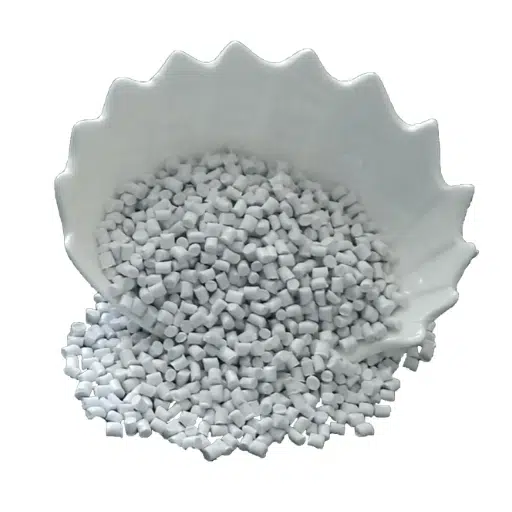
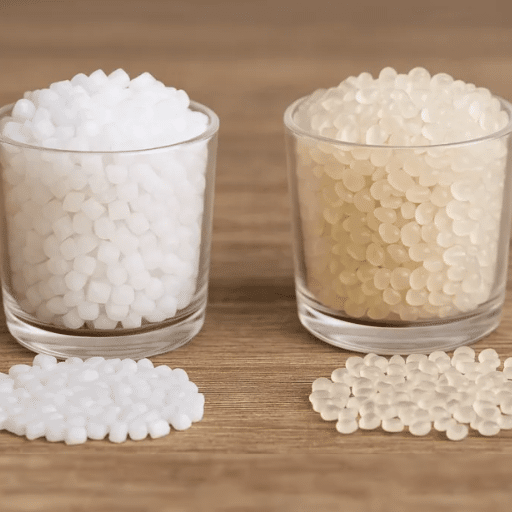
TPE, or thermoplastic elastomer, is a polymer family that behaves like rubber yet processes like a thermoplastic. Cable grades are supplied as solid pellets, fed into an extruder, and melted into a continuous jacket or insulation layer around the conductor.
The cable-relevant families matter more than the umbrella term:
- SEBS (styrenic block copolymer, TPE-S) gives soft-touch flexible cords, appliance wire, and consumer leads their feel and kink resistance.
- TPV (thermoplastic vulcanizate) is the workhorse for EV charging cables and heavy-duty dynamic jackets, balancing long-term heat and UV performance with high flexibility.
- TPU (thermoplastic polyurethane) leads where abrasion and oil resistance dominate.
- TPO (thermoplastic olefin) covers commodity flexible cords.
TPE is naturally halogen-free and plasticizer-free, which is the property that separates it from PVC in a fire. Because it is a true thermoplastic, production scrap can be reground and reused. Our TPE vs TPU vs TPV comparison → and What Is TPE Material? guide → cover the family differences in detail.
What Is PVC Wire and Cable Compound?
Polyvinyl chloride is a chlorinated thermoplastic. In its rigid form it is hard, so flexible cable grades only become flexible when a plasticizer is added, commonly at 30-40% of the formulation by weight. That plasticizer system is both the material’s strength and its weakness.
PVC has carried cable insulation and jackets since the 1950s because it is inexpensive, easy to extrude, electrically sound, and inherently flame-retardant. That last property comes from chlorine, which makes up roughly 29% of the polymer chain. The trade-off is severe: when PVC burns, that same chlorine releases hydrogen chloride gas and dense black smoke.
The second trade-off is slower but equally real. Plasticizers are not bonded to the PVC chain. Over years of heat, UV, and mechanical stress they migrate out, and the jacket hardens, shrinks, and cracks. Outdoor PVC cables can show this aging within five to ten years, which is exactly the failure Carlos saw in his cold-fill line, accelerated by cold flexing.
TPE vs PVC for Wire and Cable: Property Comparison

Here is the fastest way to orient yourself. These ranges hold for commercial cable grades from major compounders, and every value is grade-dependent.
| Property | Flexible PVC cable compound | TPE cable compound |
|---|---|---|
| Halogen content | Contains chlorine, halogenated | Halogen-free; HFFR grades available |
| Plasticizers | Required, ~30-40%, migration risk | None |
| Specific gravity | ~1.20-1.40 | ~0.88-1.05, roughly 20-30% lighter |
| Shore hardness | ~60-95 A, plasticizer-tuned | Broad, ~5-95 A, soft-touch possible |
| Continuous temperature | ~70°C, special grades to 90-105°C | ~90-105°C, special grades to 125°C |
| Low-temperature flexibility | Stiffens and cracks around -15 to -25°C | Flexible to roughly -35 to -50°C |
| Flex life | Under ~1 million cycles | 10 million-plus cycles |
| Flame behavior | Inherently flame-retardant, dense smoke and HCl | Not inherently FR; HFFR LSZH grades pass VW-1 |
| Smoke and acid gas | Dense, toxic | Low smoke, low or no acid gas |
| Oil and chemical resistance | Moderate, plasticizers migrate in oil | Good to excellent, TPU and TPV best |
| UV and weathering | Needs stabilizers, ages and cracks | Generally good, grade-dependent |
| Recyclability | Limited by chlorine and plasticizers | Fully recyclable, regrind reuse common |
| Relative material cost | Lowest | Higher per kg, narrower gap per meter |
Two rows settle most jacket decisions. Halogen content: PVC cannot be low-smoke zero-halogen, because its flame retardance comes from chlorine. Flex life: PVC cracks under repeated bending, while TPE survives millions of cycles. If your cable moves continuously or must be halogen-free, those two rows point to TPE.
Not sure which cable grade fits your construction? Our polymer specialists can review your application and point you to a batch-consistent TPE or TPV pellet. Talk to an expert →
Halogen-Free, Low Smoke: The Fire-Safety Difference
Fire behavior is where these two materials diverge most sharply, and it is the single strongest driver of the current shift from PVC to TPE in cable.
What “Halogen-Free” Actually Means for Cables
A halogen-free compound contains no fluorine, chlorine, bromine, or iodine, so it does not release acid gas when it burns. The measurement matters as much as the label:
- IEC 60754 measures acid gas evolution during combustion.
- IEC 61034 measures smoke density.
- A jacket described as LSZH (low smoke zero halogen) or HFFR (halogen-free flame retardant) is designed to pass both.
PVC can never be LSZH. Its flame retardance comes from chlorine, so it always generates HCl and heavy smoke in a fire. In a confined space, such as a control cabinet, a metro tunnel, or a data center, that smoke can disable people and equipment before the flame even arrives.
Flame Tests in Plain Terms
Cable standards are a tangle of letters, so here is the map:
| Standard | What it tests | PVC note | TPE/HFFR note |
|---|---|---|---|
| UL 62 | Flexible cords | Passes | HFFR TPE passes |
| UL 758 | Appliance wiring material | Passes | HFFR TPE passes |
| UL 1581 | Reference for UL wire tests | Heat-shock limit ~121°C | HFFR TPE rated ~150°C |
| VW-1 | Vertical-wire flame test | Passes | HFFR TPE passes |
| IEC 60332-1 | Flame spread on a single cable | Passes | Passes |
| IEC 61034 | Smoke density | Dense smoke | Low smoke |
| IEC 60754 | Acid gas | High (HCl) | Low or zero |
Halogen-free flame-retardant TPEs are not theoretical. Teknor Apex’s Halguard E 59000 series meets UL 62 and UL 758, passes the VW-1 and Cable Flame tests, and clears the IEC 61034 smoke test. Tested to UL 1581, it also passes deformation and heat-shock at 150°C, compared with 121°C for PVC. That is a documented, off-the-shelf answer to the halogen problem.
Where the Demand Is Coming From
Regulation and green-building codes are pulling demand toward LSZH. Europe’s Construction Products Regulation and its Euroclass system, RoHS, and REACH all push cable makers toward halogen-free jacketing. Mass transit, data centers, marine, and offshore specifications increasingly mandate it. When a project requires LSZH, PVC is excluded by definition, and HFFR TPE becomes a leading candidate.
Temperature and Low-Temperature Flexibility

The temperature rating printed on a cable drum hides most of the difference between these materials.
Continuous service temperature. Standard PVC cable runs continuously around 70°C, with special grades reaching 90°C or 105°C. TPE cable grades are commonly rated 90°C to 105°C, and special grades reach 125°C or higher. For an appliance cord near a motor or a charging cable near a power stage, that headroom matters.
Low-temperature flexibility. This is where PVC loses ground fast. Below roughly -15°C to -25°C, PVC stiffens and can crack when bent. TPE remains flexible down to about -35°C to -50°C depending on the grade. Outdoor winter installations, cold storage, refrigeration equipment, and outdoor EV chargers are all TPE territory.
Flex Life and Dynamic Duty: Static vs Moving Cables
The mechanical life of a cable jacket decides which applications each material can serve.
Static Installations Are PVC’s Comfort Zone
A cable that is bent once at installation and never moved again makes few demands on the jacket. For fixed building wire, control cable in a cabinet, or permanent routing, PVC remains economical and adequate. Nothing in this guide argues otherwise.
Continuous Flex Belongs to TPE
The moment a cable moves, the calculus changes. Drag chains, robotic arms, cranes, and cable carriers impose millions of bending cycles over a machine’s life. PVC jackets crack under repeated bending, typically well under a million cycles. TPE jackets survive into the millions, which is why energy-chain specialists like igus build their dynamic-jacket specifications around high-flex compounds.
Consider Priya, a machine builder in Pune who standardized on PVC-jacketed cable for her assembly robots because her panel shop could terminate it faster. Her first customer ran three shifts, and within a year the robot cable at the wrist joint began showing jacket cracks. Her warranty cost on that one line exceeded the material savings she had banked across an entire year of production. She re-specified the moving sections with TPE and left PVC on the fixed runs, a division of labor that matches the physics.
Abrasion, Oil, Chemical, and UV Resistance
Beyond flexing, the environment attacks the jacket. TPE generally outlasts PVC here.
- Abrasion: TPE, especially TPU and TPV, resists scraping and wear better than PVC.
- Oil and chemicals: PVC plasticizers migrate out when the jacket contacts oil, causing hardening and shrinkage. TPU and TPV handle oil well, and TPE-S is moderate. For machine-tool cable in an oil mist, PVC is a poor fit.
- UV and weathering: PVC needs stabilizers and still yellows and cracks outdoors over time. TPE resists UV and ozone better, which favors it for outdoor and washdown applications.
TPE vs PVC Cable Cost: Per-Kilogram vs Per-Meter

PVC is cheaper per kilogram. That fact has kept it in cables for seventy years, and the full picture is more balanced than a raw price comparison suggests.
- Raw material. Flexible PVC compound runs roughly $1.20-1.90 per kilogram. TPE runs about $2.50-4.50, and TPV and TPU sit higher. That is roughly 1.5 to 2.5 times the per-kilogram cost of PVC.
- Density closes the gap. TPE is about 20-30% lighter than flexible PVC. A jacket has a fixed volume, so a lighter compound yields more meters of cable per kilogram. The per-meter premium for TPE typically lands around 1.2 to 1.8 times PVC, not the 2.5 times the per-kilogram price suggests.
- Worked example. A meter of jacket that needs about 0.15 kg of PVC costs roughly $0.23 in material. The same volume of TPE weighs about 0.11 kg and costs roughly $0.35-0.45. The premium is real but modest once you weigh the fire and flex gains against it.
- Processing and scrap. TPE extrudes on standard lines and does not corrode tooling, while PVC can release HCl at processing temperatures and attack screws and barrels. TPE scrap regrinds cleanly; PVC regrind is limited by plasticizer degradation.
- Lifecycle. In harsh duty, a PVC jacket ages, cracks, and forces replacement years sooner than a TPE jacket. The cheapest jacket is not the cheapest cable over its service life.
For the full worked model across seals, tubing, and molded parts, the pillar guide has the complete cost-of-ownership analysis →.
Choosing TPE or PVC by Cable Application
The decision is easier when it maps to a specific cable. Use this as a starting point; every construction still needs its own flame, temperature, and mechanical validation.
| Cable application | Best fit | Why |
|---|---|---|
| EV charging cables (Type 2, CCS, GB/T) | TPV or TPE | Heat, aging, halogen-free, outdoor flex |
| Drag-chain, robotics, and automation | TPV, TPU, or TPE | Millions of flex cycles, abrasion, oil |
| Appliance wire and flexible cords (AWM, UL 758) | TPE-S, HFFR | Halogen-free, soft-touch, 105°C VW-1 grades |
| Consumer electronics and headset leads | TPE-S | Soft-touch feel, kink resistance |
| Building wire and fixed power | PVC | Proven, low cost, static |
| Control and signal cable in benign indoor runs | PVC | Economy, adequate performance |
| Medical device leads | TPE-S | Phthalate and halogen-free |
| Solar, wind, and mass transit | HFFR TPE or TPV | LSZH plus temperature resistance |
| Marine and offshore | TPU or TPV | Water, oil, abrasion |
The rule of thumb is short: static, cost-critical, and indoor points to PVC; flexing, temperature extremes, fire safety, or outdoor exposure points to TPE. For medical leads, the reasons overlap with the TPE vs PVC medical device decision →.
Selecting the Right TPE Pellet for Cable Extrusion
If the decision lands on TPE, the next question is which pellet to buy. The compounder’s grade data sheet tells the real story.
- Pick the right TPE family. SEBS/TPE-S for soft-touch cords and appliance wire, TPV for EV and heavy dynamic duty, TPU for abrasion and oil. Each extrudes differently and carries different property limits.
- Verify the flame documentation. Ask which tests the grade passes: UL 62 or UL 758, VW-1 or Cable Flame, IEC 60332, IEC 61034, and IEC 60754. Halogen-free is not the same as flame-retardant; confirm both on the specific grade.
- Check hardness and melt flow. Shore hardness sets the feel and stiffness. Melt flow index (MFI) sets extrusion behavior, and thin-wall insulation demands consistent MFI run to run.
- Inspect pellet uniformity. Uniform pellet size and consistent melt flow reduce machine jams and wall-thickness variation on the line.
- Request documentation. Ask for a Certificate of Analysis, batch traceability, and RoHS and REACH statements. If you need a UL-recognized compound, confirm the UL yellow card or letter of recognition exists for that grade before you spec it.
- Evaluate logistics. Confirm minimum order quantity, lead time, global shipping, and how quickly you get a technical answer.
That last point is where a direct-source supplier earns its place. Suzhou Yifuhui New Material Co., Ltd. supplies TPE and TPV pellets across Shore hardness and melt-flow ranges for cable jacket and insulation extrusion, with batch-consistency control, competitive bulk pricing, and global shipping. When a sourcing manager needs a grade fast, our team returns a detailed quote within 24 hours.
Need a specification sheet or a sample quote for a TPE cable grade? Request a competitive quote → or contact our polymer specialists →.
TPE vs PVC Wire and Cable: Frequently Asked Questions

Is TPE better than PVC for cables?
For halogen-free fire safety, low-temperature flexibility, and continuous flexing, TPE is better. For static, indoor, cost-critical cable, PVC remains the economical choice. The right answer depends on the application, which is why this guide maps both.
Can TPE replace PVC in wire and cable?
Yes, in most flexible-cable applications. HFFR TPE grades meet the same UL and IEC flame requirements as PVC while adding halogen-free, low-smoke performance, better cold flexibility, and longer flex life. PVC stays competitive on cost for static use.
Is PVC cable halogen free?
No. PVC contains chlorine, so it is halogenated by definition. When it burns it releases hydrogen chloride gas and dense smoke, which is why it cannot meet low-smoke zero-halogen requirements.
What temperature can TPE vs PVC cable handle?
Standard PVC cable runs continuously around 70°C, with special grades to 90-105°C. TPE cable grades are commonly rated 90-105°C, with special grades to 125°C, and they stay flexible to about -35°C to -50°C where PVC stiffens.
Which cable jacket is best, PVC or TPE?
For a static indoor cable where cost rules, PVC. For a cable that flexes, runs in the cold, faces oil or UV, or must be halogen-free, TPE. Use the application table in this guide to match the jacket to the job.
What is the difference between TPE and PVC cable?
The core difference is halogen content and flexibility mechanism. Flexible PVC needs plasticizers and contains chlorine, so it emits toxic smoke when burned and ages by plasticizer loss. TPE is halogen-free and plasticizer-free, stays flexible in the cold, and survives millions of flex cycles.
What is LSZH cable jacket material?
LSZH, or low smoke zero halogen, describes a jacket that releases almost no smoke and no acid gas when burned. It is measured under IEC 61034 and IEC 60754. PVC cannot qualify because its chlorine produces both.
Why is halogen-free cable important?
In a fire, halogenated jackets release acid gas and dense smoke that can incapacitate people and corrode equipment before the flame spreads. Halogen-free, low-smoke cable gives occupants more time to evacuate and reduces equipment damage, which is why transit, data center, and building codes increasingly require it.
Making the Right Cable Material Choice
Three forces are converging on the TPE vs PVC wire and cable decision. Fire codes and green-building rules are pushing jacketing toward halogen-free, low-smoke materials that PVC cannot deliver. Automation and electrification are demanding flex life measured in millions of cycles, and temperature ratings that PVC reaches only at the edge of its limits. And the technical gaps that once held PVC in place, its low cost and long static-service record, are narrowing as TPE density and processing close the price gap per meter.
PVC still wins where cost and static duty dominate. TPE wins for halogen-free fire safety, low-temperature flexibility, continuous flex, and recyclability, which is precisely where the cable market is heading. Run your flame test early, verify the flex life against your actual cycle count, and check the MFI consistency of every pellet lot you buy.
When your cable resolves to a TPE or TPV jacket, you want a supplier with the consistency to keep your line moving. Suzhou Yifuhui New Material Co., Ltd. supplies TPE and TPV pellets with batch-consistent quality, competitive direct-source pricing, and global shipping. Get a quote within 24 hours →