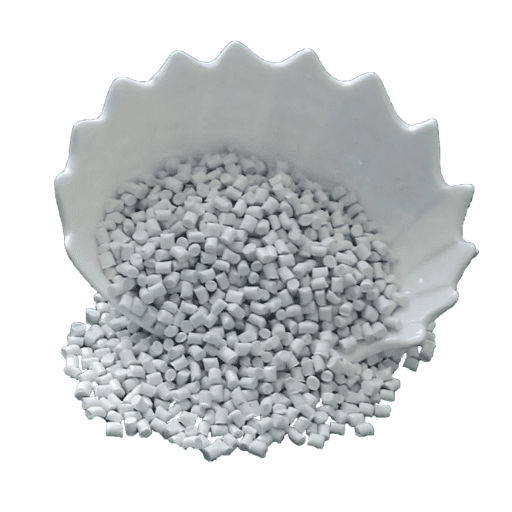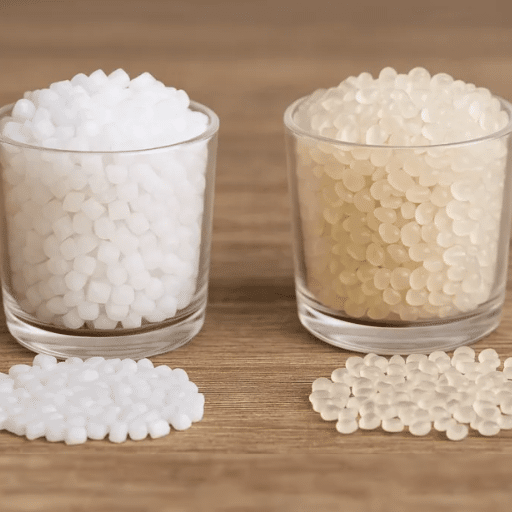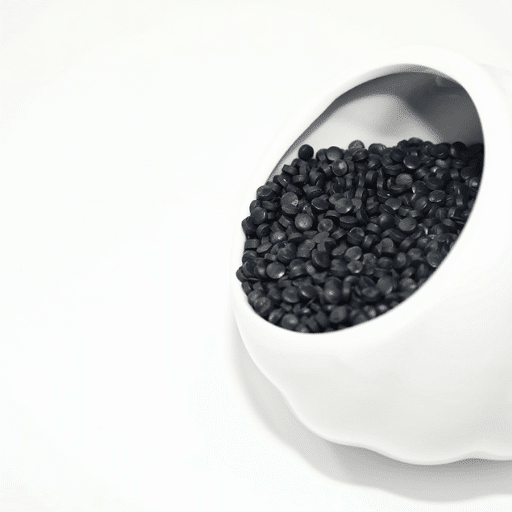
A single bond difference explains why one connector swells in a humid warehouse while the other holds its tolerance for years. That bond is the divide between the amide linkage (-CO-NH-) in polyamides and the ester linkage (-CO-O-) in polyesters. If you source engineering plastic pellets, understanding this distinction is not academic trivia. It directly controls drying schedules, mold shrinkage, heat resistance, and ultimately whether your production line delivers first-pass yield or costly rework.
You already know that polyamide and polyester are workhorse thermoplastics. You have probably specified PA66 for under-hood brackets or PET for electrical housings. Yet many procurement and design teams still treat the two families as interchangeable options in the same thermal class. They are not.
Polyamide is commonly called nylon, so the nylon vs polyester chemical structure debate surfaces frequently in both textile and engineering procurement. The polyamide vs polyester chemical structure creates fundamentally different behaviors once the pellets hit the hopper.
This guide breaks down those structures, maps how each repeat unit drives mechanical and thermal performance, and gives you a decision checklist you can use on your next material-selection review. In the sections ahead, we will examine the molecular backbone of each polymer, compare their hydrogen-bonding behavior side-by-side, trace the property consequences from tensile strength to moisture absorption, and show exactly where each material wins on the factory floor.
Want to see how these structural differences translate into exact grade specifications? Explore our full catalog of engineering plastic pellets to compare PA66, PET, PBT, and other high-performance polymer resins side-by-side.
When Marcus Chen, a senior materials engineer at an automotive Tier-1 supplier, spent three weeks troubleshooting warpage in a PA66 electrical connector, the root cause surprised everyone. The parts had absorbed moisture during monsoon-season storage, expanding 1.2% and distorting critical snap-fit geometries. His team switched the housing to a glass-filled PBT grade. Dimensional stability returned immediately, and the component passed validation without a single mold change.
What Is Polyamide? Definition and Chemical Structure
Polyamides are condensation polymers built from repeating units linked by amide groups. The defining feature is the -CO-NH- bond, which introduces strong inter-chain hydrogen bonding and gives the family its trademark toughness.
The Amide Linkage (-CO-NH-)
In every polyamide repeat unit, a carbonyl carbon is double-bonded to oxygen and single-bonded to a nitrogen atom. That nitrogen carries a hydrogen (N-H), and that hydrogen is the key. It acts as a donor in hydrogen bonds with the carbonyl oxygen on an adjacent chain. Each amide group can form two hydrogen bonds.
The result is a tightly packed crystalline structure that resists impact and fatigue far better than polymers lacking this donor. According to material data from Omnexus polymer datasheet, the hydrogen-bond energy in nylons contributes roughly 20 kJ/mol per amide group. That energy adds up across thousands of repeat units and explains why neat PA66 can achieve tensile strengths near 80 MPa in dry-as-molded condition.
Common Polyamide Grades (PA6, PA66, PA11, PA12)
Not all polyamides are identical. The polyamide chemical formula for PA6 is -[NH-(CH2)5-CO]-, and it derives from epsilon-caprolactam via ring-opening polymerization. It offers excellent surface finish and good impact strength, making it a favorite for textile monofilaments and select injection-molding applications.
The polyamide chemical formula for PA66 is often written as -[NH-(CH2)6-NH-CO-(CH2)4-CO]- to emphasize the alternating diamine and diacid segments. It comes from hexamethylenediamine and adipic acid via step-growth condensation. It delivers higher melting points, greater stiffness, and superior creep resistance. That is why glass-filled PA66 dominates automotive intake manifolds and engine covers.
Longer-chain variants such as PA11 and PA12 absorb less moisture and provide better chemical resistance, though at a higher raw-material cost. If you need PA66 plastic pellets for high-heat structural parts, grade selection matters as much as polymer family.
Polymerization Routes: Ring-Opening and Step-Growth Condensation
PA6 forms when caprolactam opens its ring under heat and catalysis, then chains propagate without a stoichiometric co-monomer. PA66 forms through condensation polymerization between diamine and diacid, releasing water as a byproduct. Both routes demand rigorous moisture control during pellet production.
Residual water degrades molecular weight and reduces final mechanical properties. Reputable suppliers test every batch for relative viscosity or intrinsic viscosity to confirm chain length meets specification. We subject all standard and engineering plastics to rigorous quality controls, ensuring consistent pellet quality for smoother production runs.
What Is Polyester? Definition and Chemical Structure
Polyesters are condensation polymers characterized by ester functional groups in their main chain. The defining linkage is -CO-O-, formed from the reaction of a diol with a dicarboxylic acid or its ester derivative.
The Ester Linkage (-CO-O-)
Unlike the amide group, the ester linkage contains no N-H donor. It cannot form inter-chain hydrogen bonds. The chains instead pack through weaker dipole-dipole interactions and, in aromatic polyesters, pi-stacking between benzene rings.
This structural difference is not subtle. It explains why polyesters generally absorb less moisture, exhibit lower wear resistance than polyamides, and maintain crisper dimensional stability in humid environments. The carbonyl oxygen still carries polarity, but without the hydrogen-bond network, the overall crystal lattice is less cohesive under impact.
Common Polyester Grades (PET, PBT, PTT, PEN)
The polyester chemical formula for PET, -[O-CH2-CH2-O-CO-C6H4-CO]-, highlights the aromatic ring that stiffens the backbone. It is the most widely produced polyester, with global resin demand exceeding 30 million metric tons annually across packaging, fiber, and engineering applications, according to Plastics Europe market data. Polybutylene terephthalate (PBT) substitutes 1,4-butanediol for ethylene glycol, yielding a more flexible backbone and a lower melting point that suits injection-molding cycles for intricate electrical connectors.
Polytrimethylene terephthalate (PTT) and polyethylene naphthalate (PEN) serve niche markets where a balance of resilience and barrier properties justifies premium pricing. For general PET pellet specifications, engineers typically specify bottle-grade or injection-molding-grade intrinsic-viscosity ranges between 0.70 and 0.85 dL/g per ASTM D4603.
Polymerization Routes: Esterification and Transesterification
Industrial PET production usually begins with either direct esterification of terephthalic acid with ethylene glycol or transesterification of dimethyl terephthalate with ethylene glycol. The oligomers then undergo polycondensation under high vacuum to drive off excess glycol and build molecular weight.
PBT follows an analogous route using 1,4-butanediol. Because ester linkages are susceptible to hydrolysis at melt temperatures, pellet drying to below 0.005% moisture is mandatory before processing. Suppliers who skip this step risk chain scission and brittle parts.
Polyamide vs Polyester Chemical Structure: Side-by-Side Comparison

If you are deciding between these two families, you need to see the structural divide in plain terms. The amide bond vs ester bond is the single most important distinction.
What Is the Chemical Difference Between Polyamide and Polyester?
Polyamide chains contain -CO-NH- linkages with N-H hydrogen-bond donors. Polyester chains contain -CO-O- linkages without any hydrogen-bond donors. This one substitution changes intermolecular forces, moisture affinity, crystallization behavior, and ultimately every property that matters on the production floor.
Repeat Units and Monomer Feedstocks
PA66 builds from hexamethylenediamine and adipic acid. PA6 builds from caprolactam. PET builds from ethylene glycol and terephthalic acid. PBT builds from 1,4-butanediol and terephthalic acid. The aliphatic segments between functional groups control chain flexibility.
Longer aliphatic sequences lower Tg and reduce stiffness. Aromatic rings in the polyester backbone increase rigidity and heat resistance but can slow crystallization kinetics during molding. A direct PA66 vs PET structure comparison reveals why one forms inter-chain hydrogen bonds and the other does not.
Hydrogen Bonding and Chain Packing
Hydrogen bonds in polyamides act like physical crosslinks at the molecular scale. They increase tensile strength, raise melting temperature, and improve fatigue life. They also create hydrophilic sites that attract water molecules.
Polyesters lack this network. Their lower cohesive energy density translates to easier melt flow, faster injection-molding cycles, and minimal moisture uptake. It also means lower notch impact resistance in unreinforced grades. Understanding these polyamide vs polyester properties starts at the bond level, not the datasheet.
Crystallinity Consequences
Both families can crystallize, but the driving forces differ. Polyamide crystallinity is hydrogen-bond mediated and therefore sensitive to humidity. Water disrupts inter-chain bonds and swells amorphous regions.
Polyester crystallinity is driven by chain regularity and aromatic stacking, making it more stable under humid storage. If your warehouse operates above 60% relative humidity, this distinction alone can govern pellet shelf life and processing consistency.
Property Comparison at a Glance
|
Property |
Polyamide (PA66) |
Polyester (PET) |
|---|---|---|
|
Repeat-unit functional group |
Amide (-CO-NH-) |
Ester (-CO-O-) |
|
Hydrogen bonding |
Strong, inter-chain |
Negligible |
|
Tensile strength (dry, neat) |
~80 MPa |
~55 MPa |
|
Melting temperature (Tm) |
~260-265 C |
~250-255 C |
|
Glass transition temperature (Tg) |
~50 C (dry) |
~78 C |
|
Moisture absorption (24 h, 23 C) |
1.0-3.0% |
0.1-0.2% |
|
Chemical resistance |
Sensitive to strong acids |
Sensitive to strong alkalis |
|
Typical pellet drying |
80 C, 4-6 h, dew point < -30 C |
120-150 C, 4-6 h |
|
Common applications |
Connectors, gears, intake manifolds |
Bottles, films, electrical components, fibers |
Ready to test the difference on your line? Request a custom quote for PA66, PET, or PBT pellet grades and receive detailed specifications within 24 hours. To learn more about Polyamide vs Polyester Injection Molding, please refer to our accompanying guide: Polyamide vs Polyester Injection Molding: A Processor’s Guide
How Chemical Structure Drives Material Properties
The bond-level difference does not stay in the textbook. It propagates through every datasheet value you review during material selection.
Mechanical Strength and Impact Resistance
Neat PA66 typically delivers tensile strengths around 80 MPa when dry, while neat PET sits closer to 55 MPa, figures confirmed by material databases. The hydrogen-bond network in polyamide resists chain slippage under load. Glass-fiber reinforcement narrows the gap, but GF-PA66 still derives modulus from amide-amide cohesion, whereas GF-PBT relies more on fiber-matrix interface strength.
Thermal Behavior (Tg, Tm, HDT)
PA66 melts near 260-265 C. PET melts near 250-255 C. The higher melting point of PA66 reflects stronger intermolecular forces. However, PET wins on glass-transition temperature. Its Tg of roughly 78 C exceeds PA66’s dry Tg of about 50 C.
PET retains stiffness better at moderate elevated temperatures in the dry state. PA66 softens earlier unless it is kept dry or reinforced. In under-hood applications, glass-filled PA66 is chosen because the fiber reinforcement and crystalline phase maintain shape above the rubbery transition.
Moisture Absorption and Dimensional Stability
Here is where the polyamide vs polyester difference becomes impossible to ignore. PA66 can absorb 1.0-3.0% moisture by mass at equilibrium in 50% relative humidity. PET absorbs 0.1-0.2%. Water binds to the amide N-H and C=O groups, plasticizing the amorphous phase and lowering Tg.
When Sarah Patel, a procurement manager at an electronics contract manufacturer, received a shipment of PA66 pellets that had not been pre-dried, her injection-molding team saw splay marks and voids within the first hour. The pellets had picked up ambient moisture during ocean freight. After implementing an 80 C desiccant-drying cycle for four hours at a dew point below -30 C, the defects disappeared. Polyester pellets tolerate shorter drying cycles and are more forgiving of minor storage oversights.
Chemical and UV Resistance
Polyamides resist hydrocarbons and alkalis well, but strong acids hydrolyze the amide bond. Polyesters withstand acids and oils, yet strong alkalis cleave the ester linkage through saponification. UV exposure degrades both families, though aromatic polyesters with UV stabilizers generally outperform unstabilized PA66 outdoors.
Electrical and Dielectric Performance
Because water has a high dielectric constant, moisture absorption in polyamides degrades insulating properties. Dry PA66 performs adequately in electrical connectors, but humidity cycling can raise dissipation factor. PET and PBT maintain more stable dielectric behavior across humidity ranges, which is why PBT engineering granules dominate connector housings in automotive and consumer electronics.
Industrial Applications: Where Each Polymer Wins

Polyamide pellets excel in applications demanding high impact, abrasion resistance, and fatigue life. Glass-filled PA66 fills engine covers, intake manifolds, gears, and bearing cages in automotive powertrains. Unfilled PA6 serves textile monofilaments and cable ties where flexibility and toughness matter. PA11 and PA12 find homes in fuel lines and pneumatic tubing because their longer aliphatic chains resist automotive fluids and absorb less moisture than PA66.
Polyester pellets dominate where dimensional stability, electrical insulation, and chemical resistance to acids take priority. PET bottle-grade resins flow into billions of food-contact containers annually. Engineering-grade PET and PBT populate electrical connectors, relay housings, and bobbins. PBT in particular offers fast crystallization during injection molding, enabling shorter cycle times and sharper detail replication in multi-cavity tools.
How to Choose Between Polyamide and Polyester Pellets
Decision Checklist for Engineers
Start with the operating environment. If the part will see sustained humidity above 60% relative humidity without protective coating, polyester is usually the safer default. If it must survive impact, abrasion, or cyclic loading in a drier climate, polyamide is hard to beat.
Next, check the thermal ceiling. For continuous service above 120 C under load, glass-filled PA66 typically outperforms unfilled PET. For moderate temperatures where rigidity and low moisture uptake matter more, PBT is often the better value.
Then review chemical exposure. Acids favor polyester. Alkalis and hydrocarbons favor polyamide. If both are present, consider a specialty grade or a competing material such as PPS or PPA.
Sourcing, Drying, and Handling Considerations
PA66 pellets require active desiccant drying before every molding run. Budget for hopper dryers and monitor dew point religiously. PET and PBT also need drying, but their wider processing window reduces the penalty for minor timing errors.
We ship all engineering plastic pellets in moisture-barrier packaging with sealed inner liners. Our team provides tailored drying-parameter sheets and responds to technical inquiries within 24 hours, ensuring your line never stalls over a material-handling question.
When a Blend or Alloy Makes Sense
Some compounders offer PC/ABS, PA/PPA, or PET/PBT alloys that blend toughness with dimensional stability. These alloys add cost and complexity, but they can solve design conflicts when a single neat resin falls short. Always validate alloy compatibility with your specific mold geometry and end-use environment before committing to volume.
Conclusion
The polyamide vs polyester chemical structure debate always comes back to one molecular reality. Polyamides carry the hydrogen-bonding amide linkage; polyesters carry the non-hydrogen-bonding ester linkage. That single substitution drives moisture absorption, thermal behavior, mechanical strength, and chemical resistance in directions that make the two families complementary rather than interchangeable. To learn more about Polyamide vs Polyester, please click to refer to our accompanying guide: Polyamide vs Polyester: Complete Guide for Industrial Applications & Plastic Pellets
Remember three takeaways. First, always match the polymer to the environment, not just the temperature rating. Second, factor drying and storage into your total cost of ownership, because PA66 demands more discipline than PET. Third, grade selection within each family, PA66 vs PA6 or PET vs PBT, can matter as much as the family itself.
When the design team at MedCore Devices needed housings for a new patient-monitoring system, they initially specified PA66 for its toughness. After reviewing the 85% relative humidity specification for tropical clinics, they pivoted to a flame-retardant PBT grade. The devices passed IEC 60601 drop tests and humidity aging without a redesign. The right bond choice saved them eight weeks of iteration.
If you are evaluating polyamide or polyester pellets for your next project, connect with our polymer specialists for grade selection support and transparent pricing. We deliver premium PA66, PA6, PET, and PBT pellets with global shipping and a 24-hour response guarantee. Contact our team today to secure the exact resin your design demands.