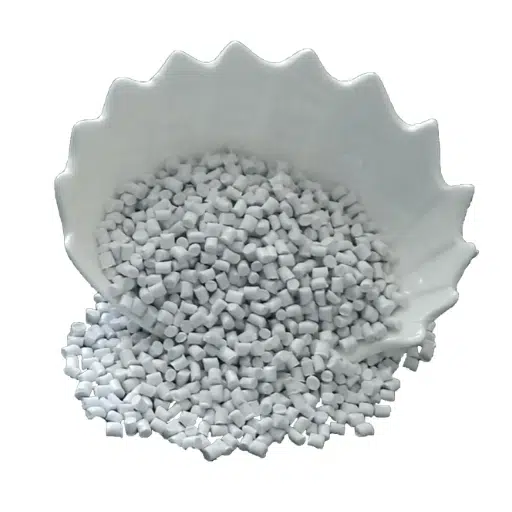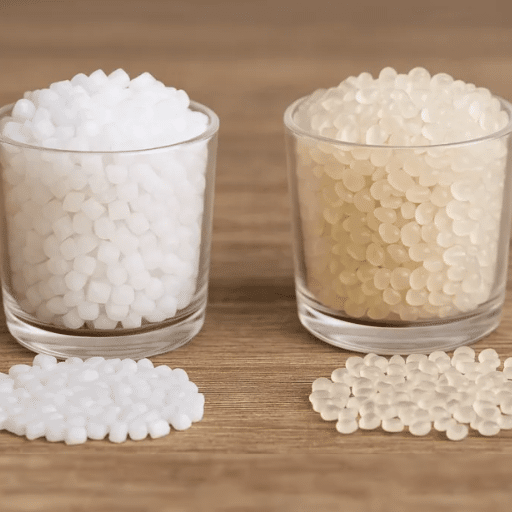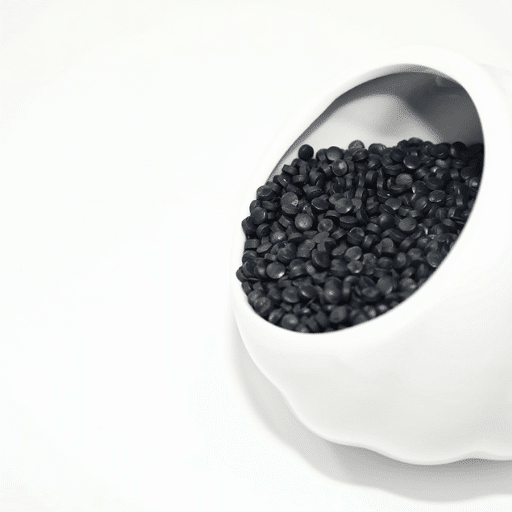
Polyamide is stronger than polyester, until it absorbs water. Then polyester wins quietly, and parts that looked perfect on the datasheet start drifting out of tolerance on the assembly line.
That single sentence captures why the polyamide vs polyester mechanical properties debate matters so much to product engineers and procurement managers. Both polymer families dominate load-bearing injection-molded parts. Both have decades of automotive, electrical, and industrial pedigree. Yet specifying the wrong family for a humid, fatigue-loaded, or precision application can quietly cost a manufacturer hundreds of thousands of dollars in defects.
This article delivers a side-by-side mechanical comparison of polyamide (PA6, PA66, and glass-filled grades) against thermoplastic polyester (PET, PBT, and glass-filled grades). You will see a hard-numbers table, the property-by-property breakdown that engineers actually use, and a procurement-ready selection framework. By the end, you can shortlist the right grade for your next RFQ with confidence.
Polyamide and Polyester at a Glance
Before comparing numbers, it helps to anchor exactly what each polymer family is, and why engineers keep putting them head to head.
What Polyamide (PA) Is
Polyamide, commonly known as nylon, is a semi-crystalline thermoplastic built from repeating amide groups. The two workhorses are PA6 and PA66. PA66 generally offers higher heat resistance and stiffness; PA6 absorbs less moisture during processing and delivers slightly better surface finish.
Polyamides shine in mechanical strength, fatigue resistance, and friction performance. That is why they dominate gears, bearings, automotive air intake manifolds, and structural under-hood components.
What Thermoplastic Polyester (PET and PBT) Is
Thermoplastic polyester refers primarily to polyethylene terephthalate (PET) and polybutylene terephthalate (PBT). Both are semi-crystalline polyesters built from terephthalic-acid backbones. PET is widely known for beverage bottles, but engineering-grade PET also serves precision parts. PBT is the engineering-grade workhorse: faster crystallizing, easier to mold, and far more dimensionally stable in humid environments than nylon.
Why These Two Families Are Compared
Polyamide and polyester compete for the same engineering applications: electrical connectors, automotive components, gears, housings, and industrial wear parts. They cost in roughly the same tier, run on the same injection-molding equipment, and accept similar fillers. The decision rarely comes down to availability. It comes down to which mechanical-property trade-off best fits your service environment.
Polyamide vs Polyester Mechanical Properties: Side-by-Side Comparison
The table below summarizes typical mechanical properties for six representative grades. Values are dry-as-molded unless otherwise noted; always confirm against the specific resin datasheet before specifying.
| Property (Test Method) | PA6 | PA66 | PA66-GF30 | PET | PBT | PBT-GF30 |
|---|---|---|---|---|---|---|
| Tensile Strength, MPa (ISO 527) | 70 to 85 | 80 to 90 | 180 to 200 | 55 to 75 | 50 to 60 | 130 to 145 |
| Flexural Modulus, GPa (ISO 178) | 2.5 to 3.0 | 2.8 to 3.3 | 9.0 to 10.0 | 2.7 to 3.2 | 2.3 to 2.6 | 8.5 to 9.5 |
| Elongation at Break, % (ISO 527) | 50 to 200 | 40 to 80 | 3 to 4 | 50 to 300 | 50 to 300 | 3 to 4 |
| Notched Izod Impact, J/m (ISO 180) | 50 to 80 | 50 to 70 | 90 to 110 | 40 to 50 | 40 to 55 | 90 to 100 |
| Rockwell Hardness (M scale) | M75 to M85 | M83 to M90 | M93 to M100 | M94 to M101 | M68 to M78 | M85 to M90 |
| HDT @ 0.45 MPa, °C (ISO 75) | 170 to 185 | 200 to 220 | 240 to 255 | 70 to 80 | 145 to 160 | 200 to 220 |
| 24 h Moisture Absorption, % | 1.3 to 1.9 | 1.0 to 1.5 | 0.8 to 1.0 | 0.05 to 0.10 | 0.06 to 0.10 | 0.05 to 0.08 |
A few patterns jump out immediately. Polyamide dominates unreinforced tensile strength and heat-deflection temperature. Polyester, particularly PBT, dominates moisture stability. Glass-fiber loading roughly doubles tensile strength and triples stiffness in both families.
Want grade-level datasheets, not just averages? Request the full mechanical-property datasheets for our PA66 and PBT plastic pellets and compare specific lots side by side.
Tensile Strength and Stiffness Compared
Tensile strength sets the ceiling for static load capacity. Stiffness, captured by flexural modulus, governs how much a part deflects under that load.
Unreinforced Grades
Unreinforced PA66 reaches roughly 80 to 90 MPa in tensile strength. Unreinforced PBT typically sits 30 to 35 percent lower. For pure static load capacity, nylon wins clearly. PET sits between the two but rarely competes in injection-molded engineering applications because its slow crystallization makes molding cycles longer.
When the designer at a Suzhou-based gear manufacturer named Wei specified a replacement for a stamped-steel timing pulley in March 2025, he ran the numbers on six candidate resins. PA66 cleared the 75 MPa working-stress target with a comfortable safety margin. Unreinforced PBT failed by 20 percent. The team specified PA66 for the unreinforced housing and saved 38 percent on part weight versus the original metal design.
Glass-Fiber-Reinforced Grades
Add 30 percent glass fiber, and the comparison narrows. PA66-GF30 reaches 180 to 200 MPa. PBT-GF30 reaches 130 to 145 MPa. Polyamide still leads in raw tensile strength, but PBT-GF30 closes much of the stiffness gap and brings far better dimensional stability to the part.
Glass-fiber reinforcement also shifts the comparison in another way. Both filled grades become brittle, dropping elongation at break to roughly 3 percent. Impact resistance no longer comes from polymer ductility; it comes from fiber-matrix adhesion and fiber length retention during molding. That is where consistent pellet quality and tight melt-flow control begin to matter as much as the base resin choice.
Impact Resistance, Toughness, and the Moisture Factor

Mechanical-property tables almost always report dry-as-molded values. Real parts rarely live dry. This is where polyamide and polyester diverge most dramatically.
Notched Izod Performance
Notched Izod impact strength on dry PA66 typically runs 50 to 70 J/m. PBT sits at 40 to 55 J/m. PA6 frequently edges out PA66, reaching 60 to 80 J/m due to its lower crystallinity and higher molecular mobility.
For impact-driven applications, polyamide wins on the test bar. But the next subsection explains why that lead often disappears in service.
How Moisture Reshapes Polyamide Performance
Polyamide is hygroscopic. PA66 will absorb 1.0 to 1.5 percent moisture in 24 hours at 23 °C, and significantly more at equilibrium in humid environments. Moisture acts as a plasticizer in nylon. It increases impact toughness and elongation, but it cuts tensile strength, stiffness, and dimensional stability.
Polyester barely notices the same conditions. PBT absorbs less than 0.1 percent moisture in 24 hours. Its mechanical retention curve is nearly flat across normal service humidity. According to Omnexus and confirmed by published ISO 1110 conditioning data on MatWeb, conditioned PA66 can lose 25 to 35 percent of its tensile strength relative to dry-as-molded values once it reaches equilibrium moisture in a 50 percent relative-humidity environment.
That is why every credible spec sheet for a humidity-exposed nylon part lists both dry-as-molded and conditioned values. Procurement teams should always request both. Engineering teams should always design around the conditioned numbers.
Fatigue, Creep, and Wear Behavior
Static strength is only part of the picture. Fatigue, creep, and friction govern long-term reliability.
Polyamide’s Self-Lubricating Edge
PA6 and PA66 have an inherently low coefficient of friction against steel, typically around 0.25 dry. They wear well against themselves and against most metals, which is why polyamide dominates gear, cam, bearing, and bushing applications.
Polyamide also exhibits excellent fatigue resistance under reversed loading. Cyclic-fatigue endurance limits for PA66-GF30 reach roughly 25 to 35 percent of ultimate tensile strength, which is competitive with many die-cast aluminum alloys for similar geometries.
PBT’s Dimensional Stability Advantage
PBT excels in a different regime: long-duration creep under moderate load, and dimensional accuracy across temperature swings. PBT-GF30 holds tolerances on connector housings, ignition components, and motor end caps where a 0.2 percent dimensional shift would compromise assembly.
A European Tier-1 automotive supplier we work with replaced a glass-filled nylon connector housing with PBT-GF30 in late 2024 after recurring field warranty claims traced back to summer-humidity dimensional drift. The team named the project “Project Steady.” Total warranty-cost reduction the following 12 months: roughly USD 410,000 across two vehicle platforms. PA66-GF30 was technically stronger. PBT-GF30 was technically right.
Facing a similar specification decision? Talk with our polymer experts for a same-week material recommendation. We turn quote requests around in 24 hours.
When to Specify Polyamide vs Polyester
Comparison tables describe properties. Engineers need decisions. Here is a working framework.
Choose Polyamide When
- Static and impact loads dominate the design envelope.
- The part will run dry or operate in low-humidity environments.
- Gear-tooth, bearing, or sliding-wear performance is critical.
- Maximum service temperature exceeds 150 °C (favor PA66 over PA6 in this case).
- Weight reduction versus steel matters more than tight tolerances.
Choose Polyester When
- The part will spend its service life in humid, wet, or condensing environments.
- Dimensional stability across temperature and humidity drives the spec.
- Electrical properties, especially tracking resistance, matter (PBT excels here).
- The application demands fast cycle times and clean release from complex molds.
- Long-term creep under moderate load matters more than peak strength.
A Quick Decision Matrix
| Service Condition | Preferred Family | Preferred Grade |
|---|---|---|
| Dry, high-load gear | Polyamide | PA66-GF30 |
| Humid electrical connector | Polyester | PBT-GF30 |
| Sliding bearing, light load | Polyamide | PA6 (cast or extruded) |
| Outdoor under-hood housing | Polyester | PBT-GF30 (UV-stabilized) |
| High-impact structural bracket | Polyamide | PA66 impact-modified |
| Precision motor end cap | Polyester | PBT-GF30 |
Use this matrix as a starting point, not an end point. Final specifications should always confirm against your part’s specific load case, temperature profile, regulatory requirements, and assembly tolerances.
Sourcing High-Quality Polyamide and Polyester Pellets

Picking the right resin family solves the engineering side of the problem. The procurement side, consistent supply, predictable pricing, and trustworthy quality control, still has to be solved.
At Suzhou Yifuhui New Material Co., Ltd., we supply premium PA6, PA66, PET, and PBT plastic pellets, including glass-filled grades, to manufacturers across automotive, electronics, and consumer-goods sectors. Every batch passes rigorous melt-flow, moisture-content, and tensile-strength verification before it leaves our facility. Procurement teams receive transparent pricing structures and traceable certificates of analysis with every order.
One procurement manager in Vietnam, Mai, consolidated five separate vendors into a single supply contract with us in early 2025. Her team had been juggling three nylon suppliers and two polyester suppliers, with five different lead times, five different price escalations, and five different quality processes. After consolidation, her department reduced annual administrative overhead by 22 percent and cut average lead time from 38 days to 19. The mechanical-property consistency across our PA66 and PBT batches let her engineering team finally trust a single specification across all product lines.
Global shipping, 24-hour quote turnaround, and a dedicated technical-support team available seven days a week round out the package. Whether you need a single trial drum of PBT-GF30 or a full-container shipment of PA66, our team handles the logistics so your production line keeps moving.
Conclusion: Specifying With Confidence
Choosing between polyamide and polyester comes down to five practical decision factors:
- Load profile. Polyamide leads on raw tensile strength; PBT leads on long-term dimensional stability.
- Moisture environment. Polyester wins decisively in humid, wet, or condensing service.
- Friction and wear. Polyamide remains the default for gears, bearings, and sliding parts.
- Temperature. PA66 outranks PBT on heat-deflection temperature; both filled grades land near 220 °C.
- Manufacturing economics. PBT crystallizes faster, often cutting cycle times by 10 to 20 percent in complex molds.
Run those five filters against your specific application, then validate with conditioned-property data and a small molding trial. The right polyamide vs polyester mechanical properties decision protects your assembly line, your warranty budget, and your customer reputation. To learn more about Polyamide Pellets and Polyester Pellets, please click to refer to our accompanying guide.
Ready to lock in a reliable supply of premium PA or polyester pellets? Request a custom quote from our polymer experts, and we will return detailed specifications, transparent pricing, and global-shipping options within 24 hours.