Most sourcing managers searching for a polyester polyamide copolymer are actually looking for three different materials: a true copolymer with ester and amide groups in one chain, a compatibilized alloy of polyester and polyamide, or a simple polyester-polyamide fiber blend. Choosing the wrong category can derail your application before production starts.
If you source polymer resins for manufacturing, you need clarity. This guide explains what a polyester polyamide copolymer really is, how it differs from blends and alloys, where it performs best, and how to source these advanced materials reliably.
By the end, you will know how to specify the right grade, what questions to ask your supplier, and whether a copolymer is worth the investment over standard resins.
Need help sourcing a specialty copolymer? Our team reviews your application and returns a detailed quote within 24 hours. Request a custom resin quote today.
What Is a Polyester Polyamide Copolymer?

A polyester polyamide copolymer is a single polymer chain that contains both ester linkages (-COO-) and amide linkages (-CONH-). This hybrid structure combines characteristics from both polymer families.
Polyesters like PET and PBT deliver dimensional stability, low moisture uptake, and good chemical resistance. Polyamides like PA6 and PA66 provide toughness, abrasion resistance, and high heat tolerance. When chemists build both functional groups into one macromolecule, the result is a material engineered to capture selected strengths from each family.
How It Differs from a Blend or Alloy
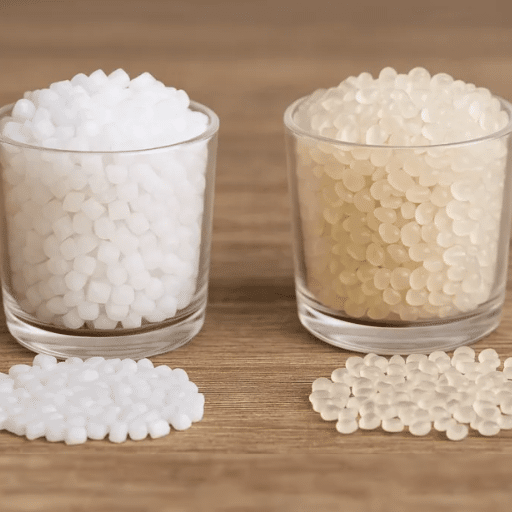
True copolymers differ from simple blends. In a physical blend, polyester pellets and polyamide pellets are mixed and melted together. The two polymers remain separate phases. In a true copolymer, the ester and amide segments are chemically bonded, producing a more uniform structure with predictable properties.
This distinction matters on the production floor. Blends can separate during processing, leading to inconsistent part performance. Copolymers and well-compatibilized alloys tend to behave more predictably under heat, stress, and repeated cycling.
A Real-World Sourcing Mistake
Consider a medical device buyer named Elena. Her team needed a flexible, biodegradable material for a short-term implant. A supplier offered a lower-cost polyester-polyamide fiber blend. The blend looked similar on paper, but it delaminated during sterilization.
Elena had to restart material qualification, delaying the project by four months. A true poly(ester-amide) copolymer would have handled the sterilization cycle because its single-phase structure is more uniform. The upfront savings from the blend turned into a costly delay.
Types of Polyester Polyamide Copolymers
Manufacturers encounter several categories of polyester-polyamide materials. Understanding each type helps you specify the right resin for your application.
Poly(ester-amide) (PEA) Copolymers
PEA copolymers are synthesized by combining diols, diamines, and dicarboxylic acid derivatives. The ratio of ester to amide segments determines the balance of flexibility, toughness, and thermal resistance. Some PEA materials are designed to be biodegradable, making them attractive for medical and environmentally focused applications.
Polyesteramide Thermoplastic Elastomers (TPE-A)
TPE-A materials combine hard polyamide segments with soft polyester segments. The polyamide domains provide strength and heat resistance. The polyester domains provide elasticity and low-temperature flexibility. These materials process like thermoplastics but perform like rubber in many applications.
Polyether Block Amides (PEBA) with Polyester Soft Segments
Standard PEBA materials use polyether soft segments. Variants with polyester soft segments offer different hydrolysis resistance, oil resistance, and dynamic performance profiles. They are common in sports equipment, medical tubing, and specialty cable jacketing.
Compatibilized PBT/PA and PET/PA Alloys
These are not true copolymers, but they are often grouped with them in technical discussions. Reactive compatibilizers such as maleic anhydride-grafted PBT improve interfacial adhesion between polyester and polyamide phases. The result is an alloy with better impact resistance and dimensional stability than an uncompatibilized blend.
If you are comparing base resins, our polyamide vs polyester guide breaks down the core differences between PA and PET families. And if you are designing a part that pairs the two polymers as separate components rather than a single resin, our design-engineering guide to polyamide polyester combination parts walks through how to make dual-material parts work reliably.
Key Properties and Performance Advantages

Polyester polyamide copolymers are engineered for specific performance windows. The exact properties depend on the ratio of ester to amide segments and the overall molecular architecture.
Mechanical Properties
The amide segments contribute high tensile strength, toughness, and abrasion resistance. The ester segments contribute flexibility and fatigue resistance. Together, they produce materials that withstand repeated flexing, impact, and wear better than many commodity plastics.
Thermal Performance
Depending on composition, these copolymers can maintain performance from -40°C up to 150°C or higher. Polyamide-rich grades lean toward higher heat resistance. Polyester-rich grades lean toward better dimensional stability at elevated temperatures.
Moisture and Chemical Behavior
Polyamides absorb moisture. Polyesters generally resist it. A well-designed copolymer can balance these behaviors, reducing the drying and processing challenges typical of hygroscopic nylons while retaining enough toughness for demanding parts.
Biodegradability Options
Bio-based poly(ester-amide) copolymers have gained attention in medical and packaging research. According to a review in the International Journal of Molecular Sciences, polyester-based biodegradable polymers including polyester-polyamide multiblock copolymers are being developed to improve sustainability without sacrificing processability. For teams pursuing sustainability goals more broadly, recycled feedstocks are another route worth exploring—our manufacturer’s sourcing guide to recycled polyester and polyamide pellets covers how to source these materials without compromising quality.
How Polyester Polyamide Copolymers Are Made
The production method depends on the material type.
Polycondensation
True copolymers are typically produced by polycondensation. Monomers such as diols, diamines, and dicarboxylic acids or their derivatives react under heat and catalysts. Water or other byproducts are removed to drive the reaction toward high molecular weight polymer chains.
Reactive Compatibilization
For blends and alloys, reactive compatibilization is common. One polymer is functionalized with groups that can react with the other polymer. A widely cited study in Polymer International showed that maleic anhydride-grafted PBT (PBT-g-MA) acts as an effective compatibilizer for PBT/PA66 blends, improving tensile properties and interfacial adhesion.
Pelletization and Quality Control
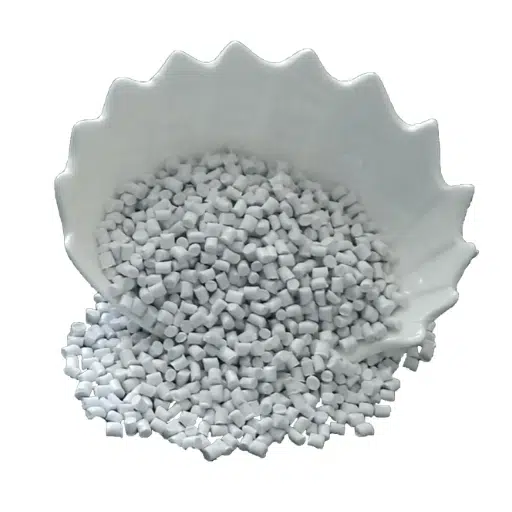
After synthesis, the material is extruded, cooled, and cut into pellets. Consistent pellet size, low moisture content, and stable melt flow index (MFI) are critical for reliable processing. Reputable suppliers provide certificates of analysis (COA), technical data sheets (TDS), and material safety data sheets (MSDS) with every lot.
Industrial Applications

Polyester polyamide copolymers serve demanding markets where standard resins fall short.
Automotive
Under-hood hoses, seals, bellows, and gaskets benefit from the heat resistance and hydrocarbon resistance of TPE-A and PEBA materials. Exterior trim and spoilers can use compatibilized PBT/PA alloys to balance impact resistance and dimensional stability.
Electronics
Wire and cable jacketing, connectors, and flexible housings use these materials for their combination of dielectric performance, flexibility, and flame-retardant compatibility. High-flex applications such as robot cables and wearable device wiring are natural fits.
Medical
Bio-based poly(ester-amide) copolymers are used in biodegradable sutures, drug delivery systems, and temporary implants. Controlled degradation rates and biocompatibility make them preferable to permanent synthetic materials in certain devices.
Textiles and Technical Fibers
While this article focuses on industrial resins, it is worth noting that polyester-polyamide fiber blends are common in activewear and technical textiles. These are physical blends, not copolymers, but they illustrate how the two polymer families complement each other.
Packaging and Barrier Films
Polyester-polyamide copolymers and barrier compositions are used in multilayer films to improve gas and moisture resistance. Patent literature describes semi-aromatic polyamide-polyester copolymers engineered for enhanced barrier properties in food and industrial packaging.
Sourcing Polyester Polyamide Copolymer Pellets
Sourcing these materials requires more precision than buying commodity PP or ABS. Here is what procurement managers should verify.
Request the Right Specifications
Start with the application. Define the required temperature range, mechanical load, chemical exposure, and regulatory compliance. Then request:
- Melt flow index (MFI) or intrinsic viscosity (IV)
- Tensile strength and elongation at break
- Hardness (Shore A or D, depending on grade)
- Heat deflection temperature (HDT)
- Moisture absorption and drying requirements
- Compliance certifications (FDA, EU, automotive, medical)
Demand Complete Documentation
A reliable supplier provides COA, TDS, and MSDS for every lot. For critical applications, ask for batch consistency data, certificates of conformance, and third-party test reports.
Plan for Lead Times and MOQs
Specialty copolymers are often produced in smaller campaigns than commodity resins. Lead times can range from a few weeks for stocked grades to several weeks for custom formulations. Minimum order quantities vary by supplier and grade. Consolidating orders with a partner who stocks both polyamide and polyester resins can simplify planning.
The Value of a Single Supplier
Imagine a procurement manager named David who sources PA66 for under-hood clips and PBT for electrical housings. He originally used two suppliers, which meant two purchase orders, two incoming inspections, and two freight shipments each month. After consolidating both resins with one supplier, David cut his administrative workload by roughly 30% and reduced shipping costs through combined loads. Specialty copolymers and alloys fit the same logic: a knowledgeable partner can simplify complex material programs. If you want a practical framework for vetting these partners, our guide on how to choose a polyester and polyamide supplier lays out the criteria that matter most.
Cost Considerations and Value Analysis

Polyester polyamide copolymers typically cost more per kilogram than standard PET, PBT, PA6, or PA66. The premium reflects specialized raw materials, more complex synthesis, and lower production volumes.
However, the total cost of ownership often favors the copolymer when it eliminates secondary operations, extends part life, or reduces warranty claims. For example, a single TPE-A hose may replace a multi-component rubber-and-metal assembly, cutting assembly labor and leak risk.
When evaluating cost, consider:
- Material price per kilogram
- Processing energy and cycle time
- Drying and handling requirements
- Tool wear and maintenance
- Part longevity and field failure rates
- Inventory consolidation opportunities
When the Premium Pays Off
A Tier 2 automotive supplier named Raj switched from a standard PA66 hose to a TPE-A copolymer for a fuel-line assembly. The material cost increased by 18%, but the new part eliminated a separate clamp and rubber grommet. Raj’s team reduced assembly time by 12 seconds per unit.
Across a 200,000-unit annual run, the savings in labor and components more than covered the resin premium. This is the kind of total-cost thinking that makes advanced copolymers attractive.
True Copolymer, Alloy, or Blend: Which Should You Choose?
The right choice depends on performance requirements and budget.
| Material Type | Structure | Best For | Cost |
|---|---|---|---|
| True copolymer | Ester and amide groups in one chain | High performance, consistent properties, specialized applications | Highest |
| Compatibilized alloy | Chemically linked phases of separate polymers | Improved impact and adhesion over simple blends | Moderate to high |
| Physical blend | Mixed but unbonded polymers | Cost-sensitive applications where some property compromise is acceptable | Lowest |
If your part demands uniform properties through repeated thermal cycling, a true copolymer or well-compatibilized alloy is usually the safer choice. If the application is less demanding, a standard blend or separate polyester and polyamide components may be more economical.
For help selecting between base resins, our polyamide pellets and polyester pellets guides cover the most common grades.
Quick Decision Checklist
Use this checklist when deciding between material architectures:
- Does the part see repeated thermal cycling? If yes, lean toward a true copolymer or compatibilized alloy.
- Is long-term flexibility critical? TPE-A or PEBA grades are strong candidates.
- Is cost the primary driver? A physical blend or separate resin components may be enough.
- Are medical or food-contact approvals required? Request certified biodegradable or compliant grades.
- Will the material face hydrocarbons, oils, or moisture? Match the ester-to-amide ratio to the exposure.
Common Myths About Polyester Polyamide Copolymers
Several misconceptions surround these materials. Clearing them up helps sourcing teams make better decisions.
Myth 1: Copolymers and Blends Are the Same
This is the most common mistake. A blend is a physical mixture. A copolymer is a single molecule with two types of linkages. The difference affects processing, performance, and price.
Myth 2: They Are Only for Textiles
Polyester-polyamide fiber blends are indeed common in fabrics. However, true copolymers and TPE-A materials are widely used in automotive, electronics, medical, and industrial applications.
Myth 3: They Are Too Expensive for Most Projects
The per-kilogram price is higher than commodity resins. The total cost of ownership is often competitive when the material reduces assembly steps, extends service life, or prevents field failures.
Myth 4: All Grades Are Biodegradable
Only specifically designed bio-based or biodegradable poly(ester-amide) grades break down in controlled environments. Always confirm biodegradability claims with test data and certification.
FAQ

What is the difference between a polyester polyamide copolymer and a blend?
A copolymer has ester and amide groups bonded within a single polymer chain. A blend is a physical mixture of two separate polymers. Copolymers generally offer more consistent properties and better phase stability.
Is a polyester polyamide copolymer biodegradable?
Some poly(ester-amide) copolymers are designed to be biodegradable or bio-based, especially for medical and packaging applications. Not all grades are biodegradable, so check the specific formulation.
What processing methods work best?
These materials are commonly processed by injection molding, extrusion, and blow molding. Drying requirements vary by composition, particularly for polyamide-rich grades.
Can a copolymer replace nylon or PET in my application?
It depends on the performance requirements. Copolymers excel where a combination of polyester stability and polyamide toughness is needed. For simpler applications, standard nylon or PET may be more cost-effective.
What certifications should I request?
Request COA, TDS, MSDS, and any application-specific certifications such as FDA, EU food contact, automotive approvals, or medical biocompatibility data.
Conclusion
A polyester polyamide copolymer is not a single material. It is a family of advanced resins that combine ester and amide chemistry to deliver targeted performance. True copolymers, compatibilized alloys, and physical blends each have distinct advantages and trade-offs.
For manufacturers, the key is matching the material architecture to the application. Define your thermal, mechanical, and regulatory requirements clearly. Request complete documentation. And work with a supplier who understands both polyester and polyamide families deeply enough to guide you through the options.
At Suzhou Yifuhui New Material Co., Ltd., we supply premium polymer granules and support complex material programs with fast response times and global logistics. Contact our polymer experts today to request a custom quote or technical data sheet for your next project.