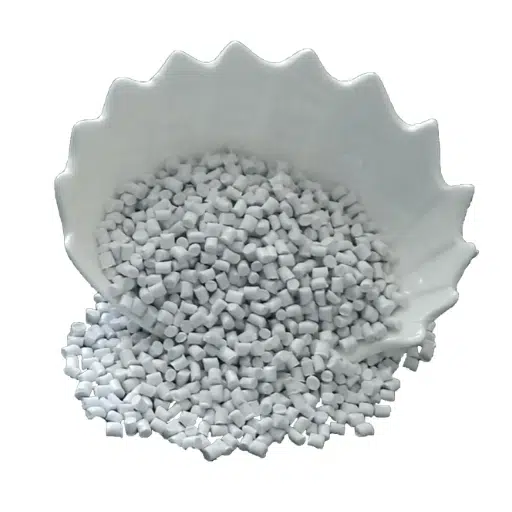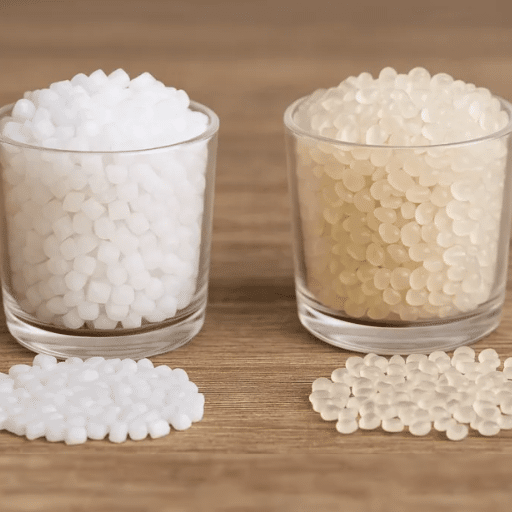
Last March, Marcus’s team at a Shenzhen power tool maker overmolded a drill handle in TPE onto an ABS body. The first batch looked flawless. Forty-eight hours later, edge lift appeared along the grip, and one in every eight handles peeled. They had picked TPE over silicone because it was cheaper and faster, but they had not designed for the bond.
That is the hidden cost in the TPE vs silicone overmolding decision. Both materials deliver a soft, rubbery grip. But TPE is a thermoplastic that must melt and fuse with the substrate, while silicone is a thermoset liquid that cures at high heat and clings mainly through mechanical interlocks. Pick the wrong one for your substrate, process, and budget, and the part fails at the interface.
This guide compares TPE and silicone for overmolding across bonding chemistry, substrate compatibility, design rules, cycle economics, and defect prevention. You will leave with a decision framework and a sourcing checklist, so you can specify the right soft-touch material the first time.
New to the material family? Start with our TPE vs Silicone material selection guide → for the full manufacturing comparison, then come back here for the overmolding depth.
TPE vs Silicone Overmolding at a Glance
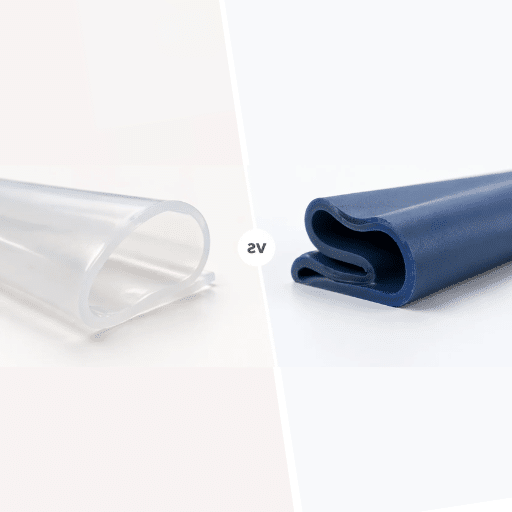
Here is the fastest way to orient yourself. These ranges reflect standard commercial grades from major compounders.
| Property | TPE Overmolding | Silicone (LSR) Overmolding |
|---|---|---|
| Raw form | Solid thermoplastic pellets | Two-part liquid, platinum- or peroxide-cured |
| Bonding mechanism | Chemical (molecular interdiffusion) | Mechanical interlock, or self-bonding grades |
| Typical substrates | PP, ABS, PC, PA, PE | PC, PBT, PA, copolyesters, metals |
| Cycle time | 30-60 seconds | 2-5 minutes plus optional post-cure |
| Mold temperature | 20-60°C | 150-200°C (300-400°F) |
| Tooling | Standard thermoplastic molds | Specialized cold-runner LSR molds |
| Wall thickness guidance | 1.5-3.0 mm | Can run thinner sections |
| Secondary operations | None | Post-cure, sometimes hand-feel coating |
| Scrap / recyclability | Regrind and reprocess | Thermoset waste, not recyclable |
| Relative cost | Lower material and tooling | Higher material and tooling |
| Typical applications | Grips, handles, phone cases, seals, cable jackets | Waterproof buttons, medical grips, premium wearables |
Two rows settle most arguments. Bonding: TPE chemically welds to most common thermoplastics, while LSR relies on interlocks or special self-bonding grades. Cycle time: TPE runs in seconds, while LSR cures for minutes. For a cost-driven, high-volume part, those two rows usually decide the material.
Not sure which overmolding material fits your part? Our polymer specialists can review your substrate and process. Talk to an expert →
What Is Overmolding? Two-Shot and Insert Molding Basics
Overmolding is a multi-material molding process that adds a soft elastomer layer over a rigid substrate in a single part. It eliminates assembly, adhesives, and separate gaskets, and it enables grip, sealing, and aesthetics in one component. The global overmolding services market reached about $11.55 billion in 2025 and is projected to grow to $19.69 billion by 2033, driven by multifunctional soft-touch parts in electronics, medical devices, and power tools.
Two processes dominate:
- Two-shot (2K) molding. Both shots run on one machine. The rigid substrate is molded first, the soft layer second, without removing the part. TPE runs this on a standard two-shot thermoplastic machine. LSR requires a second LSR injection unit plus a heated mold and metering equipment.
- Insert molding. The rigid part is molded separately, loaded into a second mold, and then overmolded. Transfer molding with preheating is common for LSR because the substrate must be warm enough to cure the silicone against it.
Both processes present the same design decision: which soft material to specify. The rest of this guide answers that question.
How TPE and Silicone Bond to the Substrate

Adhesion is where TPE and silicone diverge most sharply. Understanding the mechanism prevents most overmolding failures.
Chemical Bonding: TPE’s Advantage
When molten TPE contacts a compatible rigid plastic, it partially melts the substrate surface. Polymer chains interdiffuse at the interface and lock together as the part cools. This is chemical bonding, and it works without primers or adhesives.
The catch is compatibility. A TPE formulated for polypropylene will not necessarily bond to polycarbonate. The general map:
- TPE-S (SEBS/SBS) bonds well to PP and PE.
- TPV bonds to PP and is the workhorse for sealing and weather applications.
- TPU bonds to ABS, PC, and PA for durable, wear-resistant grips.
- Specific TPE-S grades are engineered for PC and other engineering plastics.
Surface energy governs wetting. The substrate must be clean, dry, and reach roughly 42-50 mN/m surface energy for the melt to spread and bond. Grease, mold release, and fingerprints are bond breakers.
Mechanical Interlocking: Silicone’s Primary Route
LSR adheres to thermoplastics almost exclusively through mechanical interlocks. Design undercuts, through-holes, dovetails, or a rough interface texture, and the liquid silicone flows into these features and locks in place when it cures. This works, but it constrains geometry and adds mold complexity.
Primerless Self-Bonding LSR Grades
The industry is closing the gap. Primerless, self-bonding LSR grades such as Wacker ELASTOSIL LR 3070 and Momentive Silopren LSR 47×9 bond to PC, PBT, PA, and copolyesters without primers. As Medical Design & Outsourcing explains, these grades come with hard constraints. The substrate must tolerate cure temperatures, ideally a glass transition above 149°C. Sulfur, amine additives, and external mold releases poison the platinum catalyst and stop the cure. And every substrate-grade pair must be adhesion-tested before production.
Surface Treatments and Primers
For difficult pairs, surface treatment raises bond strength by 200-400%. Plasma and corona treatment increase surface energy, while chlorinated polyolefin (CPO) primers bridge non-polar TPEs to polar substrates. These steps add cost and a process step, so most designers prefer compatible material pairs that need none.
TPE vs Silicone Overmolding Substrate Compatibility Matrix
The table below is the decision tool that most articles lack. It maps each substrate to the material that bonds reliably.
| Substrate | TPE grade that bonds | LSR route | Typical winner |
|---|---|---|---|
| PP | TPE-S (SEBS), TPV, TPO | Limited, high-temp cure risk | TPE |
| ABS | TPU, specific TPE-S | Self-bonding grades or primer | TPE |
| PC | TPU, COPE, specific TPE-S | Self-bonding LSR (Silopren 47×9) | Depends on temperature |
| PA | TPU | Self-bonding LSR | Depends on temperature |
| PBT | TPU, COPE | Self-bonding LSR | Depends on temperature |
| Copolyester (Tritan, Ecozen) | Limited | Low-temp-cure LSR grades | LSR |
| Metal (stainless, aluminum) | Mechanical only | Self-bonding LSR | LSR |
The pattern is clear. TPE dominates the low-cost, high-volume pairing with PP, ABS, and PC, which covers most consumer goods. LSR wins the high-heat, metal, copolyester, and premium-sealing cases. For detailed guidance on matching TPE families to substrates, see our What Is TPE Material? guide →.
Design Rules for TPE and Silicone Overmolding
Good overmolding design prevents most adhesion failures before the mold is cut.
Wall Thickness and Shore Hardness
Keep TPE overmold thickness between 1.5 and 3.0 mm, with 1.0-2.0 mm typical for grips. Keep it uniform and thinner than the substrate to avoid sinking and warpage. The optimum Shore hardness for bonding is 40-60 A, with 30-80 A usable depending on the feel you want. LSR can run thinner sections, but differential shrinkage must still be managed. TPE shrinks about 1.5-3% while ABS shrinks only 0.4-0.7%, so the two layers will not move the same way as they cool.
Mechanical Interlocks, Draft, and Radii
Add undercuts, grooves, or dovetails as a fail-safe for low-affinity pairs, and include draft angles so interlocks eject cleanly. Use generous radii where the soft layer meets the rigid plastic. Sharp corners concentrate stress and cause peeling. In thick TPE sections, core the material out to minimize shrinkage.
Venting, Gates, and Thermal Management
Trapped air creates weak spots. Vent depths of 0.025-0.050 mm prevent air entrapment, which can otherwise cut bond strength by 30-50%. Position the gate so flow runs parallel to the substrate surface, and size it at 60-80% of nominal wall thickness.
Thermal control differs sharply by material. TPE runs with melt temperatures of 190-230°C and mold temperatures of 20-60°C. LSR needs mold temperatures of 150-200°C, and the substrate must either be preheated or still hold residual heat from a first shot so the silicone cures against it. The HEXPOL TPE Academy publishes detailed adhesion parameters for TPE processing.
TPE vs Silicone Overmolding Cost and Cycle-Time Economics

The cost comparison is where TPE wins most commercial programs. Here are the numbers to budget with.
- Raw material. TPE runs about $2.50-5.00 per kg, while LSR runs $4-8 per kg. TPE also has a specific gravity of about 0.89 versus LSR’s 1.12, so you get roughly 20% more parts per kilogram of TPE.
- Tooling. TPE uses standard thermoplastic molds in the $15,000-40,000 range. LSR needs specialized cold-runner molds with precision shut-offs and vacuum venting, typically $30,000-80,000.
- Cycle time. TPE cycles in 30-60 seconds because the part only melts and cools. LSR runs 2-5 minutes because the silicone must cure in the mold, plus optional post-cure.
- Secondary operations. TPE needs none. LSR often requires post-vulcanization and, in consumer electronics, a hand-feel coating to remove tackiness.
- Scrap. TPE sprues and runners can be reground and reused, approaching full material utilization. LSR is a thermoset, so cured runners and defective parts become waste.
The Avient overmolding guide reinforces the core insight: cycle time and tooling drive per-part cost more than raw material price. A 2-shot PC/ABS and TPE-SEBS toothbrush grip cut cycle time from 32 seconds to 23 seconds and reduced scrap from 3.2% to 0.9%. For high-volume consumer goods, that is the difference between a profitable line and a marginal one.
Soft-Touch Feel: Haptics and Surface Finish
Feel matters more than engineers often admit. TPE delivers a dry, non-sticky, slightly matte, velvety surface with natural anti-slip properties and broad colorability, with no coating required. This is why most mass-market grips, handles, and phone cases use TPE.
LSR is inherently soft and compliant but tacky. It attracts dust and wears poorly on its own. Premium consumer products therefore apply a hand-feel coating to LSR to create a silky, skin-like finish. That coating adds a process step and a cost line, but it is also what delivers the “ultra-premium” feel in high-end controllers, beauty devices, and wearables. If your product is positioned on softness and skin contact, LSR plus coating is the route. If it is positioned on durability and cost, TPE wins.
Common Overmolding Defects and How to Prevent Them
Delamination is the most persistent and costly overmolding defect. It is rarely caused by a single factor. Usually it is a combination of material pairing, surface condition, temperature, and design.
- Peeling or delamination. Causes include material incompatibility, mold-release contamination, a cold melt or mold, moisture in the pellets, and insufficient pressure or speed. Dry hygroscopic TPE and TPU to below 0.02% moisture before molding.
- Edge lift after 24-72 hours. This is residual shrinkage stress. Reduce overmold thickness at the edge, add radii, and balance cooling across the part.
- Warpage or twist. Shrinkage mismatch plus asymmetric cooling. Balance the geometry, add ribs, and tune the cooling layout.
- Interface failure after thermal cycling. The coefficient of thermal expansion differs between the rigid and soft layers. Use hybrid locking features and softer transitions at the interface.
- LSR-specific issues. Flash from low-viscosity silicone demands precise shut-offs and vacuum venting. Platinum poisoning from sulfur or amine additives stops the cure. Delamination can appear before the bond fully develops, so allow one hour at 100°C after demolding.
Validate bonds with a peel test per ASTM D1876 or D903. For structural applications, target at least 15 N/mm. Cohesive failure, where the TPE tears before the bond lets go, is the gold standard. Adhesive failure at the interface means the bond is weak.
When to Choose TPE vs Silicone Overmolding: Decision Guide

Neither material is universally superior. The decision comes down to your part’s environment, volume, and feel requirements.
Choose TPE Overmolding When
- You need high volume and low per-part cost.
- Your substrate is PP, ABS, PC, or PA and you want a chemical bond.
- Cycle time and tooling budget are the constraints.
- You require a dry, non-tacky, matte grip with no coating.
- Your service temperature stays below 120°C.
- Recyclability and regrind matter to your program.
Choose Silicone (LSR) Overmolding When
- The part sees sustained temperatures above 120-150°C.
- You need waterproof or IP-rated sealing.
- The application requires biocompatibility for medical contact.
- Your substrate is metal, copolyester, or another high-temperature material.
- Extreme low-temperature flexibility is critical.
- Premium, skin-like tactile feel is worth the extra cost.
- Long-term compression set and sealing recovery are requirements.
The Prototype-Then-Validate Strategy
If you are undecided, prototype the geometry in TPE first. It is cheap, fast, and needs no LSR tooling. Validate the feel and fit, then qualify production in LSR only where true performance requires it. The same substrate design can serve both routes.
For the medical side of this decision, see our TPE vs Silicone for Medical Devices guide →. For sealing and automotive applications, see TPE vs Silicone for Automotive Seals →.
How to Source Overmolding-Grade TPE Pellets: Supplier Checklist
When your project resolves to TPE, the supplier choice decides how well the bond performs at scale. Verify these points with any candidate.
- Overmolding-grade designation. Confirm the grade is formulated for adhesion to your specific substrate, and request the technical data sheet with documented bond data.
- Shore hardness and melt flow consistency. Adhesion depends on consistent melt flow index and hardness. A supplier with batch-to-batch uniformity control keeps your process stable. Suzhou Yifuhui New Material Co., Ltd. supplies TPE and TPV pellets with uniform pellet size and melt flow for two-shot and insert molding.
- Compliance. Check RoHS and REACH for electronics, and FDA 21 CFR 177.2600 or EU 10/2011 for food-contact parts. Medical applications need ISO 10993 and USP Class VI data.
- Logistics. Confirm MOQ, lead time, global shipping, and technical support. A 24-hour quote turnaround keeps your program moving.
We should be direct about one point. Yifuhui supplies TPE and TPV pellets, not silicone or LSR, which are liquids. If your part resolves to silicone, we will point you to what to require of a qualified LSR compounder: platinum cure chemistry, post-cure capability, substrate-specific adhesion testing, and cleanroom control. That neutrality is what makes the recommendation reliable.
Your next step. Request a competitive quote → for overmolding-grade TPE or TPV pellets, or contact our polymer specialists → to confirm the right grade for your substrate.
Frequently Asked Questions

Can you overmold silicone onto plastic?
Yes. Silicone (LSR) can be overmolded onto thermoplastics, but the substrate must tolerate cure temperatures around 150-200°C, and bonding typically requires mechanical interlocks, primers, or self-bonding LSR grades. Every substrate and grade pair must be adhesion-tested before production.
Does TPE stick to ABS?
Yes, with the right grade. TPU and specific TPE-S grades bond to ABS, and the pair is widely used in consumer electronics. A TPE formulated for PP will not necessarily stick to ABS, so confirm the grade’s compatibility data.
Is TPE or silicone better for overmolding?
For most cost-driven, high-volume parts on PP, ABS, or PC, TPE is better because it bonds chemically, cycles in seconds, and recycles. Silicone is better when the part needs high heat, waterproof sealing, biocompatibility, or an ultra-premium skin-like feel.
How thick should a TPE overmold be?
Keep TPE overmold thickness between 1.5 and 3.0 mm, with 1.0-2.0 mm typical for grips. Keep it uniform and thinner than the rigid substrate to prevent sinking and warpage.
What substrates does LSR bond to?
LSR bonds reliably to PC, PBT, PA, copolyesters, and metals, especially with self-bonding grades. Bonding to PP and ABS is limited and usually needs mechanical interlocks or primers.
Can TPE be overmolded onto metal?
TPE can be overmolded onto metal, but the bond is primarily mechanical. Design interlocks and surface texture to lock the TPE in place, since chemical bonding to metal is not available.
Why does my TPE overmold peel off?
Peeling usually comes from a wrong material pair, mold-release contamination, a cold melt or mold, moisture in the pellets, or missing mechanical interlocks. Dry the material, raise melt and mold temperature, clean the substrate, and add interlocks as a fail-safe.
Conclusion: Make the Right Soft-Touch Choice
The TPE vs silicone overmolding decision comes down to five factors: substrate, temperature, sealing, volume, and feel. TPE is the fast, cost-efficient, chemically bonding workhorse for high-volume parts on PP, ABS, and PC. Silicone is the slower-curing premium option for high-heat, waterproof, biocompatible, and metal or copolyester applications.
Marcus’s team fixed their drill handle by switching to an adhesion-tested TPE grade, raising the mold temperature, and adding a mechanical interlock. The rework cost them a month, but it taught the whole design team to ask one question first: how does this material bond to my substrate? Ask that question before you cut tooling, and you will avoid the failure entirely. To gain a deeper understanding of LSR vs TPE: Properties, Processing, and Cost Guide, please click to refer to our accompanying guide.
If your overmolding project resolves to TPE or TPV, request a quote from Suzhou Yifuhui New Material Co., Ltd. within 24 hours. Get overmolding-grade pellets with consistent hardness and melt flow that keep your two-shot line running.