When Elena, a procurement manager at a German automotive supplier, approved a purchase order for “TPE pellets” to make door-seal profiles, nobody flagged the material family. Six weeks after the first parts shipped, the seals had lost their sealing force in summer heat. The production line that ordered a high-temperature grade had received a general-purpose styrenic TPE that softened at 100°C. The rework cost roughly €40,000 and pushed the program back by a month.
Elena’s mistake was treating TPE as a single material. It’s not. In the TPE vs TPU vs TPV comparison, TPE (thermoplastic elastomer) is a family of rubber-like, recyclable polymers, while TPU and TPV are two very different members. Choosing between them comes down to heat, wear, chemicals, and budget.
This guide breaks down the TPE vs TPU vs TPV comparison with property tables, application guidance, and a buyer’s perspective you won’t find in a standard datasheet. You’ll leave knowing exactly which family to specify, what to verify from a supplier, and how to avoid a costly mis-specification.
What Are TPE, TPU, and TPV?

TPE (thermoplastic elastomer) is the umbrella term for polymers that combine the elasticity of rubber with the processability and recyclability of thermoplastics. They melt when heated, mold under pressure, and can be re-ground and re-used. TPU and TPV are both subclasses of this family, alongside styrenic block copolymers (SEBS/SBS), thermoplastic polyolefins (TPO), and copolyester elastomers (TPEE). If you’re weighing TPE vs TPV vs TPU vs TPO, remember that TPO is the low-cost, non-crosslinked sibling of TPV, and Teknor Apex offers a useful family-by-family breakdown.
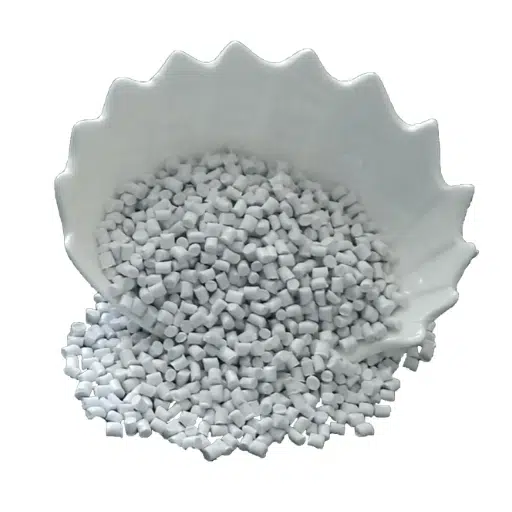
General-purpose TPE (the SEBS/SBS-based material most people mean by “TPE”) is a compound of styrenic block copolymer, polypropylene, oil, and fillers. It is inexpensive, easy to process, highly colorable, and available in a broad hardness range. Its limits are heat resistance near 100°C and weak oil resistance.
TPU (thermoplastic polyurethane) is a block copolymer of polyisocyanate and polyol, available in polyester and polyether types. It delivers engineering-grade toughness: exceptional abrasion resistance, tear strength, and oil resistance. It is also the most moisture-sensitive material of the three and must be dried before processing.
TPV (thermoplastic vulcanizate) is a blend of EPDM rubber that is dynamically vulcanized, or cross-linked, inside a polypropylene matrix. That cross-linking gives it thermoset-rubber-like performance: the best heat and weather resistance of the three, outstanding compression set, and excellent resistance to oils and fluids, while still processing like a thermoplastic.
If you’re new to the family, our guide to TPE material properties explains the chemistry and the full range of TPE types in depth.
TPE vs TPU vs TPV: Property Comparison at a Glance
The fastest way to understand the differences is a side-by-side comparison. The numbers below are typical ranges; specific grades vary by formulation and manufacturer, so always confirm against published grade datasheets. Hardness is stated in Shore hardness, with Shore A covering soft, flexible grades and Shore D covering rigid ones.
| Property | General TPE (SEBS/SBS) | TPU | TPV |
|---|---|---|---|
| Hardness range | ~5 Shore A to 70 Shore D | ~60 Shore A to 80 Shore D | ~40 Shore A to 70 Shore D |
| Continuous service temp | -40°C to ~100°C | -40°C to ~120°C (special grades to 140°C) | -60°C to ~135°C (short-term 150°C) |
| Compression set (22h/70°C) | Poor (~40-70%) | Moderate (~30-50%) | Best (~15-25%) |
| Abrasion resistance | Rubber-like | Best (5-10x rubber) | Good (3-5x rubber) |
| Tensile strength | 3-10 MPa | 20-50 MPa | 5-15 MPa |
| Oil / fuel resistance | Poor | Excellent | Good-Excellent |
| Water / hydrolysis resistance | Good | Polyester-poor, polyether-better | Good |
| UV / weather resistance | Varies (SEBS poorer) | Poor (yellows) | Best (outdoor 10+ years) |
| Clarity | Can be transparent | Best (clear, glossy) | Opaque, matte only |
| Relative cost | Lowest | Highest | Mid |
| Pre-drying required | Generally no | Yes (hygroscopic) | Often yes |
Three numbers deserve special attention. First, compression set: TPV at 15-25% versus general TPE at 40-70% tells you how long a seal will keep squeezing. Second, temperature: TPV tolerates roughly 35°C more continuous heat than general TPE, which matters for under-hood and outdoor parts. Third, TPU’s moisture sensitivity: it must be dried to below 0.02% moisture before molding, or you will see splay, bubbles, and degraded mechanical properties.
Want to see how these properties behave on the production floor? Our TPE injection molding guide covers processing parameters for each family.
TPE vs TPU vs TPV: Key Differences Explained

Whether you’re comparing TPE vs TPU, TPU vs TPV, or TPE vs TPV, the deciding factors stay the same: heat, wear, chemicals, and budget.
Heat and Weather Resistance: TPV Wins
TPV is the clear leader for heat and outdoor exposure. It runs continuously at up to 135°C, survives short excursions to 150°C, and resists UV and weathering for a decade or more outdoors. That’s why TPV has become the standard for automotive weather seals, glass-run channels, and under-hood components.
General TPE tops out near 100°C, and styrenic grades lose softness under strong UV. TPU performs well in the middle range but yellows and degrades under prolonged UV exposure.
Abrasion, Tear, and Mechanical Strength: TPU Wins
TPU is the strongest and toughest member of the family. Its abrasion resistance runs 5 to 10 times better than rubber, and its tear and tensile strength dwarf the other two. That’s why TPU dominates high-wear parts: cable jackets, hoses, conveyor belts, shoe soles, rollers, and protective cases.
TPV offers solid mechanical properties but sits clearly behind TPU on wear. General TPE is fine for low-stress soft-touch parts and little else.
Oil, Chemical, and Hydrolysis Resistance
Each material has a chemical blind spot. TPU has the best resistance to oils, fuels, and solvents, but polyester-based TPU degrades hydrolytically in hot, humid environments. For wet applications, choose polyether TPU.
TPV resists oils, acids, alkalis, and polar fluids well across a wide temperature window. General TPE is the weakest of the three: it has poor oil resistance and swells or softens when exposed to fuels and solvents.
Compression Set and Sealing Performance: TPV Wins
Compression set measures how well a material recovers after being squeezed. It’s the single most important property for sealing. TPV recovers best, typically 15-25% after 22 hours at 70°C, which is why it holds sealing force over years of service.
General TPE recovers poorly at 40-70%, so a gasket made from it slowly stops sealing. TPU sits in between with moderate compression set, acceptable for many seals but not the top choice for long-term force retention.
Transparency and Aesthetics: TPU Wins
If the part must be clear or glossy, TPU is the answer. It is the most transparent member of the family and takes color well. General TPE can be made translucent, while TPV is opaque and matte only, a non-negotiable constraint for products that need a polished, see-through appearance.
Cost and Processability: General TPE Wins
General TPE is the cheapest material to buy and the easiest to process. It has low moisture sensitivity, a broad processing window, and the lowest cycle times.
TPV sits in the middle on price and needs higher melt temperatures due to its stability. TPU is the most expensive and the most demanding to process, requiring strict drying and tight temperature control. For high-volume, cost-sensitive consumer parts, general TPE is often the natural choice.
The cost difference is real. One cable manufacturer we work with switched a headphone-cable jacket from TPU to a general TPE grade and cut material cost by roughly a third, but only after confirming the design did not need TPU’s abrasion resistance. When a prototype started failing at the stress-relief point, they moved the strain-relief boot back to TPU and kept TPE for the cable jacket. The combination delivered both the savings and the durability.
TPE vs TPU vs TPV Applications by Industry
| Industry | Best-Fit Material | Typical Parts |
|---|---|---|
| Automotive | TPV (seals, under-hood), TPU (oil seals, dust boots) | Weather seals, gaskets, glass-run channels, EV components |
| Cable & wire | TPU (heavy-wear jackets), TPE (low-cost general), TPV (high-temp/outdoor) | Cable sheaths, strain relief, connectors |
| Footwear & consumer | TPU (outsoles, cases), TPE (soft-touch grips, insoles) | Shoe soles, phone cases, handles |
| Medical | TPU (tubing, devices), TPE (tubing, seals) | Catheters, tubing, syringe plungers |
| Industrial | TPV (gaskets, bellows), TPU (rollers, gears, belts) | Seals, hoses, conveyor components, anti-vibration mounts |
Automotive is the largest market for thermoplastic elastomers, accounting for roughly 40% of global demand. Electric vehicles and lightweighting are pushing both TPV and TPU into new applications.
The global TPE market is worth more than USD 30 billion today. Analysts project it to grow at a compound annual rate of about 5 to 8% through the mid-2030s, according to Fortune Business Insights.
Which Should You Choose? A Buyer’s Decision Matrix
There is no universal winner in the TPE vs TPU vs TPV comparison. The right choice depends on the part’s environment, mechanical demands, and budget. Use this decision logic:
- Choose TPV when the part faces high heat, outdoor exposure, fluids, or long-term sealing. Automotive weather seals, under-hood gaskets, and industrial profiles are TPV territory.
- Choose TPU when the part must survive heavy wear, abrasion, oil, or repeated flexing. Cable jackets, hoses, shoe soles, and protective cases need TPU’s toughness.
- Choose general TPE when you need soft-touch feel, transparency, low cost, and easy processing, and the environment is moderate. Grips, insoles, and consumer products fit here.
Walk through this checklist before you commit to a grade:
- Operating temperature: above 110°C continuous? TPV. Below that, all three can qualify.
- Media contact: oils and fuels point to TPU or TPV; water and humidity point to TPV or polyether TPU.
- Compression set: long-term sealing force means TPV.
- Wear and abrasion: heavy-duty use means TPU.
- Appearance: clear or glossy means TPU or general TPE, never TPV.
- Overmolding substrate: TPV bonds naturally to polypropylene; TPU bonds to PC/ABS; SEBS-based TPE bonds to a wide range.
- Budget: general TPE is cheapest, then TPV, then TPU.
If your application spans automotive, medical, or industrial use, our TPE vs Silicone material selection guide adds a fourth option to compare.
Sourcing TPE, TPU, and TPV Pellets: What Buyers Should Verify

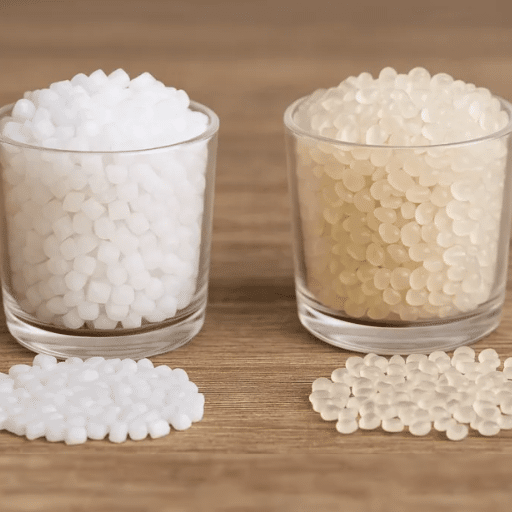
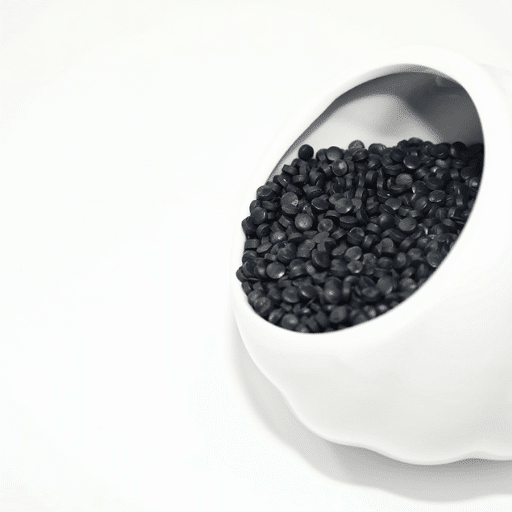
Once you have chosen the right family, the next question is where to buy quality pellets. TPE, TPU, and TPV are all supplied as pellets or granules for injection molding, extrusion, and blow molding. Because pellets from different suppliers can look identical but perform very differently, verify these five things before you order:
- Batch-to-batch melt flow consistency. A stable melt flow index (MFI) prevents process drift and shot-to-shot variation. Ask for the certificate of analysis (COA) on every lot.
- Uniform pellet size and shape. Consistent pellets melt evenly and feed without bridging in the hopper. Uneven pellets cause flow problems and voids.
- Moisture control for hygroscopic grades. TPU in particular must be dried to below 0.02% moisture before processing, typically 2 to 4 hours at 80 to 100°C. Confirm your supplier ships dry material and can advise on drying conditions.
- Compliance documentation. For food-grade contact, verify FDA 21 CFR 177.2600 and EU Regulation 10/2011. For medical-grade parts, look for ISO 10993 and USP Class VI. RoHS and REACH compliance matter for electronics and EU markets.
- Traceable quality systems. An ISO 9001-certified facility with documented testing protocols gives you confidence that every batch meets spec.
These checks matter because a mis-specified or poorly supplied elastomer can cost far more than the material itself. One medical device manufacturer we spoke with lost a full production week to a batch of TPU tubing resin that arrived with absorbed moisture and produced brittle, rejected parts. A supplier with proper drying, documentation, and batch control would have caught the issue before it reached the molding floor.
At Suzhou Yifuhui New Material Co., Ltd., we supply LSR vs TPE and TPE vs Silicone Overmolding with strict batch-consistency control, FDA and EU compliant grades, and full documentation on request. As a direct source, we pair premium polymer granules with competitive bulk pricing and worldwide shipping.
Conclusion
The TPE vs TPU vs TPV decision doesn’t have to be intimidating. TPE is a family, not a single material, and the three main members solve different problems. TPV is your answer for heat, weather, and long-term sealing. TPU is your answer for wear, oil, and mechanical strength. General TPE is your answer for soft-touch feel, transparency, and cost control.
Choose the family that matches the environment, verify pellet quality and compliance from your supplier, and you’ll avoid the costly rework that Elena and many others have faced.
Ready to spec the right material? Contact our polymer specialists at Suzhou Yifuhui New Material Co., Ltd. for certified TPE, TPU, and TPV pellets, detailed specifications, and a competitive quote within 24 hours. Our team is available seven days a week to help you source with confidence.
Frequently Asked Questions

Which is better, TPE or TPU?
Neither is universally better; the difference between TPE and TPU comes down to how each handles wear, heat, and moisture. TPE is cheaper, softer, and easier to process, and it suits soft-touch consumer parts. TPU is far tougher, with superior abrasion, tear, and oil resistance, and it is the right choice for high-wear, high-strength parts. Match the material to the application’s demands.
Is TPU a type of TPE?
Yes. TPU (thermoplastic polyurethane) is a member of the TPE family. The broader TPE category also includes SEBS/SBS styrenics, TPO, TPV, and TPEE. When people say “TPE” casually, they usually mean the general-purpose styrenic type, but TPU is technically a TPE too.
Which is stronger, TPU or TPV?
TPU is the stronger and tougher material. It has higher tensile strength, tear strength, and abrasion resistance. TPV is stronger than general TPE and offers better heat, weather, and compression-set resistance, but TPU wins on raw mechanical strength.
What is TPV material used for?
TPV (thermoplastic vulcanizate) is used for parts that must resist heat, weather, fluids, and long-term compression. Typical applications include automotive weather seals, door and window seals, under-hood gaskets, industrial profiles, and cable insulation for demanding environments.
Does TPU need to be dried before molding?
Yes. TPU is hygroscopic and absorbs moisture from the air. Without drying to below 0.02% moisture, typically 2 to 4 hours at 80 to 100°C, the material degrades during melt processing and produces splay, bubbles, and weak parts.
Is TPV recyclable?
Yes. Because TPV is a thermoplastic, it can be re-melted and re-processed, and regrind can be incorporated at typical ratios of 10 to 30% without significant property loss. This is a key advantage over thermoset rubber, which cannot be recycled in the same way.