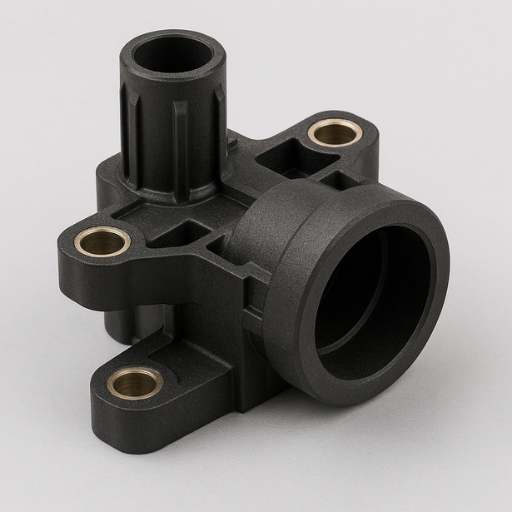
When Renata, a materials engineer at a weatherstrip supplier in São Paulo, re-qualified a glass run channel for a new EV program, the drawing still read “EPDM, flocked.” That was the safe, proven call. Then the OEM asked for a 40% weight reduction on the door module and a recyclable-content target, and EPDM stopped looking safe. Renata’s team switched the profile to a TPV glass run channel over a polypropylene carrier, cut mass by nearly half, and reused every meter of startup scrap instead of landfilling it. The seal now meets the OEM spec and the sustainability scorecard.
That switch is the quiet story behind TPE automotive window seals. The fuzzy-edged channel that grips your car window glass has been made from thermoset EPDM rubber for decades. It still is, on most vehicles. But thermoplastic elastomers (TPE), and above all thermoplastic vulcanizates (TPV), are replacing EPDM in new programs at a steady pace, driven by weight, recyclability, process speed, and the rise of frameless EV doors.
This guide explains what automotive window seals are made of, compares TPV and TPE against EPDM with real property data, maps the right TPE grade to each window-seal job, and ends with a supplier checklist for sourcing pellets that clear automotive standards. Whether you extrude weatherstrip profiles, mold glass encapsulation, or buy compound for a Tier 1 program, you will finish with a clearer material decision.
New to TPE? Start with our What Is TPE-S? guide →, then return here for the window-seal depth.
What Are Automotive Window Seals Made Of?

Automotive window seals are the guides and gaskets that let window glass slide while keeping water, wind, dust, and noise out of the cabin. They are not one part but a family of profiles with different jobs.
- Glass run channel (GRC) is the U-shaped track inside the door frame that grips the front and rear edges of the moving glass. It guides the glass, keeps it from rattling, and seals against weather. This is the most material-intensive window seal and the main TPV battleground.
- Belt line or waist seal runs along the base of the glass where it meets the door outer panel, sealing the outer glass face and often carrying the exterior trim.
- Quarter window and fixed-glass encapsulation bonds glass into a frame, usually for fixed quarter windows or flush side glass, and needs a Class-A exterior surround.
- Corner moldings and end caps are injection-molded joints that connect extruded seal lengths at the top corners of the door frame.
The seal works through soft sealing lips. When the glass is inserted, the lips flex and press against both faces of the pane while the frame side presses against the door. Because the glass slides against the seal, the glass-contact surface carries a low-friction layer, usually flocked nylon or polyester fibers, or a thin slip-coat, so the window moves smoothly without squeak or stick-slip noise.
Traditionally the whole system was EPDM rubber, dense and sponge, vulcanized in a cure oven and supplied in black. Today the same profiles are increasingly extruded and molded from TPV, with TPE-S, TPO, and PVC appearing in encapsulation and trim roles. For a full comparison of TPE against silicone in the wider sealing system, including door seals, under-hood gaskets, and EV battery seals, see our TPE vs silicone automotive seals guide →.
Why TPV and TPE Replace EPDM in Automotive Window Seals
EPDM earned its place. It offers excellent UV, ozone, and weathering resistance, a long service record, and strong elastic recovery, which is why it remains the benchmark for demanding semi-dynamic and dynamic seals. The case against it is not performance. It is weight, recyclability, and process economics.
| Property | EPDM rubber | TPV (PP/EPDM) |
|---|---|---|
| Material type | Thermoset rubber, cured | Thermoplastic vulcanizate |
| Specific gravity | 1.10-1.25 | 0.90-0.98 |
| Recyclability | Difficult, thermoset | Fully recyclable, regrind reuse, PCR grades |
| Cure step | Required, vulcanization | None, melts like polypropylene |
| Processing | Compression/autoclave, slow | Extrusion/injection, fast, co-extrusion |
| Compression set | Excellent short-term (22 h); relaxes long-term | Very good long-term (1,000 h); high-resilience grades match EPDM |
| UV/ozone/weathering | Excellent | Excellent, colorable |
| Service temperature | About -50 to +120/+150°C | About -40 to +135°C |
| Low-friction surfacing | Flocking or slip-coat | Flocking, PU/silicone, or TPV slip-coat |
| Colorability | Black only, typically | Full color, Class-A gloss available |
| Relative system cost | Proven incumbent | Lower total cost at volume |
Three rows drive the specification decision.
Weight. TPV sits at roughly 0.90 to 0.98 g/cm³ versus 1.10 to 1.25 for EPDM, so an equivalent TPV seal is about 20% to 30% lighter. Design-optimized TPV glass run channels that replace metal-reinforced EPDM frame-under-glass profiles have cut weight by up to roughly 55%, according to TPV suppliers including ExxonMobil and Celanese. On an EV, every kilogram lifts range.
Recyclability. EPDM is a thermoset, so it cross-links during curing and cannot be re-melted. TPV is a dynamically vulcanized EPDM dispersed in a polypropylene matrix, which makes it a true thermoplastic. Production scrap regrinds and reuses, and grades with post-consumer recycled content are now standard in glass run channel programs. We cover the environmental case in depth in our is TPE recyclable guide →.
Compression set nuance. This is the point most vendor tables get wrong. EPDM posts lower compression set in a short 22-hour test, which is why it looks unbeatable on a datasheet. But TPV holds its sealing force better over a 1,000-hour soak, the test that mirrors years of service. High-resilience TPV grades close the gap with EPDM entirely on elastic recovery, which is why they now qualify for the semi-dynamic GRC duty EPDM once owned.
The TPE Family for Window Seals: Which Grade Goes Where

TPE is a family, not a single polymer, and each branch fits a different window-seal job. Choosing the umbrella term is not enough. You need the right subtype.
- TPV (thermoplastic vulcanizate) is the direct EPDM replacement. It leads glass run channels, belt line seals, and semi-dynamic weatherseals because it balances compression set, UV stability, and low friction with fast, cure-free processing. It is the workhorse of the window-seal transition.
- TPE-S (styrenic block copolymer, SEBS) delivers soft-touch feel, low odor, easy colorability, and a high-gloss Class-A surface. Automakers have used styrenic TPE for window seals since at least the Peugeot 1007, and high-flow TPE-S grades are favored for glass encapsulation surrounds and visible trim where appearance matters as much as sealing.
- TPO (thermoplastic olefin) is the low-cost rigid-to-flexible option. It appears as the rigid carrier core of a co-extruded GRC and as an encapsulation substrate, often replacing metal carriers for weight savings.
- PVC remains a significant glass encapsulation material, valued for low gloss, glass bonding, and cost. It is context here rather than a TPE, and we compare it directly in our TPE vs PVC material guide →.
- TPE-U (thermoplastic polyurethane) shows up where abrasion and oil resistance dominate, but it is niche in window sealing.
If the family differences are new to you, our TPE vs TPU vs TPV comparison → and TPE material properties guide → walk through the chemistry and the numbers side by side.
Glass Run Channel
The GRC is a co-extrusion job. A rigid TPO or polypropylene carrier gives the profile its shape and replaces the metal insert, while soft TPV lips provide the sealing and wiping surfaces. A flock or a TPV slip-coat handles the glass-contact face. Dedicated GRC grades are engineered for exactly this: UV and weather stability, low coefficient of friction, and adhesion between the TPV lip and the TPO carrier using the residual heat of the co-extrusion line.
Belt Line and Waist Seals
Belt line seals press against the outer glass face and often carry the bright trim. TPE-S and TPV both work here, with TPE-S preferred where the seal is visible and must match a painted or chrome surround, and TPV preferred where the seal takes sustained weather exposure.
Quarter Window and Glass Encapsulation
Glass encapsulation bonds the window into its frame with a molded surround. High-flow TPE-S grades fill thin, complex Class-A surrounds, and some deliver surface gloss of roughly 60 on a gloss meter where rubber manages about 20. Fixed quarter windows, flush side glass, and panoramic-roof frames all lean on this capability. TPO substrates and PVC encapsulation remain common, so the material choice is a genuine four-way decision.
Corner Moldings and End Caps
An extruded GRC cannot bend around a sharp door-frame corner, so the ends are closed with injection-molded corners. This is where TPV earns its keep in a second way. Modern TPV corner-molding grades are formulated to bond directly to EPDM extrusions, with adhesion of roughly 4 MPa at room temperature that survives 70°C and climatic aging. That lets a molder join TPV or EPDM lengths without mechanical fasteners or adhesive, cutting assembly steps.
Properties That Decide Window Seal Life
Window seals sit inside the door cavity and bake in the sunbelt. They must survive decades of UV, ozone, heat, and cold, and they must keep pressing on the glass the whole time.
Compression Set
Compression set measures how much a seal keeps its thickness after being squeezed. A GRC lip that takes a permanent set stops pressing on the glass, and the window rattles, whistles, and leaks. The short-term versus long-term distinction matters more here than in almost any other seal application, because a window seal is compressed for the life of the vehicle. That is why high-resilience TPV grades, which hold their memory through millions of compression cycles, have displaced EPDM in new GRC programs despite EPDM’s strong short-term numbers.
Weathering, UV, and Temperature
Automotive TPV is formulated for continuous service to roughly 135°C and cold flexibility to about -40°C, with weather and UV stability that needs no protective coating. EPDM matches it on weathering and reaches colder floors, which is why it stays on the drawing for extreme-cold markets. OEM material specs and accelerated aging cycles, such as PV 3930 Florida and SAE J1960, are the yardsticks both must clear, and grade suppliers publish the test evidence.
Low-Friction Surfacing
The window slides against the seal thousands of times, so the glass-contact surface must be slippery without sacrificing the seal. Three approaches dominate:
- Flocking, electrostatically bonding short nylon or polyester fibers, gives the fuzzy surface most people picture on a GRC.
- Slip-coat extrusions, a thin polyurethane or silicone layer co-extruded over the profile.
- TPV slip-coat grades, a higher-resin TPV layer co-extruded as the glass-contact surface, with a dynamic coefficient of friction against glass around 0.15.
The base compound choice affects how well any of these adhere, which is one more reason to specify the pellet grade and the surfacing together rather than separately.
NVH, Odor, and Fogging
Interior-facing window seals must not stink up the cabin or fog the glass. TPE-S and TPV are available in low-odor, low-fogging automotive grades, and the tighter acoustic targets on EVs are pushing profiles toward multi-lip co-extrusions that damp wind noise without adding mass.
EVs and Frameless Doors Are Rewriting the Requirements

The biggest force behind TPE automotive window seals is the EV. Frameless doors and seamless flush side glass started as an EV styling signature and have spread to mid and luxury combustion models. Suppliers such as Cooper Standard now sell flush-glass sealing systems built on EPDM, TPV, and recyclable thermoplastic body seals, and the system has been awarded across seven global OEMs.
Flush and frameless designs impose brutal requirements on the seal. There is no visible frame to hide imperfections, so tolerances tighten toward roughly 0.1 mm. There is no engine to mask noise, so wind and road noise must be engineered out of the profile. And every gram counts toward range. In one documented example, a German luxury EV coupe recovered about 0.6% of driving range from lower wind resistance and improved cabin sound insulation by roughly 20% using advanced co-extruded dual-lip seals. That is the kind of gain a well-designed TPV profile can help deliver, and the reason OEMs now validate seals against high-pressure water intrusion and aero targets, not just door slam.
The recyclability story compounds the trend. Thermoplastic seals regrind cleanly, recycled-content TPV grades exist with 15% to 50% post-consumer content, and sealing suppliers are launching recycled and bio-based TPE seals for European automakers. For an OEM chasing a carbon and circular-economy scorecard, TPV is the material that answers both the scale and the survey.
How Automotive Window Seals Are Made from TPE and TPV Pellets
TPE and TPV arrive as uniform pellets, and they convert on standard thermoplastic lines, which is the whole point of the substitution.
- Extrusion and co-extrusion. Long GRC and weatherstrip profiles are extruded continuously. A GRC usually runs as a co-extrusion: a rigid TPO carrier core with soft TPV sealing lips fused in the same die. Pellet uniformity and melt-flow consistency are critical here, because a thin-wall, multi-lip profile holds its dimensions only if every meter of pellet feeds identically.
- Corner molding and end caps. Injection molding closes the profile ends. New TPV grades bond to the extrusion during molding, which removes a secondary joining step.
- Glass encapsulation. Two-shot or encapsulation molding bonds a TPE-S or PVC surround directly around the glass, filling thin Class-A sections with high-flow material.
- Post-treatment. Flocking, slip-coat application, and heat forming to the door curvature finish the profile.
Our TPE injection molding guide → covers the processing side, including cycle times, tooling, and the common defects to watch in thin-wall parts.
Cost: TPV versus EPDM Across a Window Seal Program

On a raw-kilogram basis, TPV costs more than raw EPDM compound. But window seals are bought by the meter and by the vehicle, not by the kilo, and the system math flips.
TPV is roughly 20% to 30% lighter, so a given profile uses less material. It skips the vulcanization cure, cutting energy by up to roughly half and removing the cure oven entirely. Startup and changeover scrap regrinds and reuses, reducing waste by up to roughly 50%. Corner-molding integration and overmolding to polypropylene remove metal carriers and fasteners. When suppliers quote a design-optimized TPV GRC against a metal-reinforced EPDM part, the weight delta alone can justify the change on an EV.
EPDM still wins where the incumbent tooling and process are already amortized, where the program volume is small, or where an OEM spec demands thermoset recovery in extreme cold. The honest answer is that the materials compete on system cost and weight, not sticker price, and a neutral cost model is the way to settle it.
Automotive Standards for Window-Seal Compounds
Before a pellet can enter a GRC program, it must clear automotive material and quality gates. Know the acronyms.
- IATF 16949 governs quality management across the automotive supply chain, and seal processors expect their material suppliers to be ready to support it.
- OEM material specs vary by automaker: VW 50123 with the TL 52381 and TL 52641 line items, Daimler DBL 5578 and DBL 1262/1270, Ford WSS-M2D380-B1, and GM GMN7396 all appear on window-seal grades.
- Aging and weathering tests such as PV 3930 (Florida) and SAE J1960 validate UV and climate durability.
- ASTM D2000 / SAE J200 classify elastomers by type and class, and material call-outs often cite them.
- VDA 270 odor and low-fogging limits apply to interior-facing seals, alongside RoHS and REACH.
Grade suppliers publish data to these standards, and our TPE supplier guide explains what documentation to demand. That is exactly the distinction that separates a compounder’s brochure from a production-ready pellet.
How to Source TPE and TPV Pellets for Automotive Window Seals
The window-seal application decides the grade, and the grade decides the supplier conversation. Work through this checklist before you buy.
- Confirm the window-seal role. GRC and weatherseal extrusion plus corner molding points to TPV. Encapsulation and visible trim point to TPE-S. A rigid carrier points to TPO. Ordering “TPE” without the subtype is how programs go wrong.
- Ask for the property pack. You need Shore hardness and melt flow for your line, short- and long-term compression set, UV and aging data against the relevant OEM cycle, coefficient of friction if you plan a slip-coat, and low-odor data for interior-facing parts.
- Verify pellet quality systems. Uniform pellet size and consistent melt flow protect thin-wall extrusion, and lot traceability plus a certificate of analysis protect your process. Confirm the supplier can support IATF 16949 expectations and RoHS/REACH documentation.
- Evaluate the commercial package. Minimum order quantity, lead time, and global shipping determine whether the material keeps your line running. A supplier that answers specification questions within 24 hours is worth more than one that sells only on price.
That is where Suzhou Yifuhui New Material Co., Ltd. fits. We supply TPE and TPV pellets with rubber-like elasticity and plastic processing efficiency, across Shore hardness and melt-flow ranges suited to window-seal extrusion and corner molding, plus the PP and TPO needed for rigid carriers and the PA66, POM, PC, and ABS used in trim and encapsulation components. Every batch is produced under controlled conditions for uniform pellet size and melt flow, and we back the material with transparent bulk pricing, global shipping, and a quote within 24 hours. We supply pellets, not finished flocked seals, so for a complete GRC program we will help you pair the right grade with a qualified seal extruder.
Frequently Asked Questions

What material is used for car window seals?
Most car window seals are made from EPDM rubber, which has been the industry standard for decades. Newer programs increasingly use TPV, a thermoplastic vulcanizate from the TPE family, because it is lighter, recyclable, and faster to process while matching EPDM’s sealing performance.
Is TPV better than EPDM for window seals?
TPV wins on weight, recyclability, and process economics, and high-resilience grades now match EPDM on long-term compression set. EPDM remains competitive where extreme-cold thermoset recovery is specified or where incumbent tooling is already amortized.
What is a glass run channel?
A glass run channel is the U-shaped seal inside a car door frame that guides the window glass as it slides and seals against water, dust, wind, and noise. It is usually co-extruded from a rigid carrier and soft sealing lips with a low-friction surface.
Why are window seals flocked?
Flocking bonds short nylon or polyester fibers to the glass-contact surface of a seal. The fibers lower friction so the window slides smoothly and quietly, preventing squeak, stick-slip noise, and wear over years of use.
What is window encapsulation?
Window encapsulation is a process that bonds a molded polymer surround directly around a fixed or flush glass panel, creating a sealed frame with a Class-A exterior surface. High-flow TPE-S and PVC are common encapsulation materials.
Can TPV replace EPDM in automotive weather seals?
Yes, for most weatherseal applications. TPV is a thermoplastic version of EPDM chemistry, fully recyclable, lighter, and faster to process, and modern high-resilience grades deliver elastic recovery comparable to cured EPDM.
Conclusion: Choose TPE, Choose the Right Grade, Source with Evidence
Automotive window seals are in the middle of a material transition. The glass run channel, belt line seal, and encapsulation that hold your window in place and keep the cabin quiet are moving from thermoset EPDM to TPE automotive window seals, led by TPV for dynamic GRC duty and TPE-S for Class-A encapsulation. The drivers are concrete: 20% to 30% lower density, up to 55% lighter optimized profiles, full recyclability with regrind and PCR grades, cure-free processing, and a design language of frameless EV doors that demands a tighter, lighter, quieter seal.
The decision framework is short. Match the TPE subtype to the window-seal role, verify the compression-set, weathering, and low-friction data against the OEM spec, and buy from a supplier that documents every batch.
Sourcing TPE or TPV pellets for a window seal or glass run channel program? Suzhou Yifuhui New Material Co., Ltd. supplies batch-consistent thermoplastic elastomer pellets for seal extrusion and molding, with global shipping and a competitive quote within 24 hours. Request a custom quote → or contact our polymer specialists → to discuss your grade requirements.