Last March, Marcus Chen, a procurement manager at a Midwest conveyor manufacturer, celebrated a $12,000 savings. He had swapped UHMW liners for HDPE across three production lines. The material looked identical. The price difference was real. Eighteen months later, the maintenance ledger told a different story. Downtime, replacement labor, and premature wear had erased those savings and added $28,000 in unplanned costs.
If you have ever stood in front of a material specification sheet wondering whether UHMW or HDPE is the smarter choice, you are not alone. Both materials belong to the polyethylene family. Both resist moisture and chemicals.
To the untrained eye, they look nearly identical. Yet their performance diverges dramatically in wear resistance, impact strength, friction, and total cost of ownership.
This guide breaks down the UHMW vs HDPE decision with the precision procurement managers and engineers need. You will learn exactly how these materials differ at the molecular level, which one suits your processing method, what each costs over a five-year lifecycle, and how to source either material competitively.
Need a quick spec comparison? Our polymer specialists can send you a side-by-side data sheet for your exact application. Contact our team for a tailored recommendation.
What Are UHMW and HDPE?
Ultra-High Molecular Weight Polyethylene (UHMW) and High-Density Polyethylene (HDPE) share the same chemical backbone. Both are thermoplastic polymers built from ethylene monomers. That shared chemistry gives them excellent chemical resistance, low moisture absorption, and good electrical insulation.
The critical difference lies in molecular weight. HDPE typically registers between 50,000 and 500,000 g/mol. UHMW starts at 3,000,000 g/mol and can exceed 10,000,000 g/mol in medical-grade variants. Those ultra-long polymer chains transform UHMW into an entirely different class of material.
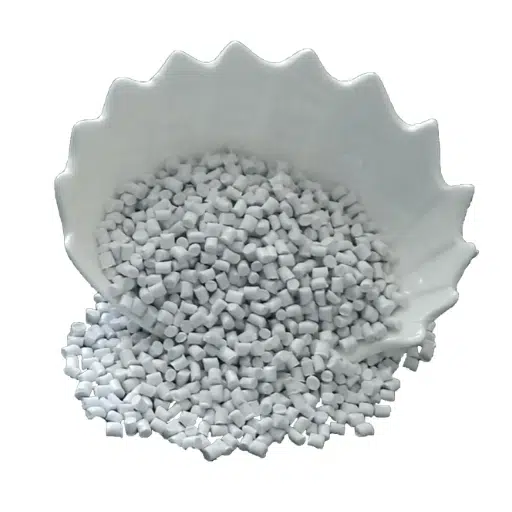
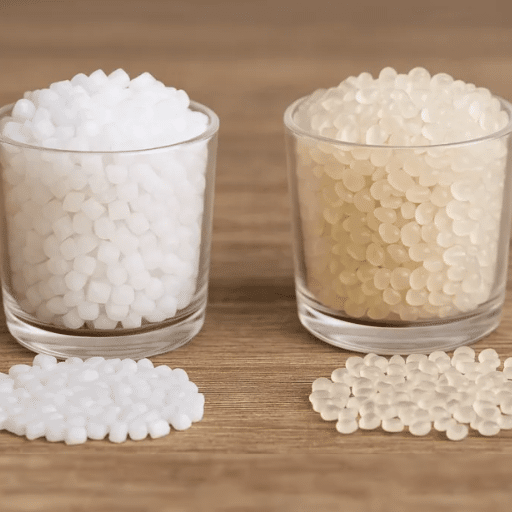
HDPE is the workhorse of the plastics world. It injection molds cleanly, extrudes smoothly, and blow molds into bottles and drums with standard equipment. It is available globally as uniform pellets with predictable melt flow. Manufacturers use it for tanks, pipes, containers, playground equipment, and consumer packaging.
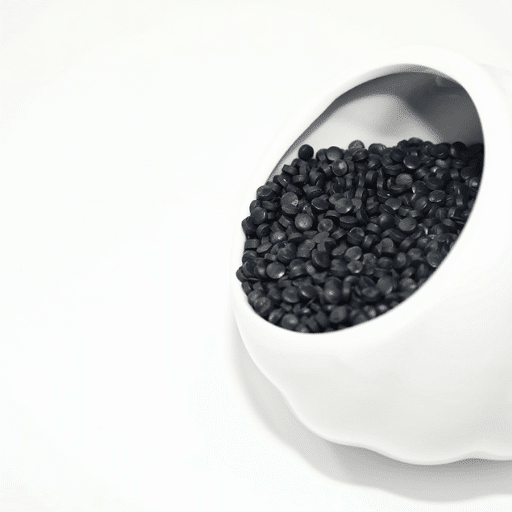
UHMW occupies a different niche. Its extreme molecular weight prevents standard injection molding and blow molding. The material is usually supplied as a fine powder or, in specialty grades, as modified pellets engineered for limited injection molding. UHMW dominates applications where wear resistance, impact absorption, and low friction matter more than ease of processing.
Understanding this distinction early prevents costly specification errors. HDPE is a versatile commodity resin. UHMW is a high-performance engineering plastic. Choose the wrong one, and your production line pays the price.
Molecular Structure and Key Properties Compared
The molecular weight gap between these materials is not a minor footnote. It is the single variable that dictates nearly every performance difference.
| Property | HDPE | UHMW | Advantage |
|---|---|---|---|
| Molecular Weight | 50,000 – 500,000 g/mol | 3,000,000 – 10,000,000+ g/mol | UHMW |
| Density | 0.941 – 0.965 g/cm³ | 0.930 – 0.935 g/cm³ | Comparable |
| Tensile Strength | 25 – 40 MPa | 35 – 50 MPa | UHMW |
| Impact Strength | Good | Exceptional | UHMW |
| Coefficient of Friction | 0.15 – 0.25 | 0.05 – 0.10 | UHMW |
| Wear Resistance | Moderate | 2-10x better than HDPE | UHMW |
| Temperature Range | -50°C to +80°C | -200°C to +80°C | UHMW |
| Moisture Absorption | <0.01% | <0.01% | Tie |
| Hardness (Shore D) | 50 – 76 | 60 – 65+ | Comparable |
UHMW’s coefficient of friction rivals PTFE in many sliding applications. Its wear rate can be six to ten times lower than carbon steel under dry sliding conditions. That explains why UHMW liners outlast steel in mining chutes and why conveyor manufacturers specify it for chain guides and wear strips.
HDPE is not without strengths. It offers slightly higher density and hardness in some grades. It machines more cleanly than UHMW, which tends to gum cutting tools. HDPE also tolerates autoclave sterilization up to approximately 120°C in specific grades, whereas UHMW maxes out near 80°C for continuous service.
Temperature performance deserves special attention. HDPE becomes brittle below -50°C. UHMW retains impact resistance down to -200°C, making it the only practical choice for cryogenic applications and extreme cold environments.
Want the full technical picture before you specify? Our complete guide to UHMW material properties walks through every data point in detail, from tensile behavior to abrasion ratings.
Processing and Fabrication: Which Is Easier to Work With?
If your facility runs standard injection molding or blow molding equipment, HDPE is the clear winner. It melts predictably, flows into complex molds, and cools with minimal warpage.
Pellets feed cleanly through hopper systems. Regrind ratios of 20-30% are common without significant property loss.
UHMW presents a different reality. Its melt viscosity reaches approximately 10⁸ Pa·s, which is effectively zero melt flow index. Standard injection molding is impossible with virgin UHMW powder. The material is shaped through compression molding, ram extrusion, sintering, or CNC machining.
Modified UHMW pellet grades change this picture partially. Celanese GUR 5113 and Mitsui LUBMER L5000 are engineered for limited injection molding. These grades trade some molecular weight for processability. They work in conventional equipment but still demand slower cycle times and tighter temperature control than HDPE.
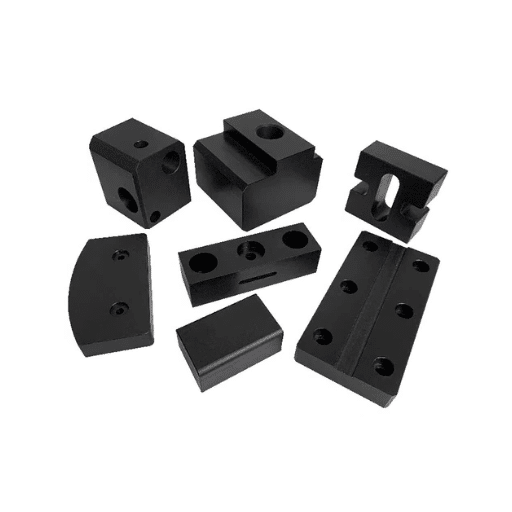
Machinability also differs. HDPE machines cleanly with standard tooling. UHMW is softer and more ductile. It generates stringy chips and requires sharper cutters with higher rake angles. Tool life is shorter. Tight tolerances are harder to hold.
Welding and joining favor HDPE as well. HDPE welds reliably with hot-plate, extrusion, or butt-fusion methods. UHMW welding is possible but more difficult and less common in field applications.
Form factor is another procurement consideration. HDPE pellets are the global standard. They flow through pneumatic conveying systems, store in silos, and feed automated lines without issue. UHMW is commonly supplied as powder. Specialty pellet grades exist but require confirmation that your feeding equipment handles the pellet size and bulk density correctly. Still deciding between the two forms? Our breakdown of UHMWPE powder vs pellets and which form you should source compares handling, processing, and cost trade-offs to help you match the right supply format to your line.
Cost Comparison and Total Cost of Ownership

Unit price alone can mislead procurement teams. HDPE pellets currently trade at approximately 1.20to1.20to1.50 per kilogram FOB China for virgin grades. Standard UHMW pellets range from 1.60to1.60to2.00 per kilogram.
Specialty injection-moldable UHMW grades run 2.00to2.00to4.00-plus per kilogram. Medical-grade UHMW can exceed $5.00 per kilogram.
At first glance, HDPE saves 20-50% on material cost. That is why Marcus Chen made the switch. His $12,000 savings looked excellent on the quarterly report.
Then the hidden costs arrived. HDPE liners on his conveyor lines wore through in six to nine months. UHMW liners at the same position had previously lasted eighteen to twenty-four months.
Each replacement required line shutdowns, labor, and lost production. Over eighteen months, Marcus’s team performed three unplanned liner changes instead of one scheduled change.
The math flipped. The “cheaper” material cost $40,000 in total. The “expensive” material would have cost roughly $22,000 including the higher upfront price.
Volume pricing also matters. HDPE is produced at massive scale. Suppliers offer flexible minimum order quantities starting at 25 kilograms.
UHMW pellets, especially modified grades, often carry 500-kilogram to 1-metric-ton minimums. Lead times are longer. Inventory planning is more critical.
For current pricing on UHMW pellet grades and volume tiers, refer to our UHMW plastic pellets buyer’s guide.
Ready to test both materials in your process? We supply trial samples of HDPE and UHMW pellets starting at 5 kilograms. Request your sample batch today.
Applications: When to Choose UHMW vs HDPE
The right material depends on what your part must survive. Here is a practical decision framework.
Choose HDPE for:
- Tanks, vessels, and chemical containment
- Piping and drainage systems
- Blow-molded bottles, drums, and containers
- General-purpose structural components
- Playground equipment and outdoor furniture
- Cost-sensitive consumer goods and packaging
- Applications requiring easy welding and thermoforming
Choose UHMW for:
- Wear strips, liners, and slide rails
- Chain guides and conveyor components
- Bearings, bushings, and sprockets
- Mining chute liners and dump truck bed liners
- Food processing equipment (cutting boards, conveyor parts)
- Medical implants and surgical instrument components
- Cryogenic environments below -50°C
- High-abrasion, continuous-friction environments
Sarah Okonkwo, a manufacturing engineer at a poultry processing plant, faced exactly this decision. Her team needed new conveyor flight guides. HDPE was the default choice because it was already in the warehouse. After six months, the guides showed significant wear and generated plastic dust that contaminated the line.
Sarah respecified the guides in food-grade UHMW. The wear rate dropped by roughly 80%. Dust generation stopped. The line passed USDA inspection without issue.
The UHMW guides cost 40% more upfront. They lasted three times longer. The plant manager approved the change for all future conveyor upgrades.
Overlap exists. Both materials work for marine fenders, dock bumpers, and some liner applications. In these cases, duty cycle and replacement access dictate the choice. If you can shut down for maintenance easily, HDPE might suffice. If downtime costs thousands per hour, UHMW is the safer bet.
HDPE is not the only alternative worth weighing against UHMW. If nylon is also on your shortlist for wear parts, our procurement guide to UHMW vs nylon for selecting wear-resistant plastic pellets compares strength, moisture behavior, and cost so you can pick the right engineering plastic with confidence. Explore industry-specific UHMW applications in our complete UHMW applications guide.
Regulatory Compliance and Certifications

Both materials offer food-grade and industrial-grade options, but the compliance landscape differs.
| Certification | HDPE | UHMW | Notes |
|---|---|---|---|
| FDA Food Contact | Available | Available | Virgin grades only for direct contact |
| USDA Approval | Common | Common | UHMW preferred for meat/poultry processing |
| NSF Certification | Widely certified | Grade-specific | HDPE dominates potable water applications |
| EU REACH | Generally compliant | Generally compliant | Verify supplier documentation |
| RoHS | Compliant | Compliant | Standard for both virgin grades |
| USP Class VI | Rare | Available | UHMW for medical implants and devices |
| ISO 5834-2 | Not applicable | Available | UHMW standard for orthopedic implants |
HDPE dominates the potable water and packaging sectors because it is easier to certify for blow-molded containers and extruded pipe. UHMW leads in food processing equipment where wear resistance and USDA approval for direct contact are mandatory.
Medical applications strongly favor UHMW. ISO 5834-2 governs orthopedic implant materials. Cross-linked and vitamin-E stabilized UHMW grades are the industry standard for hip and knee replacements. HDPE does not meet these requirements.
When sourcing either material, request the Technical Data Sheet (TDS) and Safety Data Sheet (SDS) before placing an order. Verify that the specific grade matches your regulatory requirements. Do not assume that all HDPE or all UHMW carries the same certifications.
Sourcing Considerations for Pellet Buyers
Availability and logistics favor HDPE. Major producers include Sinopec, Sabic, LG Chem, and Formosa. Pellets are stocked globally.
Lead times are typically two to four weeks for standard grades. Minimum orders start at 25 kilograms.
UHMW pellet supply is more specialized. Key brands include Celanese GUR, Mitsui LUBMER, YUHWA, and Braskem UTEC. Modified injection-molding grades are not always in regional stock. Lead times can stretch to six to eight weeks. Minimum order quantities often start at 500 kilograms.
Packaging is similar for pellets. Both materials ship in 25-kilogram PE bags, paper-plastic composite bags, or 800 to 1,250-kilogram super sacks. Container loads run 16 to 18 metric tons per 20-foot container.
Supplier vetting is critical for both materials, but UHMW demands extra scrutiny. Red flags include:
- Pricing well below $1.50 per kilogram for virgin UHMW
- Missing or incomplete TDS and SDS documentation
- Claims that standard UHMW powder injection molds easily
- Reluctance to provide sample batches for trial runs
- Inability to verify molecular weight or melt flow data
Request trial samples of 1 to 5 kilograms before committing to bulk orders. Run them through your actual equipment. Measure wear rates, dimensional stability, and processing yield. Real-world data beats datasheet claims every time.
Consolidate your material sourcing. Suzhou Yifuhui supplies both HDPE and UHMW pellets with competitive pricing, transparent MOQs, and global shipping. Request a custom quote for your next order.
Frequently Asked Questions

Is UHMW stronger than HDPE?
Yes, in the ways that matter for demanding applications. UHMW delivers higher tensile strength (35-50 MPa vs 25-40 MPa) and dramatically better impact resistance and wear performance. HDPE can register slightly higher hardness in some grades, but UHMW outperforms it in toughness and durability.
Is UHMW more expensive than HDPE?
Upfront, yes. Standard UHMW pellets cost roughly 20-50% more than HDPE pellets. Specialty injection grades and medical grades can cost 100-300% more. However, total cost of ownership often favors UHMW in high-wear environments because replacement cycles are two to four times longer.
Can UHMW replace HDPE?
Only in specific high-wear, low-friction, or extreme-cold applications. UHMW cannot replace HDPE in blow molding, thin-wall injection molding, or cost-sensitive general-purpose parts. HDPE remains the better choice for tanks, pipes, containers, and consumer goods.
Which is easier to machine: UHMW or HDPE?
HDPE machines more cleanly. UHMW is softer and produces stringy chips that can gum cutting tools. UHMW requires sharper cutters, slower speeds, and more frequent tool changes. Tight tolerances are harder to achieve with UHMW.
What is the temperature difference between UHMW and HDPE?
UHMW performs from -200°C to +80°C. HDPE performs from -50°C to +80°C. UHMW retains impact strength at cryogenic temperatures where HDPE becomes brittle. Both materials soften above 80°C in continuous service.
Can UHMW pellets be injection molded?
Standard UHMW powder cannot. Modified pellet grades such as Celanese GUR 5113 and Mitsui LUBMER L5000 enable limited injection molding with restricted part geometries and slower cycle times. Always confirm grade compatibility with your equipment before ordering.
Which is better for food processing: UHMW or HDPE?
Both offer FDA-compliant virgin grades. For static tanks and containers, HDPE is cost-effective. For moving parts subject to wear, such as conveyor guides and cutting boards, UHMW delivers longer service life and generates less contamination. USDA inspectors often prefer UHMW in high-wear zones.
Is HDPE or UHMW more recyclable?
HDPE is easier to recycle repeatedly. It retains properties through ten or more regrind cycles. UHMW is recyclable but degrades faster across reprocessing cycles. Post-industrial regrind is common for HDPE. UHMW regrind is typically downcycled into lower-performance applications.
Conclusion
UHMW and HDPE are not interchangeable. They are two distinct materials that happen to share a chemical family tree. HDPE is the versatile, cost-effective standard for general manufacturing. UHMW is the high-performance specialist for wear, impact, and extreme environments.
For pellet buyers, the decision comes down to three questions. What processing equipment do you run? What environment will the part face? What does downtime cost you?
If you run standard injection molding or blow molding and need general-purpose parts, HDPE is the logical choice. It is widely available, competitively priced, and easy to process. If you need wear strips, liners, bearings, or parts that survive extreme cold and constant friction, UHMW delivers value that HDPE cannot match.
Marcus Chen learned this lesson the hard way. After his $28,000 maintenance surprise, he respecified his critical wear components back to UHMW.
His next quarterly report showed higher material costs. His annual report showed a 34% reduction in total maintenance spend.
Suzhou Yifuhui supplies both HDPE and UHMW pellets in standard and specialty grades. Our team reviews your application, processing method, and volume requirements to recommend the right material at the right price. We respond to all inquiries within 24 hours and ship globally.
Contact our polymer specialists today for competitive quotes, sample batches, and technical data sheets tailored to your project.