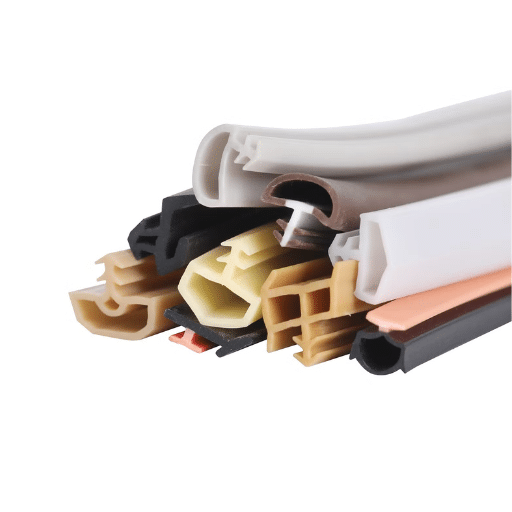
Elena had three quotes on her desk, all within four cents per kilogram of each other. She picked the cheapest.
Two months later, her blown-film line in Poland was scrapping roll after roll because the LLDPE melt index drifted outside the window her extruder could tolerate. The resin was cheaper per kilogram. The downtime cost her far more.
Elena’s mistake is the default one. Most buyers compare price before they compare capability, and when they search for a polyethylene pellets supplier they treat the result as a single product. It isn’t. Polyethylene is a family of polymers, and HDPE, LDPE and LLDPE behave differently, process differently, and are priced differently.
This guide gives you what marketplace listings and thin vendor pages don’t. You’ll learn how the PE family breaks down, how grades are specified by melt flow index and density, what a polyethylene pellets supplier should charge in 2026, how food-contact and recycled rules apply, and exactly how to vet, sample and qualify a supplier before you commit to a container.
Need HDPE, LDPE or LLDPE matched to your process? Request a polyethylene pellets quote →
What Are Polyethylene Pellets?

Polyethylene pellets are small, uniform granules of polymerized ethylene. They’re the raw material form that injection molders, film extruders, blow molders and pipe manufacturers feed into their machines. Because polyethylene is sold in this granular form, buyers also search for polyethylene granules or polyethylene in granules; both describe the same product.
Polyethylene is the highest-volume plastic family in the world. Its density and behavior depend on how the polymer chains branch during polymerization.
More branching means less crystallinity, lower density and a softer material. Less branching means tight packing, higher crystallinity and greater stiffness. That single variable produces the whole family.
The members you’ll meet when sourcing are HDPE, LDPE, LLDPE, MDPE and UHMWPE. Each has its own grade structure, price band and supplier base.
Pellet form and consistency matter more than buyers expect. Uniform pellet size, low fines, and low moisture all affect how reliably your machine feeds and melts. That’s why a supplier’s pelletizing and quality control process, not just its resin source, determines whether your line runs clean.
If you’re comparing pellet form against powder for a specialty application, our guide to powder versus pellet form covers when each makes sense.
HDPE vs LDPE vs LLDPE: Complete Property Comparison
Most sourcing pages stop at HDPE versus LDPE. That leaves out LLDPE, which is the workhorse of flexible packaging and the grade most likely to cause process problems when it drifts. Here’s the complete picture.
| Property | HDPE | LDPE | LLDPE |
|---|---|---|---|
| Density (g/cm³) | 0.940-0.976 | 0.910-0.940 | 0.915-0.935 |
| Crystallinity | 65-85% | 45-65% | 55-65% |
| Softening point | 125-135°C | 90-100°C | 94-108°C |
| Chain structure | Linear, minimal branching | Long-chain branching | Linear with short branches |
| Stiffness | High | Low | Medium-high |
| Puncture and tear resistance | Moderate | Moderate | Excellent |
| Moisture barrier | Best | Moderate | Good |
| Environmental stress crack resistance (ESCR) | Lower | Higher | Moderate |
| Typical applications | Pipe, bottles, caps, crates, liners | Film, cable insulation, bags, toys | Stretch film, heavy-duty sacks, agricultural film |
Three properties drive almost every specification decision.
Density determines stiffness, barrier and load-bearing capacity. It’s measured by ASTM D792 or ISO 1183. Higher density means a stiffer, stronger, more moisture-resistant part. Lower density means flexibility and toughness in the cold.
Crystallinity follows density closely and controls how the material responds to heat. HDPE holds its shape to a much higher temperature than LDPE. That’s why HDPE serves pipe and hot-fill applications while LDPE serves films and wraps.
Environmental stress crack resistance is the property buyers overlook until a part fails in service. HDPE resists cracking under sustained load and chemical contact less well than LDPE. That’s why HDPE grades for containers and pipe often carry added antioxidants and UV stabilizers.
Thermal behavior is worth knowing before you set your barrel temperatures.
Polyethylene Pellet Grades by Process
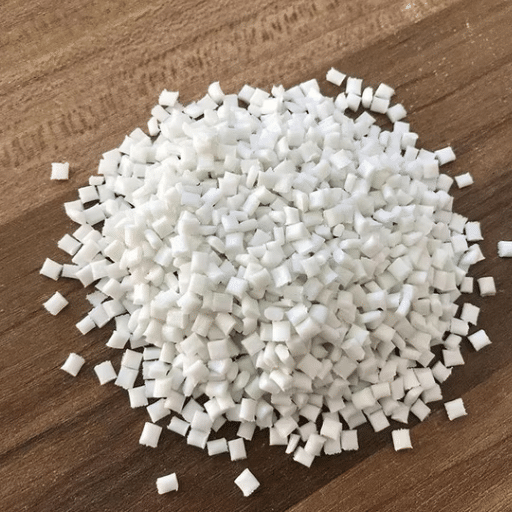
A polyethylene pellets supplier will quote you a grade, not a material. Order HDPE pellets without specifying density and melt flow index, and you leave that choice to whoever fills the bag. The grade is a combination of melt flow index (MFI, also written MFR or MI) and density, tuned to a specific forming process. Melt flow index measures how easily the molten polymer flows. It’s tested to ASTM D1238 at 190°C under a 2.16 kg load.
Here’s the grade-selection matrix that matters.
| Process | Typical MFI (g/10 min) | Typical density (g/cm³) | Typical products |
|---|---|---|---|
| Injection molding | 10-30+ | 0.940-0.960 | Crates, pallets, caps, closures, housewares |
| Film extrusion (blown and cast) | 0.8-2.0 | 0.915-0.935 | Packaging film, stretch film, heavy-duty sacks |
| Blow molding | 0.2-0.8 | 0.945-0.955 | Bottles, drums, jerry cans, IBCs |
| Pipe extrusion | 0.2-0.5 (HLMI) | 0.940-0.960 | Water mains, gas pipe, conduits |
| Rotomolding | 2-10 | 0.930-0.945 | Tanks, kayaks, playground equipment |
The relationship is inverse and intuitive once you see it. Higher MFI means better flow, which suits intricate molds and fast cycles. Lower MFI means higher molecular weight, which delivers melt strength.
That matters for a parison that must hold its shape while it’s blown. Higher MFI also tends to reduce mechanical properties, so you never want more flow than the process requires.
For pipe, the grade families are PE80 and PE100. They’re defined by minimum required strength (MRS) and specified against standards such as ISO 4427 and ASTM D3350. PE100 holds a higher pressure rating at the same wall thickness, which lets a fabricator use less material for the same duty.
When you write an RFQ, specify all three: process, MFI target with tolerance, and density target. A supplier who can’t quote against those three numbers is quoting a commodity, not a grade.
Polyethylene Pellets Price Guide 2026
Polyethylene pricing moves with crude oil, plant maintenance schedules, new capacity and seasonal demand. Any single number you read is already stale. When buyers ask about HDPE pellets price, the honest answer is a range with an as-of date, not a figure.
Virgin HDPE has traded in a global band of roughly USD 1,080 to 1,400 per tonne (USD 1.08 to 1.40 per kilogram), depending on grade and region. In Europe, a virgin HDPE pellet offer was listed at EUR 1.52 per kilogram in May 2026.
Recycled HDPE sits lower, but not always by as much as buyers assume. According to the Expert Market Research recycled HDPE price index, the global average was USD 0.881 per kilogram in Q2 2026, up 8% from USD 0.816 in Q1. The forecast for the second half of 2026 is USD 0.88 to 1.00.
| Region (Q2 2026) | Recycled HDPE average |
|---|---|
| United States | USD 0.93/kg |
| Germany | USD 1.12/kg |
| India | USD 0.87/kg |
| China | USD 0.70/kg |
| Global average | USD 0.881/kg |
The virgin-to-recycled gap usually runs 35% to 45%, and sometimes as wide as 60%. But in constrained grades, post-consumer resin can price equal to or above virgin. European recycled HDPE in May 2026 traded at roughly EUR 1,119 to 1,129 per tonne for grey pellets, EUR 1,503 to 1,513 for white, and EUR 1,760 to 1,770 for natural, according to OPIS recycled plastics pricing. Food-grade recycled HDPE pellet prices have climbed nearly 50% since the start of the year.
Why the Lowest Price per Kilogram Is Rarely the Lowest Cost
Density changes the arithmetic. A material at lower density yields more parts per kilogram, so a cheaper resin can produce a more expensive part. Add freight, customs, financing and the cost of a rejected batch, and per-kilogram comparisons fall apart.
Incoterms shift the landed cost further. EXW excludes everything from the factory gate. FOB adds inland transport and export clearance. CIF adds freight and insurance to your port, and DDP covers delivery to your door with duties paid.
The same resin can differ by USD 0.10 to 0.30 per kilogram across those terms. That gap is often wider than the difference between competing quotes.
Always ask for both an FOB and a CIF quote. A supplier who won’t name an Incoterm is either inexperienced or hiding logistics cost inside the unit price.
Comparing quotes across different Incoterms? Send us your specification and target volume → and we’ll return an itemized FOB and CIF price within 24 hours.
Virgin vs Recycled Polyethylene Pellets
Recycled polyethylene comes in two forms. Post-industrial recycled (PIR) material is production scrap, clean and consistent because it never left a controlled manufacturing environment. Post-consumer recycled (PCR) material is collected from end users, which makes it cheaper and far more variable.
| Virgin PE | Recycled PE (PCR) | |
|---|---|---|
| Feedstock | Polymerized ethylene | Collected post-consumer or post-industrial scrap |
| Consistency | High, tightly specified | Variable; depends on feedstock and sorting |
| Price | Baseline | Typically 35-45% lower, but can invert in tight grades |
| Contamination risk | Minimal | Higher; requires filtration and lot testing |
| Food contact | Compliant grades available (21 CFR 177.1520) | Requires FDA No Objection Letter |
| Certification | Grade datasheet and lot COA | GRS, ISCC PLUS, Ocean Cycle, plus lot COA |
That variability is the real risk. PCR feedstock carries contamination, color inconsistency and molecular degradation from repeated heat history. Consistency between batches matters more in recycled resin than in virgin, not less.
Certification for recycled content is now a procurement requirement in many markets. Look for GRS (Global Recycled Standard), ISCC PLUS, or Ocean Cycle where marine-bound plastic is involved. These verify the recycled content claim, not the technical performance of the resin, so you still need material data.
Priya, a plant engineer at a beverage-bottle manufacturer, learned to separate those two questions. She sourced a low-cost rHDPE with an attractive GRS certificate. The material arrived with no lot-specific Certificate of Analysis and no melt flow data.
Her incoming inspection found the MFI a full 15% above the datasheet value, and the run produced short shots and inconsistent wall thickness. The certification was genuine. The process control wasn’t.
For buyers comparing recycled options across resin families, our recycled polyamide versus recycled polyester comparison shows how the same trade-offs play out in engineering plastics.
Food-Contact and Regulatory Compliance

For food grade polyethylene pellets, the governing United States regulation is FDA 21 CFR 177.1520, which covers olefin polymers. Virgin PE grades that comply with it can be used in food packaging. A compliant supplier will provide the specific paragraph citation alongside the grade data.
The European equivalent is EU 10/2011, with LFGB for the German market. Both require migration testing, not just a material declaration.
Recycled polyethylene is where buyers get into trouble. A recycled grade isn’t automatically food-safe, even if the virgin equivalent is. Recycled PE for food contact requires an FDA-reviewed recycling process and a No Objection Letter (NOL), plus feedstock that came from food-contact articles only.
Precedents exist and they’re specific. The FDA issued an NOL to Polymetrix AG (PNC 2442) in 2020, permitting PCR-HDPE at up to 100% recycled content in milk, water and juice bottles under defined conditions of use. It issued another to Baosu Machinery and Suzhou Polytec (PNC 3411) for HDPE containers contacting raw fruits, vegetables and shell eggs. Kingfa received an NOL covering up to 100% recycled content across a wider set of conditions.
The practical rule is simple. If your application touches food, ask your polyethylene pellets supplier for the grade’s 21 CFR 177.1520 citation. For recycled grades, ask for the NOL number and the feedstock controls that support it.
A verbal assurance isn’t evidence. If you’re working with a supplier on a broader compliance program, our polyester and polyamide supplier guide covers the equivalent documentation requirements for engineering resins.
How to Choose a Polyethylene Pellets Supplier
Now the part that actually determines whether your line runs. Whether you’re evaluating an HDPE pellets supplier or a distributor carrying several resin families, work through these criteria in order. Price belongs at the end.
Know Which Type of Supplier You’re Dealing With
| Supplier Type | What They Do | Best For | Watch Out For |
|---|---|---|---|
| Manufacturer / compounder | Pelletizes and compounds resin on its own lines | Custom grades, color matching, application-specific formulation | Verify the factory is real, not a trading front |
| Trader | Buys and resells generic grades | Spot buys, small or unusual quantities | No technical depth, often no batch traceability |
| Distributor / agent | Represents global brands at a markup | Branded grades in small volumes | Higher cost, limited customization |
| Full-range pellets supplier | Stocks multiple grades with technical support | Consolidated sourcing, volume programs | Confirm the breadth is real, not just a catalog |
For custom formulation, color matching or application-specific compounding, a manufacturer is the right answer. For branded grades in small volumes, a distributor makes sense. If you source other resin families alongside PE, our guide to how to choose a TPE supplier applies the same evaluation framework to thermoplastic elastomers. The classic failure is buying generic resin from a trader at a low price and discovering that nobody can explain an off-spec batch.
Verify Certifications Against the Issuing Body
ISO 9001 is the baseline. It signals a documented quality management system and lower batch-to-batch variation, but it proves a system, not a material. Verify the certificate number with the issuing body and confirm the scope covers plastic production at the site supplying you.
Product-level compliance comes from third-party testing. Ask for RoHS and REACH reports from SGS, BV, TUV or Intertek, issued within the last six months, matching the exact grade you’re buying.
Demand a Lot-Specific COA, Not a Generic Datasheet
This is the single most effective filter you have. Request a Certificate of Analysis for the specific lot you’ll receive. A useful COA shows melt flow index at the stated temperature and load, density, tensile strength and elongation at break, moisture content, contamination limits, the lot number and the manufacturing date.
Then cross-check it against the Technical Data Sheet. If the COA melt flow index falls outside the TDS range, ask why before you accept. A tolerance of roughly plus or minus 10% is normal. A deviation beyond 20% means the datasheet can’t be trusted.
For batch stability, request COAs for three consecutive lots of the same grade and compare them directly. Also ask about the retention sample policy and the line changeover procedure. Those tell you how much cross-contamination risk exists.
Match MOQ to Your Actual Consumption
Minimum order quantity reveals how a supplier thinks about partnership. A supplier that accepts only full-container orders can’t support your pilot phase. One that offers trials from 25 kg can.
Typical expectations for polyethylene resin run from 1 to 10 tonnes direct from a manufacturer, with distributor trials from 25 kg. A sensible qualification path looks like this:
- Free samples of 5 to 10 kg.
- A 25 to 500 kg pilot, run on your own equipment.
- LCL shipments for early production.
- A full container once the grade is qualified.
- An annual contract with agreed pricing and lead times.
Confirm pricing, lead time and documentation at every stage in writing.
Red Flags
- Prices 20% to 30% below market. This can indicate off-spec resin, recycled sold as virgin, or a trader who can’t deliver.
- Refusal to provide a sample, or a sample without a COA.
- Vague grade descriptions such as “HDPE pellets” with no MFI or density.
- No named Incoterm.
- No verifiable business license or factory address.
Working with a Polyethylene Pellets Supplier in China

China is the largest polyethylene market and the dominant supply base in Asia-Pacific. That’s why so many listings for a polyethylene pellets supplier resolve to Chinese factories. The concentration of capacity means wide grade availability and competitive pricing. It also means you must separate factories from trading companies.
Erik, a sourcing lead at a pipe extrusion company, did this well. Before placing a PE100 order, he asked for the factory address, an ISO 4427 test report, and lot-specific MRS data. He then ordered 50 kg, ran it on his own line, and compared the melt flow index against the TDS.
Only after the pilot matched did he commit to a container. The supplier passed, and Erik had documentation to defend the decision internally.
Packaging and moisture control matter for export. Specify 25 kg moisture-barrier bags on wrapped pallets, with desiccants for humid routes. Sea transport exposes resin to condensation over weeks, and wet resin causes bubbles, voids and surface defects in molded parts.
Structure payment to protect yourself. Avoid 100% upfront. Common terms are 30% deposit with 70% against the bill of lading, or an irrevocable letter of credit for a larger first order.
Polyethylene vs Polypropylene Pellets
Polyethylene rarely competes only with itself. The most common cross-material decision for a buyer is PE against PP.
Polyethylene wins on moisture barrier, impact resistance in the cold, and flexibility. Polypropylene wins on stiffness, chemical resistance at higher temperatures, and fatigue resistance. That last point is why living hinges are PP rather than PE. PP also carries a higher service temperature.
The decision usually comes down to a few questions.
| Question | Material |
|---|---|
| Does the part need to flex many times (living hinge)? | PP |
| Does it need to block moisture? | PE |
| Does it need to survive impact in the cold? | PE |
| Does it need stiffness at a higher service temperature? | PP |
FAQ

Is polyethylene food safe?
Yes, when the grade complies with FDA 21 CFR 177.1520 and is used under the conditions of use that regulation permits. Virgin PE grades meeting that standard are widely used in food packaging. The plastic itself isn’t the question. The specific grade, its compliance documentation and the application are.
What is HDPE used for?
HDPE serves pipe and conduit, bottles and caps, crates and pallets, drums, liners, and industrial containers. Its stiffness, moisture barrier and load-bearing strength suit structural and packaging applications.
How much does HDPE cost per kg in 2026?
Virgin HDPE has traded between roughly USD 1.08 and 1.40 per kilogram globally, with European offers above EUR 1.50. Recycled HDPE averaged about USD 0.88 per kilogram in Q2 2026. Treat these as ranges and request a current quotation for your grade, volume and Incoterm.
What is the difference between HDPE, LDPE and LLDPE?
Density and chain structure. HDPE is dense, stiff and holds its shape at higher temperature. LDPE has long-chain branching, which makes it flexible and easy to process.
LLDPE has a linear backbone with short branches, giving a balance of strength and toughness with excellent puncture resistance. The property table above breaks this down across nine dimensions.
What is the MOQ for polyethylene pellets?
Standard resin grades usually require 1 to 10 tonnes from a manufacturer, with distributor trials from 25 kg. Custom colors and compounds typically start at 500 to 1,000 kg. Sample quantities of 5 to 10 kg are normally available for qualification.
Can recycled polyethylene pellets be used for food contact?
Only when the recycling process has been reviewed by the FDA and covered by a No Objection Letter, with feedstock limited to food-contact articles. Several processes hold NOLs for up to 100% recycled content in specific applications. Without an NOL, recycled PE shouldn’t be used in food contact.
Is polyethylene recyclable?
Yes. Polyethylene is a thermoplastic and can be re-melted and reprocessed, and it carries resin identification codes 2 (HDPE) and 4 (LDPE). Mechanical recycling is well established for HDPE bottles and containers. Repeated heat history degrades the polymer, which is why recycled content is usually blended with virgin resin rather than used alone.
How do I get a quote for polyethylene pellets?
Prepare three things: the process you run, your target MFI and density with tolerances, and your monthly volume. With those, a supplier can quote a specific grade rather than a commodity.
Why Source Polyethylene Pellets from Suzhou Yifuhui
Suzhou Yifuhui New Material supplies HDPE and the broader standard and engineering plastics portfolio. That means you can consolidate your raw material sourcing rather than manage five vendors.
Every shipment carries lot-traceable documentation. We control batch consistency through standardized pelletizing and testing, verify melt flow and density against the datasheet, and supply 21 CFR 177.1520 documentation on grades that hold food-contact compliance. Our portfolio also covers PP, ABS, PC, PA66, POM and specialist resins including PFA, PPS and PEI.
We ship worldwide with the logistics support to keep your line supplied, and our polymer specialists answer technical questions within 24 hours. Pricing is transparent, with Incoterms stated up front and no hidden fees.
If you’re shortlisting suppliers and want to compare real capability and cost, that comparison starts with a specification. Request a polyethylene pellets quote →
Conclusion
Sourcing polyethylene pellets is a specification exercise before it’s a purchasing one. To get it right:
- Identify the family and the process before you talk to anyone. HDPE, LDPE and LLDPE aren’t interchangeable.
- Quote against MFI and density, with tolerances, not against a material name.
- Compare landed cost, not unit price. Density, Incoterms and freight change the answer.
- Verify documentation: lot-specific COAs matched to the TDS, three-lot consistency, and certifications confirmed with the issuing body.
- Treat recycled and food-contact claims with extra rigor. An FDA No Objection Letter is the standard, not a badge.
- Sample and pilot before you scale, and get the terms in writing.
The right polyethylene pellets supplier doesn’t give you the lowest number. It gives you the same number every time, with the paperwork to prove it. If that’s what you need, our team will respond with grade-specific pricing within 24 hours. Talk to a polymer specialist →