The average vehicle on the road today contains 150 to 200 kilograms of plastics. The global automotive plastics market is projected to grow from roughly USD 33.67 billion in 2026 to USD 49.96 billion by 2031, according to Mordor Intelligence.
That growth is not a single material decision. It is the result of thousands of individual choices made by engineers, sourcing managers, and Tier 1 suppliers who must balance heat resistance, dimensional stability, cost, and weight in every component. When it comes to polyester and polyamide automotive applications, the most successful programs do not choose one polymer family. They use both.
Polyamide (PA) dominates where toughness, heat resistance, and mechanical load matter. Polyester (PET/PBT) wins where dimensional stability, electrical insulation, and chemical resistance are critical. Modern vehicles need both. Yet most sourcing guides still treat them as separate decisions, forcing procurement teams to manage multiple suppliers, conflicting documentation, and inconsistent lead times for materials that often ship to the same production line.
This guide explains how automotive manufacturers use polyester and polyamide together, where each material delivers the most value, and how to source both as a unified material program. You will learn the specific vehicle systems that rely on PA and PET, the engineering reasons behind those choices, and what to look for when qualifying a supplier who can deliver both polymer families.
Want to simplify your automotive resin sourcing? Request a custom multi-resin quote and our polymer specialists will recommend the right PA and PET/PBT grades for your program. To gain a deeper understanding of Polyester and Polyamide Market Trends 2026: What Procurement Managers Need to Know, please click to refer to our accompanying guide.
Why Automotive Manufacturers Need Both Polyester and Polyamide

No single thermoplastic can do everything a modern vehicle demands. Polyamide absorbs impact, resists automotive fluids, and maintains strength at high temperatures. Polyester repels moisture, holds tight tolerances, and provides excellent electrical insulation. These properties are complementary, which is why a typical automotive program specifies both.
Consider a single fuel-system module. The structural bracket that holds the assembly in place must survive vibration, engine heat, and occasional oil exposure. That is a job for glass-filled PA66.
The connector housing that seals the wiring must stay dimensionally stable across temperature swings and resist fuel vapors. That calls for PBT. The same module needs two distinct polymer families, each solving a different engineering problem.
Marcus Chen, a sourcing manager at a Tier 1 supplier in Suzhou, learned this the hard way. His team had been buying PA66 from one compounder and PBT from another to chase the lowest per-kilogram price. When the PBT supplier missed a specification change on the connector grade, 12,000 housings molded out of tolerance before anyone caught the issue.
The program delay cost more than the annual resin budget. Marcus consolidated both materials with a single supplier who understood the full module, and his defect rate dropped by 60%.
The broader benefit is supply chain resilience. Using both polyester and polyamide across a vehicle platform spreads risk across resin markets. If benzene-based feedstock costs spike and push PA66 prices higher, a manufacturer with a balanced PET program has more negotiating leverage. Conversely, if paraxylene supply tightens and affects PET, a diversified PA portfolio provides flexibility.
For a deeper comparison of when to choose one material over the other, see our polyamide vs polyester automotive guide. If your goal is to manage polyamide and polyester automotive procurement as one program, our complete sourcing guide covers storage, quality control, and cost strategy.
Under-the-Hood: Where Polyamide Leads, Polyester Supports
The engine bay is the most demanding environment for automotive plastics. Components here face continuous heat, vibration, oil, coolant, and road salt. Polyamide is the natural choice for most of these applications because it combines toughness with chemical resistance and can be formulated to withstand temperatures above 200°C when glass-filled.
Common under-hood PA applications include:
- Air intake manifolds and engine covers: PA6-GF and PA66-GF handle heat and structural loads.
- Fuel lines and fittings: PA11 and PA12 resist fuel permeation while remaining flexible.
- Cooling system components: Radiator end tanks and coolant manifolds use heat-stabilized PA66.
- Gears, bushings, and bearings: PA’s wear resistance and self-lubricating properties extend service life.
Polyester plays a supporting role rather than leading under the hood. PET and PBT grades can handle moderate heat, but they lack the impact resistance and fluid compatibility of PA. Where polyester excels is in precision brackets, sensor housings, and electrical connectors located near the engine but not directly exposed to extreme mechanical stress. Their low moisture absorption prevents the dimensional drift that can cause connector pins to misalign over time.
Moisture management is the critical difference between these two families under the hood. PA6 can absorb 2.5-3.5% moisture in ambient conditions, which affects both dimensions and mechanical properties. For a deeper look at tensile strength, impact resistance, and thermal behavior, see our polyamide vs polyester mechanical properties comparison.
Parts made from polyamide must be dried before processing and may require post-mold conditioning. PET absorbs less than 0.5% moisture, making it more forgiving in humid assembly environments.
Automotive Property Snapshot: Polyamide vs Polyester
| Property | Polyamide (PA6/PA66) | Polyester (PET/PBT) |
|---|---|---|
| Moisture absorption | 2.5-3.5% | <0.5% |
| Heat resistance | Up to 200°C+ (glass-filled) | Up to 120-240°C (grade-dependent) |
| Toughness / impact | Excellent | Moderate |
| Dimensional stability | Good when conditioned | Excellent |
| Chemical resistance | Strong against oils and fuels | Strong against solvents and fuels |
| Typical automotive use | Under-hood, structural, safety | Interior, electrical, precision |
This table summarizes why polyester and polyamide automotive programs rarely substitute one for the other. Each family occupies a distinct performance zone.
Interior and Exterior: Where Polyester Leads, Polyamide Reinforces

Step inside a vehicle and the polymer landscape flips. Polyester dominates the cabin because it offers the dimensional stability, UV resistance, and colorfastness that interior surfaces demand. According to market research on automotive woven fabrics, polyester held approximately 64.66% of the market in 2025, driven by its use in upholstery, seating, headliners, and door panels.
Key interior applications for polyester include:
- Seat covers and upholstery: PET fabrics resist fading and abrasion while supporting recycled-content targets.
- Carpets and floor coverings: PET offers excellent stain resistance and durability.
- Headliners, parcel shelves, and boot liners: Lightweight PET substrates reduce cabin weight.
- Instrument panels and trim: PBT provides the surface quality and heat resistance needed near HVAC outlets.
Polyamide is not absent from the interior. It reinforces the structures that passengers never see. Seat tracks, latch mechanisms, adjustment gears, and load-bearing brackets often use PA66 because it withstands repeated mechanical stress without deforming. The combination of a soft PET surface with a strong PA core is common in seating and trim assemblies.
Exterior applications follow a similar pattern. Polyester leads in body panels, trim, and lighting housings where UV stability and paint adhesion matter. Polyamide supports underbody shields, wheel-arch liners, and fasteners where impact resistance and toughness are priorities. A well-designed exterior system pairs PET visible surfaces with PA structural clips that can survive stone impacts and thermal cycling.
Electrical and EV Systems: Precision Pairing of PA and PBT
The shift to electric vehicles has intensified the demand for both polymer families in electrical systems. Battery packs, inverters, and high-voltage connectors require materials that combine electrical insulation, dimensional stability, and flame retardancy. Here, the PA and PET automotive pairing becomes even more strategic.
PBT is the workhorse for connector housings and relay bodies. Its low moisture absorption keeps tight tolerances over the vehicle lifetime, and it accepts flame-retardant additives without losing processability. PBT-GF30 is a common choice for high-voltage EV connectors where electrical isolation must survive temperature cycling and vibration.
PA66 and PA6 are used in wire harness components, cable ties, and high-load retention clips. These parts need the toughness and heat resistance that polyamide provides, especially near the battery pack or electric motor where temperatures can climb rapidly. Some newer EV thermal management systems use PA66 for coolant manifolds that route fluid around the battery module.
The precision pairing matters because a single battery pack can contain hundreds of connectors and fasteners. If every connector housing swells from moisture absorption, alignment fails and electrical resistance rises. If every retention clip lacks toughness, vibration causes fatigue failure. Using PBT for housings and PA for clips gives engineers both properties without over-specifying either material.
Flame retardancy is another shared requirement. Both PA and PBT can be formulated with halogen-free flame retardants to meet UL94 V-0 and OEM-specific standards. The right additive package depends on the base resin, wall thickness, and operating temperature, which is why a supplier with expertise in both families can accelerate material qualification.
Safety Systems: Airbags, Seatbelts, and Crash Components
Safety systems represent some of the most performance-critical applications for polyamide in vehicles. Airbag fabrics are the clearest example. Polyamide 66 dominates this market because it folds compactly, resists heat during deployment, and maintains strength under the sudden loads of inflation.
Market data from Strategic Market Research shows that polyamide holds approximately 52.3% of the automotive airbag fabric market, compared to polyester at 31.7%.
The reasons are technical. PA66 fabric deploys predictably at high speeds without tearing, and it withstands the hot gases released during airbag inflation. Polyester is lighter and less expensive, but it historically lacked the heat resistance and foldability needed for the most demanding cushion designs.
That balance is starting to shift. Autoliv announced a 100% recycled polyester airbag cushion in September 2024, demonstrating that advanced fabric engineering can close the performance gap while supporting sustainability targets. For now, PA66 remains the dominant choice, but Tier 1 suppliers are increasingly qualifying rPET alternatives where specifications allow.
Seatbelt webbing often combines both materials. High-load segments may use PA for strength, while comfort-facing sections use PET for flexibility and color consistency. Crash-absorbing structural elements, such as pedal boxes and steering column brackets, frequently use glass-filled PA66 because it absorbs energy without brittle fracture.
For components that combine recycled content with safety performance, our recycled polyamide vs recycled polyester comparison covers qualification considerations for automotive programs.
Multi-Material Lightweighting: Using PA and PET Together to Cut Weight

Lightweighting is one of the strongest drivers for engineering plastics in automotive. Replacing metal with polymers can reduce component weight by 30-50%, improving fuel efficiency in internal combustion vehicles and extending range in EVs. The most effective lightweighting strategies pair polyamide and polyester in the same assembly.
A classic example is a front-end module. Glass-filled PA66 provides the structural backbone that mounts the radiator, headlights, and crash sensors. PET or PBT covers and brackets attach to this backbone, providing aerodynamic surfaces and electrical mounting points at lower weight than steel or aluminum. The result is a module that is lighter than an all-metal design but still rigid enough to survive frontal impact tests.
Recent industry developments reinforce this trend. In March 2025, Covestro launched a bio-based glass-fiber-reinforced polyamide composite for automotive structural parts, claiming up to 10% vehicle weight reduction. In July 2025, Volkswagen introduced a new EV SUV platform using long-fiber reinforced thermoplastic composites in over 30% of exterior panels. Both announcements point to the same conclusion: the future of automotive lightweighting is multi-material, and PA plus PET/PBT is a proven combination.
The design challenge is not just selecting the right materials but ensuring they work together. Thermal expansion coefficients differ between PA and PET, so attachment points must accommodate movement across temperature cycles. Surface preparation and adhesive selection matter when bonding dissimilar polymers. A supplier who provides both materials can offer guidance on these interface issues because they understand the processing behavior of each resin.
Sourcing Both Resins for Automotive Programs
Sourcing polyamide and polyester as separate transactions may look cheaper on a per-kilogram basis, but it often creates hidden costs. Duplicate quality systems, separate freight schedules, multiple certificates of analysis, and inconsistent technical support can erase the apparent savings. Consolidating both polymer families with one qualified supplier simplifies procurement and reduces program risk.
What should automotive buyers look for in a multi-resin supplier?
- Grade breadth: The supplier should stock PA6, PA66, PA12, PET, PBT, and glass-filled or flame-retardant variants for automotive use.
- Quality systems: Look for ISO 9001, IATF 16949 where applicable, and documented batch consistency controls.
- Regulatory documentation: Expect COA, TDS, MSDS, REACH/RoHS compliance, and support for IMDS submissions.
- Automotive experience: The supplier should understand PPAP timing, OEM approval processes, and just-in-time delivery requirements.
- Technical support: Material selection guidance for both PA and PET grades from a single team prevents conflicting recommendations.
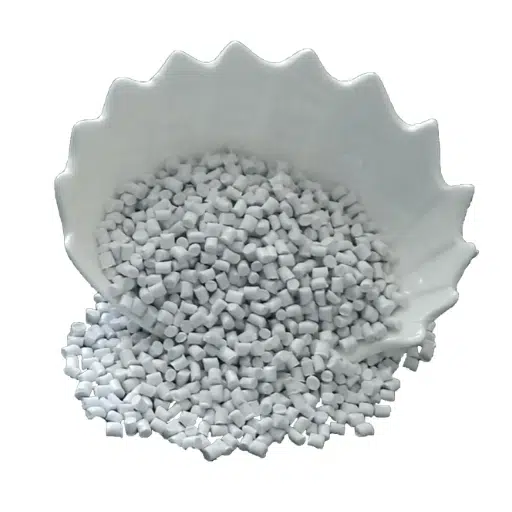
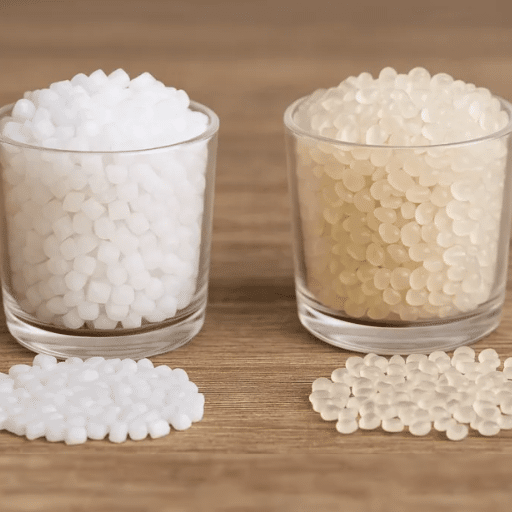
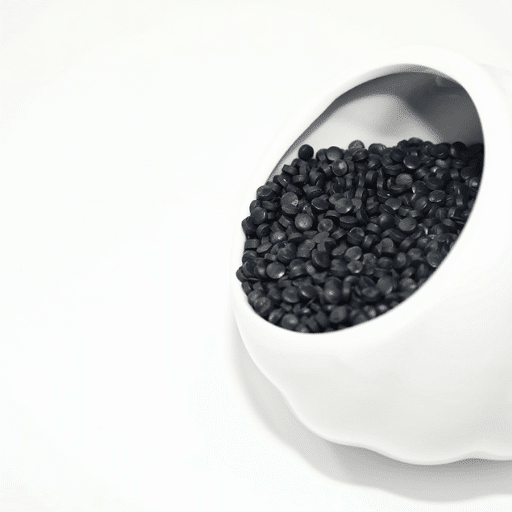
At Suzhou Yifuhui New Material Co., Ltd., we supply both polyamide and polyester pellet grades from a single source. Our technical team works with automotive customers to match the right resin to each application, whether that means PA66 GF35 for an under-hood bracket or PBT-GF30 for a connector housing. We provide global shipping, transparent pricing, and a 24-hour response guarantee for material inquiries.
Planning a new automotive program? Contact our polymer experts to discuss your PA and PET/PBT requirements and receive a competitive multi-resin quotation within 24 hours.
Sustainability: Recycled Polyamide and Recycled Polyester in Cars
Sustainability is no longer optional for automotive OEMs. Volvo has committed to using 25% recycled plastics in every new vehicle. Audi uses up to 89% recycled polyester in the seat covers of the A3. BMW, Mercedes-Benz, and other OEMs have set similar recycled-content targets across their lineups.
For suppliers, this means both rPET and rPA are becoming standard options rather than special requests.
Recycled polyester has the more mature supply chain. Post-consumer PET bottles and industrial scrap can be processed into automotive-grade fibers and resins with consistent quality. Recycled polyamide is advancing through both mechanical recycling and chemical depolymerization. The BASF, ZF, and Mercedes-Benz pilot project that recycles PA6 from end-of-life vehicle stabilizer links is a notable example of closing the loop for automotive PA.
The challenge for manufacturers is running rPET and rPA programs simultaneously. Each recycled resin has its own feedstock constraints, quality verification requirements, and certification needs. GRS and OEKO-TEX certifications may apply to textiles, while automotive interior applications often require OEM-specific approvals. A supplier who handles both recycled resin families can coordinate documentation and help buyers meet sustainability targets without sacrificing performance.
Designing for recyclability adds another layer. When a vehicle combines PA and PET in the same assembly, disassembly and material separation become harder at end of life. Some designers are exploring poly(ester-amide) copolymers and compatibilizers that allow mixed polymer streams to be recycled together. These materials bridge the properties of both families while simplifying circular-economy logistics.
FAQ: Common Questions About Polyester and Polyamide Automotive Applications

Which is better for automotive, polyamide or polyester?
Neither is universally better. Polyamide excels in under-hood, structural, and high-load applications because of its toughness, heat resistance, and wear properties. Polyester excels in interior, electrical, and precision components because of its dimensional stability, low moisture absorption, and UV resistance. Most automotive programs use both.
Why do automotive manufacturers use both PA and PET?
Modern vehicles contain thousands of components with different performance requirements. No single polymer can meet all of them. Using PA and PET together lets engineers match each material to the right application while reducing weight and cost compared to metal alternatives.
What automotive parts use both nylon and polyester?
Common examples include fuel-system modules (PA lines with PBT connectors), seating assemblies (PA structural frames with PET fabrics), battery packs (PA coolant manifolds with PBT electrical housings), and front-end modules (PA66 structural backbones with PET covers).
Can you source polyamide and polyester from one supplier?
Yes, and there are significant advantages. A single supplier can align quality systems, consolidate freight, provide unified documentation, and offer technical support for both material families. This reduces procurement overhead and lowers the risk of specification mismatches.
Do polyamide and polyester need different drying for automotive parts?
Yes. Polyamide is hygroscopic and must be dried before processing to prevent hydrolysis and defects. Polyester absorbs much less moisture and is more forgiving, though some PET grades still benefit from pre-drying to optimize melt quality and appearance.
Is polyester suitable for under-hood automotive applications?
Polyester can be used under the hood in select applications such as sensor housings, electrical connectors, and moderate-temperature brackets. However, it is generally not suitable for high-heat, high-load components like intake manifolds or engine mounts where polyamide performs better.
What is the best plastic for EV battery components?
There is no single answer. PA66 is often used for thermal management parts such as coolant manifolds. PBT-GF30 is common for high-voltage connector housings due to its dimensional stability and electrical insulation. The best choice depends on the specific component, voltage level, and thermal requirements.
How do recycled PA and PET fit into automotive sustainability programs?
Recycled PET is already widely used in automotive interiors, particularly seat fabrics and carpets. Recycled PA is growing through mechanical and chemical recycling initiatives. Many OEMs specify recycled-content targets that require both materials, making a dual recycled-resin strategy increasingly important.
Conclusion
The most effective polyester and polyamide automotive material strategies do not force a choice between the two polymers. They recognize that each polymer family solves a different engineering challenge, and they source both as part of a unified material program. Polyamide delivers the toughness, heat resistance, and wear properties that under-hood and safety systems demand. Polyester provides the dimensional stability, electrical insulation, and surface quality that interiors and precision components require.
For sourcing and procurement managers, the opportunity is consolidation. Working with a single supplier who understands both PA and PET/PBT reduces documentation complexity, improves batch consistency, and provides one point of contact for technical support. For design engineers, the opportunity is optimization, pairing the right resin with each component instead of over-engineering a single material.
The automotive industry is moving toward more electrified, lightweight, and sustainable vehicles. That future depends on smart multi-material design, and polyester and polyamide will remain foundational polymers in that mix. Getting the material strategy right today means fewer production delays, lower costs, and better-performing vehicles tomorrow. To learn more about How to Choose a Polyester and Polyamide Supplier and Polyamide Polyester Combination, please click to refer to our accompanying guide.
Ready to source both polyamide and polyester for your automotive program? Request a custom quote from Suzhou Yifuhui New Material Co., Ltd. and our polymer specialists will recommend the right grades, provide technical data sheets, and deliver competitive pricing within 24 hours.