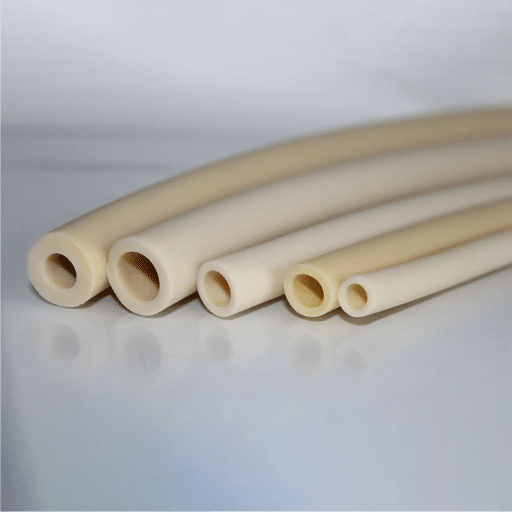
TPE costs roughly three times more than PVC per kilogram. That statement is accurate, and it’s also the fastest way to approve the wrong material.
Here’s the problem. The gap that decides your margin isn’t the TPE vs PVC price per kilogram. It’s cost per finished part, and that number is set by density, regrind recovery, cycle time, compliance overhead, and annual volume. A sourcing team that compares resin invoices alone will systematically select PVC for parts where the thermoplastic elastomer (TPE) is actually cheaper to produce, then absorb the difference through scrap, rework, and testing for years.
This guide breaks down the complete TPE vs PVC cost stack from a pellet supplier’s perspective, building on our TPE vs PVC material selection guide. You’ll get 2026 grade-level price ranges, the density math that converts dollars per kilogram into dollars per part, an application-by-application cost-convergence table, a volume break-even analysis, and the switching costs nobody puts in a quotation.
Want per-grade numbers for your specific part? Request a quote and our polymer specialists will return detailed pricing within 24 hours.
TPE vs PVC Cost at a Glance
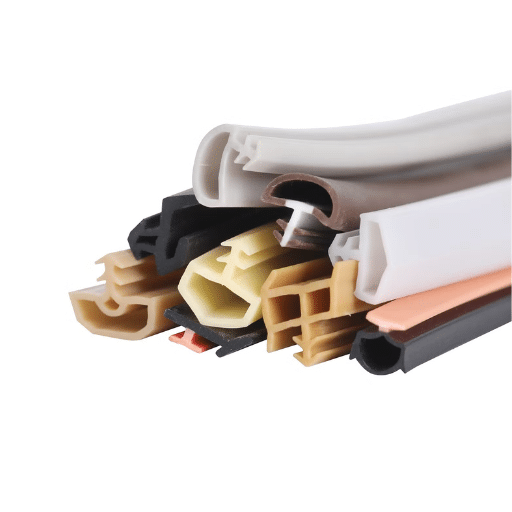
Start with the full cost picture, not the invoice line.
| Cost Factor | Flexible PVC | TPE (SEBS-based TPE-S) |
|---|---|---|
| Raw material price | 1.20–1.20–1.55/kg (¥8,500–11,000/ton compound) | 2.25–2.25–3.95/kg (¥16,000–28,000/ton) |
| Base resin price | ~0.62–0.62–0.74/kg (¥4,400–5,250/ton PVC resin) | Not applicable (always compounded) |
| Specific gravity | 1.16–1.40 g/cm³ | 0.88–1.05 g/cm³ (~20–30% lighter) |
| Material per part (same cavity volume) | Baseline | ~20–30% less by weight |
| Regrind reuse rate | 8–15% (plasticizer degradation) | 30–50% |
| Extrusion / cycle speed | Baseline | +15–25% throughput |
| Compliance overhead | Phthalate testing, REACH/RoHS documentation | Minimal for halogen-free grades |
| Medical-grade price | 1.55–1.55–1.83/kg (DEHP grades, ¥11,000–13,000/ton) | 6.30–6.30–9.60/kg (¥45,000–68,000/ton) |
| Per-part verdict | Wins in commodity static parts | Parity or wins in regulated, flexing parts |
Three facts explain the whole table. First, a mold cavity holds a fixed volume, so a lighter material uses less mass per part. Second, TPE scrap goes back into the hopper at a far higher rate than PVC scrap. Third, compliance spending sits on the PVC side of the ledger in regulated markets, not on the TPE side.
Cost per kilogram is a starting point. TPE vs PVC total cost of ownership is the decision.
Why the Per-Kilogram Gap Shrinks Per Part
Six factors narrow the gap before a single part ships:
- Density: TPE is 20–30% lighter, so the same cavity volume uses less mass.
- Regrind: TPE returns 30–50% to the hopper versus 8–15% for PVC.
- Cycle time: TPE runs 15–25% faster with no pre-curing step.
- Compliance overhead: Phthalate and VOC testing sits on the PVC ledger.
- Service life: TPE outlasts PVC two to three times in flexing applications, spreading cost across more years.
- Brand premium: A retailer’s willingness to pay for a halogen-free, phthalate-free claim absorbs the residual.
Each factor is small alone. Together they turn a 1.5x to 3x per-kilogram gap into a per-part figure within ±10%.
TPE vs PVC Raw Material Cost per kg
Prices below are 2026 China ex-factory ranges for polyvinyl chloride (PVC) and TPE compounds, the benchmark that sets global export pricing. Convert at roughly ¥7.1 to the US dollar.
2026 Flexible PVC Price per kg
PVC resin powder trades at ¥4,400–5,250 per ton, or about 0.62–0.62–0.74/kg. Add plasticizer, stabilizer, and filler to make a soft compound, and flexible PVC lands at ¥8,500–11,000 per ton (1.20–1.20–1.55/kg). Medical-grade DEHP-plasticized PVC runs higher, at ¥11,000–13,000 per ton (1.55–1.55–1.83/kg).
One structural change matters here. China removed the 13% VAT export rebate on PVC effective April 1, 2026, adding roughly ¥700–780 per ton, or about $0.10/kg, to export cost. Current Asian PVC resin benchmarks sit near ¥5,110 per ton, per Trading Economics. For export-oriented buyers, the rebate change narrows the PVC price advantage without any improvement in material performance.
2026 TPE Price per kg by Grade
“TPE” covers a 3–5x price spread depending on chemistry, oil loading, hardness, and certification. Matching quotes without matching specs is meaningless. If you’re new to styrenic elastomers, start with our what is TPE-S guide.
| TPE Grade (China, 2026) | ¥/ton ex-factory | Approx. $/kg |
|---|---|---|
| SBS-based TPR | 13,000–22,000 | 1.85–1.85–3.10 |
| SEBS general injection (60A–85A) | 16,000–28,000 | 2.25–2.25–3.95 |
| SEBS overmolding (PP/ABS) | 25,000–40,000 | 3.50–3.50–5.65 |
| SEBS food-grade (FDA) | 23,000–28,000 | 3.20–3.20–4.00 |
| TPV | 22,000–32,000 | 3.10–3.10–4.50 |
| TPU-based TPE | 30,000–60,000 | 4.20–4.20–8.45 |
| Medical (ISO 10993) | 45,000–68,000 | 6.30–6.30–9.60 |
The trend line favors TPE. Domestic SEBS capacity growth has cut base-resin prices roughly 18% from their 2019 highs, so the TPE vs PVC cost gap has narrowed even as PVC got more expensive to export. The global thermoplastic elastomer market, valued above $30 billion and expanding 5–9% annually according to Grand View Research, keeps pressure on SEBS pricing. See our guide to TPE vs TPU vs TPV for how each chemistry maps to a cost tier, and our TPV plastic pellets range for mid-tier grade options.
The Density Trap: Why TPE vs PVC Cost per Part Beats Price per kg
This is the calculation that changes purchasing decisions.
Flexible PVC has a specific gravity of 1.16–1.40. SEBS-based TPE-S sits at 0.88–1.05. Take a 1 cm³ part. It consumes about 1.37 grams of PVC but only about 0.94 grams of TPE.
Now apply price. PVC compound at ¥10/kg costs ¥0.0137 per part in raw material. TPE at ¥12.5/kg costs ¥0.0117 per part. Despite costing 25% more per kilogram, TPE is about 15% cheaper per part on material alone.
The lesson is straightforward: never compare $/kg. Convert to $/part using cavity volume and specific gravity, then layer regrind, cycle time, and compliance on top. Our TPE material properties guide covers how to read specific gravity and Shore hardness off a datasheet correctly.
TPE vs PVC Cost by Application

Material price gaps look very different once regrind, cycle time, and compliance are counted. The table below shows the TPE vs PVC cost gap buyers see on a quotation versus the gap they actually experience in production.
| Application | Material gap | Total-cost delta vs PVC | Verdict |
|---|---|---|---|
| Consumer-electronics wire jacket | +60% to +120% | −5% to +12% | TPE at or near parity |
| Toy soft components | +50% to +90% | 0% to +8% | TPE near parity |
| Medical tubing and masks | +120% to +250% | TPE cheaper after compliance | Switch on compliance grounds |
| Automotive interior soft-touch | +80% to +160% | +8% to +18% | Near parity with compliance credit |
| Yoga and sports mats | +200% to +320% | +10% to +20% | Premium absorbed at retail |
| Door/window seals, fridge gaskets | +70% to +130% | +6% to +15% | TPE wins on warranty and returns |
| Footwear (uppers, outsoles) | +40% to +100% | +5% to +14% | Narrow |
| Building fixed wiring cable | +100% to +180% | +35% to +55% | PVC wins decisively |
Cost convergence tracks two forces: regulation and brand value. Wherever phthalate compliance, odour and VOC rework, warranty returns, or retail brand premium are in play, TPE’s total-cost premium collapses. Where none of those exist, PVC’s advantage holds.
That’s why building wire stays PVC territory while medical tubing and consumer cable jackets move to TPE. Read the application deep dives on TPE vs PVC in medical devices and TPE vs PVC for wire and cable for the regulatory detail behind those two rows, or compare material ratings directly in this tubing material showdown from Cole-Parmer.
Not sure which side of the table your part falls on? Send us the drawing and annual volume, and we will model the per-part cost for both materials.
Processing, Regrind, and Cycle-Time Economics
Regrind: The Biggest Single Lever
Regrind recovery is where TPE’s per-kilogram disadvantage shrinks fastest. TPE scrap returns to the hopper at 30–50% with minimal property loss. PVC regrind is capped at roughly 8–15%, because plasticizer migration above that level causes whitening, pitting, and surface defects.
At a 35% regrind rate, TPE erases roughly 40% of its unit-price gap on its own. That single variable often decides the comparison. Our recyclability guide explains why the two materials behave so differently in a closed loop.
Cycle Time and Energy
TPE injection cycles run 15–25% shorter than PVC plastisol and slush-molding cycles, and extrusion runs roughly 20% faster. TPE also needs no pre-drying or pre-curing step. Together, those factors lower machine-hour cost per part, which matters most on high-cavitation automated lines.
Hidden PVC Costs
The PVC invoice omits spending that shows up later. Odour and VOC control on a 3.5 VOC grade frequently requires odour-absorbing masterbatch plus an extra re-bake pass. Migration testing for DOP and DINP runs about ¥4,800 per SGS REACH SVHC batch, several times a year.
Across regulated segments, compliance and testing consume roughly 0.8–1.5% of revenue. TPE doesn’t carry that line item.
Total Production Cost: A Worked Comparison
Model a 1 cm³ flexible part at 1,000,000 units per year with 35% regrind on the TPE side.
| Cost item | Flexible PVC | TPE-S | Notes |
|---|---|---|---|
| Material (net of regrind) | Baseline | +10% to +40% | Density and regrind offset the per-kg gap |
| Processing / machine hour | Baseline | −10% to −20% | Shorter cycles, no curing step |
| Scrap and rejects | Baseline | Lower | Regrind loop plus lower defect rate |
| Compliance and testing | Higher | Near zero | Phthalate and VOC testing amortized |
| Tooling | Baseline | Slightly higher | Non-corrosive melt, no HCl handling |
| Net per-part cost | Wins: commodity static parts | Wins: regulated, flexing parts |
For this reference part, expect TPE at −5% to +12% of PVC cost in consumer-electronics cable and toys, +6% to +20% in seals, mats, and footwear, and +35% to +55% in building fixed wiring. Medical applications can invert the result entirely, placing TPE below PVC once compliance is counted.
Tooling deserves a note. PVC releases hydrogen chloride at processing temperature, which corrodes molds and narrows the processing window. TPE is non-corrosive and runs on standard thermoplastic equipment, which reduces maintenance and mold-refurbishment spend over the tool’s life. See our TPE injection molding guide for the processing parameters involved.
TPE vs PVC Cost Break-Even: When Scale Changes the Answer

Annual volume frequently matters more than material choice.
Under 100,000 parts per year, tooling and changeover dominate the model. PVC wins on material cost unless a regulation forces the switch. Prototype in PVC only if you have no regulated-market exposure.
Between 100,000 and 1,000,000 parts per year, you’re in the evaluation zone. TPE’s regrind loop and cycle advantage begin to offset the material premium, and retail or brand premium typically absorbs the remainder.
Above 1,000,000 parts per year, TPE can reach parity or advantage through regrind looping, automation, and yield. PVC’s advantage persists only in very large commodity runs with no compliance exposure.
Tomas, a process engineer at a consumer-electronics cable plant, ran this exact comparison in early 2026. Management initially rejected TPE on the higher quotation. The production data told a different story.
A 40,000-part-per-day line running TPE at 20% higher output with regrind looping saved roughly 11 tons per month in material losses. The net difference landed at 3–7%, and field return rates fell from about 0.3% to 0.04%. The material premium was real. The total-cost penalty wasn’t.
One warning about trials. A 300 kg trial typically prices TPE about 18% above PVC. At 20+ tons per month with regrind looping, that narrows to roughly 7%. Never price a production switch off a trial run.
Certification and documentation add about 0.001–0.001–0.007 per part in the first twelve months, then disappear at scale.
Switching Costs and the Decision Threshold
Switching materials isn’t free. Budget for new machine settings, supplier qualification, staff training, and first-article inspection. In medical devices, extractables, leachables, and biocompatibility re-testing can reach roughly $300,000 and nine months per device program. Treat that figure as an estimate for a regulated program, not a universal constant.
Cost engineers apply a simple threshold test to the total-cost delta:
- Within ±5%: switch immediately and take the non-cost benefits, such as compliance, feel, and recyclability.
- Between 5% and 15%: the brand premium, compliance credit, or warranty savings must cover the gap.
- Above 15%: hold PVC unless a regulation forces the change.
Most PVC-to-TPE switches in regulated markets are driven by compliance deadlines rather than material price. The healthcare industry’s own phthalate phase-out commitments show how that pressure builds.
Our TPE vs PVC caps and plugs comparison and food-grade comparison show how the same decision plays out in specific product families.
How to Get Accurate TPE and PVC Pricing
Most quotation errors come from comparing unlike materials. Request the same data for every quote:
- Compound or pellet price in $/kg or ¥/ton, with the currency basis stated
- Grade name and Shore hardness (A or D)
- Specific gravity, so you can convert to parts per kilogram
- Certifications held (ISO 9001, RoHS, REACH, FDA, EU 10/2011, ISO 10993)
- Minimum order quantity and Incoterms
- Freight basis and lead time to your facility
Then ask a second question. Request a per-part cost estimate including mold amortization, not a resin price. A supplier who can model your cavity volume, cycle time, and regrind rate is a partner. A supplier who quotes only $/kg is a broker.
Verify pellet quality before you commit. Consistent melt flow index batch to batch matters more than a headline price, because MFI drift forces processing adjustments that wipe out any saving. A short checklist covers the essentials:
- Consistent melt flow index (MFI) from lot to lot
- Uniform pellet size with low fines content
- Certificate of analysis (COA) supplied with each lot
- Current ISO 9001, RoHS, REACH, and FDA or EU documentation where required
Buying TPE and TPV pellets direct from a China-based supplier removes broker markup and regional distribution premiums. Bulk orders of 5+ tons per month typically earn 8–15% volume discounts. Our TPE supplier guide walks through qualification questions for every material, and the silicone cost guide applies the same framework to the other elastomer comparison buyers ask about most.
Ready for real numbers? Request pricing on TPE and TPV pellets or contact our polymer specialists directly.
Frequently Asked Questions

Is TPE cheaper than PVC?
Not per kilogram. Flexible PVC compound costs roughly 1.20–1.20–1.55/kg versus 2.25–2.25–3.95/kg for general-purpose TPE-S. Per finished part, the two often reach parity, because TPE is 20–30% less dense and returns 30–50% regrind. In regulated applications such as medical tubing and consumer-electronics cable, TPE can be cheaper once compliance and scrap are counted.
Why is TPE more expensive than PVC?
PVC rests on low-cost chlorine chemistry, and its flexibility comes from inexpensive plasticizers. SEBS-based TPE uses higher-cost styrenic block copolymers plus process oil and polypropylene. TPE also carries the cost of genuinely higher performance: elasticity, low-temperature flexibility, halogen-free compliance, and recyclability.
How much does TPE cost per kg in 2026?
General-purpose SEBS-based TPE-S runs about 2.25–2.25–3.95/kg (¥16,000–28,000/ton). TPV runs 3.10–3.10–4.50/kg (¥22,000–32,000/ton), food-grade SEBS about 3.20–3.20–4.00/kg, and medical grades meeting ISO 10993 roughly 6.30–6.30–9.60/kg (¥45,000–68,000/ton).
When does TPE become cheaper than PVC?
In regulated, high-flex, human-contact, or export-oriented parts: medical tubing, consumer-electronics cable jackets, toys, and automotive interior soft-touch. Once regrind, cycle time, and compliance are counted, TPE reaches parity or better. PVC stays cheaper in commodity indoor static parts such as building wiring and general pipe.
How much does it cost to switch from PVC to TPE?
Beyond the material delta, budget for tooling adjustments, supplier qualification, and staff training. In medical devices, extractables, leachables, and biocompatibility re-testing can reach roughly $300,000 and nine months per program. That’s why compliance deadlines, not material price, drive most PVC-to-TPE switches.
Does TPE cost more in small production runs?
Yes. A 300 kg trial typically prices TPE about 18% above PVC. At 20+ tons per month with regrind looping, the gap narrows to roughly 7%. Scale, not material choice, sets the final cost gap.
The Bottom Line on TPE vs PVC Cost
PVC wins the per-kilogram invoice. TPE wins or reaches parity on per-part and total cost in regulated, flexing, human-contact parts, once density, regrind, cycle time, and compliance are on the table. Cost per kilogram is not cost per part, and the difference is large enough to reverse a sourcing decision.
Run the density math before you trust any TPE vs PVC cost comparison. Model a total-cost-of-ownership scenario at your actual annual volume. Then weigh the switching cost against a compliance or brand benefit that PVC cannot match.
Suzhou Yifuhui New Material Co., Ltd. supplies certified TPE and TPV pellets with batch-consistent melt flow, transparent direct-source pricing, and global shipping. Our specialists return a detailed, competitive quote within 24 hours, including a per-part estimate where you need one.
Request a competitive quote or explore our full range of plastic pellets across standard and engineering grades.