A food processing plant in Wisconsin replaced their HDPE conveyor wear strips with UHMW in January 2025. Their maintenance manager, Elena Torres, expected modest improvement. Instead, she watched replacement intervals stretch from four months to twenty-two months. Downtime dropped 78%.
The line supervisor stopped keeping spare strips in inventory. They simply did not wear out fast enough to justify the shelf space.
That is what happens when the right material meets the right application.
If you source polymer resins for manufacturing, you have probably seen UHMW on specification sheets. You know it is tough. You know it resists wear. What is harder to find is a clear map of which industries actually benefit from UHMW, which specific parts perform best, and which grade your buyer should specify.
This guide delivers exactly that map. You will learn how UHMW performs across eight major industrial sectors, from food processing to mining to medical implants. You will get grade recommendations for each application, quantified wear data you can take to your engineering team, and a decision framework for choosing between pellets, powder, sheet, and rod forms.
Need a grade recommendation for a specific application? Our polymer specialists match UHMW formulations to your operating conditions before you place an order. Contact our team for a tailored specification.
What Makes UHMW Suitable for Demanding Applications?

Ultra high molecular weight polyethylene (UHMWPE) starts at roughly 3 million g/mol and can exceed 10 million g/mol in specialized grades. Those ultra-long polymer chains create a material that behaves unlike standard HDPE, nylon, or even PTFE in many environments.
| Property | UHMW Value | Why It Matters |
|---|---|---|
| Abrasion resistance | 8-10x lower wear rate than carbon steel | Liners and wear parts last years, not months |
| Coefficient of friction | ~0.08 (self-lubricating) | No external grease needed; reduces energy consumption |
| Impact strength | >150 kJ/m² | Highest among thermoplastics; absorbs impacts that crack other plastics |
| Moisture absorption | <0.01% | No swelling, no freeze-thaw degradation, stable dimensions |
| Chemical resistance | Resistant to acids, alkalis, most solvents | Tanks and valves survive aggressive chemicals |
| Density | ~0.93-0.97 g/cm³ | One-eighth the weight of steel; easier handling and lower shipping costs |
These properties translate directly into application performance. A conveyor guide rail made from UHMW does not just slide smoothly. It eliminates metal-on-plastic galling, reduces drive motor load, and outlasts nylon alternatives in dusty or gritty environments.
A chute liner does not just resist abrasion. Its low surface energy prevents material buildup. That eliminates the bridging and rat-holing that plague steel-lined hoppers.
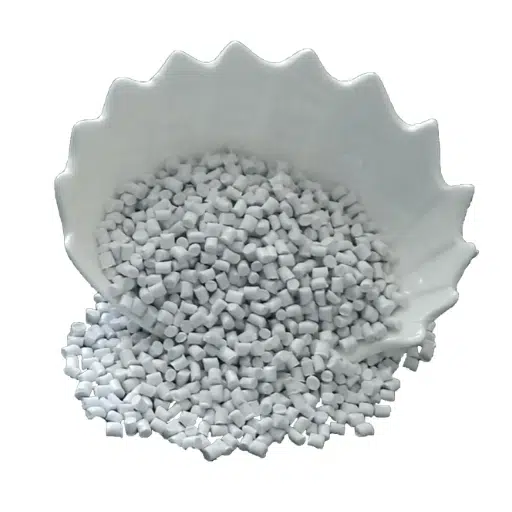
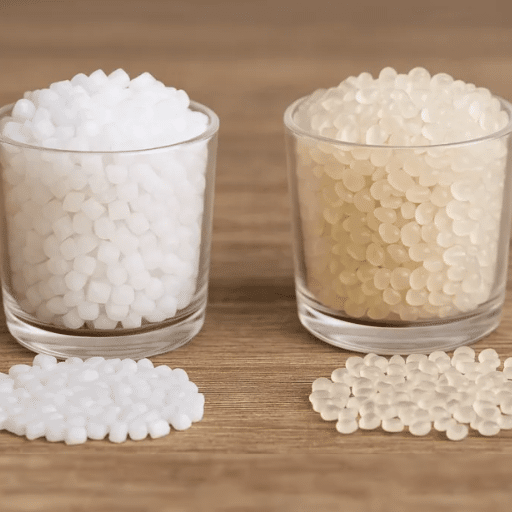
UHMW arrives in several forms. The form matters as much as the grade. Standard industrial applications typically use compression-molded sheet and rod or ram-extruded profiles. Food and pharmaceutical processors often machine parts from virgin sheet. Mining operations may specify ceramic-filled blocks for extreme abrasion.
For a deeper look at how these forms differ and which suits your process, see our complete guide to UHMW processing.
Industrial and Material Handling Applications
Material handling is where UHMW earns its reputation. Any application involving sliding contact, abrasive particulates, or repetitive impact is a candidate. The results speak for themselves.
Conveyor wear strips and chain guides. UHMW guide rails support conveyor chains in bottling plants, packaging lines, and automotive assembly. The material’s low friction reduces chain tension and motor load. Its abrasion resistance prevents the grooves and scoring that shorten chain life. Anti-static grades are essential in explosive dust environments such as grain handling or sugar processing.
Chute, hopper, and bin liners. Bulk materials flow poorly against steel. They stick, bridge, and rat-hole. UHMW liners solve this with a combination of low friction and non-stick surface energy. Coal, ore, grain, and cement slide rather than cling. Maintenance crews spend less time with hammers and air lances clearing blockages.
Rollers, bushings, and bearings. Self-lubricating UHMW bearings operate without grease in environments where contamination is unacceptable. They run quietly, resist corrosion, and handle shock loads that would damage bronze or nylon bearings.
Packaging machinery components. Dead plates, star wheels, and guide rails in filling and capping equipment benefit from UHMW’s food compliance, low friction, and dimensional stability. The material does not shed particles into product streams and withstands the caustic washdown cycles common in dairy and beverage plants.
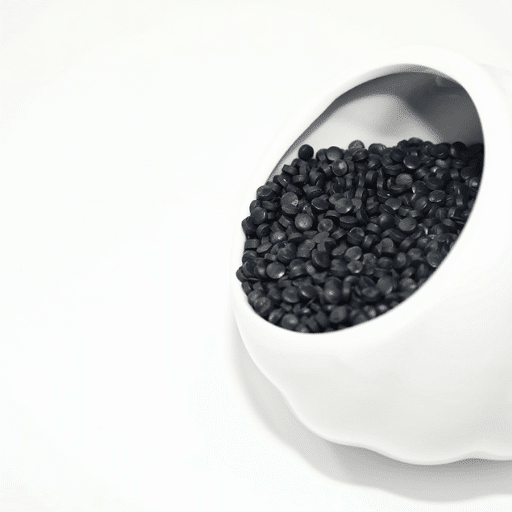
For applications involving extreme abrasion, ceramic-filled or glass-filled UHMW grades extend wear life beyond standard virgin material. For general industrial use, virgin natural or black UHMW sheet and rod provide the best balance of performance and cost.
Food and Pharmaceutical Processing
Food processing demands more than wear resistance. It demands regulatory compliance, lot traceability, and resistance to aggressive sanitizers.
Virgin UHMW meets FDA 21 CFR 177.1520 for direct food contact. It does not absorb moisture, so bacteria cannot penetrate the material matrix. It resists chlorine, peracetic acid, and quaternary ammonium sanitizers at concentrations used in commercial clean-in-place systems. These properties make it ideal for:
- Conveyor components in meat, poultry, and dairy processing
- Cutting boards and butcher blocks
- Packaging machinery parts and filling equipment liners
- Pharmaceutical tablet handling and clean-room equipment
One detail procurement teams often miss: reprocessed UHMW is not suitable for direct food contact. Recycled content may carry contaminants from prior industrial use. For food and pharma applications, specify virgin natural or white UHMW with full lot traceability and a certificate of compliance. If you want a complete breakdown of compliance requirements, sanitizer resistance, and sourcing considerations, see our Food Grade UHMW: Properties, Compliance, and Sourcing Guide.
Temperature matters too. Standard UHMW handles continuous service up to 80°C (175°F). Steam sterilization cycles or hot-fill operations may require consultation with your supplier to confirm grade suitability. Suzhou Yifuhui supplies FDA-compliant UHMW pellets and sheet with full certification documentation and global shipping.
Automotive and Transportation

The automotive industry uses UHMW for both under-hood durability and interior comfort.
Chain guides and tensioners. Timing chain systems in modern engines run at high speeds under heavy load. UHMW chain guides provide low-friction wear surfaces that reduce noise and extend chain life. Their dimensional stability prevents the loosening that causes chain rattle at cold start.
NVH reduction components. UHMW’s damping characteristics make it useful for interior trim clips, seat track liners, and door-panel bushings. It eliminates squeaks and rattles without the cost of rubber overmolding.
Truck bed liners and outrigger pads. Dump trucks, concrete mixers, and boom trucks face some of the harshest wear conditions in transportation. UHMW bed liners protect steel from abrasive aggregate. Outrigger pads distribute crane loads across soft ground while resisting puncture and compression set.
Lightweighting advantage. At roughly one-eighth the density of steel, UHMW helps manufacturers reduce vehicle weight without sacrificing durability. Every kilogram of UHMW replacing steel in non-structural wear parts is a kilogram removed from fuel consumption calculations.
For automotive applications, standard virgin UHMW sheet and rod work well for liners and pads. Injection-molded interior parts may require specially compounded UHMW grades with modified flow characteristics. If you are comparing UHMW to HDPE for transportation applications, our detailed UHMW vs HDPE comparison covers lifecycle cost, processing trade-offs, and wear data.
Marine and Dock Protection
Marine environments punish materials with salt spray, UV exposure, freeze-thaw cycles, and impact from vessels weighing thousands of tonnes.
UHMW handles all of it. Its near-zero moisture absorption means it does not swell, warp, or degrade when submerged. Its high impact strength absorbs kinetic energy from docking vessels without cracking or splintering.
Its low friction allows ships to slide along fender faces without damaging hull paint. That matters when a single hull repair can cost more than the entire fender system.
Common marine applications include:
- Dock fenders, bumpers, and pile guards
- Boat trailer slides and launch ramp strips
- Quay wall protection and shipyard impact pads
- Lock gate bushings and miter gate bearings
Standard UHMW degrades in prolonged UV exposure. For outdoor marine use, specify UV-stabilized grades containing either 2.5% carbon black or 0.5% dedicated UV additive. These formulations retain impact strength and color stability through years of sun exposure.
Mining, Aggregates, and Bulk Material Handling
Mining is arguably UHMW’s most economically compelling application. The numbers tell the story clearly. No other industry sees returns this dramatic.
A copper mine in Arizona tracked liner replacement costs across two identical chutes. One used 6 mm carbon steel liners. The other used 12 mm UHMW liners. The steel lasted 4 months. The UHMW lasted 21 months.
Over a five-year period, the UHMW chute required two replacements. The steel chute required fifteen. Maintenance labor, crane rental, and lost production time made the steel option 3.4 times more expensive on a total-cost basis. The UHMW liner cost more upfront. It saved money anyway.
This pattern repeats across the industry. UHMW hopper and chute liners typically deliver 18 to 24 months of service in abrasive ore handling, compared with 3 to 6 months for steel. The material’s low friction also promotes mass flow, preventing the bridging and rat-holing that shut down feed lines. For a step-by-step procurement walkthrough covering liner thickness, grade selection, and total-cost calculations, read our UHMW Mining Liners: A Procurement Guide for Bulk Material Handling.
Additional mining applications include:
- Truck bed liners for abrasive ore and aggregate transport
- Dragline bucket liners and shovel protection
- Cyclone liners and slurry pipe sections
- Vibratory feeder linings and screen deck components
For extreme abrasion, ceramic-filled UHMW grades embed hard ceramic particles in the polymer matrix. These composites outlast standard UHMW by 30-50% in high-velocity slurry applications. For moderate-wear duty, virgin UHMW provides the best cost-performance ratio.
Medical and Orthopedic Applications

Medical-grade UHMWPE occupies a specialized market distinct from industrial UHMW pellets. It is worth understanding because procurement teams occasionally encounter crossover terminology.
Orthopedic implants represent the highest-profile medical use. Cross-linked UHMWPE bearing surfaces in hip and knee replacements deliver low wear debris generation and excellent biocompatibility. Vitamin-E stabilized grades extend oxidative stability, reducing the risk of long-term implant degradation.
These medical grades must meet ISO 5834-2 and FDA requirements for implantable devices. They are produced through specialized compression molding or gel-spinning processes, not standard extrusion. The molecular weight, cross-linking density, and sterilization compatibility are tightly controlled. To understand the standards, biocompatibility requirements, and sourcing pathways in detail, see our Medical Grade UHMWPE: Properties, Standards, and Sourcing Guide.
Industrial procurement teams should note that standard UHMW pellets and powder are not suitable for implant manufacturing. If your application involves surgical instruments, medical device housings, or pharmaceutical processing equipment, specify industrial virgin UHMW with appropriate FDA compliance for device surfaces, not implant grades.
Chemical Processing and Corrosion Resistance
Chemical plants specify UHMW for tank linings, valve components, pump housings, and flange gaskets in environments where metal corrodes and other plastics degrade.
The material resists sulfuric acid, hydrochloric acid, sodium hydroxide, and most organic solvents at concentrations and temperatures where PVC would soften, nylon would hydrolyze, and PTFE would require costly fabrication. Its near-zero moisture absorption also prevents chemical permeation, a failure mode that affects many elastomeric seals.
One caution: UHMW is not suitable for strong oxidizing acids such as fuming nitric acid or concentrated chromic acid. It also has a temperature ceiling of approximately 80°C for continuous chemical exposure. For applications above this threshold, review material compatibility data with your supplier before specifying.
Virgin UHMW is the conservative choice for aggressive chemical environments. Reprocessed grades may contain contaminants from prior industrial use that compromise chemical resistance or introduce leachable species.
Emerging and High-Growth Applications
UHMW is not standing still. Several emerging applications are expanding demand and creating new specification requirements.
EV battery separators. Microporous UHMWPE membranes separate the anode and cathode in lithium-ion cells while allowing ion transport. The material’s chemical stability, mechanical strength, and ability to form controlled porosity make it ideal for next-generation battery designs. As electric vehicle production scales, demand for battery-grade UHMWPE is projected to grow at double-digit rates.
PFAS-free PTFE replacement. Regulatory pressure on per- and polyfluoroalkyl substances is driving manufacturers to seek alternatives. UHMW offers a thermoplastic substitute for PTFE in seals, bearings, and sliding components where extreme temperature is not required. The coefficient of friction is comparable, and UHMW avoids the regulatory scrutiny surrounding fluorinated polymers.
Defense and ballistics. High-modulus UHMWPE fiber, produced through gel spinning, is stronger than steel by weight and a key component in modern body armor, helmets, and vehicle armor panels. Dyneema and Spectra are the best-known commercial brands.
High-performance ropes and cables. UHMWPE fiber ropes are stronger than steel cables of equivalent diameter, do not corrode in salt water, and float. They are increasingly specified for marine mooring lines, offshore towing, and heavy-lift operations.
These emerging applications signal where the UHMW market is heading. Procurement teams who understand the material’s expanding role can anticipate supply requirements and secure long-term contracts before demand spikes tighten availability.
Choosing the Right UHMW Form and Grade for Your Application

Selecting UHMW is only half the decision. You also need the right form and grade.
| Application Type | Recommended Form | Recommended Grade | Certification Needed |
|---|---|---|---|
| Industrial wear parts | Sheet, rod, machined parts | Virgin natural or black | None |
| Food/pharma processing | Sheet, machined parts | Virgin natural or white | FDA 21 CFR 177.1520 |
| Mining, extreme abrasion | Sheet, ceramic-filled blocks | Ceramic-filled or glass-filled UHMW | None |
| Marine, outdoor exposure | Sheet, fender pads | UV-stabilized (carbon black or additive) | None |
| Medical devices (non-implant) | Sheet, rod | Virgin, lot-traceable | ISO 13485, FDA device |
| Chemical handling | Sheet, rod, custom shapes | Virgin, chemical-grade | REACH, SDS compliance |
| Explosive dust environments | Sheet, machined parts | Anti-static / conductive | ATEX, IECEx |
Pellets vs. powder vs. sheet/rod. UHMWPE powder is the standard feedstock for compression molding and ram extrusion. It is not suitable for conventional injection molding without specialized equipment. Pre-compacted UHMW pellets exist for limited injection molding applications, but they require modified screws and higher injection pressures. Sheet and rod are the go-to forms for machined parts and liners. For a detailed breakdown of powder and pellet trade-offs, see our UHMW plastic pellets buyer’s guide.
Virgin vs. reprocessed. Virgin UHMW guarantees consistent molecular weight, clean chemistry, and full certification. Reprocessed grades offer cost savings for non-critical industrial applications but should never be used in food contact, medical devices, or aggressive chemical service.
If you are unsure which grade fits your process, Suzhou Yifuhui provides application-specific recommendations with 24-hour response. We supply virgin, FDA-compliant, UV-stabilized, anti-static, and ceramic-filled UHMW grades with competitive MOQs and global shipping.
Frequently Asked Questions
What is UHMW used for most commonly?
The most common UHMW applications are industrial wear parts and food processing equipment. Conveyor guide rails, chute liners, chain guides, and hopper liners account for the largest volume. Food processing uses include cutting boards, conveyor components, and packaging machinery parts where FDA compliance is required.
Is UHMW better than HDPE for conveyor systems?
Yes, for high-wear environments. UHMW offers 8-10x better abrasion resistance and lower coefficient of friction than HDPE. For light-duty conveyors handling non-abrasive materials, HDPE may suffice at lower cost. The decision depends on operating conditions, maintenance access, and total lifecycle budget.
Can UHMW replace steel in mining equipment?
For liners and sliding surfaces, yes. UHMW chute and hopper liners typically last 18-24 months compared with 3-6 months for steel under equivalent abrasive conditions. UHMW is not suitable for structural load-bearing components, cutting edges, or high-temperature zones where steel remains necessary.
Is UHMW FDA approved for food contact?
Specific virgin UHMW grades meet FDA 21 CFR 177.1520 for direct food contact. These grades are typically natural or white and carry full lot traceability. Reprocessed UHMW does not meet FDA requirements and should not be used in food processing equipment.
What grade of UHMW should I use outdoors?
Specify UV-stabilized UHMW for outdoor exposure. Standard grades degrade under prolonged ultraviolet radiation. UV-stabilized formulations contain either 2.5% carbon black or 0.5% dedicated UV additive and retain impact strength and color stability through years of sun exposure.
How long do UHMW mining liners last?
UHMW mining liners typically last 18-24 months in abrasive ore and aggregate handling, compared with 3-6 months for carbon steel liners under equivalent conditions. Ceramic-filled UHMW grades can extend this to 30+ months in extreme abrasion environments.
Conclusion
UHMW applications span nearly every heavy industry where wear, friction, impact, or chemical exposure challenge material performance. From conveyor guides in food plants to chute liners in copper mines to dock fenders in marine ports, the material delivers measurable improvements in wear life, maintenance cost, and operational uptime.
Three principles should guide your material selection:
- Match the grade to the environment. Food contact demands virgin FDA-compliant material. Mining demands abrasion-resistant formulations. Marine demands UV stability.
- Calculate total cost of ownership, not just material cost. A UHMW liner that costs twice as much as steel but lasts four times longer delivers a 50% reduction in lifecycle cost.
- Specify the right form for your process. Powder for compression molding. Sheet and rod for machining. Specialty pellets only for modified injection molding systems.
The global UHMW-PE market is projected to reach USD 4.8 billion by 2033, driven by demand in EV batteries, defense, and industrial automation. Manufacturers who understand how to specify and source UHMW today will have a supply chain advantage as that growth accelerates.
Ready to specify UHMW for your next project? Suzhou Yifuhui supplies virgin, FDA-compliant, UV-stabilized, and ceramic-filled UHMW grades with competitive pricing and global delivery. Contact our polymer specialists for a grade recommendation, competitive quote, or sample batch for trial evaluation.